
Mary M. Talbot
Author of Dotter of her Father's Eyes
About the Author
Mary Talbot is an internationally acclaimed scholar who has published widely on language, gender and power, particularly in relation to media and consumer culture.
Works by Mary M. Talbot
Tagged
Common Knowledge
- Legal name
- Talbot, May Margaret
- Birthdate
- 1954
- Gender
- female
- Education
- Lancaster University (PhD)
Preston Polytechnic (BA) - Occupations
- writer
scholar - Relationships
- Talbot, Bryan (husband)
Atherton, James S. (father) - Nationality
- UK
- Birthplace
- Wigan, Lancashire, England, UK
- Places of residence
- Sunderland, England, UK
- Map Location
- England, UK
Members
Reviews
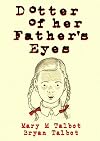
Though I haven’t read a single page written by James Joyce, I have always been fascinated by him and his life. It is for this reason that when I saw a graphic novel was coming out about Joyce and the relationship with his daughter, I knew that I had to get my hands on it. I was not disappointed. In fact, I intend on buying more copies to give out to friends and family because I think this graphic novel has an audience wider that Joyce fans or graphic novel readers.
This graphic novel show more actually tells two stories; that of Mary Talbot and that of Lucia Joyce. Mary, the author of the graphic novel, had a tumultuous and at times an abusive upbringing. Her father was one of the leading Joycean scholars who suffered from depressive bouts and violent outbursts. Interwoven with Mary’s story is that of Lucia Joyce who has a similar relationship to her own father as Mary had to hers. For those who do not know about Lucia’s history, she was a free spirit who was misunderstood by her parents and therefore suffered a tortuous life.
There are striking similarities between Lucia and Mary who both came of age during pivotal times in history; Mary during the 1950s and 1960s right on the cusp of women’s liberation, and Lucia during the 1930s which socially mirrored that of the 1960s with changing roles for women. Yet both women are hindered by their parents’ own failed dreams and subsequent anger which kept them from encouraging their daughters. Instead, they wished to see them cloistered in a traditional setting despite the societal changes that were taken place. Both of their fathers struggled intellectually and this was played out in their troubled relationships with their daughters; forever changing their daughters’ lives.
The illustrations are absolutely gorgeous and adds greatly to the story. Lucia’s story is told in illustrations that are defined but blend into each other as memories typically do. This was an interesting technique and very effective for her story. Mary’s story is told in sepia while Joyce’s story is told in shades of blue. This technique works perfectly as sepia brings to mind old photographs while shades of blue conjures up melancholy feelings which fits each story. There are images of “today” which are in full color and have very defined panels. This only adds to the feeling of remembrance in the other sections.
At under 100 pages, this graphic novel accomplishes a great deal in very little space. There is not a wasted word or image. This is quite possibly the best graphic novel I have read all year. If you know anything about me, you know that Seth is my favorite graphic novelist...well now he has some serious competition as this book rivals my love for Seth’s work. I am buying a copy for every woman, literature-lover, and historian in my life (which is basically everyone in my life...). Though I have seen this labeled as a children’s book in various places, it is far from it. It is more mild than other graphic novels but it certainly deals with issues of abuse and mental illness which is for a more advanced audience. I really think that this graphic novel will appeal to graphic novel readers and non-readers alike. The book is very approachable and the story flows easily without any jarring transitions that could throw off those who are not typically readers of graphic novels.
www.iamliteraryaddicted.blogspot.com show less
This graphic novel show more actually tells two stories; that of Mary Talbot and that of Lucia Joyce. Mary, the author of the graphic novel, had a tumultuous and at times an abusive upbringing. Her father was one of the leading Joycean scholars who suffered from depressive bouts and violent outbursts. Interwoven with Mary’s story is that of Lucia Joyce who has a similar relationship to her own father as Mary had to hers. For those who do not know about Lucia’s history, she was a free spirit who was misunderstood by her parents and therefore suffered a tortuous life.
There are striking similarities between Lucia and Mary who both came of age during pivotal times in history; Mary during the 1950s and 1960s right on the cusp of women’s liberation, and Lucia during the 1930s which socially mirrored that of the 1960s with changing roles for women. Yet both women are hindered by their parents’ own failed dreams and subsequent anger which kept them from encouraging their daughters. Instead, they wished to see them cloistered in a traditional setting despite the societal changes that were taken place. Both of their fathers struggled intellectually and this was played out in their troubled relationships with their daughters; forever changing their daughters’ lives.
The illustrations are absolutely gorgeous and adds greatly to the story. Lucia’s story is told in illustrations that are defined but blend into each other as memories typically do. This was an interesting technique and very effective for her story. Mary’s story is told in sepia while Joyce’s story is told in shades of blue. This technique works perfectly as sepia brings to mind old photographs while shades of blue conjures up melancholy feelings which fits each story. There are images of “today” which are in full color and have very defined panels. This only adds to the feeling of remembrance in the other sections.
At under 100 pages, this graphic novel accomplishes a great deal in very little space. There is not a wasted word or image. This is quite possibly the best graphic novel I have read all year. If you know anything about me, you know that Seth is my favorite graphic novelist...well now he has some serious competition as this book rivals my love for Seth’s work. I am buying a copy for every woman, literature-lover, and historian in my life (which is basically everyone in my life...). Though I have seen this labeled as a children’s book in various places, it is far from it. It is more mild than other graphic novels but it certainly deals with issues of abuse and mental illness which is for a more advanced audience. I really think that this graphic novel will appeal to graphic novel readers and non-readers alike. The book is very approachable and the story flows easily without any jarring transitions that could throw off those who are not typically readers of graphic novels.
www.iamliteraryaddicted.blogspot.com show less
http://nwhyte.livejournal.com/2499751.html
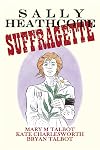
Following up from the Talbots' brilliant biography of Lucia Joyce, this excellent graphic story takes a close look at the suffragette movement, through the person of Sally Heathcote, a red-haired Northern girl who moves to London and becomes a core activist, imprisoned and force-fed through a hunger srike, growing up quickly in brutal political circumstances. Dangerfield brings in the suffragettes as just one of the destabilising factors for the show more Asquith government in The Strange Death of Liberal England; I hadn't realised just how strong the commitment to political violence was from an early stage, much more so than the Irish activists of either side at that particular time; nor was I aware of the full brutality of the British state's reaction to those who only wanted an equal say in its governance. Talbot tells a compelling story, but is also transparent about where she has egged the pudding; I knew so little about the period that I turned to the endnotes with some excitement to find out if Sally Heathcote was a real historical figure or not. (And I usually hate endnotes with a deep deep loathing.) The last line, delivered to a dying Sally in 1969 by her granddaughter, is a real emotional kicker. Strongly recommended. show less
Following up from the Talbots' brilliant biography of Lucia Joyce, this excellent graphic story takes a close look at the suffragette movement, through the person of Sally Heathcote, a red-haired Northern girl who moves to London and becomes a core activist, imprisoned and force-fed through a hunger srike, growing up quickly in brutal political circumstances. Dangerfield brings in the suffragettes as just one of the destabilising factors for the show more Asquith government in The Strange Death of Liberal England; I hadn't realised just how strong the commitment to political violence was from an early stage, much more so than the Irish activists of either side at that particular time; nor was I aware of the full brutality of the British state's reaction to those who only wanted an equal say in its governance. Talbot tells a compelling story, but is also transparent about where she has egged the pudding; I knew so little about the period that I turned to the endnotes with some excitement to find out if Sally Heathcote was a real historical figure or not. (And I usually hate endnotes with a deep deep loathing.) The last line, delivered to a dying Sally in 1969 by her granddaughter, is a real emotional kicker. Strongly recommended. show less
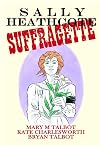
I’ll admit that at the beginning of this graphic novel, I wasn’t sure if I was going to be blown away. However, by the time I reached the end I could not stop thinking about it! Being a graphic novel, I was able to finish this in one sitting and in such a short time I’m still haunted by the last few pages and the story that unfolded about women’s suffrage in England at the turn of the twentieth century. Sally Heathcote Suffragette accounts actual events and the majority of the show more characters were real people so it read more like a historical account than a historical fiction. I highly recommend this graphic novel to anyone interested in history and women’s rights, especially if you are a young lady who has recently become of voting age.
Personally, this graphic novel made me so appreciative that I live in a time where I don’t have to worry about having rights and representation. Without question, I am lucky enough to live in a country where I have not felt disadvantaged or oppressed as a woman, and I owe it all to women like the ones we find in this graphic novel. They fought for us, were imprisoned for us, and died for us so we could have the right to vote and the right to be recognized as human beings equal to our male counterparts. I have this novel to thank for allowing me to appreciate how extreme the struggle truly was for women at the beginning of the twentieth century.
The reason I knocked off half a teacup is because, as I said at the beginning of this review, it didn’t grab me right away. The art style is interesting, but I found that a lot of the characters looked the same and there were a lot that I got mixed up. It was also a little jumpy in places so it was a tiny bit hard to follow for me at the beginning. It was definitely one of those reads that I didn’t realize I loved until I read the last line and closed the book. THAT LAST LINE. It hit me so hard I tossed and turned all night thinking about it. It will definitely stay with me for a long time.
As far as graphic novels go, this one is certainly a gem, particularly if you like historical or biographical graphic novels, or if you are passionate about women’s rights. All women should remember the work that our ancestors have done for us to give us the privileged lives we live today, and should realize that women had it much worse than some could imagine. We now have the vote, we now have a voice, and we have rights, all thanks to our ladies of yesterday. And you can read all about these courageous women in this wonderful graphic novel! show less
Personally, this graphic novel made me so appreciative that I live in a time where I don’t have to worry about having rights and representation. Without question, I am lucky enough to live in a country where I have not felt disadvantaged or oppressed as a woman, and I owe it all to women like the ones we find in this graphic novel. They fought for us, were imprisoned for us, and died for us so we could have the right to vote and the right to be recognized as human beings equal to our male counterparts. I have this novel to thank for allowing me to appreciate how extreme the struggle truly was for women at the beginning of the twentieth century.
The reason I knocked off half a teacup is because, as I said at the beginning of this review, it didn’t grab me right away. The art style is interesting, but I found that a lot of the characters looked the same and there were a lot that I got mixed up. It was also a little jumpy in places so it was a tiny bit hard to follow for me at the beginning. It was definitely one of those reads that I didn’t realize I loved until I read the last line and closed the book. THAT LAST LINE. It hit me so hard I tossed and turned all night thinking about it. It will definitely stay with me for a long time.
As far as graphic novels go, this one is certainly a gem, particularly if you like historical or biographical graphic novels, or if you are passionate about women’s rights. All women should remember the work that our ancestors have done for us to give us the privileged lives we live today, and should realize that women had it much worse than some could imagine. We now have the vote, we now have a voice, and we have rights, all thanks to our ladies of yesterday. And you can read all about these courageous women in this wonderful graphic novel! show less
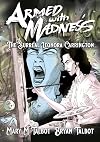
A truly remarkable and beautiful book about a remarkable and beautiful soul.
I have become a bit obsessed with Leonara Carrington since reading The Hearing Trumpet and falling in love with her art and writing, and this absolutely blew me away.
I don't know enough about her life to know how true an account of her life this is, but it makes sense with the things I have come across.
Her life truly was a magical, brutal, heartbreaking gauntlet and this graphic novel captures it and her art show more spectacularly!
I absolutely hated The Last Days of New Paris for using Surrealism without engaging with or understanding it. In contrast, while the narrative is a rather traditional biography, the use of Carrington and others Surrealist Imagery and style to. convey emotion and the strangeness of her life is pretty much perfect!
Genuinely made me incredibly happy and absolutely made me cry. Wonderful stuff! show less
I have become a bit obsessed with Leonara Carrington since reading The Hearing Trumpet and falling in love with her art and writing, and this absolutely blew me away.
I don't know enough about her life to know how true an account of her life this is, but it makes sense with the things I have come across.
Her life truly was a magical, brutal, heartbreaking gauntlet and this graphic novel captures it and her art show more spectacularly!
I absolutely hated The Last Days of New Paris for using Surrealism without engaging with or understanding it. In contrast, while the narrative is a rather traditional biography, the use of Carrington and others Surrealist Imagery and style to. convey emotion and the strangeness of her life is pretty much perfect!
Genuinely made me incredibly happy and absolutely made me cry. Wonderful stuff! show less
Lists
Awards


You May Also Like


Associated Authors
Statistics
- Works
- 10
- Members
- 614
- Popularity
- #40,945
- Rating
- 3.7
- Reviews
- 38
- ISBNs
- 43
- Languages
- 3