
Jan Coates (1)
Author of A Hare in the Elephant's Trunk
For other authors named Jan Coates, see the disambiguation page.
Works by Jan Coates
Tagged
Common Knowledge
There is no Common Knowledge data for this author yet. You can help.
Members
Reviews
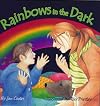
"Rainbows in the Dark" was a very wholesome story about a girl's positive encounter/friendship with a woman that can't see. Abby comes across Joanna in a clothing store with her service dog, Charlie. Abby is very interested in her dog and how she lives her life without eyesight. She helps Joanna pick out fancy clothes for her music recital that she invites Abby and her mom to. I thoroughly enjoyed the figurative language in the book and the consistency of rainbows in the illustrations. The show more book effectively teaches children that people with blindness are just like the average person, and everyone has great talents and lessons to teach. The illustrations are very bright and aesthetically pleasing. The more complex writing and concepts make it suitable for older kids, probably 3rd-5th grade. The point-of-view of Abby helps the readers identify with her curiosity and subsequent findings on people with blindness. show less
In my opinion this is an excellent book and teaches children that nothing, not even a disability, can hold you back from your dreams. The book pushes readers to broaden their perspective on the blind and their capability to succeed. Initially in the story, the main character helps a blind women pick out an outfit. The writing during this portion of the story is very engaging because the main character compares the color of each article of clothing to something. For example, the main show more character says "purple like violets," "dirty snow," "blue and black like the night sky," and "green and purple like peacock feathers." These analogies create a picture in the reader and the blind woman's mind of what the articles of clothing look like. By the end of the book, the main character attends a big concert, only to find that the blind women she helped out in the store is the star, leading to the big idea that nothing can hold you back from achieving your dream. show less
I would give this book three to three and a half stars out of five. I think that the major redeeming quality of the book is that it maintains an authentic child’s perspective and voice throughout. The main character of the story, Abby, often speaks in ways that reflect child-like curiosity and some initial discomfort towards people who are different. For example, when Abby meets, Joanna, and learns that Joanna is blind, she readily and unabashedly asks questions like “how come you’re show more wearing sunglasses?”. I also like that this book portrays authentic childlike reactions as Abby frequently forgets and then quickly remembers that Joanna cannot see. For example, Abby points to her mother and says “that’s my mom over there”, before quickly remembering and stating out loud that “Oh…I guess you can’t see her though.” I also liked that this book showed a person with visual impairments living a productive and happy life. For example, I think it was important that Abby learned that even though Joanna cannot see, she still has an interest in fashion and music, and can be the star of the show. That people with disabilities can have varied interests and passions that they pursue with success is ultimately the “big idea” of this book, and is a positive message for all young readers. My only wish is that in another story, I get to read a story from Joanna’s perspective. show less
In 1983, southern Sudan was thrust into civil war and thousands of boys were displaced. Families and whole villages were destroyed, torn apart, lost forever.
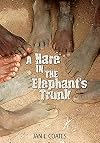
This story is based on the true story of Jacob Deng who was a child of the Sudan. The author, Jan Coates, has masterfully woven fiction around the deeply moving, horrific story of a young child running for his life. Jacob was only seven years old when his village was raided and he barely escaped certain death. Having to leave his mother show more behind, along with everything he knew, he began walking for what turned into many months, and along the way he joined up with hundreds of others – all boys – on the same journey. After crossing a crocodile-infested river the survivors became refugees in another country, but even there they were not safe.
This is such a gripping, well-written story that at times I gasped, aloud said, “oh no!”, and winced at the suffering and struggles those young children endured. Hungry, afraid, and without their parents, they did what they knew to do – stay together, keep walking, keep ahead of the enemy, and somehow survive another day of exposure to the elements and wild animals. This is one of those books that was truly hard to put down – when eating and sleeping seemed a nuisance while reading a story in which both food and sleep were hard to come by for those children.
A Hare in the Elephant’s Trunk is not overly graphic to read, but at the same time it is real. Jan wrote a powerfully descriptive story that pulls the reader into the life and climate of Africa where daily existence is fraught with the challenge simply to survive. And this story is a story of survival and the strength of the human will along with an underlying faith to rise above one’s circumstances.
The amazing gem is that Jan Coates met Jacob Deng here in Nova Scotia, and after talking with him she felt compelled to write his story. The result, A Hare in the Elephant’s Trunk, has gained well deserved attention, now listed as a 2011 finalist for the Governor
General’s Literary Award.
In the back of the book there is an interview Jan had with Joseph Deng. There is even a glossary to which the reader can refer to understand the meaning of some African words, such as abaar, which means orphan, and wadeng – a Dinka word which means look always to tomorrow; it will be better.
This book is an excellent way to learn about the story of the Lost Boys of Sudan. Proceeds from the sale of A Hare in the Elephant’s Trunk are shared with Jacob’s charity Wadeng Wings of Hope, which is another good reason to add this novel to your personal library. show less
This story is based on the true story of Jacob Deng who was a child of the Sudan. The author, Jan Coates, has masterfully woven fiction around the deeply moving, horrific story of a young child running for his life. Jacob was only seven years old when his village was raided and he barely escaped certain death. Having to leave his mother show more behind, along with everything he knew, he began walking for what turned into many months, and along the way he joined up with hundreds of others – all boys – on the same journey. After crossing a crocodile-infested river the survivors became refugees in another country, but even there they were not safe.
This is such a gripping, well-written story that at times I gasped, aloud said, “oh no!”, and winced at the suffering and struggles those young children endured. Hungry, afraid, and without their parents, they did what they knew to do – stay together, keep walking, keep ahead of the enemy, and somehow survive another day of exposure to the elements and wild animals. This is one of those books that was truly hard to put down – when eating and sleeping seemed a nuisance while reading a story in which both food and sleep were hard to come by for those children.
A Hare in the Elephant’s Trunk is not overly graphic to read, but at the same time it is real. Jan wrote a powerfully descriptive story that pulls the reader into the life and climate of Africa where daily existence is fraught with the challenge simply to survive. And this story is a story of survival and the strength of the human will along with an underlying faith to rise above one’s circumstances.
The amazing gem is that Jan Coates met Jacob Deng here in Nova Scotia, and after talking with him she felt compelled to write his story. The result, A Hare in the Elephant’s Trunk, has gained well deserved attention, now listed as a 2011 finalist for the Governor
General’s Literary Award.
In the back of the book there is an interview Jan had with Joseph Deng. There is even a glossary to which the reader can refer to understand the meaning of some African words, such as abaar, which means orphan, and wadeng – a Dinka word which means look always to tomorrow; it will be better.
This book is an excellent way to learn about the story of the Lost Boys of Sudan. Proceeds from the sale of A Hare in the Elephant’s Trunk are shared with Jacob’s charity Wadeng Wings of Hope, which is another good reason to add this novel to your personal library. show less
Awards


Statistics
- Works
- 5
- Members
- 107
- Popularity
- #180,614
- Rating
- 4.7
- Reviews
- 15
- ISBNs
- 30
- Languages
- 1