
Ben Montgomery
Author of Grandma Gatewood's Walk: The Inspiring Story of the Woman Who Saved the Appalachian Trail
About the Author
Ben Montgomery is a staff writer at the Tampa Bay Times and cofounder of the Auburn Chautauqua, a Southern writers' collective. He was a finalist for the Pulitzer Prize in 2010 and has won many other national writing awards. He lives in Florida.
Works by Ben Montgomery
Grandma Gatewood's Walk: The Inspiring Story of the Woman Who Saved the Appalachian Trail (2014) 835 copies, 45 reviews
A Shot in the Moonlight: How a Freed Slave and a Confederate Soldier Fought for Justice in the Jim Crow South (2021) 89 copies, 4 reviews
The Man Who Walked Backward: An American Dreamer's Search for Meaning in the Great Depression (2018) 59 copies, 4 reviews
Grandma Gatewod's Walk 1 copy
The Man Who Walked Backward 1 copy
Tagged
Common Knowledge
- Birthdate
- 1978
- Gender
- male
- Education
- Arkansas Tech University
- Nationality
- USA
- Birthplace
- Tulsa, Oklahoma, USA
- Places of residence
- Tampa, Florida, USA
- Associated Place (for map)
- USA
Members
Reviews
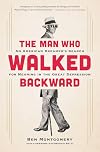
The Man Who Walked Backward: An American Dreamer's Search for Meaning in the Great Depression by Ben Montgomery
BIOGRAPHY/ ADVENTURE
Ben Montgomery
The Man Who Walked Backward: An American Dreamer’s Search for Meaning in the Great Depression
Little, Brown Spark
Hardcover, 978-0-3164-3806-3 (also available as an e-book and an audio-book), 304 pgs., $28.00
September 18, 2018
“Don’t worry. Do something.”
On April 15, 1931, Plennie Wingo, 36, of Abilene, Texas, donned a pin-striped suit, a tie, a fedora, and a pair of sunglasses specially fitted with side rear-view mirrors and set out to traverse the show more world walking backward. Wingo’s café, which fed and housed him and his wife and daughter during the Roaring Twenties, went belly-up as the country plunged into the darkness of what would become known as the Great Depression. Wingo’s arrest for serving alcohol during the folly of Prohibition didn’t help, either.
Wingo claimed to be trying to earn some money to provide for his family and maybe that was originally the impetus, but Wingo carried on with his stunt after none of his attempts to be sponsored — preferably by the Fort Worth Chamber of Commerce in return for global advertising in the form of a sandwich board, then maybe by a shoe manufacturer, then hopefully by a company that made rubber soles for footwear — panned out. Wingo financed his Grand Tour by selling postcards of himself facing backward (but who could discern that from a photograph?). Surprisingly, the postcard sales worked pretty well.
Oh, the places he went and the sights he saw! During his grand adventure, Wingo depended upon the kindness of strangers and was (usually) not disappointed. He walked 2,000 some-odd miles across sixteen states, from Fort Worth to Boston, where he got a berth, in return for his labor, on the Seattle Spirit (which would be torpedoed the very next year by a German submarine) headed for Hamburg, Germany. He ultimately made it as far as Istanbul, Turkey (where he had tea with Queen Maria of Yugoslavia), backward-walking.
Wingo encountered quarrelsome cops, jealous husbands, and “gypsies”; was thrown into not a few jail cells (“Things began to look bleak for Plennie around day seven in the Turkish jail”); and was deloused once. His return from Europe involved an Italian mystery man and a few suspicious trunks of he-claims-not-to-know-what.
Wingo also experienced the best of the species, people of all races and nationalities who became fast friends and provided a meal, a bed, fresh clothes, cash (a crowd of Romanians passed the hat), and, in one instance, an escort to the Czech border by a contingent of lumberjacks, to this peculiar American who inspired them against a backdrop of Al Capone’s soup kitchen, banks collapsing, dusty bowls, plagues of grasshoppers, MacArthur ordering the murder of the children of veterans camped out on the Potomac River, and the rise of something called the Nationalist Socialist Party in Germany.
The Man Who Walked Backward: An American Dreamer’s Search for Meaning in the Great Depression is Pulitzer Prize–nominated journalist Ben Montgomery’s third book of nonfiction and his second book about an unusual pedestrian. The Man Who Walked Backward is a richly textured, elegantly constructed cry against convention in a country which has battled between stultifying convention and “rugged individualism” since its earliest days.
Montgomery’s narrative is quick and even while incorporating asides into the flow. His personality permeates his writing and adds to the experience rather than distracting from it. Montgomery is fondly indulgent of Wingo though not adverse to gently but firmly calling him out on his self-serving justifications and disingenuous rationalizations with a sharp, clear-eyed wit — and a pun or two (no small feat) — when deemed necessary.
Fun fact: if you walk backward far enough, your legs appear as if your calves (“like ripe grapefruit”) have migrated to your shins. Imagine.
Another fun fact: “Walking backward around the world” in German is “Rückwärts rund um die welt.”
Montgomery has a gift for the well-turned phrase and for succinctly capturing the character of historical events and periods and how those events affect the character of individuals. Of the 1920s, Montgomery writes, “What followed [World War I] was optimism, and mass production, and the mass production of optimism.” The introduction of radio into homes birthed “a controversial new offense on family circles called a ‘commercial.’”
The author’s use of language is a joy. Environmental devastation caused by certain farming and mining practices leaves a debilitated landscape and human suffering as “a reminder of the toll of the taking.” That’s my new favorite phrase, the toll of the taking. Crossing the Atlantic, one of Wingo’s jobs was to squeegee the cabins but he was profoundly seasick and so his vomiting “erased considerably his squeegee productivity.” A disgusting image but a hilarious phrase followed by touching emotion: Wingo comes to a fork in the road in a Bavarian forest. The snowfall had finally stopped and sunlight was filtering through the dense branches causing the snow to sparkle. “[Wingo] stood for a long time, watching, listening, his breath visible, the full moon rising over the woods,” Montgomery writes. “[Wingo] had walked at least twelve miles in the wrong direction. He was happy to be lost.”
The epilogue is a neat compilation of updates on people and situations mentioned as context throughout The Man Who Walked Backward. Capone died from a heart attack in his mansion in Florida in 1947. Native Americans “refused to vanish, despite attempts to brainwash tens of thousands of Indian children in boot-camp boarding schools” and built casinos which finally recouped some of the money owed them by Anglos for stolen land. Americans raised a glass to the death of Prohibition. FDR refused to allow Charles Lindbergh to enlist in the army on account of Lindbergh being a Nazi.
And Plennie Wingo? It’s 1976 and he’s on “The Tonight Show” with Johnny Carson. Wingo’s world record for distance stands.
Narrative nonfiction is a form which allows for a broader picture of the subject, not just a portrait but a landscape showing where the subject fits in time and place, the influences of circumstances both large and small. An intriguing mix of biography and history, seasoned with dashes of science, sociology, and psychology, leavened with Montgomery’s sly wit, The Man Who Walked Backward is the best sort of narrative nonfiction, using the micro of Plennie Wingo’s journey to tell us something about the macro state of us in the 1930s. Indeed, in our love of spectacle and self-promotion, which has culminated in the election of a walking spectacle as president, we haven’t changed much.
“A man had come, and he would be remembered, and what more could he ask?”
Originally published in Lone Star Literary Life. show less
Ben Montgomery
The Man Who Walked Backward: An American Dreamer’s Search for Meaning in the Great Depression
Little, Brown Spark
Hardcover, 978-0-3164-3806-3 (also available as an e-book and an audio-book), 304 pgs., $28.00
September 18, 2018
“Don’t worry. Do something.”
On April 15, 1931, Plennie Wingo, 36, of Abilene, Texas, donned a pin-striped suit, a tie, a fedora, and a pair of sunglasses specially fitted with side rear-view mirrors and set out to traverse the show more world walking backward. Wingo’s café, which fed and housed him and his wife and daughter during the Roaring Twenties, went belly-up as the country plunged into the darkness of what would become known as the Great Depression. Wingo’s arrest for serving alcohol during the folly of Prohibition didn’t help, either.
Wingo claimed to be trying to earn some money to provide for his family and maybe that was originally the impetus, but Wingo carried on with his stunt after none of his attempts to be sponsored — preferably by the Fort Worth Chamber of Commerce in return for global advertising in the form of a sandwich board, then maybe by a shoe manufacturer, then hopefully by a company that made rubber soles for footwear — panned out. Wingo financed his Grand Tour by selling postcards of himself facing backward (but who could discern that from a photograph?). Surprisingly, the postcard sales worked pretty well.
Oh, the places he went and the sights he saw! During his grand adventure, Wingo depended upon the kindness of strangers and was (usually) not disappointed. He walked 2,000 some-odd miles across sixteen states, from Fort Worth to Boston, where he got a berth, in return for his labor, on the Seattle Spirit (which would be torpedoed the very next year by a German submarine) headed for Hamburg, Germany. He ultimately made it as far as Istanbul, Turkey (where he had tea with Queen Maria of Yugoslavia), backward-walking.
Wingo encountered quarrelsome cops, jealous husbands, and “gypsies”; was thrown into not a few jail cells (“Things began to look bleak for Plennie around day seven in the Turkish jail”); and was deloused once. His return from Europe involved an Italian mystery man and a few suspicious trunks of he-claims-not-to-know-what.
Wingo also experienced the best of the species, people of all races and nationalities who became fast friends and provided a meal, a bed, fresh clothes, cash (a crowd of Romanians passed the hat), and, in one instance, an escort to the Czech border by a contingent of lumberjacks, to this peculiar American who inspired them against a backdrop of Al Capone’s soup kitchen, banks collapsing, dusty bowls, plagues of grasshoppers, MacArthur ordering the murder of the children of veterans camped out on the Potomac River, and the rise of something called the Nationalist Socialist Party in Germany.
The Man Who Walked Backward: An American Dreamer’s Search for Meaning in the Great Depression is Pulitzer Prize–nominated journalist Ben Montgomery’s third book of nonfiction and his second book about an unusual pedestrian. The Man Who Walked Backward is a richly textured, elegantly constructed cry against convention in a country which has battled between stultifying convention and “rugged individualism” since its earliest days.
Montgomery’s narrative is quick and even while incorporating asides into the flow. His personality permeates his writing and adds to the experience rather than distracting from it. Montgomery is fondly indulgent of Wingo though not adverse to gently but firmly calling him out on his self-serving justifications and disingenuous rationalizations with a sharp, clear-eyed wit — and a pun or two (no small feat) — when deemed necessary.
Fun fact: if you walk backward far enough, your legs appear as if your calves (“like ripe grapefruit”) have migrated to your shins. Imagine.
Another fun fact: “Walking backward around the world” in German is “Rückwärts rund um die welt.”
Montgomery has a gift for the well-turned phrase and for succinctly capturing the character of historical events and periods and how those events affect the character of individuals. Of the 1920s, Montgomery writes, “What followed [World War I] was optimism, and mass production, and the mass production of optimism.” The introduction of radio into homes birthed “a controversial new offense on family circles called a ‘commercial.’”
The author’s use of language is a joy. Environmental devastation caused by certain farming and mining practices leaves a debilitated landscape and human suffering as “a reminder of the toll of the taking.” That’s my new favorite phrase, the toll of the taking. Crossing the Atlantic, one of Wingo’s jobs was to squeegee the cabins but he was profoundly seasick and so his vomiting “erased considerably his squeegee productivity.” A disgusting image but a hilarious phrase followed by touching emotion: Wingo comes to a fork in the road in a Bavarian forest. The snowfall had finally stopped and sunlight was filtering through the dense branches causing the snow to sparkle. “[Wingo] stood for a long time, watching, listening, his breath visible, the full moon rising over the woods,” Montgomery writes. “[Wingo] had walked at least twelve miles in the wrong direction. He was happy to be lost.”
The epilogue is a neat compilation of updates on people and situations mentioned as context throughout The Man Who Walked Backward. Capone died from a heart attack in his mansion in Florida in 1947. Native Americans “refused to vanish, despite attempts to brainwash tens of thousands of Indian children in boot-camp boarding schools” and built casinos which finally recouped some of the money owed them by Anglos for stolen land. Americans raised a glass to the death of Prohibition. FDR refused to allow Charles Lindbergh to enlist in the army on account of Lindbergh being a Nazi.
And Plennie Wingo? It’s 1976 and he’s on “The Tonight Show” with Johnny Carson. Wingo’s world record for distance stands.
Narrative nonfiction is a form which allows for a broader picture of the subject, not just a portrait but a landscape showing where the subject fits in time and place, the influences of circumstances both large and small. An intriguing mix of biography and history, seasoned with dashes of science, sociology, and psychology, leavened with Montgomery’s sly wit, The Man Who Walked Backward is the best sort of narrative nonfiction, using the micro of Plennie Wingo’s journey to tell us something about the macro state of us in the 1930s. Indeed, in our love of spectacle and self-promotion, which has culminated in the election of a walking spectacle as president, we haven’t changed much.
“A man had come, and he would be remembered, and what more could he ask?”
Originally published in Lone Star Literary Life. show less
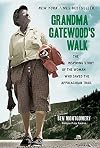
Grandma Gatewood's Walk: The Inspiring Story of the Woman Who Saved the Appalachian Trail by Ben Montgomery
How did I grow so old without knowing about Emma Gatewood and her epic walks? My own brother did survey work on the Appalachian Trail in the 1970s, as portions of the trail in Maine were being rehabilitated or relocated for better access and ease of maintenance. That project came about partly as a result of Grandma Gatewood's three--count 'em--three hikes of the full 2000+ miles of that trail which stretches between Georgia and Mount Katahdin in Maine, after she qualified for Social show more Security. I've been to Hocking Hills State Park in Ohio, where this phenomenal woman guided WINTER tours in her late 70s from Old Man's Cave to Ash Cave on a trail now named for her. Her name must have crossed my consciousness somehow, but it never sparked my curiosity until recently, and I don't even know how she came to my attention finally. I just know Ben Montgomery's book about his great-great-aunt Emma has been on my wishlist for a year or so, and I dropped it into the basket last month. It's a grand read, not only giving us a portrait of a woman tougher than shoe leather (or canvas & rubber soled sneakers), but setting her life and adventures into excellent socio-historical context. It did not inspire me to want to hike the AT...but it did remind me of why I love a quiet afternoon alone in less challenging natural surroundings. show less
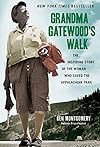
Grandma Gatewood's Walk: The Inspiring Story of the Woman Who Saved the Appalachian Trail by Ben Montgomery
Although it seems wholly inadequate, the only word I can think of to describe this book -- and this woman -- is "WOW!"
Author Ben Montgomery tells the story of Emma "Grandma" Gatewood, the first woman to ever through hike the 2,050 Appalachian Trail in 1957 at the age of 67. She then became the first person -- male or female -- to hike the trail two, and then three times. She was first inspired to hike the trail while reading about it in an article in National Geographic magazine. The article show more claimed that any person in reasonable health should be able to hike the trail and wouldn't need any special equipment. (This was in a time when even those who created the trail didn't imagine that anyone would hike it all the way through. It was intended for day or weekend hikes). Emma hiked it with a hand-sewn back satchel which carried only the essentials (omitting a tent) and went through numerous pairs of flimsy shoes in her journey.
Using her journals, newspaper articles, letters, and interviews with children and others who knew her as sources, Montgomery gives us a picture of this extraordinary woman. He not only brings readers along on Emma's journey, but also tries to discover her motivation for making such a quest.
Emma spent her married life on a farm in southern Ohio, which had much more in common with Appalachian West Virginia than the rust belt cities of the northern part of the state. Her married life was miserable. Her husband was mercilessly abusive, and the author implies that at least some of her 11 children were conceived via instances of marital rape. In that era and in that place, a husband's word was gospel, and after one particularly bad fight although Emma was left with a bludgeoned face, 4 broken teeth, and broken ribs, the local sheriff came and arrested *her* because her husband, with hardly a scratch, claimed Emma was being uncooperative.
Decades after being in a horrible marriage Emma finally divorced her husband. Once her children were finally grown she was ready to live life on her terms. All she told her children was that she was going for a walk, and that's all they heard from her until she had walked more than 800 miles of the Appalachian Trail.
Emma had much to say about the "lazy" attitudes of people of her day. Those who would rather jump in the car than walk a few blocks to run an errand (and this was in the 50s and 60s -- God only knows what she'd have to say today!) She also had a deep reverence for the outdoors . Although she's not a household name today, she gained quite a bit a fame during her journey, and as a result of her hike she brought much-needed attention to the inadequacies of the Appalachian Trail as it was in her day -- from poorly maintained trails, to missing blazes, to falling-down shelters.
Even after her Appalachian Trail hikes, Emma continued making long-distances walks throughout the rest of her life, including walking the 2,000 mile Oregon trail among others.
If you're looking to be inspired, or for a reminder that age is just a number, look no further than this book.
5 enthusiastic stars. show less
Author Ben Montgomery tells the story of Emma "Grandma" Gatewood, the first woman to ever through hike the 2,050 Appalachian Trail in 1957 at the age of 67. She then became the first person -- male or female -- to hike the trail two, and then three times. She was first inspired to hike the trail while reading about it in an article in National Geographic magazine. The article show more claimed that any person in reasonable health should be able to hike the trail and wouldn't need any special equipment. (This was in a time when even those who created the trail didn't imagine that anyone would hike it all the way through. It was intended for day or weekend hikes). Emma hiked it with a hand-sewn back satchel which carried only the essentials (omitting a tent) and went through numerous pairs of flimsy shoes in her journey.
Using her journals, newspaper articles, letters, and interviews with children and others who knew her as sources, Montgomery gives us a picture of this extraordinary woman. He not only brings readers along on Emma's journey, but also tries to discover her motivation for making such a quest.
Emma spent her married life on a farm in southern Ohio, which had much more in common with Appalachian West Virginia than the rust belt cities of the northern part of the state. Her married life was miserable. Her husband was mercilessly abusive, and the author implies that at least some of her 11 children were conceived via instances of marital rape. In that era and in that place, a husband's word was gospel, and after one particularly bad fight although Emma was left with a bludgeoned face, 4 broken teeth, and broken ribs, the local sheriff came and arrested *her* because her husband, with hardly a scratch, claimed Emma was being uncooperative.
Decades after being in a horrible marriage Emma finally divorced her husband. Once her children were finally grown she was ready to live life on her terms. All she told her children was that she was going for a walk, and that's all they heard from her until she had walked more than 800 miles of the Appalachian Trail.
Emma had much to say about the "lazy" attitudes of people of her day. Those who would rather jump in the car than walk a few blocks to run an errand (and this was in the 50s and 60s -- God only knows what she'd have to say today!) She also had a deep reverence for the outdoors . Although she's not a household name today, she gained quite a bit a fame during her journey, and as a result of her hike she brought much-needed attention to the inadequacies of the Appalachian Trail as it was in her day -- from poorly maintained trails, to missing blazes, to falling-down shelters.
Even after her Appalachian Trail hikes, Emma continued making long-distances walks throughout the rest of her life, including walking the 2,000 mile Oregon trail among others.
If you're looking to be inspired, or for a reminder that age is just a number, look no further than this book.
5 enthusiastic stars. show less
Grandma Gatewood's Walk: The Inspiring Story of the Woman Who Saved the Appalachian Trail by Ben Montgomery
Emma Gatewood decides it’s time to start her bucket list and sets off to hike the Appalachian Trail. Mother of 11, grandmother to 23, and 67 years of age. Telling those left behind she was merely “going for a walk” she implements her years of farming, living off the multiple elements of the land, and basic survival skills, she packs a small sack and begins.
The year was 1955.
This was not your current AP of frequent shelters, food sources, or even fellow hikers. Days alone, sleeping in show more the wild, battling the elements and wildlife, she was a tenacious reckoning of savvy chutzpah. A small journal was mostly her only source of conversation, albeit one-sided.
Her amazing journey was inspirational in so many ways. A testament to female endurance, acceptance and overcoming pain, thrift and common sense. That she did all this with the bare minimals even further extols her superhuman traits.
The few people she conversed with on the trail, the sights, the perils, the wonder, kept briefly in her journal and shared in snippets in this book. Very much the minimalist, even her thoughts were only as needed.
Once she completes the first trek, the accolades pour in and her celebrity begins. On her second thru-hike, she is often recognized and given better hospitality and occasional “Trail magic” but she mostly shuns the hubris and goes about her way.
Add in the Oregon Trail and a 3rd A.T. hike( albeit sectional, this go) not to mention trails she instrumentally creates in Hocking Hills, Ohio (of which I hope to enjoy soon) and we have one awesome woman who sets the marker for just about anyone.
Backstory of her abuse at the hands of her then husband gives an inkling to where her perseverance originated. A loving, teaching mother, her children also grew up with her knowledge of nature and love if the outdoors.
As much a historical take of the time, creation of the Trail, and anthropological look at the denizens along the way, it’s a fascinating read in just so many ways. The first of so much we take for granted daily: paved roads, TV’s, cell phones, indoor facilities, not that long in our norm. It makes us aware of how pantywaisted we are today.
I hope they make a movie about her soon. If Bill Bryson has one for 1/3, she sure need one for 3 times. show less
The year was 1955.
This was not your current AP of frequent shelters, food sources, or even fellow hikers. Days alone, sleeping in show more the wild, battling the elements and wildlife, she was a tenacious reckoning of savvy chutzpah. A small journal was mostly her only source of conversation, albeit one-sided.
Her amazing journey was inspirational in so many ways. A testament to female endurance, acceptance and overcoming pain, thrift and common sense. That she did all this with the bare minimals even further extols her superhuman traits.
The few people she conversed with on the trail, the sights, the perils, the wonder, kept briefly in her journal and shared in snippets in this book. Very much the minimalist, even her thoughts were only as needed.
Once she completes the first trek, the accolades pour in and her celebrity begins. On her second thru-hike, she is often recognized and given better hospitality and occasional “Trail magic” but she mostly shuns the hubris and goes about her way.
Add in the Oregon Trail and a 3rd A.T. hike( albeit sectional, this go) not to mention trails she instrumentally creates in Hocking Hills, Ohio (of which I hope to enjoy soon) and we have one awesome woman who sets the marker for just about anyone.
Backstory of her abuse at the hands of her then husband gives an inkling to where her perseverance originated. A loving, teaching mother, her children also grew up with her knowledge of nature and love if the outdoors.
As much a historical take of the time, creation of the Trail, and anthropological look at the denizens along the way, it’s a fascinating read in just so many ways. The first of so much we take for granted daily: paved roads, TV’s, cell phones, indoor facilities, not that long in our norm. It makes us aware of how pantywaisted we are today.
I hope they make a movie about her soon. If Bill Bryson has one for 1/3, she sure need one for 3 times. show less
Lists
Awards


You May Also Like


Statistics
- Works
- 7
- Members
- 1,015
- Popularity
- #25,389
- Rating
- 4.0
- Reviews
- 55
- ISBNs
- 36
- Favorited
- 1