
Atsushi Nakajima (1909–1942)
Author of The Moon over the Mountain
About the Author
Disambiguation Notice:
Nakajima is the author's family name.
Works by Atsushi Nakajima
Light, wind, and dreams: An interpretation of the life and mind of Robert Louis Stevenson (1962) 6 copies
Associated Works
Three-Dimensional Reading: Stories of Time and Space in Japanese Modernist Fiction, 1911-1932 (2013) — Contributor — 11 copies
Takashi Saitō's I Can Read It In One Go! Selection of Masterpieces - Middle School (2006) — Contributor — 2 copies
中島敦展―魅せられた旅人の短い生涯 — Contributor — 1 copy
Tagged
Common Knowledge
- Canonical name
- Nakajima, Atsushi
- Birthdate
- 1909-05-05
- Date of death
- 1942-12-04
- Gender
- male
- Education
- 東京帝国大学国文科
- Nationality
- Japan
- Birthplace
- Tokyo, Japan
- Map Location
- Japan
- Disambiguation notice
- Nakajima is the author's family name.
- Associated Place (for map)
- Tokyo, Japan
Members
Reviews

This is the story of Li Zheng of Longxi, a young civil servant who quits service because he feels he has more to offer the world as a poet. He never becomes famous, however, and eventually leaves his wife, children, and everything else behind, disappearing. Later, his old friend, government inspector Yuan Can of Chenjun, encounters a beast that almost attacks him but races away at the last second. Then Yuan Can hears the voice of his old friend, who tells him that he has become a terrifying show more beast, a tiger. He had Yuan Can record some of his poetry and asks him to tell his wife and children that he is dead, and to care for them in some way. He admits that his combination of narcissism, fear of failure, and lack of desire to put in strenuous work is what has transformed him into a beast.
This felt very didactic, like reading something out of Der Struwwelpeter. That said, I know absolutely nothing about this story and its author beyond what's presented here, so maybe I'm missing something. It seems pretty simple and sorrowful. Li Zheng was a bit of a dick, and it took turning into a tiger for him to realize it.
As is the case with many of the works in the Maiden's Bookshelf series, the illustrations were this work's primary appeal for me. They were gorgeous, even though they hardly matched the text at all - lots of androgynous youths with tigers, cats, and cat-eared people.
Now I know where Bungo Stray Dogs' Atsushi got his tiger transformation powers from...
(Original review posted on A Library Girl's Familiar Diversions.) show less
This felt very didactic, like reading something out of Der Struwwelpeter. That said, I know absolutely nothing about this story and its author beyond what's presented here, so maybe I'm missing something. It seems pretty simple and sorrowful. Li Zheng was a bit of a dick, and it took turning into a tiger for him to realize it.
As is the case with many of the works in the Maiden's Bookshelf series, the illustrations were this work's primary appeal for me. They were gorgeous, even though they hardly matched the text at all - lots of androgynous youths with tigers, cats, and cat-eared people.
Now I know where Bungo Stray Dogs' Atsushi got his tiger transformation powers from...
(Original review posted on A Library Girl's Familiar Diversions.) show less
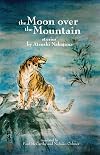
The art is amazing. I loved it so much. I enjoyed the story as well, but I expected it to be a little creepier and disturbing after the first book. Still, this is a great adaption of a classic story that's still possible to enjoy today, and this version makes it much more palatable.
The publication of The Moon Over the Mountain and Other Stories by Autumn Hill Books in 2011 was the first time that any of Atsushi Nakajima's works were made available in English. My introduction to Nakajima was through his short story "Sandy's Lament" which was included in the first issue of the English-language edition of the Japanese literary journal Monkey Business, also in 2011. The story was probably my favorite piece in the entire volume and so I immediately sought out The Moon Over show more the Mountain, translated by Paul McCarthy and Nobuko Ochner as part of the Japanese Literature Publishing Project. Nakajima made his literary debut in 1934. Unfortunately, he died in 1942 at the age of 33, just as his writing career was beginning to take off. Before his death, Nakajima produced many works, mostly short stories and novellas, which are frequently included in anthologies in Japan. Even now, Nakajima continues to have a small but devoted fanbase in which I am happy to include myself as a member.
The Moon Over the Mountain and Other Stories collects six of Nakajima's short works as well as an excellent afterword by the translators about Nakajima, the context of his writings, and his place in Japanese literary history. The volume begins with the titular story and one of Nakajima's most well known works, "The Moon Over the Mountain," in which an aspiring poet turns into a tiger instead. This is followed by three more short stories. In "The Master" a man strives to become the world's greatest archer. "The Bull Man" is a clever but ugly illegitimate son of a government official. Men coveting a beautiful woman in "Forebodings" bring about their own downfall. Next is the novella "The Disciple" which follows the life of Zilu, a famous disciple of Confucius. "The Rebirth of Wujing" features the eponymous Wujing searching for the meaning of existence before he joins the monk Tripitaka on his journey westward. This is followed by another short story, "Waxing and Waning," about political unrest in the state of Wei. The misfortunes of the Han Dynasty cavalry commander Li Ling and the historian who chronicles the events are the focus of the novella "Li Ling." Finally, the book closes with "On Admiration: Notes by the Monk Wujing." (This actually happens to be a different translation of the story "Sandy's Lament.")
Nakajima was a scholar and teacher of Chinese classics. Their influence on his works collected in The Moon Over the Mountain and Other Stories is readily apparent. All of the stories take place in ancient China and are based on Chinese mythologies, legends, philosophies, and histories. Some of the immediate inspiration in The Moon Over the Mountain collection is taken from such works as the Analects of Confucius, Records of the Grand Historian, and the ever popular The Journey to the West among others. Nakajima respects his source material, even adopting a style similar to the originals. While he may use and combine several different texts in the creation of a single story, the heart of the tales remain mostly unchanged. Classic Chinese literature has always been an important component in the development of Japanese literature and Nakajima builds on that tradition.
I absolutely loved The Moon Over the Mountain and Other Stories. Nakajima's writing has an elegance to it as well as a subtle sense of humor that is easy to overlook. Although a reader who is already versed in the Chinese classics from which Nakajima draws may be at a slight advantage and will be able to appreciate his stories on multiple levels, it is not at all necessary to have read the source material to enjoy Nakajima's interpretations. I did find the order of the stories in The Moon Over the Mountain to be a little odd. Personally, I would have kept stories featuring the same characters together rather tan splitting them up. Granted, each of Nakajima's short works stands very well on its own. It is probably safe to say that it is unlikely that much more of Nakajima's work will be translated into English; I am incredibly happy to at least have The Moon Over the Mountain and Other Stories available.
Experiments in Manga show less
The Moon Over the Mountain and Other Stories collects six of Nakajima's short works as well as an excellent afterword by the translators about Nakajima, the context of his writings, and his place in Japanese literary history. The volume begins with the titular story and one of Nakajima's most well known works, "The Moon Over the Mountain," in which an aspiring poet turns into a tiger instead. This is followed by three more short stories. In "The Master" a man strives to become the world's greatest archer. "The Bull Man" is a clever but ugly illegitimate son of a government official. Men coveting a beautiful woman in "Forebodings" bring about their own downfall. Next is the novella "The Disciple" which follows the life of Zilu, a famous disciple of Confucius. "The Rebirth of Wujing" features the eponymous Wujing searching for the meaning of existence before he joins the monk Tripitaka on his journey westward. This is followed by another short story, "Waxing and Waning," about political unrest in the state of Wei. The misfortunes of the Han Dynasty cavalry commander Li Ling and the historian who chronicles the events are the focus of the novella "Li Ling." Finally, the book closes with "On Admiration: Notes by the Monk Wujing." (This actually happens to be a different translation of the story "Sandy's Lament.")
Nakajima was a scholar and teacher of Chinese classics. Their influence on his works collected in The Moon Over the Mountain and Other Stories is readily apparent. All of the stories take place in ancient China and are based on Chinese mythologies, legends, philosophies, and histories. Some of the immediate inspiration in The Moon Over the Mountain collection is taken from such works as the Analects of Confucius, Records of the Grand Historian, and the ever popular The Journey to the West among others. Nakajima respects his source material, even adopting a style similar to the originals. While he may use and combine several different texts in the creation of a single story, the heart of the tales remain mostly unchanged. Classic Chinese literature has always been an important component in the development of Japanese literature and Nakajima builds on that tradition.
I absolutely loved The Moon Over the Mountain and Other Stories. Nakajima's writing has an elegance to it as well as a subtle sense of humor that is easy to overlook. Although a reader who is already versed in the Chinese classics from which Nakajima draws may be at a slight advantage and will be able to appreciate his stories on multiple levels, it is not at all necessary to have read the source material to enjoy Nakajima's interpretations. I did find the order of the stories in The Moon Over the Mountain to be a little odd. Personally, I would have kept stories featuring the same characters together rather tan splitting them up. Granted, each of Nakajima's short works stands very well on its own. It is probably safe to say that it is unlikely that much more of Nakajima's work will be translated into English; I am incredibly happy to at least have The Moon Over the Mountain and Other Stories available.
Experiments in Manga show less
You May Also Like
Associated Authors
Statistics
- Works
- 35
- Also by
- 8
- Members
- 175
- Popularity
- #122,546
- Rating
- 4.0
- Reviews
- 5
- ISBNs
- 29
- Languages
- 5
- Favorited
- 1