
Debbie Nathan
Author of Sybil Exposed: The Extraordinary Story Behind the Famous Multiple Personality Case
Works by Debbie Nathan
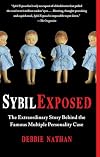
Sybil Exposed: The Extraordinary Story Behind the Famous Multiple Personality Case (2011) 435 copies, 31 reviews
Satan's Silence: Ritual Abuse and the Making of a Modern American Witch Hunt (1995) 150 copies, 1 review
Associated Works
The Late Great Mexican Border: Reports from a Disappearing Line (1996) — Contributor — 26 copies, 1 review
Tagged
Common Knowledge
- Canonical name
- Nathan, Debbie
- Birthdate
- 1950
- Gender
- female
- Education
- Shimer College
Temple University
University of Texas - Short biography
- Debbie Nathan (b. 1950) is an award-winning American feminist journalist and author. She is known for her work in dismantling popular myths such as satanic ritual abuse, and for her coverage of criminal justice and immigration issues. Her books include Satan's Silence (2001), Pornography (2007), and Sybil Exposed (2011). Nathan received her undergraduate education at Shimer College and Temple University, and holds a master's degree from the University of Texas. She is a board member of the National Center for Reason and Justice. (from Shimer College Wiki)
- Nationality
- USA
- Associated Place (for map)
- USA
Members
Reviews

Debbie Nathan, the very fine journalist who wrote Satan's Silence (with Nathan Snedeker), neatly eviscerates the Sybil myth. And yes, it is a myth.
Although I'll confess to being surprised that there are still people who believe that Sybil was non-fiction, such people apparently do still exist, and they should read this book. I can't guarantee that cognitive dissonance won't prevail (it usually does, thus explaining the continuing belief in stuff like supply-side economics and multiple show more personality disorder), but Nathan convincingly demonstrates that the story -- dreamed up, more or less, by poor "Sibyl"'s arrogant and grandiose psychiatrist Cornelia Wilbur -- was a load of rubbish from start to finish. Sybil, whose real name was Shirley Ann Mason, was indeed a very sick woman, but her woes weren't caused by Multiple Personality Disorder, which doesn't exist except in the minds of the very credulous. Instead, they were caused partly by pernicious anemia, partly by gaps in the knowledge of various medical professionals, and partly (probably mostly) by, you guessed it, Dr. Wilbur.
Although she certainly doesn't let Wilbur off the hook, Nathan can't, and doesn't, hold Wilbur entirely responsible for the mess Sybil made. She's also critical of much of the psychological establishment, which wholeheartedly embraced MPD and its successor-in-fact, the recovered memory hypothesis. And and as she did in Satan's Silence, Nathan also posits reasons that Sybil so captured the public imagination -- namely, the rise of feminism and changing expectations for women, which often left them feeling confused and ambivalent about their place in their own lives and their role in society. What better symbol than Sybil, a woman who was said to literally have 16 different selves, each one wholly unlike the other?
As usual for Nathan, she's given readers a well-balanced (which is not the same thing as "objective," btw) and well-written book.
(A side note: Some time ago, I suppose about six or seven years now, I wrote a Goodreads review of Sybil where noted, more or less in passing, that the book was fiction; I thought by then it was pretty well known that the story was more or less made up. But no: some lady left me a comment calling me an "arrogant cow" and noting, unsurprisingly, that she herself had 24 personalities or whatever. I took issue with the remark -- I am not a cow -- and deleted it, but now I rather wish I hadn't because in retrospect it was pretty funny. That'll learn me.) show less
Although I'll confess to being surprised that there are still people who believe that Sybil was non-fiction, such people apparently do still exist, and they should read this book. I can't guarantee that cognitive dissonance won't prevail (it usually does, thus explaining the continuing belief in stuff like supply-side economics and multiple show more personality disorder), but Nathan convincingly demonstrates that the story -- dreamed up, more or less, by poor "Sibyl"'s arrogant and grandiose psychiatrist Cornelia Wilbur -- was a load of rubbish from start to finish. Sybil, whose real name was Shirley Ann Mason, was indeed a very sick woman, but her woes weren't caused by Multiple Personality Disorder, which doesn't exist except in the minds of the very credulous. Instead, they were caused partly by pernicious anemia, partly by gaps in the knowledge of various medical professionals, and partly (probably mostly) by, you guessed it, Dr. Wilbur.
Although she certainly doesn't let Wilbur off the hook, Nathan can't, and doesn't, hold Wilbur entirely responsible for the mess Sybil made. She's also critical of much of the psychological establishment, which wholeheartedly embraced MPD and its successor-in-fact, the recovered memory hypothesis. And and as she did in Satan's Silence, Nathan also posits reasons that Sybil so captured the public imagination -- namely, the rise of feminism and changing expectations for women, which often left them feeling confused and ambivalent about their place in their own lives and their role in society. What better symbol than Sybil, a woman who was said to literally have 16 different selves, each one wholly unlike the other?
As usual for Nathan, she's given readers a well-balanced (which is not the same thing as "objective," btw) and well-written book.
(A side note: Some time ago, I suppose about six or seven years now, I wrote a Goodreads review of Sybil where noted, more or less in passing, that the book was fiction; I thought by then it was pretty well known that the story was more or less made up. But no: some lady left me a comment calling me an "arrogant cow" and noting, unsurprisingly, that she herself had 24 personalities or whatever. I took issue with the remark -- I am not a cow -- and deleted it, but now I rather wish I hadn't because in retrospect it was pretty funny. That'll learn me.) show less
Man, this book is controversial, perhaps because of the subject matter? Although it's kind of shocking to me to read the reviews, since I came of age in a time where no one really believed in multiple personality disorder the way that it was portrayed in the Sybil case. When we learned about it as an example of the fallibility of memory it seemed intuitively true to me that while we all have different facets of identity, no one is truly multiple people. Additionally, Nathan has clearly show more researched the heck out of this topic -- nearly every sentence she writes directly cites the personal written records of one of the protagonists.
But why is multiple personality disorder something that speaks to so many people? I think it's because of the way that feeling fragmented into multiple parts of self is such a core part of the human experience, while the myth of the continuity of a single self still dominates the human narrative. For instance, rushing from work, I summarized my day to my husband and we both noticed at the same time that in clinic, I am calm and collected in a crisis, while only minutes later, in a different context: late to daycare, I easily become anxious and struggle to quickly make a plan. I think the story of Sybil speaks to that.
And I think the story behind the story of Sybil speaks to so much else: the way in which psychologic manifestations and the perception of self is contagious; the way in which uncertainty about gender roles can subconsciously be subverted into ways to get women back out of the work place (first post-WWII with MPD, a very neat analogy for the way women were torn between the work place and home, but also, as it hit epidemic levels, a way to get women back out of the workforce; and later, during the recession of the 80's with the satanic panic vilifying daycare); the way in which things that we take for granted, like a scientific approach to medicine and professional ethics, had to evolve and belong to a place and a time.
And honestly, that's really what this story is about: that things that seem "normal" and perpetual to us belong to a place and a time. Nathan makes the point that MPD, a disease of middle class white women during the 50's-70's belongs in the back of the DSM with the other "exotic" disorders that only occur in cultural contexts. So does the psychiatry of Dr. Wilbur's age -- giving the patient excessive amounts of barbiturates, amphetamines and other psychoactive drugs, then hypnotizing them -- clearly barbaric to our eyes. But Nathan treats her very sympathetically, making it clear that Dr. Wilbur pioneered a field, enjoyed all of the professional accolades of the time and did scholarly work. The point is not character assassination, but rather to cause us to question what modern precepts only exist within our cultural context. I found it very interesting reading. show less
But why is multiple personality disorder something that speaks to so many people? I think it's because of the way that feeling fragmented into multiple parts of self is such a core part of the human experience, while the myth of the continuity of a single self still dominates the human narrative. For instance, rushing from work, I summarized my day to my husband and we both noticed at the same time that in clinic, I am calm and collected in a crisis, while only minutes later, in a different context: late to daycare, I easily become anxious and struggle to quickly make a plan. I think the story of Sybil speaks to that.
And I think the story behind the story of Sybil speaks to so much else: the way in which psychologic manifestations and the perception of self is contagious; the way in which uncertainty about gender roles can subconsciously be subverted into ways to get women back out of the work place (first post-WWII with MPD, a very neat analogy for the way women were torn between the work place and home, but also, as it hit epidemic levels, a way to get women back out of the workforce; and later, during the recession of the 80's with the satanic panic vilifying daycare); the way in which things that we take for granted, like a scientific approach to medicine and professional ethics, had to evolve and belong to a place and a time.
And honestly, that's really what this story is about: that things that seem "normal" and perpetual to us belong to a place and a time. Nathan makes the point that MPD, a disease of middle class white women during the 50's-70's belongs in the back of the DSM with the other "exotic" disorders that only occur in cultural contexts. So does the psychiatry of Dr. Wilbur's age -- giving the patient excessive amounts of barbiturates, amphetamines and other psychoactive drugs, then hypnotizing them -- clearly barbaric to our eyes. But Nathan treats her very sympathetically, making it clear that Dr. Wilbur pioneered a field, enjoyed all of the professional accolades of the time and did scholarly work. The point is not character assassination, but rather to cause us to question what modern precepts only exist within our cultural context. I found it very interesting reading. show less
I won this as part of a Goodreads First Reads giveaway, but that has in no way influenced my review.
This was a wonderful book. The amount of research Debbie Nathan put into her book is staggering. I can't help but shake my head at how Shirley a.k.a. Sybil, Dr. Wilbur and Flora managed to pull the wool over everyone's eyes with the story. Shirley may have been mentally ill, but I certainly don't believe she was a multiple. I believe Dr. Wilbur wanted her fame and recognition in this field as show more a psychiatrist so she latched onto Shirley and ran with her problems. She drugged and manipulated the woman and took advantage of Shirley's loneliness and attachment to her. Then together, they roped Flora into writing Sybil. Flora had her doubts, but she too wanted her fame and recognition, and she was conned with the fake diary that Shirley and Dr. Wilbur gave her. These three women all needed something: Shirley needed attention from Dr. Wilbur, Dr. Wilbur, as a woman, needed recognition as a woman in her field of psychiatry, and Flora needed fame and riches from a bestseller. They kept this lie under wraps and deceived the world and the disservice that Dr. Wilbur did not only to her patient(s) but to the field of psychiatry is shameful. Debbie Nathan has done a great job of breaking down the stories of all three women and exposing the lies and each woman for what they were. show less
This was a wonderful book. The amount of research Debbie Nathan put into her book is staggering. I can't help but shake my head at how Shirley a.k.a. Sybil, Dr. Wilbur and Flora managed to pull the wool over everyone's eyes with the story. Shirley may have been mentally ill, but I certainly don't believe she was a multiple. I believe Dr. Wilbur wanted her fame and recognition in this field as show more a psychiatrist so she latched onto Shirley and ran with her problems. She drugged and manipulated the woman and took advantage of Shirley's loneliness and attachment to her. Then together, they roped Flora into writing Sybil. Flora had her doubts, but she too wanted her fame and recognition, and she was conned with the fake diary that Shirley and Dr. Wilbur gave her. These three women all needed something: Shirley needed attention from Dr. Wilbur, Dr. Wilbur, as a woman, needed recognition as a woman in her field of psychiatry, and Flora needed fame and riches from a bestseller. They kept this lie under wraps and deceived the world and the disservice that Dr. Wilbur did not only to her patient(s) but to the field of psychiatry is shameful. Debbie Nathan has done a great job of breaking down the stories of all three women and exposing the lies and each woman for what they were. show less
The book Sybil captured the nation's imagination, but since then the idea of multiple personalities has been controversial at best in the psychological community. As you can guess from the title, this book is aiming to prove that Sybil's case was a fraud perpetrated on the American public by some combination of Sybil, her psychiatrist, and the journalist who wrote the original book.
It's a pretty persuasive case, if you just take it all at face value (not that I'm suggesting you do so). The show more psychiatrist was an ambitious woman in a field where women didn't tend to get much recognition. The same goes for the journalist. And Sybil herself was a troubled young woman who wanted to be liked. Once she had started to give the "right" answers and get praise, she wasn't able to back out and tell the truth. Add into this that the psychiatrist used far too many drugs in her treatment of Sybil, and that she asked leading questions, and suddenly everything is called into question.
The worst part of the entire affair is the treatment that Sybil didn't receive, which might have actually helped her. The second worst part is the treatment that Sybil *did* receive, which definitely didn't improve things and probably made them worse. And in third place for the worst part was the proliferation of repressed memories and multiple personality cases that created an atmosphere of hysteria (no coincidence to use that word, either, as related diagnoses became practically expected for troubled women).
Some things are pretty clear: Sybil needed help. The psychiatrist was entirely too involved in Sybil's life. The journalist had to have her story, even if it required making some of it up. Just about everything else is open to argument and interpretation.
A note about the audio version: there were some moments where the sentence phrasing got seriously strange, as if the narrator was reading along on teleprompter and thought there was going to be a comma where there wasn't or vice versa. She also has some very jarring mispronunciations, like "pundint" instead of "pundit" and "piqued" pronounced like "pee-cued." I'd probably recommend reading this one instead of listening to it. show less
It's a pretty persuasive case, if you just take it all at face value (not that I'm suggesting you do so). The show more psychiatrist was an ambitious woman in a field where women didn't tend to get much recognition. The same goes for the journalist. And Sybil herself was a troubled young woman who wanted to be liked. Once she had started to give the "right" answers and get praise, she wasn't able to back out and tell the truth. Add into this that the psychiatrist used far too many drugs in her treatment of Sybil, and that she asked leading questions, and suddenly everything is called into question.
The worst part of the entire affair is the treatment that Sybil didn't receive, which might have actually helped her. The second worst part is the treatment that Sybil *did* receive, which definitely didn't improve things and probably made them worse. And in third place for the worst part was the proliferation of repressed memories and multiple personality cases that created an atmosphere of hysteria (no coincidence to use that word, either, as related diagnoses became practically expected for troubled women).
Some things are pretty clear: Sybil needed help. The psychiatrist was entirely too involved in Sybil's life. The journalist had to have her story, even if it required making some of it up. Just about everything else is open to argument and interpretation.
A note about the audio version: there were some moments where the sentence phrasing got seriously strange, as if the narrator was reading along on teleprompter and thought there was going to be a comma where there wasn't or vice versa. She also has some very jarring mispronunciations, like "pundint" instead of "pundit" and "piqued" pronounced like "pee-cued." I'd probably recommend reading this one instead of listening to it. show less
Lists
You May Also Like


Associated Authors
Statistics
- Works
- 5
- Also by
- 1
- Members
- 650
- Popularity
- #38,840
- Rating
- 3.8
- Reviews
- 32
- ISBNs
- 20
- Languages
- 1
- Favorited
- 1