
Tomoka Shibasaki
Author of Spring Garden
Works by Tomoka Shibasaki
Associated Works
Tagged
Common Knowledge
- Birthdate
- 1973-10-20
- Gender
- female
- Nationality
- Japan
- Birthplace
- Osaka, Japan
- Associated Place (for map)
- Osaka, Japan
Members
Reviews
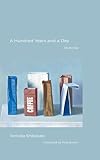
A Hundred Years and a Day, by Tomoka Shibasaki and translated by Polly Barton, is a collection of short stories (perhaps vignettes might better describe them) where the characters are nameless and the locations, the villages and buildings, serve as additional characters.
It is true of all books that some people will like what the author does and some won't. Many times, no matter which view you hold, you don't immediately grasp why someone would feel the other way. For this book, I understand, show more even though I don't feel the same way, why many will be turned off or simply "not interested." The events are largely nonevents, in the way that most events in our own lives aren't anything big but may well stay with us and affect us for years. So readers wanting a straightforward story, the common "beginning, middle, end," will resist this one. Just please, as a former teacher, don't make it sound like only those stories are "proper." If a story doesn't work for you, that is fine. But the implication with the term "proper" is that whatever is done differently is "improper." If a story works, then it was done properly for that story. If it is how the writer wants to tell the story, then it was done properly for that writer. If it didn't work for you, then it didn't work for you. Subjective taste is not objective fact.
If you enjoy slice-of-life vignettes that may well cover an entire lifetime in just a few pages, that leave room for you to think about not just the story but your own life, then you will be richly rewarded. Don't read this as quickly as you will be tempted, let each story sit with you for a while. Maybe just five or ten minutes, maybe a day, you might be surprised at the insight some of them will offer on your own life. Change is constant, even when we aren't aware of it. Returning to any place, or any person for that matter, can be startling because of what is changed, and what hasn't. These are some of the things this volume will give you the chance to reflect on, if you are a reflective type of reader/thinker.
Reviewed from a copy made available by the publisher via NetGalley. show less
It is true of all books that some people will like what the author does and some won't. Many times, no matter which view you hold, you don't immediately grasp why someone would feel the other way. For this book, I understand, show more even though I don't feel the same way, why many will be turned off or simply "not interested." The events are largely nonevents, in the way that most events in our own lives aren't anything big but may well stay with us and affect us for years. So readers wanting a straightforward story, the common "beginning, middle, end," will resist this one. Just please, as a former teacher, don't make it sound like only those stories are "proper." If a story doesn't work for you, that is fine. But the implication with the term "proper" is that whatever is done differently is "improper." If a story works, then it was done properly for that story. If it is how the writer wants to tell the story, then it was done properly for that writer. If it didn't work for you, then it didn't work for you. Subjective taste is not objective fact.
If you enjoy slice-of-life vignettes that may well cover an entire lifetime in just a few pages, that leave room for you to think about not just the story but your own life, then you will be richly rewarded. Don't read this as quickly as you will be tempted, let each story sit with you for a while. Maybe just five or ten minutes, maybe a day, you might be surprised at the insight some of them will offer on your own life. Change is constant, even when we aren't aware of it. Returning to any place, or any person for that matter, can be startling because of what is changed, and what hasn't. These are some of the things this volume will give you the chance to reflect on, if you are a reflective type of reader/thinker.
Reviewed from a copy made available by the publisher via NetGalley. show less
Rating: 4.5* of five
The Publisher Says: This ground-breaking collection from Tomoka Shibasaki, author of the acclaimed novel Spring Garden, pushes the short story to a new level.
In these stories of human connection in a contemporary, alienated world, people come together to share pieces of their lives, then part. We meet the women who share a house after the outbreak of war before going their separate ways once it is over; the man who lives in a succession of rooftop apartments; the show more diverging lives of two brothers who are raised as latch-key kids by factory workers; the old ramen restaurant that endures despite the demolition of all surrounding buildings; people who watch a new type of spaceship lift off from a pier that once belonged to an island resort; and more.
These 34 tales from all over the planet have the compulsive power of news reports, narrated in a crisp yet allegorical style.
I RECEIVED A DRC FROM THE PUBLISHER VIA NETGALLEY. THANK YOU.
My Review: There is a pattern I follow when reviewing short stories: I call it, for convenience, The Bryce Method after my old friend Bryce and his collection-spanning short summary followed by a very short summary and rating of the individual story habits from his blogging days.
Not going to work here.
Thirty-four stories in two hundred pages is problem one; not much between summary and spoiler. Two is these are stories that begin with something I'd call a spoiler: a summary-like paragraph set off from the text, which honestly took a half-star off my overall rating for off-puttingness. I think it's pointless, for these reasons, to use my old method as it would really add to the wall-to-wall spoilers. To avoid a close encounter with the shrieking Spoiler Stasi maniacs, allow me to review the gestalt of the collection for you.
It was fine. Nice prose, I'd say based on a long reading life with more than the usual number of translated works in many genres, quite gracefully translated. Plenty of well-woven-in clues to words that wouldn't translate. A solid, creditable job for a nice book of stories.
Does anything here do something that "pushes the short story to a new level"? No.
Does it really need to? No. Breathless copy does nothing good for this solid, well-crafted collection of short fiction mostly exploring the horrors of trying to communicate with actual other human beings in mutually satisfying connective ways. It's a collection full of fun, if weird, ways for that to fail. It has no central character or group, unlike that Ryu Murakami book I wasn't keen on that did mostly the same thing. It isn't set in one place like Pleasantville, that braided-stories novel I liked so well. In the off-kilter liminal spaces we're in for the whole collection, I'm most put in mind of the way Brian Evenson, in his uneasy style, makes the world feel. These are *not* horror, or even horror-adjacent, stories; instead, they partake of the weirdness and not-quite-ness of horror without any of the sillier trappings.
Polly Barton's ear for, say, how a wisteria vine relates to the wisteria vine it's been entwined with for goddesses only know how long, is the main vehicle for little minds like thee and me to get access to the core of longing and need in each of these very Japanese tales. Will we really know what's what? Not in my experience, and all the more fun to read because of it.
When I finished this read I had to sit a minute and look into my emotional reactor core to see what this bolus of new fuel was doing. I'm impressed that the way Author Shibasaki and her able translator, Polly Barton, never once threw a sucker punch. These stories deliver their intensely meant, unshielded radioactivity to you direct. It's not fussy; it's not overwrought; it's the high-quality story-ore, direct to your well-shielded reactor core to be processed.
I gave it a half-star less than perfect because, in some cases, the oddball opening paragraphs say too much even for me. That's hard to do! show less
The Publisher Says: This ground-breaking collection from Tomoka Shibasaki, author of the acclaimed novel Spring Garden, pushes the short story to a new level.
In these stories of human connection in a contemporary, alienated world, people come together to share pieces of their lives, then part. We meet the women who share a house after the outbreak of war before going their separate ways once it is over; the man who lives in a succession of rooftop apartments; the show more diverging lives of two brothers who are raised as latch-key kids by factory workers; the old ramen restaurant that endures despite the demolition of all surrounding buildings; people who watch a new type of spaceship lift off from a pier that once belonged to an island resort; and more.
These 34 tales from all over the planet have the compulsive power of news reports, narrated in a crisp yet allegorical style.
I RECEIVED A DRC FROM THE PUBLISHER VIA NETGALLEY. THANK YOU.
My Review: There is a pattern I follow when reviewing short stories: I call it, for convenience, The Bryce Method after my old friend Bryce and his collection-spanning short summary followed by a very short summary and rating of the individual story habits from his blogging days.
Not going to work here.
Thirty-four stories in two hundred pages is problem one; not much between summary and spoiler. Two is these are stories that begin with something I'd call a spoiler: a summary-like paragraph set off from the text, which honestly took a half-star off my overall rating for off-puttingness. I think it's pointless, for these reasons, to use my old method as it would really add to the wall-to-wall spoilers. To avoid a close encounter with the shrieking Spoiler Stasi maniacs, allow me to review the gestalt of the collection for you.
It was fine. Nice prose, I'd say based on a long reading life with more than the usual number of translated works in many genres, quite gracefully translated. Plenty of well-woven-in clues to words that wouldn't translate. A solid, creditable job for a nice book of stories.
Does anything here do something that "pushes the short story to a new level"? No.
Does it really need to? No. Breathless copy does nothing good for this solid, well-crafted collection of short fiction mostly exploring the horrors of trying to communicate with actual other human beings in mutually satisfying connective ways. It's a collection full of fun, if weird, ways for that to fail. It has no central character or group, unlike that Ryu Murakami book I wasn't keen on that did mostly the same thing. It isn't set in one place like Pleasantville, that braided-stories novel I liked so well. In the off-kilter liminal spaces we're in for the whole collection, I'm most put in mind of the way Brian Evenson, in his uneasy style, makes the world feel. These are *not* horror, or even horror-adjacent, stories; instead, they partake of the weirdness and not-quite-ness of horror without any of the sillier trappings.
Polly Barton's ear for, say, how a wisteria vine relates to the wisteria vine it's been entwined with for goddesses only know how long, is the main vehicle for little minds like thee and me to get access to the core of longing and need in each of these very Japanese tales. Will we really know what's what? Not in my experience, and all the more fun to read because of it.
When I finished this read I had to sit a minute and look into my emotional reactor core to see what this bolus of new fuel was doing. I'm impressed that the way Author Shibasaki and her able translator, Polly Barton, never once threw a sucker punch. These stories deliver their intensely meant, unshielded radioactivity to you direct. It's not fussy; it's not overwrought; it's the high-quality story-ore, direct to your well-shielded reactor core to be processed.
I gave it a half-star less than perfect because, in some cases, the oddball opening paragraphs say too much even for me. That's hard to do! show less

I love this beautiful take on a really subtle sort of longing and emptiness and need for the overlooked. I see a lot of reviews about loneliness but I thought it was more about context and connection to the environment and observation and peace? Maybe it's just the particular books that come to me, but I feel like Japanese literature makes space for these contemplations that other canons don't.
This is a rather odd little book. Divorced Taro, who seems to have no friends, lives in a rundown apartment building, which will be torn down once the leases all run out. Over a concrete wall, he can see the top of the house next door from his balcony. It’s a big, expensive, house, with a sky blue roof. One day, he sees one of his neighbors trying to climb up the wall. She’s not a robber; she’s obsessed with the house. Years before, she found a book of photographs called “Spring show more Garden”- the house the photos were taken of is the sky blue house next door. She wants to see the house, inside and out. The photo book, that is all interior shots some of which show the home owners, has given the house a kind of mythic beauty for her. As she schemes to get inside the house, Taro finds himself drawn into her obsession.
Not much happens in the book. They see the house. He sees the current house under laid by the photos in the book, just like he sees signs of the rivers and streams that have been tamed and forced into culverts underground all over the city. The whole world is a palimpsest.
Despite the lack of action, I sped through the book. I, too, became enamored of the beauty of the house, and how the now overlays the past. Four stars, even though it is, as I said, odd. show less
Not much happens in the book. They see the house. He sees the current house under laid by the photos in the book, just like he sees signs of the rivers and streams that have been tamed and forced into culverts underground all over the city. The whole world is a palimpsest.
Despite the lack of action, I sped through the book. I, too, became enamored of the beauty of the house, and how the now overlays the past. Four stars, even though it is, as I said, odd. show less
Awards


You May Also Like
Associated Authors
Statistics
- Works
- 4
- Also by
- 6
- Members
- 158
- Popularity
- #133,025
- Rating
- 3.4
- Reviews
- 11
- ISBNs
- 14
- Languages
- 5