
Richard Seaver (1926–2009)
Author of The Tender Hour of Twilight: Paris in the '50s, New York in the '60s: A Memoir of Publishing's Golden Age
Works by Richard Seaver
The Tender Hour of Twilight: Paris in the '50s, New York in the '60s: A Memoir of Publishing's Golden Age (2012) 71 copies, 1 review
Associated Works
Justine, Philosophy in the Bedroom, and Other Writings (1791) — Translator, some editions — 1,300 copies, 10 reviews
The 120 Days of Sodom and Other Writings (1785) — Translator, some editions — 1,294 copies, 19 reviews
Four Novels: The Square / Moderato Cantabile / 10:30 on a Summer Night / The Afternoon of Mr. Andesmas (1965) — Translator, some editions — 332 copies, 3 reviews
First Love and Other Novellas (Penguin Modern Classics) (1977) — Translator, some editions — 305 copies, 4 reviews
The Stoning of Soraya M.: A Story of Injustice in Iran (1990) — Translator, some editions — 142 copies, 10 reviews
Tagged
Common Knowledge
- Canonical name
- Seaver, Richard
- Legal name
- Seaver, Richard Woodward
- Birthdate
- 1926-12-31
- Date of death
- 2009-01-06
- Gender
- male
- Education
- University of North Carolina
Sorbonne University - Occupations
- teacher
editor
publisher - Nationality
- USA
- Places of residence
- Watertown, Connecticut, USA
Paris, France
New York, New York, USA - Associated Place (for map)
- USA
Members
Reviews
The Tender Hour of Twilight: Paris in the '50s, New York in the '60s: A Memoir of Publishing's Golden Age by Richard Seaver
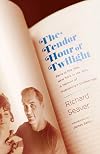
Posthumously edited by his wife, Jeanette, Richard Seaver’s memoir is an honest, self-effacing and fascinating story of his decades in publishing and translating, from Paris to New York. He tells of discovering the writing of Samuel Beckett, falling love with it, and getting it in print. Episodes with Genet, Ionesco, George Orwell, Brendan Behan and Jean-Paul Sartre are described first hand.
Seaver writes concisely and clearly, with touches of beauty. On his first view of France, show more approaching from sea: “Gentle hills of green rose up to touch the lowering clouds, inviting undulations were speckled with black-and-white dots that, as we drew nearer, became herds of cattle.”
The first half of the book “Paris, 1950s” is the most vibrant. To the young American studying at the Sorbonne the city seemed “the center of the universe.” The New York portion, when Seaver was an editor at Grove Press, tells a different story of publishing, as the radical Grove becomes larger and more mainstream. A wonderful story of bringing new writers to the public and fighting censorship. show less
Seaver writes concisely and clearly, with touches of beauty. On his first view of France, show more approaching from sea: “Gentle hills of green rose up to touch the lowering clouds, inviting undulations were speckled with black-and-white dots that, as we drew nearer, became herds of cattle.”
The first half of the book “Paris, 1950s” is the most vibrant. To the young American studying at the Sorbonne the city seemed “the center of the universe.” The New York portion, when Seaver was an editor at Grove Press, tells a different story of publishing, as the radical Grove becomes larger and more mainstream. A wonderful story of bringing new writers to the public and fighting censorship. show less
Awards

You May Also Like
Associated Authors
Statistics
- Works
- 3
- Also by
- 11
- Members
- 107
- Popularity
- #180,614
- Rating
- 3.5
- Reviews
- 1
- ISBNs
- 2
- Languages
- 1