
Lynne Rae Perkins
Author of Criss Cross
About the Author
Series
Works by Lynne Rae Perkins
The Broken Cat 1 copy
Associated Works
Seed by Seed: The Legend and Legacy of John "Appleseed" Chapman (2012) — Illustrator — 182 copies, 15 reviews
Tagged
Common Knowledge
- Birthdate
- 1956
- Gender
- female
- Education
- Pennsylvannia State University (BA|1978)
University of Wisconsin-Milwaukee (MA|1981) - Nationality
- USA
- Places of residence
- Cheswick, Pennsylvania, USA (Birth)
Suttons Bay, Michigan, USA - Associated Place (for map)
- USA
Members
Reviews
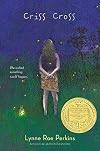
The cover copy: "She wished something would happen"
The moral: Wishes frequently don't come true.
Another lesson: Sometimes a Newbery Medal means jack shit. I mean, it can be stamped right there on the cover, but everything under it makes you wonder if, like, the committee just gets really wasted every so often and gives it to a book that really, really doesn't even deserve to be in consideration. A drunken, "Wouldn't it be funny if we gave it to . . . ?" joke gone oh so very wrong.
This is an show more extremely boring and generic slice-of-life/coming-of-age tale. The author tries to spice it up by occasionally diddling around with the format and her writing style, including some useless illustrations and photographs, and alluding to some literary serendipity crap, but it remains steadfastly dull, bland, and tedious. show less
The moral: Wishes frequently don't come true.
Another lesson: Sometimes a Newbery Medal means jack shit. I mean, it can be stamped right there on the cover, but everything under it makes you wonder if, like, the committee just gets really wasted every so often and gives it to a book that really, really doesn't even deserve to be in consideration. A drunken, "Wouldn't it be funny if we gave it to . . . ?" joke gone oh so very wrong.
This is an show more extremely boring and generic slice-of-life/coming-of-age tale. The author tries to spice it up by occasionally diddling around with the format and her writing style, including some useless illustrations and photographs, and alluding to some literary serendipity crap, but it remains steadfastly dull, bland, and tedious. show less

This book follows a group of friends on the cusp of adolescence, as they explore new ideas, find new interests, and form first crushes. The plot structure is very loose and episodic; the content is rooted in nostalgia. There are occasional illustrations that don't do a whole lot for the story. Set in a small town in the 1970s, I found myself wondering what sort of appeal this book would have for young readers today. It won the Newbery Medal in 2006, inexplicably. This reads like a book for show more adults who grew up in the 1970s, and not a book for children at all. The writing is good, and the characters are interesting, if not always fully realized (I had trouble distinguishing some of the boys, particularly, and Debbie's best friend Patty has no personality to speak of), but there's so little action that I really had to push myself to stay engaged. I wouldn't recommend this for kids, but adults who were teenagers in the '70s might find it a nice walk down memory lane. show less
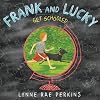
This adorable book, illustrated by the author in watercolors, is about a boy, Frank, and a dog, Lucky, who found each other at an animal shelter, and grew together, learning as they went.
In the process of exploring their world together, they became interested in science. Science, the author explains, “is when you wonder about something, so you observe it and ask questions about it and try to understand it.”
For example, Lucky wondered about squirrels, and how fast they could run compared show more to Lucky. He wondered what snow was and whether he could eat what he found in the grass. Frank learned about all the plants and bugs that stuck to Lucky after his adventures, such as dog ticks and burdock.
They especially learned about doing experiments, i.e., when you ask a question and then try to find the answer. Lucky wondered about skunks. Frank wondered what a smell is made of, and how to change it.
They did math together. Lucky wondered, if there is one dog and three people in the living room, how many biscuits should the dog get? Frank wondered how much hair a dog could shed in a week.
They also explore the history of dogs and humans living together. Once when Lucky ate a birthday cake left out on the table, they thought about how “[s]ometimes in History there are different versions of what really happened, depending on who is telling the story.”
Other topics they explore together include art, geography, communications (such as the languages of Spanish, dog-speak, and duck-speak), and hospitality.
Frank is able to learn about “the whole wide world” because of Lucky, and he loved it.
The bright watercolors use a vividly colorful palette. The artwork is enhanced by clever textual elements, such as thought balloons, and workbook-like check boxes.
Evaluation: This humorous love story between a boy and his dog is also a paean to learning, and to all the wonders that can be discovered in the world by keeping one’s eyes and mind open. show less
In the process of exploring their world together, they became interested in science. Science, the author explains, “is when you wonder about something, so you observe it and ask questions about it and try to understand it.”
For example, Lucky wondered about squirrels, and how fast they could run compared show more to Lucky. He wondered what snow was and whether he could eat what he found in the grass. Frank learned about all the plants and bugs that stuck to Lucky after his adventures, such as dog ticks and burdock.
They especially learned about doing experiments, i.e., when you ask a question and then try to find the answer. Lucky wondered about skunks. Frank wondered what a smell is made of, and how to change it.
They did math together. Lucky wondered, if there is one dog and three people in the living room, how many biscuits should the dog get? Frank wondered how much hair a dog could shed in a week.
They also explore the history of dogs and humans living together. Once when Lucky ate a birthday cake left out on the table, they thought about how “[s]ometimes in History there are different versions of what really happened, depending on who is telling the story.”
Other topics they explore together include art, geography, communications (such as the languages of Spanish, dog-speak, and duck-speak), and hospitality.
Frank is able to learn about “the whole wide world” because of Lucky, and he loved it.
The bright watercolors use a vividly colorful palette. The artwork is enhanced by clever textual elements, such as thought balloons, and workbook-like check boxes.
Evaluation: This humorous love story between a boy and his dog is also a paean to learning, and to all the wonders that can be discovered in the world by keeping one’s eyes and mind open. show less
Fourteen-year-old friends in pre-cell-phone summer in the small town of Seldem, PA, do some growing and changing. Hector, inspired by a coffee house performance he attends with his older sister, takes up guitar. Debbie helps a neighbor, and develops a crush (mutual) on her visiting great-nephew. Lenny fixes things, teaches Debbie to drive, and listens to a radio show. Thin on plot, perhaps, but strong on character and setting. The characters seem slightly older than 14; it feels like YA show more rather than middle grade, but maybe that's because there's so little upper middle grade/young YA out there.
Quotes
Have you ever been somewhere, and it hit you that if you lived there instead of where you do, your whole life might be really different? (89)
I felt ten years old and a thousand years old, but I didn't know how to be my own age. (Debbie, 126)
"I really like how when you go somewhere for the first time, everything seems unusual." (Peter to Debbie, 258)
They were both trying to be quiet; every bump and scrape seemed to tear holes in the silence. (297)
He had always been able to get away with things. The flip side was that no one took him seriously. (Hector, 304) show less
Quotes
Have you ever been somewhere, and it hit you that if you lived there instead of where you do, your whole life might be really different? (89)
I felt ten years old and a thousand years old, but I didn't know how to be my own age. (Debbie, 126)
"I really like how when you go somewhere for the first time, everything seems unusual." (Peter to Debbie, 258)
They were both trying to be quiet; every bump and scrape seemed to tear holes in the silence. (297)
He had always been able to get away with things. The flip side was that no one took him seriously. (Hector, 304) show less
Lists
Awards


You May Also Like


Associated Authors
Statistics
- Works
- 18
- Also by
- 1
- Members
- 4,245
- Popularity
- #5,925
- Rating
- 3.6
- Reviews
- 217
- ISBNs
- 123
- Languages
- 3