
Fount William Mattox (1909–2000)
Author of The Eternal Kingdom: A History of the Church of Christ
About the Author
Works by Fount William Mattox
Associated Works
Tagged
Common Knowledge
- Canonical name
- Mattox, Fount William
- Other names
- Mattox, Billy
Mattox, F. W. - Birthdate
- 1909-07-17
- Date of death
- 2000-03-16
- Gender
- male
- Education
- Central State Teacher's College, Edmund, OK (B.A.)
University of Oklahoma (M.A.)
George Peabody College, Nashville, TN (Ph.D.) - Organizations
- Lubbock Christian University (President)
- Relationships
- Mattox, J. P. (father)
- Short biography
- Dr. F. W. Mattox, founder and first president of Lubbock Christian University. It is largely to the tenacity, vision, and enthusiasm of this great man that Lubbock Christian University exists today. Dr. Mattox served as president of LCU from its founding in 1956 until his retirement in 1974. During his 18 years as president, he watched it grow from a few temporary buildings in a cotton field to an established four-year college and from a student body of 110 students in 1956 to one of 1100 students in 1974. According to Dr. Harvie Pruittt, LCU's third president and a faculty member under Dr. Mattox, 'It'd be really hard to overemphasize the great work he did starting the college from scratch. In those years, he did a little bit of everything.' He recruited teachers, oversaw construction of the campus's first permanent buildings, enlisted trustees and sought private donations. A native of Texas, Dr. Mattox was born in Grand Falls in 1909. He received his B.A. degree from Central State Teacher's College in Edmund, OK in 1934; his M.A. degree from the University of Oklahoma in 1940; and his Ph.D. degree from George Peabody College in Nashville, TN in 1947. He was married to the former Mildred Formby in 1929. They had two children, Mrs. Reese Bryant and Dr. Joe Mattox, and seven grandchildren. The dream of Dr. Mattox's-- to provide a quality education in a Christian environment for countless students in Lubbock, TX has certainly come true. It will serve as his great legacy as Lubbock Christian University continues to goes about its mission of "changing lives."
- Birthplace
- Grand Falls, Ward County, Texas, USA
- Place of death
- Searcy, White County, Arkansas, USA
- Burial location
- White County Memorial Gardens, Searcy, White County, Arkansas, USA
- Associated Place (for map)
- Arkansas, USA
Members
Reviews
History is always best understood as how we, in the present, make sense of what we know and how we frame the past. Writing about history demands a lot of decisions; those decisions say nothing about events, people, and places of the past, and everything about ourselves.
And how Christians in churches of Christ should understand the history of Christianity has always been fraught with contention and disputation: are we Christians only, or the only Christians?
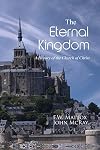
The Eternal Kingdom: A History of show more the Church of Christ by F.W. Mattox and John McRay is a great example of this kind of difficulty and tension.
In truth, this book is designed to be a historical primer for members of churches of Christ, probably in the late 19th through 20th centuries, to understand the history of Christianity in the West from its origins until the end of the 18th century in a way which would make the work of restoration done in the early 19th century seem inevitable. Put another way, the authors go through the story of apostolic Christianity, its development into Roman Catholic and Eastern Orthodox Christianity, the various protest movements in western Christianity against Roman Catholicism, the Reformation, and the early denominational period from 1600-1800, intentionally highlighting anything and everything which might look like a precursor to the Restoration Movement.
As an overview of the history of Christianity in the West, it’s not bad. It oversimplifies to the point of caricature at times, but such is to be expected in a broad and introductory work such as this.
But some of the sympathies and antipathies of the authors are interesting. The authors really want to find praiseworthy elements in the Albigensian/Cathar movement of the 13th century, even though by all evidence it was predominantly inspired by the Bogomils and the long history of Gnostic dualist heresy in the east. They really want to paint Martin Luther as a Restorationist before the Restoration Movement, even though the historical Luther would have recoiled at the idea; at the same time, the proto-Restorationists if there ever were proto-Restorationists, the Anabaptists, get comparatively shorter shrift and a more icy reception.
The authors are convinced there were always Christians seeking to uphold the teachings of the New Testament throughout the ages, although they do not attempt to reach Traces of the Kingdom levels of desperation in making their argument and case.
The ultimately baffling part of the book is how so much of it is a genuine attempt at understanding the history of Christianity in the West…until about 1800. And after that it is only about the development of the Stone-Campbell / Restoration Movement. The final chapters read like a standard account of the work of reformation/restoration in what was at the time the western frontier of the United States. Nothing is said about developments and adaptations of denominations or other groups.
Thus, in the end, the book proves particularly sectarian in consideration and approach; it seems like the goal is for members of churches of Christ to see what happened in Western Christendom before 1800, and then how the Stone-Campbell Movement got going.
If that’s the kind of thing you’re looking for, here’s your book. I still find the approach rather strange. I can understand a book which attempts to understand the history of the Restoration Movement on its own terms and to look back to see possible antecedents: but why would that include the whole swath of Western Christendom? I can understand a book which attempts to cover the whole swath of Western Christendom with a view of reaching the Restoration Movement, but that would also seem to be benefited by looking across as well. It’s not as if doctrinal and sectarian developments in Western Christendom, particularly in American Christianity, have not affected or influenced those of us who assemble in churches of Christ; if anything, they prove even more salient than some of the medieval and early modern developments.
So are we Christians only or the only Christians? It’s a question with which we need to grapple, and to better reconceptualize Christian history in the process. show less
And how Christians in churches of Christ should understand the history of Christianity has always been fraught with contention and disputation: are we Christians only, or the only Christians?
The Eternal Kingdom: A History of show more the Church of Christ by F.W. Mattox and John McRay is a great example of this kind of difficulty and tension.
In truth, this book is designed to be a historical primer for members of churches of Christ, probably in the late 19th through 20th centuries, to understand the history of Christianity in the West from its origins until the end of the 18th century in a way which would make the work of restoration done in the early 19th century seem inevitable. Put another way, the authors go through the story of apostolic Christianity, its development into Roman Catholic and Eastern Orthodox Christianity, the various protest movements in western Christianity against Roman Catholicism, the Reformation, and the early denominational period from 1600-1800, intentionally highlighting anything and everything which might look like a precursor to the Restoration Movement.
As an overview of the history of Christianity in the West, it’s not bad. It oversimplifies to the point of caricature at times, but such is to be expected in a broad and introductory work such as this.
But some of the sympathies and antipathies of the authors are interesting. The authors really want to find praiseworthy elements in the Albigensian/Cathar movement of the 13th century, even though by all evidence it was predominantly inspired by the Bogomils and the long history of Gnostic dualist heresy in the east. They really want to paint Martin Luther as a Restorationist before the Restoration Movement, even though the historical Luther would have recoiled at the idea; at the same time, the proto-Restorationists if there ever were proto-Restorationists, the Anabaptists, get comparatively shorter shrift and a more icy reception.
The authors are convinced there were always Christians seeking to uphold the teachings of the New Testament throughout the ages, although they do not attempt to reach Traces of the Kingdom levels of desperation in making their argument and case.
The ultimately baffling part of the book is how so much of it is a genuine attempt at understanding the history of Christianity in the West…until about 1800. And after that it is only about the development of the Stone-Campbell / Restoration Movement. The final chapters read like a standard account of the work of reformation/restoration in what was at the time the western frontier of the United States. Nothing is said about developments and adaptations of denominations or other groups.
Thus, in the end, the book proves particularly sectarian in consideration and approach; it seems like the goal is for members of churches of Christ to see what happened in Western Christendom before 1800, and then how the Stone-Campbell Movement got going.
If that’s the kind of thing you’re looking for, here’s your book. I still find the approach rather strange. I can understand a book which attempts to understand the history of the Restoration Movement on its own terms and to look back to see possible antecedents: but why would that include the whole swath of Western Christendom? I can understand a book which attempts to cover the whole swath of Western Christendom with a view of reaching the Restoration Movement, but that would also seem to be benefited by looking across as well. It’s not as if doctrinal and sectarian developments in Western Christendom, particularly in American Christianity, have not affected or influenced those of us who assemble in churches of Christ; if anything, they prove even more salient than some of the medieval and early modern developments.
So are we Christians only or the only Christians? It’s a question with which we need to grapple, and to better reconceptualize Christian history in the process. show less

This is an interesting handling of church history. My biggest problem with Mattox is that he seems to view any departure in church history from modern conservative Church of Christ theology as a departure into error. While this may be more true in later church history, I tend to put more weight on early church theologians and find it difficult to so easily dismiss them if they don't agree with what I've been taught.

Reviewed on The Light Network
You May Also Like
Associated Authors
Statistics
- Works
- 2
- Also by
- 1
- Members
- 139
- Popularity
- #147,350
- Rating
- 3.3
- Reviews
- 3
- ISBNs
- 5

