

Zhang Yueran
Author of Cocoon
About the Author
Image credit: Zhang Yue Ran
Works by Zhang Yueran
Associated Works
Queer: A Collection of LGBTQ Writing from Ancient Times to Yesterday (2021) — Contributor, some editions — 65 copies
Tagged
Common Knowledge
- Canonical name
- Zhang Yueran
- Legal name
- 張悅然
- Other names
- Чжан Юэжань
- Birthdate
- 1982
- Gender
- female
- Education
- Shandong Experimental High School
Shandong University
National University of Singapore - Occupations
- professor
- Awards and honors
- New Concept Writing Competition
- Short biography
- Zhang was born in 1982 in Jinan, Shandong. She is an only child. Her father was a professor of Shandong University, and he was very keen on literature. Her main works include short stories and novels. She won the 2001 New Concept Writing Competition organised by Mengya magazine. She is often labeled as part of a group of successful Chinese authors known as the "post-'80s" generation. In 2011 she participated in the International Writing Program Fall Residency at the University of Iowa in Iowa City. Currently, Zhang is a teacher of Literary Studies in Renmin University of China.
- Nationality
- China
- Birthplace
- Jinan, Shandong, China
- Associated Place (for map)
- Shandong, China
Members
Reviews
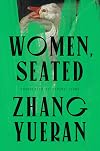
Eventually, she finished the work she titled Woman, Seated. Yu Ling was disappointed: she found the woman in the picture much uglier than herself. Shoulders hunched, hands clasped, apparently anxious about something—perhaps the fact of being seated. Just being there, not doing anything, left her ill at ease.
Yu Ling is the nanny to a seven-year-old boy, the son of wealthy parents and grandson to a prominent provincial politician. She finds herself drawn to the boy and to a lesser extent his show more artistic mother, even as she chafes at the class and education differences that divide them. Despite having lived with the family for years, they all have secrets and separate lives that threaten the carefully constructed relationships. As the secrets are revealed, these relationships are tested.
I was completely engrossed in this fast-paced novel, and continually surprised by the developments. The writing (and translation) is crisp and clean, each chapter only lasting a few pages, all of which heightens the pace. At the conclusion I was left thinking about the position of women in society and what leverage they have or can find to help them succeed and survive. I really enjoyed this novel and will look for more of Zhang's works in translation. show less
Yu Ling is the nanny to a seven-year-old boy, the son of wealthy parents and grandson to a prominent provincial politician. She finds herself drawn to the boy and to a lesser extent his show more artistic mother, even as she chafes at the class and education differences that divide them. Despite having lived with the family for years, they all have secrets and separate lives that threaten the carefully constructed relationships. As the secrets are revealed, these relationships are tested.
I was completely engrossed in this fast-paced novel, and continually surprised by the developments. The writing (and translation) is crisp and clean, each chapter only lasting a few pages, all of which heightens the pace. At the conclusion I was left thinking about the position of women in society and what leverage they have or can find to help them succeed and survive. I really enjoyed this novel and will look for more of Zhang's works in translation. show less
People say the poor love to dream, but that isn't quite right. Dreaming is the privilege of the moneyed, and the world has all kinds of ways to protect their dreams.
Yu Ling is a nanny to the child of a wealthy Beijing couple. One day, she and her fiancé take the boy out for a Spring excursion, but while that's what she calls it, there is really another plan. But even as she has second thoughts, larger forces move against that family and now Yu Ling is just trying to figure out what to do. show more
In this novel, the experience of a woman working a job that includes being able to use luxuries like a modern kitchen and to take her charge to theater performances is balanced against the precarity of that employment, subject as it is, first to the whims of her employer, then to that family's status in Beijing. And as the focus of the story shares space with other women in Yu Ling's orbit, it becomes a story about how women survive and the compromises they make to get by.
I picked this book up because of the translator, Jeremy Tiang. He has chosen some very interesting and thought-provoking work to translate and this novel is no exception. My thanks to him for introducing me to the work of Zhang Yueran. I hope to read more by her. show less
Yu Ling is a nanny to the child of a wealthy Beijing couple. One day, she and her fiancé take the boy out for a Spring excursion, but while that's what she calls it, there is really another plan. But even as she has second thoughts, larger forces move against that family and now Yu Ling is just trying to figure out what to do. show more
In this novel, the experience of a woman working a job that includes being able to use luxuries like a modern kitchen and to take her charge to theater performances is balanced against the precarity of that employment, subject as it is, first to the whims of her employer, then to that family's status in Beijing. And as the focus of the story shares space with other women in Yu Ling's orbit, it becomes a story about how women survive and the compromises they make to get by.
I picked this book up because of the translator, Jeremy Tiang. He has chosen some very interesting and thought-provoking work to translate and this novel is no exception. My thanks to him for introducing me to the work of Zhang Yueran. I hope to read more by her. show less
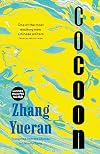
Cocoon was first published in 2016 in Chinese, and sold over 120,000 copies: a massive success. Jeremy Tiang’s English translation was published by World Editions in 2022. I picked it up because the English translation was nominated for the Singapore Literature Prize in 2024 (Tiang is Singaporean) and I'm working my way through the list. Zhang had already made a name for herself with two prior books, but this is the one that established her reputation as a writer.
Zhang is part of a show more literary generation that grappled with the impact of the Cultural Revolution (1966-76) in their writing, or as it is called, ‘scar literature’. In Cocoon, this is through the lens of people born in the 1980s, looking back at their parents and grandparents who lived through the events of that time. The two protagonists, Jiaqi and Gong, were childhood friends over one year spent in Jinan, before Jiaqi moved away. They had a falling out at the time, but as adults in their 30s, unemployed and purposelessly drifting, they meet again. In chapters alternating their points of view, they slowly narrate to each other the secrets that they uncovered over the decades in between.
Jiaqi and Gong’s grandfathers used to work in the same hospital during the cultural revolution: one, a surgeon and the other, an administrator. Both were involved in some kind of incident at the ‘Dead Man’s Tower’ – a local dumping ground for corpses, resulting in Gong’s grandfather entering a coma from which he never recovered. Their parents’ generation, living with the memory of what their parents went through, failed Jiaqi and Gong. Both had fathers who abandoned them, mothers who were disinterested, disaffected relatives who raised them. Jiaqi as an adult is obsessed with tracking down every one her father knew, in a bid to understand why he left them. Her boyfriend leaves her over this, telling her, “You feed on that generation's scars. Like a vulture.” Gong is equally obsessed with uncovering who it was that put his grandfather in a coma. As they go along, they unpick longstanding grievances and pain: Jiaqi finds a rival who wrote an anonymous letter that cost her father his nascent literary career; Gong finds out his grandfather’s assailant is somewhat closer to home that he suspected.
Cocoon is intimately told, making the great political significance of these years very personal. Yueran Zhang captures the deep trauma that individuals experienced, told over three generations, and how it was passed down through families. It’s filled with global literary references that I caught – and probably many that I didn’t, because I’m not familiar with Chinese literature. Tiang’s translation is well done, reading naturally and easily. Recommended. show less
Zhang is part of a show more literary generation that grappled with the impact of the Cultural Revolution (1966-76) in their writing, or as it is called, ‘scar literature’. In Cocoon, this is through the lens of people born in the 1980s, looking back at their parents and grandparents who lived through the events of that time. The two protagonists, Jiaqi and Gong, were childhood friends over one year spent in Jinan, before Jiaqi moved away. They had a falling out at the time, but as adults in their 30s, unemployed and purposelessly drifting, they meet again. In chapters alternating their points of view, they slowly narrate to each other the secrets that they uncovered over the decades in between.
Jiaqi and Gong’s grandfathers used to work in the same hospital during the cultural revolution: one, a surgeon and the other, an administrator. Both were involved in some kind of incident at the ‘Dead Man’s Tower’ – a local dumping ground for corpses, resulting in Gong’s grandfather entering a coma from which he never recovered. Their parents’ generation, living with the memory of what their parents went through, failed Jiaqi and Gong. Both had fathers who abandoned them, mothers who were disinterested, disaffected relatives who raised them. Jiaqi as an adult is obsessed with tracking down every one her father knew, in a bid to understand why he left them. Her boyfriend leaves her over this, telling her, “You feed on that generation's scars. Like a vulture.” Gong is equally obsessed with uncovering who it was that put his grandfather in a coma. As they go along, they unpick longstanding grievances and pain: Jiaqi finds a rival who wrote an anonymous letter that cost her father his nascent literary career; Gong finds out his grandfather’s assailant is somewhat closer to home that he suspected.
Cocoon is intimately told, making the great political significance of these years very personal. Yueran Zhang captures the deep trauma that individuals experienced, told over three generations, and how it was passed down through families. It’s filled with global literary references that I caught – and probably many that I didn’t, because I’m not familiar with Chinese literature. Tiang’s translation is well done, reading naturally and easily. Recommended. show less
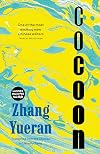
“Cocoon” by Zhang Yueran is a complex, lyrical and thoughtful novel – an exploration of the theme of memory and time, set against the backdrop of the recent history of China, particularly the Cultural Revolution.
The novel’s narrative is bookended by a frame story set in the present. Li Jiaqi returns to the town where she was brought up. Her ailing grandfather Li Jisheng is dying, and although he is uncommunicative, she spends his last days with him. Li Jisheng is a mysterious figure show more – a widely-respected doctor and part of the “establishment”, his past harbours unsavoury mysteries which led to a long-running rift between him and his son Li Muyuan, Li Jiaqi’s father. Jiaqi is obsessed with her family history, and particularly that of her professor father, who abandoned his wife and calling to reinvent himself as a businessman in Beijing. Jiaqi’s return to her roots is, in many respects, the final station on a long journey of (self) discovery. To conclude her investigation, she seeks out Cheng Gong, a childhood friend. These two characters – and their respective families – are connected by a dark thread involving a macabre crime which happened way back in 1967. The main part of the book is divided in segments alternating between the respective narratives of Li Jiaqi and Cheng Gong, both recounted in the first person.
This novel has a strange aura to it, a beguiling mixture of bleakness and nostalgia rendered in poetic prose. It presents an array of broken characters, a panorama of generations marked by cultural upheavals. Yet, it never feels cynical or nihilistic, and, against all odds, it conveys a sturdy belief in the redeeming aspects of friendship and love.
A word of warning though – “Cocoon” is touted as a “literary thriller”, but is more “literary” than “thriller”. This is one of those works which puts you immediately in the middle of things, and expects you to make the effort to piece together the clues and information provided. Indeed, it was only after the half-way mark that the parts of the puzzle started falling into place. Also, I felt that the storylines of the different families were (presumably purposely) so similar, that at times I had some difficulty distinguishing between the various strands of the plot. The final credits section says that Jeremy Tiang’s masterful translation has been “slightly abridged from the original, in agreement with the author”. I wonder whether the longer version would have made it any easier to follow. In any case, this was an intriguing and poignant novel.
https://endsoftheword.blogspot.com/2022/05/Cocoon-Zhang-Yueran-Jeremy-Tiang.html show less
The novel’s narrative is bookended by a frame story set in the present. Li Jiaqi returns to the town where she was brought up. Her ailing grandfather Li Jisheng is dying, and although he is uncommunicative, she spends his last days with him. Li Jisheng is a mysterious figure show more – a widely-respected doctor and part of the “establishment”, his past harbours unsavoury mysteries which led to a long-running rift between him and his son Li Muyuan, Li Jiaqi’s father. Jiaqi is obsessed with her family history, and particularly that of her professor father, who abandoned his wife and calling to reinvent himself as a businessman in Beijing. Jiaqi’s return to her roots is, in many respects, the final station on a long journey of (self) discovery. To conclude her investigation, she seeks out Cheng Gong, a childhood friend. These two characters – and their respective families – are connected by a dark thread involving a macabre crime which happened way back in 1967. The main part of the book is divided in segments alternating between the respective narratives of Li Jiaqi and Cheng Gong, both recounted in the first person.
This novel has a strange aura to it, a beguiling mixture of bleakness and nostalgia rendered in poetic prose. It presents an array of broken characters, a panorama of generations marked by cultural upheavals. Yet, it never feels cynical or nihilistic, and, against all odds, it conveys a sturdy belief in the redeeming aspects of friendship and love.
A word of warning though – “Cocoon” is touted as a “literary thriller”, but is more “literary” than “thriller”. This is one of those works which puts you immediately in the middle of things, and expects you to make the effort to piece together the clues and information provided. Indeed, it was only after the half-way mark that the parts of the puzzle started falling into place. Also, I felt that the storylines of the different families were (presumably purposely) so similar, that at times I had some difficulty distinguishing between the various strands of the plot. The final credits section says that Jeremy Tiang’s masterful translation has been “slightly abridged from the original, in agreement with the author”. I wonder whether the longer version would have made it any easier to follow. In any case, this was an intriguing and poignant novel.
https://endsoftheword.blogspot.com/2022/05/Cocoon-Zhang-Yueran-Jeremy-Tiang.html show less
Lists
Awards


You May Also Like
Associated Authors
Statistics
- Works
- 13
- Also by
- 2
- Members
- 166
- Popularity
- #127,844
- Rating
- 3.6
- Reviews
- 7
- ISBNs
- 17
- Languages
- 4