
Herbie J. Pilato
Author of Twitch Upon a Star: The Bewitched Life and Career of Elizabeth Montgomery
About the Author
Herbie J Pilato is the author of several media tie-in books (including Taylor Trade's Glamour, Gidgets, and the Girl Next Door, and many more). He's worked for the AE, Bravo, TLC, Syfy, and TV Guide channels, as well as Sony, Warner Bros., NBC Universal, among other TV networks and studios. He has show more several TV shows, books, and films in development and resides in Burbank, California. show less
Works by Herbie J. Pilato
Twitch Upon a Star: The Bewitched Life and Career of Elizabeth Montgomery (2012) 55 copies, 3 reviews
Bewitched Forever: The Immortal Companion to Television's Most Magical Supernatural Situation Comedy (1996) 37 copies
The Essential Elizabeth Montgomery: A Guide to Her Magical Performances (2013) 20 copies, 11 reviews
Glamour, Gidgets, and the Girl Next Door: Television's Iconic Women from the 50s, 60s, and 70s (2014) 16 copies, 1 review
Tagged
Common Knowledge
- Birthdate
- 1960-10-09
- Gender
- male
- Organizations
- Classic TV Preservation Society
- Birthplace
- Rochester, New York, USA
- Associated Place (for map)
- New York, USA
Members
Reviews
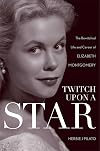
I am a fan of Elizabeth Montgomery and *was* surprised to read such an uplifting biography. Of the many biographies I've read, Elizabeth Montgomery stands out here among them as a personality who seemed to be genuinely (and unusually) kind, thoughtful and intelligent. She kept her stardom in perspective. There's no doubt about the author's enthusiasm for this beloved actress.
But there are a number of problems with this biography. First, it contains many punctuation errors, a notable number show more of mis-spelled words, and bizzarely concocted, confusing sentences. I can't remember ever reading a book with this many glaring errors before. Can't Taylor Trade afford an editor? Second, although it looks like the author's done a great deal of research, he frequently goes off on unrelated tangents and uses quotes from people who were really inconsequential to Montgomery's life story. Like Ed Asner and Lydia Cornell.
Most disappointing for me: in the final chapter the author begins speculating about "what" caused Montgomery's colon cancer--from "alcoholism" (with miniscule evidence to back this up) to "weight fluctuation" (huh?) to metaphysical reasons (her "personal demons" or her relationship with her father). The author even quotes a hairdresser who suggests that Montgomery "wanted to die young." The author then compares Elizabeth Montgomery to coke-snorting Whitney Houston (!). Isn't it possible that Montgomery was simply predisposed to colon cancer--and her only mistake was denying the possibility that she was ill? Lastly, for a biography that seeks to drive home the difficult relationship Montgomery had with her father, it was not until the final chapter that the author mentions--and it was in passing--that her father, too, had died of cancer fourteen years before her. How is it that during the course of this biography, Elizabeth's reaction to her father's death goes entirely without mention?
Still, I read "Twitch upon a Star" because in my early teens I was mesmerized by the lovely persona that Elizabeth Montgomery emulated on the small screen. I've amazingly never lost the wonder that I felt when seeing her act. I suppose for the fans of Elizabeth Montgomery, Herbie J. Pilato's enthusiastic biography of (and devoted tribute to) Elizabeth Montgomery will have to do for now, with its warts and all. show less
But there are a number of problems with this biography. First, it contains many punctuation errors, a notable number show more of mis-spelled words, and bizzarely concocted, confusing sentences. I can't remember ever reading a book with this many glaring errors before. Can't Taylor Trade afford an editor? Second, although it looks like the author's done a great deal of research, he frequently goes off on unrelated tangents and uses quotes from people who were really inconsequential to Montgomery's life story. Like Ed Asner and Lydia Cornell.
Most disappointing for me: in the final chapter the author begins speculating about "what" caused Montgomery's colon cancer--from "alcoholism" (with miniscule evidence to back this up) to "weight fluctuation" (huh?) to metaphysical reasons (her "personal demons" or her relationship with her father). The author even quotes a hairdresser who suggests that Montgomery "wanted to die young." The author then compares Elizabeth Montgomery to coke-snorting Whitney Houston (!). Isn't it possible that Montgomery was simply predisposed to colon cancer--and her only mistake was denying the possibility that she was ill? Lastly, for a biography that seeks to drive home the difficult relationship Montgomery had with her father, it was not until the final chapter that the author mentions--and it was in passing--that her father, too, had died of cancer fourteen years before her. How is it that during the course of this biography, Elizabeth's reaction to her father's death goes entirely without mention?
Still, I read "Twitch upon a Star" because in my early teens I was mesmerized by the lovely persona that Elizabeth Montgomery emulated on the small screen. I've amazingly never lost the wonder that I felt when seeing her act. I suppose for the fans of Elizabeth Montgomery, Herbie J. Pilato's enthusiastic biography of (and devoted tribute to) Elizabeth Montgomery will have to do for now, with its warts and all. show less
The Kung Fu Book of Caine-The Complete Guide to TV's First Mystical Eastern Western by Herbie J. Pilato
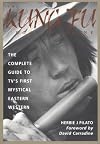
In 1972 a wandering Shaolin monk walked out of the Old West and into the imagination of an entire generation of TV viewers. The weekly Kung Fu series sparked a revolution of interest in Eastern philosophy and martial arts, a revolution that is still going on today through the new hit series Kung Fu: The Legend Continues.
The Kung Fu Book of Caine is the complete episode-by-episode guide to America's first mystical Eastern Western. Author Herbie Pilato had unprecendented access to materials show more previously unavailable to the show's millions of fans. He provides in-depth background information, behind he scenes photographs, and summaries of sixty-two weekly shows plus all the Kung Fu TV movies that not only capture the weekly plots but also explore the themes drawn from the Eastern philosophy of Masters Po and Kan. David Carradine, star of this remarkable series, offers his own thoughts on the Kung Fu phenomenon, nearly twenty years later, in the books foreword.
Author Herbie J. Pilato is an actor and songwriter. His previous book is Bewitched, about the popular TV sitcom.
Contents
Foreword by David Carradine
Preface
Acknowledgments
Part One The making of kung fu
Chapter One The appeal of grasshopper
Chapter Two Creations
Chapter Three The Shaolin way
Capter Four Kwai Chang Caine
Chapter Five Masters and other supporting characters
Chapter Six Behind the scenes
Part Two The stories of kung fu
Chapter Seven First season episodes
Chapter Eight Second season episodes
Chapter Nine Third season episodes show less
The Kung Fu Book of Caine is the complete episode-by-episode guide to America's first mystical Eastern Western. Author Herbie Pilato had unprecendented access to materials show more previously unavailable to the show's millions of fans. He provides in-depth background information, behind he scenes photographs, and summaries of sixty-two weekly shows plus all the Kung Fu TV movies that not only capture the weekly plots but also explore the themes drawn from the Eastern philosophy of Masters Po and Kan. David Carradine, star of this remarkable series, offers his own thoughts on the Kung Fu phenomenon, nearly twenty years later, in the books foreword.
Author Herbie J. Pilato is an actor and songwriter. His previous book is Bewitched, about the popular TV sitcom.
Contents
Foreword by David Carradine
Preface
Acknowledgments
Part One The making of kung fu
Chapter One The appeal of grasshopper
Chapter Two Creations
Chapter Three The Shaolin way
Capter Four Kwai Chang Caine
Chapter Five Masters and other supporting characters
Chapter Six Behind the scenes
Part Two The stories of kung fu
Chapter Seven First season episodes
Chapter Eight Second season episodes
Chapter Nine Third season episodes show less
Glamour, Gidgets, and the Girl Next Door: Television's Iconic Women from the 50s, 60s, and 70s by Herbie J. Pilato
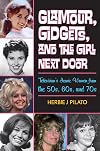
A collection of 45 short profiles of popular young actresses of the 1950s through the 1970s, from Elinor Donahue and Gale Storm to Goldie Hawn and Mary Tyler Moore to Loni Anderson and Suzanne Summers. Interesting facts about them (like Hawn's start in ballet and go-go dancing), some of the profiles are better than others which is to be expected. Based on personal interviews and a variety of published resources. Author Pilato made good selections, but you'll disagree over some exclusions. show more For me it was Batgirl Yvonne Craig who only rated an honorable mention on the last couple of pages. Definitely worth it for Hollywood fans. show less

Initially this book was disappointing. I was hoping for a deeper, traditional biography of Montgomery's life. While it is a beautiful book, it appears to be simply a chronicle of every moment she appeared on film.
After the disappointment with the format, I began reading through the book. Being a fan of Montgomery, I found some interesting details. The photographs are lovely. Pilato also gives solid background information about her parents and their family, though I hungered for more. He show more outlines her relationships with men, as well as a possibly troubled relationship with her father. Pilato does seem a bit over-fixated on the father/daughter relationship.
Again, it is a beautiful book. It is simply not a biography, but a listing of her performances with some details about her life and family. show less
After the disappointment with the format, I began reading through the book. Being a fan of Montgomery, I found some interesting details. The photographs are lovely. Pilato also gives solid background information about her parents and their family, though I hungered for more. He show more outlines her relationships with men, as well as a possibly troubled relationship with her father. Pilato does seem a bit over-fixated on the father/daughter relationship.
Again, it is a beautiful book. It is simply not a biography, but a listing of her performances with some details about her life and family. show less
 This review was written for LibraryThing Early Reviewers.
Lists
Awards


You May Also Like


Associated Authors
Statistics
- Works
- 15
- Members
- 236
- Popularity
- #95,934
- Rating
- 3.0
- Reviews
- 17
- ISBNs
- 29
