
Heidi Squier Kraft
Author of Rule Number Two: Lessons I Learned in a Combat Hospital
Works by Heidi Squier Kraft
The docs: a graphic novel 1 copy
Tagged
Common Knowledge
Members
Reviews
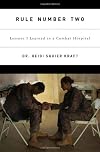
"There are two rules of war. Rule number one is that young men die. Rule number two is that doctors can't change rule number one."
This is a well written story of a young female Navy clinical psychologist who is sent to a field Marine surgical unit (think MASH) in Fallugah Iraq at the height of the battle in Feb 2004. She left behind her 15 mo old twins in the care of her parents and her husband (a Marine pilot). It's an incredibly honest, compassionate, compelling, and heartwrenching story show more of her tour of duty and the heroes she counts herself privileged to serve with. I count her as one of the heroes.
The book is not long, not technical and 'easy' to read on the one hand--the prose is sharp and clear. However, It is difficult to read about a young woman separated from her family, enduring incredible hardships, but able to help those Marines both younger and older than herself to not only endure and function, but survive with some humanity. With people like Heidi Kraft taking care of us, we will remain a strong country. show less
This is a well written story of a young female Navy clinical psychologist who is sent to a field Marine surgical unit (think MASH) in Fallugah Iraq at the height of the battle in Feb 2004. She left behind her 15 mo old twins in the care of her parents and her husband (a Marine pilot). It's an incredibly honest, compassionate, compelling, and heartwrenching story show more of her tour of duty and the heroes she counts herself privileged to serve with. I count her as one of the heroes.
The book is not long, not technical and 'easy' to read on the one hand--the prose is sharp and clear. However, It is difficult to read about a young woman separated from her family, enduring incredible hardships, but able to help those Marines both younger and older than herself to not only endure and function, but survive with some humanity. With people like Heidi Kraft taking care of us, we will remain a strong country. show less
Subtitled, "Lessons I Learned in a Combat Hospital," the book tells the story of the 7-month deployment of Dr. Heidi (LCDR) Kraft, who served with USMC Alpha Surgical Company in Iraq. This psychologist recounts not only the stories of those she treats, but also of herself, and how, over the course of the deployment, she begins to display many of the same symptoms of continual stress that plague her clients, the Marines fighting in Iraq.
The U.S. Navy is deploys Doctor Kraft, a Lieutenant Commander in to Iraq to provide clinical psychologist services to men and woman in combat. Stationed in Al Asad, she is part of a Marine Corp medical team providing emergency triage and medical services. Kraft conveys the agony separate from family and children faced by her and others. The vivid descriptions highlight the heat, dust, and insects take on a body. Flak and Kevlar seemed insufficient when incoming artillery shells hit nearby. show more Physical and mental wounds are common but not everyone survives to make it home and some that do will never be whole again. War is ugly and Dr. Kraft shares her experience dealing with the mental anguish that is hard from those who have not experience it to understand. show less
Kraft was a navy psychologist who was sent to Iraq for 7 months. This memoir recounts her deployment. She and her team seem to have spent much of their time doing immediate response for medical traumas, some critical incident debriefing, emergency psychiatric evaluation, and regular appointments. This is described against the backdrop of Kraft's wrenching separation from her young twins.
I would have wished for more technical descriptions of the therapeutic work. While Kraft goes into her show more countertransference and other emotional responses, I'd have liked to read about this in a deeper context, even if it was in composite cases show less
I would have wished for more technical descriptions of the therapeutic work. While Kraft goes into her show more countertransference and other emotional responses, I'd have liked to read about this in a deeper context, even if it was in composite cases show less
Statistics
- Works
- 3
- Members
- 138
- Popularity
- #148,170
- Rating
- 4.2
- Reviews
- 7
- ISBNs
- 6
- Languages
- 1