
Ronald A. Reis
Author of Christopher Columbus and the Age of Exploration for Kids: With 21 Activities
About the Author
Ronald A. Reis has written 13 books, including young adult biographies of Eugenie Clark and Jonas Salk. He is the chairman of the technology department at Los Angeles Valley College.
Works by Ronald A. Reis
Christopher Columbus and the Age of Exploration for Kids: With 21 Activities (2013) 20 copies, 2 reviews
The US Congress for Kids: Over 200 Years of Lawmaking, Deal-Breaking, and Compromising, with 21 Activities (55) (For Kids series) (2014) 16 copies, 1 review
Henry Ford for Kids: His Life and Ideas, with 21 Activities (For Kids series) (2016) 11 copies, 1 review
Tagged
Common Knowledge
- Gender
- male
Members
Reviews

Henry Ford was a fascinating character who truly “gave birth to a modern America.” While he did not invent the automobile, nor the assembly-line technique of mass production, he revolutionized transportation by combining the two in order to make cars affordable and put the country on wheels. He also instituted living wages in his factories - more than double what most mechanics could earn elsewhere; established reduced work week hours; hired the disabled; started a profit-sharing system show more (open only to those who had been on the job more than six months and who conducted themselves according to a set of “socially approved” behaviors); set up a system of local dealerships so that potential drivers all over America could find and purchase cars; founded schools, hospitals, and an orphanage; sponsored a newspaper, and much more.
Unfortunately, the heading of “much more” would include Ford’s rabid anti-Semitic notions, which he had printed up regularly in his newspaper, “The Dearborn Independent.” The weekly essays were based on the idea that the Jews were “vile, lewd, nasty, erotic, and criminal,” and described the ways in which Ford believed they were responsible for most of the world’s problems. He even would not allow brass to be used in his Model T automobiles, because he was informed it was a “Jew metal.” (Engineers used it anyway but covered it up with black paint.)
Ford was also not the best father, regularly humiliating his son Edsel in front of executives and workers. He thought Edsel was weak, and found a substitute-son in Harry Bennett, a “tough guy” who became Ford’s “personal man,” and who developed a group of enforcers - 800-strong at one point - to roam through the main factor and apply pressure to employees to work faster and not socialize, or even smile. As Reis reports:
“Ford workers learned to communicate without moving their lips. They developed what became known as the ‘Ford whisper.’”
Ford created a museum collecting “Americana” which opened in 1929, with an adjoining "Greenfield Village" that featured many historical structures - some re-created, and others disassembled and then reassembled in Dearborn - including the Logan County Courthouse, where Lincoln argued cases as a young lawyer, Thomas Edison’s Menlo Park Complex, the Wright Brothers Garden Shed, and even rides (of course). (You can look at a map here.)
In short, Henry Ford, as Reis writes, “was a man of monumental contradictions.” He had huge flaws, but at the same time, he “not only gave birth to a modern America, he was modern America.” He certainly deserves careful consideration in the history of the country.
Discussion: I love so many aspects of this series of books for kids from the Chicago Review Press. Most of all, they don’t shy away from giving a complete picture of the life of the person being profiled, warts and all. They demonstrate it is possible to applaud the accomplishments of acclaimed figures in history while at the same time admitting to more regrettable aspects of their lives. They understand that to eschew deification and expose inequality and injustice is not to question the entire American project, but to strengthen it by applying standards of fairness to which future citizens may aspire.
A second great feature of this series is the inclusion of activities that not only relate to the subject, but tie in different aspects of learning, from language arts to science to architecture, etc.
Some of the 21 activities in this book include instructions for the following:
construct a simple electric motor
design a hubcap (from a paper plate)
build a lemon-powered battery
build a bird feeder (Ford loved birds, and created a huge bird sanctuary of close to 1,500 acres providing a home to some 200 species)
learn the language of industrial drawing
make a moving assembly line
set up a recycling center (Ford anticipated the environmental movement by setting up recycling centers in his factories)
dance the waltz (Ford not only published a dance manual, but opened dancing schools for the boys and girls of Dearborn, which in time spread from Michigan to the East Coast)
This book also contains a time line, glossary, annotated list of internet resources, bibliography, and index.
Evaluation: This series of books from the Chicago Review Press for kids is outstanding. Each provides a comprehensive and accessible overview of the subject matter, adds fun and informative activities, and treats history as it should be treated: without misleading filters that glamorize and/or obfuscate the truth. show less
Unfortunately, the heading of “much more” would include Ford’s rabid anti-Semitic notions, which he had printed up regularly in his newspaper, “The Dearborn Independent.” The weekly essays were based on the idea that the Jews were “vile, lewd, nasty, erotic, and criminal,” and described the ways in which Ford believed they were responsible for most of the world’s problems. He even would not allow brass to be used in his Model T automobiles, because he was informed it was a “Jew metal.” (Engineers used it anyway but covered it up with black paint.)
Ford was also not the best father, regularly humiliating his son Edsel in front of executives and workers. He thought Edsel was weak, and found a substitute-son in Harry Bennett, a “tough guy” who became Ford’s “personal man,” and who developed a group of enforcers - 800-strong at one point - to roam through the main factor and apply pressure to employees to work faster and not socialize, or even smile. As Reis reports:
“Ford workers learned to communicate without moving their lips. They developed what became known as the ‘Ford whisper.’”
Ford created a museum collecting “Americana” which opened in 1929, with an adjoining "Greenfield Village" that featured many historical structures - some re-created, and others disassembled and then reassembled in Dearborn - including the Logan County Courthouse, where Lincoln argued cases as a young lawyer, Thomas Edison’s Menlo Park Complex, the Wright Brothers Garden Shed, and even rides (of course). (You can look at a map here.)
In short, Henry Ford, as Reis writes, “was a man of monumental contradictions.” He had huge flaws, but at the same time, he “not only gave birth to a modern America, he was modern America.” He certainly deserves careful consideration in the history of the country.
Discussion: I love so many aspects of this series of books for kids from the Chicago Review Press. Most of all, they don’t shy away from giving a complete picture of the life of the person being profiled, warts and all. They demonstrate it is possible to applaud the accomplishments of acclaimed figures in history while at the same time admitting to more regrettable aspects of their lives. They understand that to eschew deification and expose inequality and injustice is not to question the entire American project, but to strengthen it by applying standards of fairness to which future citizens may aspire.
A second great feature of this series is the inclusion of activities that not only relate to the subject, but tie in different aspects of learning, from language arts to science to architecture, etc.
Some of the 21 activities in this book include instructions for the following:
construct a simple electric motor
design a hubcap (from a paper plate)
build a lemon-powered battery
build a bird feeder (Ford loved birds, and created a huge bird sanctuary of close to 1,500 acres providing a home to some 200 species)
learn the language of industrial drawing
make a moving assembly line
set up a recycling center (Ford anticipated the environmental movement by setting up recycling centers in his factories)
dance the waltz (Ford not only published a dance manual, but opened dancing schools for the boys and girls of Dearborn, which in time spread from Michigan to the East Coast)
This book also contains a time line, glossary, annotated list of internet resources, bibliography, and index.
Evaluation: This series of books from the Chicago Review Press for kids is outstanding. Each provides a comprehensive and accessible overview of the subject matter, adds fun and informative activities, and treats history as it should be treated: without misleading filters that glamorize and/or obfuscate the truth. show less
Christopher Columbus and the Age of Exploration for Kids: With 21 Activities (For Kids series) by Ronald A. Reis
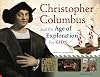
The real story of Columbus and his discoveries is such a good one, I can’t imagine why textbooks keep feeding kids the insipid myths that omit most of the action and drama of the truth. Well, actually I can imagine; the truth certainly doesn’t cast the “discoverer” of America and his crew in a very good light, but I don’t know why that fact also can’t be used as teaching material.
Christopher Columbus and the Age of Exploration for Kids is part of a large series of similar books show more from the Chicago Review Press, and it is so good I went out and got some others! This one tells the story of Columbus and his voyages in depth, and includes enough of a glimpse of the appalling treatment of the natives and the introduction of slavery to give kids an idea about what really happened. It doesn’t provide a lot of gory details though, especially with respect to how the females were used by the crew, presumably because of it being a book for kids.
The author tries to be even-handed. He is full of praise for the navigational skills of Columbus. But he also reveals just how badly used the Arawak Indians were, and how Columbus tricked them into continuing to provide him and his men with food in spite of the genocide being carried out on their people.
But this is not just a story about Columbus and his voyages. The author includes a lot of ancillary material that ties the history to other subject areas, such as math, social studies, and science. There is a chapter, for instance, on The Columbian Exchange, in which readers learn about the interchange of plants, animals, cultures, populations, diseases and ideas between the Old and New Worlds that began with Columbus (hence the name). A number of maps show the routes of the voyages, as well as demonstrate the state of geographical knowledge at the time.
Each of these books includes 21 activities that help expand the impact of the story. The Columbus book, for example, incorporates projects such as how to make a compass (also explaining how it works), how to simulate a hurricane, how to make a sundial, and how to make hardtack. In addition to footnotes and sources, the back of the book has an annotated list of websites for additional information and a glossary.
Evaluation: This book is outstanding. Besides the entertaining narration of the main story, there are plenty of photos and graphics and sidebars and boxes that mix it up and keep it interesting. I made the mistake of letting a 9 and 11 year old see this book before I could review it, and had to wrestle them so I could keep it for another week.
Highly recommended! show less
Christopher Columbus and the Age of Exploration for Kids is part of a large series of similar books show more from the Chicago Review Press, and it is so good I went out and got some others! This one tells the story of Columbus and his voyages in depth, and includes enough of a glimpse of the appalling treatment of the natives and the introduction of slavery to give kids an idea about what really happened. It doesn’t provide a lot of gory details though, especially with respect to how the females were used by the crew, presumably because of it being a book for kids.
The author tries to be even-handed. He is full of praise for the navigational skills of Columbus. But he also reveals just how badly used the Arawak Indians were, and how Columbus tricked them into continuing to provide him and his men with food in spite of the genocide being carried out on their people.
But this is not just a story about Columbus and his voyages. The author includes a lot of ancillary material that ties the history to other subject areas, such as math, social studies, and science. There is a chapter, for instance, on The Columbian Exchange, in which readers learn about the interchange of plants, animals, cultures, populations, diseases and ideas between the Old and New Worlds that began with Columbus (hence the name). A number of maps show the routes of the voyages, as well as demonstrate the state of geographical knowledge at the time.
Each of these books includes 21 activities that help expand the impact of the story. The Columbus book, for example, incorporates projects such as how to make a compass (also explaining how it works), how to simulate a hurricane, how to make a sundial, and how to make hardtack. In addition to footnotes and sources, the back of the book has an annotated list of websites for additional information and a glossary.
Evaluation: This book is outstanding. Besides the entertaining narration of the main story, there are plenty of photos and graphics and sidebars and boxes that mix it up and keep it interesting. I made the mistake of letting a 9 and 11 year old see this book before I could review it, and had to wrestle them so I could keep it for another week.
Highly recommended! show less
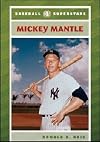
Review by Elizabeth D. Schafer (Children's Literature):
The son of avid baseball fans, Mickey Mantle, born in 1931, practiced to become a professional player by learning skills, particularly switch-hitting, from his father and grandfather in his Depression-era Oklahoma community. This “Baseball Superstars” series biography explores the complexities of Mantle’s career with the New York Yankees during the 1950s and 1960s. Mantle secured a contract with the Yankees two days after high show more school graduation and started minor league play two weeks later. Mantle’s impressive performances resulted in his reaching the major leagues by 1951. The 1956 season showcased Mantle’s talents, resulting in his first American League Most Valuable Player title and major league Triple Crown of highest batting average, most home runs, and most runs batted in. For several seasons, fans and reporters expected Mantle to exceed Babe Ruth’s record of 60 home runs in one year. By his 1969 retirement, Mantle had played 2,401 games and batted 536 home runs. He was chosen for the National Baseball Hall of Fame in 1974. This book addresses such controversial aspects as Mantle’s alcoholism, public outbursts, and casino endorsements, resulting in his major league ban. Both childhood and adult photographs of Mantle illustrate this biography. Additional resources include Mantle’s statistics, sidebars, chronology, glossary, bibliography, and web site addresses. Noting modern values of Mantle’s salaries would have been useful. No citations are provided to assist readers preparing reports. 2008, Chelsea House Publishers/Infobase Publishing. Ages 12 up. show less
The son of avid baseball fans, Mickey Mantle, born in 1931, practiced to become a professional player by learning skills, particularly switch-hitting, from his father and grandfather in his Depression-era Oklahoma community. This “Baseball Superstars” series biography explores the complexities of Mantle’s career with the New York Yankees during the 1950s and 1960s. Mantle secured a contract with the Yankees two days after high show more school graduation and started minor league play two weeks later. Mantle’s impressive performances resulted in his reaching the major leagues by 1951. The 1956 season showcased Mantle’s talents, resulting in his first American League Most Valuable Player title and major league Triple Crown of highest batting average, most home runs, and most runs batted in. For several seasons, fans and reporters expected Mantle to exceed Babe Ruth’s record of 60 home runs in one year. By his 1969 retirement, Mantle had played 2,401 games and batted 536 home runs. He was chosen for the National Baseball Hall of Fame in 1974. This book addresses such controversial aspects as Mantle’s alcoholism, public outbursts, and casino endorsements, resulting in his major league ban. Both childhood and adult photographs of Mantle illustrate this biography. Additional resources include Mantle’s statistics, sidebars, chronology, glossary, bibliography, and web site addresses. Noting modern values of Mantle’s salaries would have been useful. No citations are provided to assist readers preparing reports. 2008, Chelsea House Publishers/Infobase Publishing. Ages 12 up. show less
The US Congress for Kids: Over 200 Years of Lawmaking, Deal-Breaking, and Compromising, with 21 Activities (For Kids series) by Ronald A. Reis
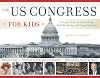
Young Reader Reaction: My friend used this as a resource in teaching her class about the function of Congress and why there is so much disdain for the Members of Congress today. The class found parts of the book and some of the activities interesting.
Adult Reader Reaction: I liked the balance of past and present material. Current Members of Congress are mentioned, so the book may be updated in the future to reflect the current composition of the Legislative Branch.
Pros: The US Congress for show more kids is well illustrated and has good content. Many (but not all) of the activities are enjoyable and make sense.
Read our full review and add yours at The Reading Tub®. show less
Adult Reader Reaction: I liked the balance of past and present material. Current Members of Congress are mentioned, so the book may be updated in the future to reflect the current composition of the Legislative Branch.
Pros: The US Congress for show more kids is well illustrated and has good content. Many (but not all) of the activities are enjoyable and make sense.
Read our full review and add yours at The Reading Tub®. show less
Awards

Statistics
- Works
- 24
- Members
- 201
- Popularity
- #109,506
- Rating
- 3.6
- Reviews
- 5
- ISBNs
- 72