
Maria Laurino
Author of Were You Always an Italian?: Ancestors and Other Icons of Italian America
About the Author
Maria Laurino is a journalist & essayist living in New York City. Her work has appeared in numerous publications including the "New York Times" & the "Village Voice". (Bowker Author Biography)
Works by Maria Laurino
Were You Always an Italian?: Ancestors and Other Icons of Italian America (2000) 64 copies, 2 reviews
Tagged
Common Knowledge
Members
Reviews
I have a soft spot for books dealing with the immigrant experience. I like reading about second and third generations and the methods they face in assimilation. Cultures that seem to have had success holding onto their traditions and beliefs even after crossing an ocean fascinate me. And I'm not too far removed from the Italian portion of my family (even if my grandmother did use Velveeta in her lasagne). So this book should have been a slam dunk for me. Can you hear the "But..." in the show more previous sentence? Because it is there and unfortunately it looms large.
I went into this collection of essays believing that I would be reading anecdotes about Laurino's Italian family, especially her mother, and the ways in which hyphenation (Italian-American) both complicated and enriched her life. And there was some of that, but only a very small amount. Instead the bulk of the essays dealt with the ways in which she as a woman navigated the old world ideas under which she was raised and the new world ideals surrounding her adulthood. The essays are very politicized, feminist focused writings on the balance between work and family. So for someone looking for a memoir, a mother-daughter ode, an entertaining cultural fiesta (sorry, I'm enough removed from my Italian roots I can't come up with an approrpiate Italian term instead), this was not the book to read.
Laurino does posit the interesting idea that her mother's life was not unfulfilling simply because she followed the traditional pattern, that our concept of dependence is unneccesarily negative, and that the idea of independence can be isolating. But a little of this discussion goes a long way for me. I was unfortunately disappointed by what this book wasn't and bored by the extended discussion of feminism and its roots and relationship to traditional old world gender roles. For the more politically and sociologically inclined who aren't expecting as much a memoir as I was, this will probably be of more interest than it was to me. show less
I went into this collection of essays believing that I would be reading anecdotes about Laurino's Italian family, especially her mother, and the ways in which hyphenation (Italian-American) both complicated and enriched her life. And there was some of that, but only a very small amount. Instead the bulk of the essays dealt with the ways in which she as a woman navigated the old world ideas under which she was raised and the new world ideals surrounding her adulthood. The essays are very politicized, feminist focused writings on the balance between work and family. So for someone looking for a memoir, a mother-daughter ode, an entertaining cultural fiesta (sorry, I'm enough removed from my Italian roots I can't come up with an approrpiate Italian term instead), this was not the book to read.
Laurino does posit the interesting idea that her mother's life was not unfulfilling simply because she followed the traditional pattern, that our concept of dependence is unneccesarily negative, and that the idea of independence can be isolating. But a little of this discussion goes a long way for me. I was unfortunately disappointed by what this book wasn't and bored by the extended discussion of feminism and its roots and relationship to traditional old world gender roles. For the more politically and sociologically inclined who aren't expecting as much a memoir as I was, this will probably be of more interest than it was to me. show less
Old World Daughter, New World Mother is a provocative meditation on feminism: a symphony of intellectual, historical, economic, political, social, emotional, and personal aspects playing their part in a final creation that holds together not only the story of Maria Laurino, but also other ambitious second generation immigrant women--perhaps Italian Americans in particular, but certainly not limited to that ethnic group.
Laurino, author of the best selling book, Were You Always an Italian, show more grew up in a traditional household that honored women who cared for their families, who sacrificed individual dreams for the well-being of the group. Her father, breaking the mold so many ethnic fathers broke in the 70s, encouraged his daughter to establish an independent life and a career. So off she went.
At Georgetown University, Laurino ‘assumed the identity of a girl reporter,’ found a championing mentor--Jeane Kirkpatrick, ardent anticommunist and U.S. ambassador to the United Nations, nonetheless--and began looking for answers to what became, for her, a lifelong question: female autonomy. Is it possible? Can autonomy create parity in a society built on competition and profit? Do women really want autonomy?
At this point in the book, Laurino pulls out her powerful writing skills and begins, like the master she is, to twirl, cut, expose, and cite literature as well as scientific reports that lead along the path to answering her question. At the same time, readers ascend the steps of her impressive journalistic career.
As she moves from the mice-infested, exciting and sexually polarized Village Voice office to New York City Mayor David Dinkin’s money-laden digs, we hear from Chaucer’s Wife of Bath, Japanese novelist Haruki Murakami, phallocentric challenged French feminists, and young NYU students who can’t define feminism. We learn about philosopher Eva Feder Kittay’s concept that ‘everyone is some mother’s child,’ statistics from Australia’s daycare system, a summary of British psychoanalyst's John Bowlbey’s attachment theory, and the author’s own Uncle Patsy who says ‘ev-ah-ree-tings-ah-boolsheet.’
Motherhood culminates the discussion of autonomy and equality. “The most enduring and difficult conflict for all women who want to combine motherhood with personal ambition has less to do with defined maternal roles than the absolute dependency of an infant,” she writes.
To foster true feminist equality and autonomy, Laurino urges a defined chlid-caring partnership between parents, as well as for government to spend more on child care than on prisons, and that women’s autonomy concerns gain top billing in political discussions.
As a mother, she can’t help wondering if her fingers were stained by the grapes in her Old World? Genetic and ancestral patterns ‘hover about us throughout or lives.’ Can family life possibly be a ‘joy-filled reality of attachment and dependency’ and not a purposeful oppression of individual freedom?
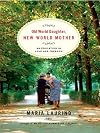
The book surprised me. The cover and title promised a story about mothers and daughters, different, for sure, than what was delivered. As much as mothers and daughters, Laurino’s meditation honed in on daughters and ‘feminist’ fathers, sisters and successful brothers, the political dynamics of female and male co-workers, and the responsibility of wives and husbands.
Either way, as we read Laurino’s book we ponder: who are we, where did we come from, where are we going? Like many Italian Americans of her generation, Laurino has done well in the New World; her heart, however, hovers in a More-Perfect World and her mind reaches out for the irretrievable Old World; the Old World of our common childhood, of our ancestors, of memory, of our sometimes ethnic self-consciousness, of our dependency on each other. show less
Laurino, author of the best selling book, Were You Always an Italian, show more grew up in a traditional household that honored women who cared for their families, who sacrificed individual dreams for the well-being of the group. Her father, breaking the mold so many ethnic fathers broke in the 70s, encouraged his daughter to establish an independent life and a career. So off she went.
At Georgetown University, Laurino ‘assumed the identity of a girl reporter,’ found a championing mentor--Jeane Kirkpatrick, ardent anticommunist and U.S. ambassador to the United Nations, nonetheless--and began looking for answers to what became, for her, a lifelong question: female autonomy. Is it possible? Can autonomy create parity in a society built on competition and profit? Do women really want autonomy?
At this point in the book, Laurino pulls out her powerful writing skills and begins, like the master she is, to twirl, cut, expose, and cite literature as well as scientific reports that lead along the path to answering her question. At the same time, readers ascend the steps of her impressive journalistic career.
As she moves from the mice-infested, exciting and sexually polarized Village Voice office to New York City Mayor David Dinkin’s money-laden digs, we hear from Chaucer’s Wife of Bath, Japanese novelist Haruki Murakami, phallocentric challenged French feminists, and young NYU students who can’t define feminism. We learn about philosopher Eva Feder Kittay’s concept that ‘everyone is some mother’s child,’ statistics from Australia’s daycare system, a summary of British psychoanalyst's John Bowlbey’s attachment theory, and the author’s own Uncle Patsy who says ‘ev-ah-ree-tings-ah-boolsheet.’
Motherhood culminates the discussion of autonomy and equality. “The most enduring and difficult conflict for all women who want to combine motherhood with personal ambition has less to do with defined maternal roles than the absolute dependency of an infant,” she writes.
To foster true feminist equality and autonomy, Laurino urges a defined chlid-caring partnership between parents, as well as for government to spend more on child care than on prisons, and that women’s autonomy concerns gain top billing in political discussions.
As a mother, she can’t help wondering if her fingers were stained by the grapes in her Old World? Genetic and ancestral patterns ‘hover about us throughout or lives.’ Can family life possibly be a ‘joy-filled reality of attachment and dependency’ and not a purposeful oppression of individual freedom?
The book surprised me. The cover and title promised a story about mothers and daughters, different, for sure, than what was delivered. As much as mothers and daughters, Laurino’s meditation honed in on daughters and ‘feminist’ fathers, sisters and successful brothers, the political dynamics of female and male co-workers, and the responsibility of wives and husbands.
Either way, as we read Laurino’s book we ponder: who are we, where did we come from, where are we going? Like many Italian Americans of her generation, Laurino has done well in the New World; her heart, however, hovers in a More-Perfect World and her mind reaches out for the irretrievable Old World; the Old World of our common childhood, of our ancestors, of memory, of our sometimes ethnic self-consciousness, of our dependency on each other. show less
My biggest problem with this book is that it wasn't what I expected it to be. I'm not sure it is fair to hold that against it.On the other hand, I had a hard time figuring out what the book WAS supposed to be. I liked most of the parts. It was combining them into a whole that didn't always work for me.I really, really want to give this book 3.5 stars.I was expecting a homey, somewhat funny memoir-- stories of the author's life, with some reflections on deeper meaning.What I read was a series show more of loosely related essays, braiding thoughts on feminism, references to research, and homey stories of her life. (I never did find the "witty" referred to in the book blurb.)These were, for the most part, well written. Several of them leave me with questions for the author. Some make me bristle, and want to argue. A few leave me saying Yes! She gets it!That's not a bad outcome. show less
Maria Laurino's book is part memoirs and part analysis of feminism in practice.
The book begins with stories of her Italian American grandparents and the lives that they built for themselves in New Jersey. Sharing anecdotes from her mother's childhood of how her maternal grandfather who came to the US at the turn of the century and created his own construction company. Growing their own vegetables and flowers, making their own wine in the basement of their home, maintaining many of their show more traditions and habits of the lives that they'd had in Italy. In the stories of her family, Maria Laurino shares the roles that women have held and how each generation of women would balance the expectations and needs of their families with their own needs.
She writes about feminism in the context of her own life and her identity as Italian American. "I explained how my father wanted me to attend any college that I chose and always supported my living away from home to pursue a career...[the journalist] had no idea how radical the concept of establishing an independent life was for a daughter in a traditional Italian-American family."
Laurino discusses how motherhood affected her understanding of everyday feminism. She also analyzes how feminism is regarded by college women and recent college graduates insofar as anecdotal research shows that less women seem to describe themselves as feminists while they have a deep commitment to gender equality in practice.
Overall, I found Old World Daughter, New World Mother: An Education in Love and Freedom to be an interesting read.
Publisher: W.W. Norton & Co. (April 13, 2009), 224 pages.
Courtesy of Bostick Communications and the author. show less
The book begins with stories of her Italian American grandparents and the lives that they built for themselves in New Jersey. Sharing anecdotes from her mother's childhood of how her maternal grandfather who came to the US at the turn of the century and created his own construction company. Growing their own vegetables and flowers, making their own wine in the basement of their home, maintaining many of their show more traditions and habits of the lives that they'd had in Italy. In the stories of her family, Maria Laurino shares the roles that women have held and how each generation of women would balance the expectations and needs of their families with their own needs.
She writes about feminism in the context of her own life and her identity as Italian American. "I explained how my father wanted me to attend any college that I chose and always supported my living away from home to pursue a career...[the journalist] had no idea how radical the concept of establishing an independent life was for a daughter in a traditional Italian-American family."
Laurino discusses how motherhood affected her understanding of everyday feminism. She also analyzes how feminism is regarded by college women and recent college graduates insofar as anecdotal research shows that less women seem to describe themselves as feminists while they have a deep commitment to gender equality in practice.
Overall, I found Old World Daughter, New World Mother: An Education in Love and Freedom to be an interesting read.
Publisher: W.W. Norton & Co. (April 13, 2009), 224 pages.
Courtesy of Bostick Communications and the author. show less
Statistics
- Works
- 5
- Members
- 135
- Popularity
- #150,830
- Rating
- 3.6
- Reviews
- 8
- ISBNs
- 8
- Languages
- 1