
About the Author
Works by Jiro Takei
Sakuteiki Visions of the Japanese Garden: A Modern Translation of Japan's Gardening Classic (2001) 118 copies, 4 reviews
Tagged
Common Knowledge
- Birthdate
- 1930-03-14
- Gender
- male
Members
Reviews
Sakuteiki: Visions of the Japanese Garden: A Modern Translation of Japan's Gardening Classic (Tuttle Classics) by Jiro Takei
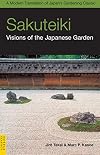
The Sakuteiki (Records of Garden Making) is some 1,000 years old, the oldest surviving treatise on gardening in the world. Written in the eleventh century, it provides principles and rules for the construction of the gardens featured in aristocratic residences and temples, including instructions for the use of stones, streams, islands, and waterfalls. It also deals extensively with taboos the violation of which could spell trouble or even disaster for the owner of a residence.
This show more translation, published in 2008, prefaces the Sakuteiki with extensive historical and cultural notes on life in Japan's Heian period, nature (which provides the inspiration for gardens), geomancy, Buddhism, and the convoluted collection of taboos that developed from varying religious streams and influenced every aspect of life in those times. This background occupies the first half of the volume, with the Sakuteiki and translator's footnotes comprising the second half.
For most of us, it's unlikely we will learn much of relevance to our own gardens from this book. We aren't aristocrats, after all. Most of our properties aren't even a fraction of the size of the gardens discussed here. Still, it's a fascinating read for anyone interested in history, religion, or gardening in general, and some of the principles presented in the Sakuteiki cross cultures and millennia to speak to us today: nature as the inspiration for gardens, gardens as a place for contemplation, the peace and tranquility of gardens. Even if we never build a garden of the scale and complexity of those presented here, it's a interesting read and possibly a source of inspiration. show less
This show more translation, published in 2008, prefaces the Sakuteiki with extensive historical and cultural notes on life in Japan's Heian period, nature (which provides the inspiration for gardens), geomancy, Buddhism, and the convoluted collection of taboos that developed from varying religious streams and influenced every aspect of life in those times. This background occupies the first half of the volume, with the Sakuteiki and translator's footnotes comprising the second half.
For most of us, it's unlikely we will learn much of relevance to our own gardens from this book. We aren't aristocrats, after all. Most of our properties aren't even a fraction of the size of the gardens discussed here. Still, it's a fascinating read for anyone interested in history, religion, or gardening in general, and some of the principles presented in the Sakuteiki cross cultures and millennia to speak to us today: nature as the inspiration for gardens, gardens as a place for contemplation, the peace and tranquility of gardens. Even if we never build a garden of the scale and complexity of those presented here, it's a interesting read and possibly a source of inspiration. show less
Sakuteiki Visions of the Japanese Garden: A Modern Translation of Japan's Gardening Classic by Jiro Takei

I really enjoyed this. Of course it's dated but as a gardener who lived in Japan, I loved the history and the thinking behind the gardens. A lot to think about when planning my next garden.
The Sakuteiki, vision of the Japanese garden : a modern translation of Japan's gardening classic by Jiro Takei
A heavily-annotated translation of a Heian-period text on garden design.
The first half of the book contains a lot of background information to put it into context, such as the typical layout of the types of houses to have such gardens and the importance of things like Buddhism, geomancy and directional taboos to their design.
I found this pretty interesting, but it has a lot of typos and punctuation errors.
The first half of the book contains a lot of background information to put it into context, such as the typical layout of the types of houses to have such gardens and the importance of things like Buddhism, geomancy and directional taboos to their design.
I found this pretty interesting, but it has a lot of typos and punctuation errors.
Statistics
- Works
- 1
- Members
- 118
- Popularity
- #167,489
- Rating
- 3.9
- Reviews
- 4
- ISBNs
- 5
- Languages
- 1