
Sophie Treadwell (1885–1970)
Author of Machinal
Works by Sophie Treadwell
Associated Works
25 best plays of the Modern American Theatre : Early Series : 1916-1929 (1949) — Contributor — 31 copies
Gender in Modernism: New Geographies, Complex Intersections (2007) — Contributor — 12 copies, 1 review
Tagged
Common Knowledge
- Birthdate
- 1885-10-03
- Date of death
- 1970-02-20
- Gender
- female
- Education
- University of California, Berkeley
- Occupations
- playwright
journalist
actor
women's rights advocate
social activist
novelist - Short biography
- Sophie Treadwell was born to a pioneer family in Stockton, California. She was the only daughter of Alfred B. Treadwell, a judge, from whom she inherited a passion for all things Mexican and Spanish, and his wife Nellie Fairchild Treadwell. After her father deserted the family, Sophie and her mother moved to San Francisco, where she first learned about the theater. She attended the University of California at Berkeley, where she had to work several jobs to support herself; during this time, she also began to write one-act plays and short stories. After graduating with a degree in French in 1906, she worked for a year as a teacher in a one-room school in Yankee Jims, once a mining camp during the California Gold Rush/ She then moved to Los Angeles where she studied acting and worked for a brief time as a vaudeville singer. She returned to San Francisco to work as a reporter on the San Francisco Bulletin. She soon became a feature writer with her own byline.
In 1910. she married William O. McGeehan, a popular sports writer for the San Francisco Chronicle and later moved with him to New York City, where he got a job with the New York Herald Tribune. Sophie persuaded the newspaper to send her to Europe as a war correspondent during World War I.
In NYC, Sophie joined the Lucy Stone League of suffragists and was an associate editor for Equal Rights, a weekly publication for the National Woman’s Party. She befriended many modernist personalities and modern artists of the time, including Louise and Walter Arensberg and painter Marcel Duchamp. Sophia advocated for sexual independence, birth control rights, and increased sexual freedom for women. She traveled often with her husband across the USA, Europe, and Northern Africa, all the while continuing to write plays; by the end of her career, she had written 39. In 1921, she used her Mexican connections to secure the only American interview with Pancho Villa at his ranch near Durango, Mexico. This visit resulted in her first professionally produced play on Broadway, Gringo (1922). Her most successful play was the expressionist work Machinal (1928). It was staged in England and in many European cities, including two productions in Moscow.
It was adapted by BBC-TV and by several American television programs in the 1950s. When Machinal was revived at the off-Broadway Gate Theater in 1960, it won the Vernon Rice Award.
Throughout most of the 1950s, Sophie lived abroad, in Austria and in Spain, where she published a novel in 1959. At age 80, she was actively engaged in the production of her final work, Now He Doesn't Want to Play, at the University of Arizona. - Nationality
- USA
- Birthplace
- Stockton, California, USA
- Places of residence
- San Francisco, California, USA
- Place of death
- Tucson, Arizona, USA
- Associated Place (for map)
- California, USA
Members
Reviews
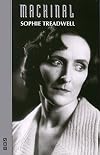
In this dramatic play, a young woman looks for peace and happiness in a variety of ways – work, marriage, motherhood – but never finds fulfillment, only a mechanized routine.
Machinal is very loosely based, or rather inspired, by the true and then-shocking story of Ruth Snyder who, with the help of her lover, murdered her husband and met her fate through the electric chair as a result. With that background, you know you’re not going to be in for a happy ending with this play by Sophie show more Treadwell.
But what makes Machinal so fascinating for me is not the plot but the way it is written. As Treadwell herself explains in the stage directions at the beginning of the play “The hope is to create a stage production that will have ‘style’ … In the dialogue of these scenes there is the attempt to catch the rhythm of our common city speech, its brassy sound, its trick of repetition, etc. Then there is, also, the use of many different sounds chosen primarily for their inherent emotional effect (steel riveting, a priest chanting, a Negro singing, jazz band, etc.), but contributing also to the creation of a background, an atmosphere.” Unlike the many plays I’ve been to where you could hear a pin drop between characters’ lines, this play calls for lots of ambient noise – from typewriters clanging in an office to children playing outside. So much of this play occurs off stage that I’ve always been fascinated by how it would actually play out on a stage. (I’ve only ever read it before but I’m excited by the prospect of going to see this play live shortly.)
It’s not the kind of play where the viewer (or this case, reader) would walk away having beautiful and catchy lines to repeat as much of the dialogue is staccato – but again, another reason why I like it. The short, rushed speech of the characters, especially the protagonist Helen who can barely ever get out a coherent sentence, adds all the more to the jarring atmosphere of this play.
The episode called “Prohibited” is an especially striking scene in which Treadwell touches upon a number of still touchy issues, including homosexuality and abortion, in a roundabout way by having the viewer able to listen in on the conversations of random characters not tied to the plot at all. It seems a particularly daring scene for a play written in 1928. While there are obvious markers of age, such as typewriters and adding machines, on the whole Machinal feels oddly modern.
I really, really enjoy this play although I’m not sure my rambling comments here really do it justice. It’s relatively short so I would recommend going out and finding a copy to read immediately. It’s so fantastic you won’t be disappointed. show less
Machinal is very loosely based, or rather inspired, by the true and then-shocking story of Ruth Snyder who, with the help of her lover, murdered her husband and met her fate through the electric chair as a result. With that background, you know you’re not going to be in for a happy ending with this play by Sophie show more Treadwell.
But what makes Machinal so fascinating for me is not the plot but the way it is written. As Treadwell herself explains in the stage directions at the beginning of the play “The hope is to create a stage production that will have ‘style’ … In the dialogue of these scenes there is the attempt to catch the rhythm of our common city speech, its brassy sound, its trick of repetition, etc. Then there is, also, the use of many different sounds chosen primarily for their inherent emotional effect (steel riveting, a priest chanting, a Negro singing, jazz band, etc.), but contributing also to the creation of a background, an atmosphere.” Unlike the many plays I’ve been to where you could hear a pin drop between characters’ lines, this play calls for lots of ambient noise – from typewriters clanging in an office to children playing outside. So much of this play occurs off stage that I’ve always been fascinated by how it would actually play out on a stage. (I’ve only ever read it before but I’m excited by the prospect of going to see this play live shortly.)
It’s not the kind of play where the viewer (or this case, reader) would walk away having beautiful and catchy lines to repeat as much of the dialogue is staccato – but again, another reason why I like it. The short, rushed speech of the characters, especially the protagonist Helen who can barely ever get out a coherent sentence, adds all the more to the jarring atmosphere of this play.
The episode called “Prohibited” is an especially striking scene in which Treadwell touches upon a number of still touchy issues, including homosexuality and abortion, in a roundabout way by having the viewer able to listen in on the conversations of random characters not tied to the plot at all. It seems a particularly daring scene for a play written in 1928. While there are obvious markers of age, such as typewriters and adding machines, on the whole Machinal feels oddly modern.
I really, really enjoy this play although I’m not sure my rambling comments here really do it justice. It’s relatively short so I would recommend going out and finding a copy to read immediately. It’s so fantastic you won’t be disappointed. show less
My first encounter with this play was when my college put on a production and I had to write a paper about it for one of my classes. I knew the bare minimum about the subject matter and left the school theater that night in awe. It led me to want to spend some time with the play in the written sense and learn more about its author Sophie Treadwell.
Sophie Treadwell is thought to be one of the first female war reporters and was one of the first women to write and director on Broadway. show more Treadwell brought Freud's psychoanalysis to the stage by bringing the story of Ruth Snyder, the first woman to die in the electric chair, and her lover for the murder of Snyder's husband.
What I loved most about this play is Treadwell's use of language. The way she set up her characters dialogues, with lots of pauses, makes the emotions and characters seem that much more realistic. It's easy to tell that the main character, mostly known as Young Woman, has some sort of mental illness. Her lack of feeling she belongs is always an issue for her until she actually falls in love, and not with her husband. It is very interesting how Treadwell decided to make Young Woman dislike being touched, dislike small places and seems to have an issue with germs. It allows the audience to feel as if they are in Young Woman's mind instead of just watching events unfold.
Reading the words after seeing the play live helped sink in the issues that Treadwell was trying to hit home. Her work raises issues about class, race, sex and women's rights. Although Treadwell's play is a more minimalist approach to the famous case. It is a play that is still shockingly relevant today as it was then, no pun intended. show less
Sophie Treadwell is thought to be one of the first female war reporters and was one of the first women to write and director on Broadway. show more Treadwell brought Freud's psychoanalysis to the stage by bringing the story of Ruth Snyder, the first woman to die in the electric chair, and her lover for the murder of Snyder's husband.
What I loved most about this play is Treadwell's use of language. The way she set up her characters dialogues, with lots of pauses, makes the emotions and characters seem that much more realistic. It's easy to tell that the main character, mostly known as Young Woman, has some sort of mental illness. Her lack of feeling she belongs is always an issue for her until she actually falls in love, and not with her husband. It is very interesting how Treadwell decided to make Young Woman dislike being touched, dislike small places and seems to have an issue with germs. It allows the audience to feel as if they are in Young Woman's mind instead of just watching events unfold.
Reading the words after seeing the play live helped sink in the issues that Treadwell was trying to hit home. Her work raises issues about class, race, sex and women's rights. Although Treadwell's play is a more minimalist approach to the famous case. It is a play that is still shockingly relevant today as it was then, no pun intended. show less
The best part of this book is the introduction, in which I learned about Treadwell and expressionism. The play is excellent. I am officially off the wagon of depressing literature about women...I'm discontinuing my nightly routine of reading Shirley Jackson short stories (The Renegade mixed with Machinal thoroughly depressed me) and I'm going to read something more upbeat. :)
I recommend Bjork's film "Dancer in the Dark" which is also thoroughly depressing and disturbing in the same way.
P.S. show more Putting the bookcrossing label on the cover that exclaims, "I'm Free! I'm not lost!" kind of choked me up...very appropriate. show less
I recommend Bjork's film "Dancer in the Dark" which is also thoroughly depressing and disturbing in the same way.
P.S. show more Putting the bookcrossing label on the cover that exclaims, "I'm Free! I'm not lost!" kind of choked me up...very appropriate. show less
This is the story of a woman who marries a man she does not love. It is very mechanized in its structure, as is suited to a piece that is approaching the problem as that of a machine that goes wrong. It isn't particularly easy to read, since characters change their designations within the piece, becoming known by other names as the play proceeds and they move to a different status, such as First Man becoming Lover and Mr. J. becoming Husband. This can cause a bit of confusion, but if you can show more get past that, it is a play that is well worth spending some time reading. show less
Lists
You May Also Like
Associated Authors
Statistics
- Works
- 2
- Also by
- 3
- Members
- 181
- Popularity
- #119,335
- Rating
- 3.6
- Reviews
- 9
- ISBNs
- 5