
Henry M. Hoenigswald (1915–2003)
Author of Language Change and Linguistic Reconstruction
About the Author
Works by Henry M. Hoenigswald
Biological Metaphor and Cladistic Classification: An Interdisciplinary Perspective (1987) — Editor — 9 copies, 1 review
Associated Works
Ancient Indo-European dialects: Proceedings of the Conference on Indo-European Linguistics held at the University of California,Los Angeles,April 25-27.1963 (1966) — Contributor — 8 copies
Indo-European Perspectives: Studies in Honour of Anna Morpurgo Davies (Oxford Linguistics) (2004) — Contributor — 7 copies
Papers from the 7th International Conference on Historical Linguistics (1987) — Contributor — 5 copies
First person singular : papers from the Conference on an Oral Archive for the History of American Linguistics (Charlotte, N.C., 9-10 March 1979) (1980) — Contributor — 4 copies
Linguistic reconstruction and Indo-European syntax : proceedings of the colloquium of the Indogermanische Gesellschaft, University of Pavia, 6-7 September 1979 (1980) — Contributor — 3 copies
Studies in Baltic and Indo-European linguistics : in honor of William R. Schmalstieg (2004) — Contributor — 2 copies
Historical, Indo-European, and lexicographical studies a festschrift for Ladislav Zgusta on the occasion of his 70th birthday (1996) — Contributor — 2 copies
Tagged
Common Knowledge
- Legal name
- Hönigswald, Heinrich Max Franz (birth)
- Birthdate
- 1915-04-17
- Date of death
- 2003-06-16
- Gender
- male
- Education
- University of Padua
University of Florence - Occupations
- professor of linguistics
- Organizations
- University of Pennsylvania
Linguistic Society of America
American Philosophical Society
National Academy of Sciences
American Oriental Society
Indian Journal of Linguistics - Nationality
- Germany (birth)
USA - Birthplace
- Breslau, Germany
- Place of death
- Haverford, Pennsylvania, USA
- Associated Place (for map)
- Haverford, Pennsylvania, USA
Members
Reviews
Biological Metaphor and Cladistic Classification: An Interdisciplinary Perspective by Henry M. Hoenigswald
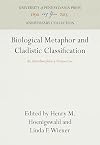
The editors have compiled the essays of sixteen scholars across various science disciplines from botano-biology to linguistics,
"Biological metaphor has been utilized in many fields for both artistic and heuristic purposes. The dynamic aspects of biological systems, the birth, growth, decay, and death of individual organisms, the change of one form into another over time, and the appearance and extinction of species are all compelling images."
The editors have captured the opportunity created show more by the emergence of the "sciences" of biological taxonomy and linguistics in 19th century Europe as both have been evolving. And "For the past ten years" it has reached a kind of "revolution" among the systematists in the biological community. [xi].
Cladistic classification involves constructing a tree in which branch points are based on possession of derived or more recent characters as distinguished from primitive characters. Competing methods, for example taking phenetic foci, or shared ecological niches, or rate of change in a taxon since branching, differ from cladistic methodology. Since classification has been cladistic for well over a hundred years, the recent use by biologists is a surprise. At the same time, the use of trees based explicitly on measures of similarity, which preceded the use of cladistics in biology, is now being used by linguists under the name of lexicostatistics or glottochronology. [xi] Helpful to know. Now?
Cladistics in biological sciences has generally been accepted as the best methodology since the 1980s. Cladistics is an approach to classification that relies on the identification of unique features to determine monophyletic groups. (Groups with a common ancestor.) Of course, common sense must also accompany any reconstruction of a genealogy.
Linguists and biologists face many of the same issues in trying to classify the objects of their studies. The glimpse across the "specializations" is useful for finding solutions. Both bio-botanical and linguistic sciences have moved from the "family" metaphor to the "tree" for modeling genealogy or relationships. This brilliant compilation across specialized sciences will increase the accuracy of the cladistic method used by all of them. show less
"Biological metaphor has been utilized in many fields for both artistic and heuristic purposes. The dynamic aspects of biological systems, the birth, growth, decay, and death of individual organisms, the change of one form into another over time, and the appearance and extinction of species are all compelling images."
The editors have captured the opportunity created show more by the emergence of the "sciences" of biological taxonomy and linguistics in 19th century Europe as both have been evolving. And "For the past ten years" it has reached a kind of "revolution" among the systematists in the biological community. [xi].
Cladistic classification involves constructing a tree in which branch points are based on possession of derived or more recent characters as distinguished from primitive characters. Competing methods, for example taking phenetic foci, or shared ecological niches, or rate of change in a taxon since branching, differ from cladistic methodology. Since classification has been cladistic for well over a hundred years, the recent use by biologists is a surprise. At the same time, the use of trees based explicitly on measures of similarity, which preceded the use of cladistics in biology, is now being used by linguists under the name of lexicostatistics or glottochronology. [xi] Helpful to know. Now?
Cladistics in biological sciences has generally been accepted as the best methodology since the 1980s. Cladistics is an approach to classification that relies on the identification of unique features to determine monophyletic groups. (Groups with a common ancestor.) Of course, common sense must also accompany any reconstruction of a genealogy.
Linguists and biologists face many of the same issues in trying to classify the objects of their studies. The glimpse across the "specializations" is useful for finding solutions. Both bio-botanical and linguistic sciences have moved from the "family" metaphor to the "tree" for modeling genealogy or relationships. This brilliant compilation across specialized sciences will increase the accuracy of the cladistic method used by all of them. show less

Edition: // Descr: viii, 168 p. 23 cm. // Series: Call No. { } Shelved in Kade German Center, 116 Lawrence : Sprachunterricht // //
Lists
You May Also Like
Associated Authors
Statistics
- Works
- 6
- Also by
- 18
- Members
- 72
- Popularity
- #243,042
- Rating
- 4.0
- Reviews
- 2
- ISBNs
- 12