
Joe DeVito
Author of Kong: King Of Skull Island
Works by Joe DeVito
Dark Avenger: The Strange Saga of The Shadow (Will Murray's Pulp History Series) (2022) — Illustrator — 7 copies, 2 reviews
The Wild Adventures of Sherlock Holmes Vol. 2 — Illustrator — 4 copies
Associated Works
The Further Adventures of Batman, Volume 2: Featuring the Penguin (1992) — Cover artist, some editions — 101 copies, 1 review
Kong Unbound: The Cultural Impact, Pop Mythos, and Scientific Plausibility of a Cinematic Legend (2005) — Contributor — 21 copies
Tarzan: Return to Pal-ul-don (The Wild Adventures of Tarzan) (Volume 1) (2015) — Illustrator — 14 copies
Bronze Gazette Special Doc Con XX Edition — Contributor — 1 copy
Bronze Gazette Special Doc Con XIX Edition (DocCon 2016) — Contributor — 1 copy
The Bronze Gazette (#92) — Contributor — 1 copy
Tagged
Common Knowledge
- Canonical name
- DeVito, Joe
- Birthdate
- 1957-03-16
- Gender
- male
- Education
- Parsons School of Design
Art Students League of New York - Occupations
- artist
- Nationality
- USA
- Birthplace
- New York, New York, USA
- Places of residence
- Chalfont, Pennsylvania, USA
- Associated Place (for map)
- USA
Members
Reviews
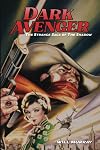
Who Knows What History Lurks Behind the Shadows Laugh?... Will Murray Knows.
Who knows what evil lurks in the hearts of men?.......The Shadow knows, is a phrase many people are familiar with either through memory of the radio shows or in recent times a myriad of pop culture references. They have a vague idea of who or what the character actually was. Most do not know the origins of the character nor the literary legacy of the character at the pen of Walter Gibson guided by his editors. To show more paraphrase Lester Dent- The Shadow was just a voice until he was handed over to Walter Gibson.
The Shadow as a nemesis to crime has had 4 incarnations in different media. First was the pulp hero, second the radio show, third movies and fourth in comic books. Each incarnation keeps similar elements but also unique to themselves. This is a character that has survived in our culture to present times with a recent revamping by James Patterson
The Dark Avenger chronicles the history of the Shadow, the first masked crime fighter of the Golden Age of pulp magazines. Starting with his transformation from being a “host” to a detective radio show into a pulp magazine hero that transformed the pulp magazine industry.The Shadow debuted in his own magazine published by Street & Smith for a run of 325 issues over the next two decades. The Shadow’s success heralded a new phase in the pulp magazines with new titles being created to jump on the super heroic action adventure bandwagon. Street & Smith itself would follow up with Doc Savage and The Avenger among others.
The appeal of Murray’s Dark Avenger to me is threefold. As a literary historian, I was interested in the history of the character and his evolution. Murray gives an overview of many of the novels without giving away details of the stories. Interwoven with this is a history of the magazine, the writers, the editors giving the reader an idea of who these men were and their impact on the stories and the direction the stories went. Also interwoven in this tale of The Shadow is the impact of the culture and history of the times on the stories and magazine itself.
The book should appeal to those interested in this fascinating character, those interested in the pulp magazine phenomenon that peaked in the 1920s and 1930s and those who are intrigued by the origins of pulp culture. It’s an easy read, not a dry recounting of history. More like a discussion of the events with insight given by those involved at the time.
Highly recommended for Shadow fans, Pulp fans and those who are curious about our world 90 years ago. show less
Who knows what evil lurks in the hearts of men?.......The Shadow knows, is a phrase many people are familiar with either through memory of the radio shows or in recent times a myriad of pop culture references. They have a vague idea of who or what the character actually was. Most do not know the origins of the character nor the literary legacy of the character at the pen of Walter Gibson guided by his editors. To show more paraphrase Lester Dent- The Shadow was just a voice until he was handed over to Walter Gibson.
The Shadow as a nemesis to crime has had 4 incarnations in different media. First was the pulp hero, second the radio show, third movies and fourth in comic books. Each incarnation keeps similar elements but also unique to themselves. This is a character that has survived in our culture to present times with a recent revamping by James Patterson
The Dark Avenger chronicles the history of the Shadow, the first masked crime fighter of the Golden Age of pulp magazines. Starting with his transformation from being a “host” to a detective radio show into a pulp magazine hero that transformed the pulp magazine industry.The Shadow debuted in his own magazine published by Street & Smith for a run of 325 issues over the next two decades. The Shadow’s success heralded a new phase in the pulp magazines with new titles being created to jump on the super heroic action adventure bandwagon. Street & Smith itself would follow up with Doc Savage and The Avenger among others.
The appeal of Murray’s Dark Avenger to me is threefold. As a literary historian, I was interested in the history of the character and his evolution. Murray gives an overview of many of the novels without giving away details of the stories. Interwoven with this is a history of the magazine, the writers, the editors giving the reader an idea of who these men were and their impact on the stories and the direction the stories went. Also interwoven in this tale of The Shadow is the impact of the culture and history of the times on the stories and magazine itself.
The book should appeal to those interested in this fascinating character, those interested in the pulp magazine phenomenon that peaked in the 1920s and 1930s and those who are intrigued by the origins of pulp culture. It’s an easy read, not a dry recounting of history. More like a discussion of the events with insight given by those involved at the time.
Highly recommended for Shadow fans, Pulp fans and those who are curious about our world 90 years ago. show less
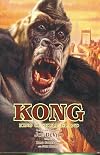
The original 1933 film King Kong was an immediate financial success. An inevitable sequel soon followed with the humorous but tepid Son of Kong being released late in 1933. King Kong eventually became the second most viewed movie in history (second only in theaters to [b:Gone With The Wind|18405|Gone With The Wind|Margaret Mitchell|http://photo.goodreads.com/books/1166913011s/18405.jpg|3358283] and on TV to The Wizard of Oz). Over the last seventy-odd years, several Kong related projects show more were produced including an awful 1976 remake and the cult favorite King Kong Vs. Godzilla.
The planned December release of Peter Jackson's re-imagining of the original epic has spawned new Kong-related fictions.
Conceived by artist Joe DeVito, Kong: King of Skull Island purports to be both a sequel and prequel to Delos W. Lovelace's novelization of the original King Kong conceived by Edgar Wallace and Merian C. Cooper. Kong opens with Carl Denham, the man who brought the giant ape to New York, returning to Skull Island months after the great ape's demise. (Apparently for the purposes of this sequel, Son of Kong never happened.)
In 1957, Denham's son Vincent elicits the aide of Jack Driscoll, hero of the original story, to uncover what happened to his father on his last visit to Skull Island. Leaving his wife Ann (the Beauty to King Kong's Beast) at home, Driscoll joins Vincent on an adventure that reveals the origin of King Kong (he's part of a race of Kongs!), the natives of Skull Island, and the fate of Carl Denham.
Throw in lavishly painted full color images from creator DeVito and Kong: King of Skull Island should be an unforgettable thrill. Sadly, it is not.
I have never read a Brad Strickland novel, though according to his bio he has written or co-written 60 published books. Odds are I will not seek out another. His writing turned a potentially thrilling story into something forgettable.
The plot was slow and predictable. It jumped from viewpoint and place at inappropriate times and for no apparent reason. As soon interesting events began to unfold, Strickland moved to another character, plot point, or place. I'm all for cliffhangers, but when they become commonplace, the impact dulls.
Award-winning artist and sculptor Joe DeVito supplied painted images to correspond with the tale. While DeVito's art style is a little too realistic for my tastes, I found the illustrations striking and very well done. I wish the artist and writer had communicated more, though. In some scenes, the paintings and descriptions do not match.
Overall, Kong: King of Skull Island is a subpar King Kong sequel with some excellent illustrations. If you are looking for a book with superior ape and dinosaur images, then this is the book for you. Otherwise, watch your King Kong video and wait impatiently like the rest of us ape freaks for the Peter Jackson remake.
(The review originally appeared on RevolutionSF.)
Link: [http://www.revolutionsf.com/article.html?id=2553] show less
The planned December release of Peter Jackson's re-imagining of the original epic has spawned new Kong-related fictions.
Conceived by artist Joe DeVito, Kong: King of Skull Island purports to be both a sequel and prequel to Delos W. Lovelace's novelization of the original King Kong conceived by Edgar Wallace and Merian C. Cooper. Kong opens with Carl Denham, the man who brought the giant ape to New York, returning to Skull Island months after the great ape's demise. (Apparently for the purposes of this sequel, Son of Kong never happened.)
In 1957, Denham's son Vincent elicits the aide of Jack Driscoll, hero of the original story, to uncover what happened to his father on his last visit to Skull Island. Leaving his wife Ann (the Beauty to King Kong's Beast) at home, Driscoll joins Vincent on an adventure that reveals the origin of King Kong (he's part of a race of Kongs!), the natives of Skull Island, and the fate of Carl Denham.
Throw in lavishly painted full color images from creator DeVito and Kong: King of Skull Island should be an unforgettable thrill. Sadly, it is not.
I have never read a Brad Strickland novel, though according to his bio he has written or co-written 60 published books. Odds are I will not seek out another. His writing turned a potentially thrilling story into something forgettable.
The plot was slow and predictable. It jumped from viewpoint and place at inappropriate times and for no apparent reason. As soon interesting events began to unfold, Strickland moved to another character, plot point, or place. I'm all for cliffhangers, but when they become commonplace, the impact dulls.
Award-winning artist and sculptor Joe DeVito supplied painted images to correspond with the tale. While DeVito's art style is a little too realistic for my tastes, I found the illustrations striking and very well done. I wish the artist and writer had communicated more, though. In some scenes, the paintings and descriptions do not match.
Overall, Kong: King of Skull Island is a subpar King Kong sequel with some excellent illustrations. If you are looking for a book with superior ape and dinosaur images, then this is the book for you. Otherwise, watch your King Kong video and wait impatiently like the rest of us ape freaks for the Peter Jackson remake.
(The review originally appeared on RevolutionSF.)
Link: [http://www.revolutionsf.com/article.html?id=2553] show less
This should really be subtitled “The Strange Saga of The Shadow in pulp magazines” as that is where the majority of the book is focused. Each part covering a particular phase of The Shadow’s history in print.
While it was interesting to read about how editorial changes, and historical events (namely WW2) impacted the way that Shadow stories evolved, I would have liked to learn more about the radio show, movie serials, comics etc. which are only mentioned when they had some bearing on show more the pulp stories.
If you want to do a deep dive into the character’s pulp roots, and his creator Walter Gibson then this is a great resource.
But there’s more to The Shadow’s story than is told here. show less
While it was interesting to read about how editorial changes, and historical events (namely WW2) impacted the way that Shadow stories evolved, I would have liked to learn more about the radio show, movie serials, comics etc. which are only mentioned when they had some bearing on show more the pulp stories.
If you want to do a deep dive into the character’s pulp roots, and his creator Walter Gibson then this is a great resource.
But there’s more to The Shadow’s story than is told here. show less
Downloaded this on a whim but I found it very dull and quickly gave up.
You May Also Like
Associated Authors
Statistics
- Works
- 8
- Also by
- 44
- Members
- 85
- Popularity
- #214,930
- Rating
- 3.5
- Reviews
- 4
- ISBNs
- 20
- Languages
- 3