
Mark Anthony Jarman
Author of 19 Knives
About the Author
Works by Mark Anthony Jarman
Associated Works
Tagged
Common Knowledge
Members
Reviews
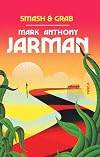
Fans of Mark Anthony Jarman’s work know what to expect. That is to say, they know to expect the unexpected. Jarman, award-winning author of fiction, poetry and travel writing, writes in a raucous, kinetic mode that inundates the reader with a firehose of sights and sounds, impressions, memories and activities as his characters set out across landscapes bristling with emotional and physical minefields. His bracing new collection, Smash & Grab, follows this pattern. “The Bodies” tells an show more amusing and disturbing tale of two men—self-sufficient, rough-and-ready types—who return home from a trip out west where they’ve procured drugs for a local commune, only to find the bodies of two unknown men on the property outside the narrator’s friend’s house. After burying the bodies at the dump, they go for a swim, then carry on with their lives, attempting to behave as if nothing unusual has happened. The female narrator of “That Petrol Emotion,” a story set in Ireland, is suffering an agony of guilt after hitting a young man with her car. In the immediate aftermath, she stopped and was about to get out to offer help, but the young man stood and walked away with his friend. He seemed, she tells us, “right as rain.” But that was then. Later, he was rushed to the hospital, his life hanging by a thread. That’s when the story hit the news, and now the entire city of Dublin is on the lookout for the woman who was behind the wheel and callously left the accident scene. Her moral quandary: should she turn herself in? “The Cutpurse of Venice” takes place in a contemporary version of that venerable city. The narrator and his companion, Emma, are visiting Italy post-Covid. It’s carnival season. Tourists and criminals alike are relieved to be back in action after the shutdown. The narrator spots a young man—“the pockmarked pickpocket”—plying his trade in the piazza. When it dawns on the narrator that the thief is targeting him, he recalls a long list of thieves and scammers who have victimized him and the people in his life. Livid, he picks up a brick, intending damage, but then can’t quite bring himself to take sweet revenge for these earlier losses, and then hates himself for his cowardice. And in “The December Astronauts (Moonbase Horse Code)” the narrator has returned from a space mission during which his fellow astronaut died. The story’s speculative premise is that humans are living and working on the moon, but, like everywhere on Earth, a criminal element has infiltrated. Between missions, the narrator is working with police to stem the flow of drugs being brought by various means to the moon-based community. But along the way, the story veers into a kind of meditation, on notions of connection and belonging, as the narrator mourns a failed relationship (with Ava) while investing time in a new one (with Delia). The fact is that Jarman’s stories often veer, and do so gleefully and unapologetically, leaving it to the reader to follow and draw sense from what’s happening. Jarman’s narrators—primarily men—are weary observers, grizzled commentators on a world lacking moral certainty that rarely gives them a break. They are candid with their thoughts, which come to us raw and unfiltered and often coloured by past instances of trauma and bad luck. And while it’s true that the verbal pyrotechnics can sometimes get in the way of the story, in Smash & Grab, Mark Anthony Jarman continues to render a world flush with hazard where anything can happen, doing it in his own singularly beguiling and entertaining fashion. show less
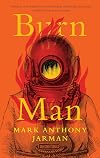
Burn Man: Selected Stories is a representative collection covering Mark Anthony Jarman’s award-studded career, chosen by the author and introduced by John Metcalf. It is the sort of treatment reserved for writers of major repute and significance (think Munro, Atwood). Whether or not Jarman deserves to be mentioned in that hallowed company will be a matter for future scholarly debate. For the moment we can say with a fair degree of certainty that while Jarman is a risk-taker extraordinaire show more and the author of some of the most adventurous fiction ever to emanate from within these borders, there’s also no getting around the fact that his take-no-prisoners brand of storytelling will not appeal to everyone. It is, however, a brand of storytelling that, if you’re willing to accept the challenge, will leave an indelible impression. Jarman writes in an unconventional mode. His largely first-person tales of male angst, misbehaviour and regret are boldly nonlinear impressionistic monologues, and can sometimes come across as a stew of words splattered across the page. First up in the new volume is “Burn Man on a Texas Porch,” the story (loosely speaking) of a man left marked beyond recognition when his camper’s propane tank explodes. The narrative, while swirling around notions of scars, healing, skin and the disguises we use to navigate a hostile world, centres upon the sort of life left to the burn victim once the doctors have done all they can. The narrator recalls a woman’s lips on his, tells us of love post-burn (keeping the lights off while being serviced by an escort dressed as a nurse), and describes his new career as a mascot on-demand, done up as a bunny at Easter or a clown waving a sign outside a flower shop. He figures that, as long as he can keep his face covered, he’s okay. The story—proceeding in fits and starts, circling back, jumping ahead, reprising theme and variations in different guises—ends as a commentary on the fragility of life and love. The narrator of “Song from Under the Floorboards”—a star football player in high school, now a mechanic—narrates a tale of failure and missed opportunities that includes the suicides of two classmates. “There is no convincing logic in my life,” he laments, a recurring theme across much of Jarman’s fiction. The narrator of the final story, “The Hospital Island,” is visiting Rome with his young cousin, Eve. He’s escaping, or avoiding, messy entanglements awaiting him back in Canada, but life in Rome offers little relief from his anxieties (in an earlier story he and Eve witnessed a stabbing and watched the victim bleed out). His thoughts fixate on things disturbing and gruesome, such as a local practise from hundreds of years earlier of relegating plague victims to a barge and setting them out to sea. At one point he’s wondering why he can be fascinated by stories of other people’s travels, but his own seem to amount to nothing. “Why,” he asks, “do I have no faith in my own life?” The question resonates, sticks with us. It’s probably true that in his fiction Mark Anthony Jarman is doing something that nobody else is doing. His singular manner of rendering the world is often shocking and chaotic, but also uniquely absorbing, even revelatory, much like the world itself. His prose cannot be pinned down as it swerves and contorts, zigs and zags, irresistibly pulling the along reader with it. The ride may be bumpy, and you can be sure there’s no soft landing. But, based on the evidence to be found in this new volume, it’s a risk worth taking. show less
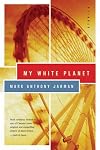
This is quite a collection. On finishing it, I had to wonder why Jarman isn't better known.
The answers to that are obvious. First, he writes short stories, which many people view as a training ground for beginning novelists rather than a serious discipline in its own right, and so he doesn't get wide exposure. Second, he's at odds with the conventional "Canadian short story," which is realist and character-driven -- see Munro, Alice. (Not that I have anything against Munro, Alice.)
But Jarman show more is so, so good. His prose crackles. Jarman lives at the level of the sentence, and often seems more concerned with sentences than with plot or character, and the results are remarkable.
Furthermore, he's drop-dead funny. "Fables of the Deconstruction," in which a professor struggles to interpret the intentions of a student who removes her bra from under her shirt, is not only drop-dead accurate but hilarious. "If Derrida didn't exist, we'd have to invent him," she remarks, borrowing from Voltaire, "and then beat him up at recess."
Highly recommended. show less
The answers to that are obvious. First, he writes short stories, which many people view as a training ground for beginning novelists rather than a serious discipline in its own right, and so he doesn't get wide exposure. Second, he's at odds with the conventional "Canadian short story," which is realist and character-driven -- see Munro, Alice. (Not that I have anything against Munro, Alice.)
But Jarman show more is so, so good. His prose crackles. Jarman lives at the level of the sentence, and often seems more concerned with sentences than with plot or character, and the results are remarkable.
Furthermore, he's drop-dead funny. "Fables of the Deconstruction," in which a professor struggles to interpret the intentions of a student who removes her bra from under her shirt, is not only drop-dead accurate but hilarious. "If Derrida didn't exist, we'd have to invent him," she remarks, borrowing from Voltaire, "and then beat him up at recess."
Highly recommended. show less
Reading this collection of short stories was a unique experience for me. The writing is excellent, and it is the writing, more than the characters or the plot that carries the stories. And carries them well.
I can compare reading these stories to visiting an art gallery -- the paintings (and in this case, the words) draw out emotions and perspectives. Every paragraph in this collection made me feel something.
But this isn't just finely crafted sentences. There are stories here, about people show more struggling to make sense of those around them and looking for meaning in life.
I would definitely read more by this author. show less
I can compare reading these stories to visiting an art gallery -- the paintings (and in this case, the words) draw out emotions and perspectives. Every paragraph in this collection made me feel something.
But this isn't just finely crafted sentences. There are stories here, about people show more struggling to make sense of those around them and looking for meaning in life.
I would definitely read more by this author. show less
Awards


You May Also Like
Associated Authors
Statistics
- Works
- 17
- Also by
- 2
- Members
- 163
- Popularity
- #129,734
- Rating
- 3.6
- Reviews
- 8
- ISBNs
- 38
- Languages
- 1
- Favorited
- 1