
Jerry Griswold
Author of Feeling Like a Kid: Childhood and Children's Literature
About the Author
Jerry Griswold is professor emeritus of literature at San Diego State University and former director of the National Center for the Study of Children's Literature. He is the author of seven books, including Feeling Like a Kid: Childhood and Children's Literature, also published by Johns Hopkins.
Works by Jerry Griswold
Tagged
Common Knowledge
- Legal name
- Griswold, Jerome
- Gender
- male
Members
Reviews
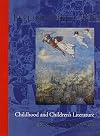
A very well-written, concise exploration of some of the primary themes common in children's books but less common in books for adults. A few were missed, of course; Luann points out the predominance of orphans and quasi-orphans in tween stories and suggests Griswold could have had a chapter on "aloneness." She also points out that there aren't a lot of books represented, and most are very old. (Sylvester and the Magic Pebble is probably the most recent.)
That being said, it's also a very show more enjoyable read, and gave me a lot to think about. And *iff* I wanted to add to my TBR pile, there's a good bibliography. There are also pictures. It's a very cozy and quick read and I will look for more by the author as he has some lovely turns of phrase and insight.
I do recommend this to parents and other educators, and to interested folk like me.
Some bookdart-marked passages:
Quotes Randall Jarrell (brilliant poet and author of fables for all ages), in his poem *Children Selecting Books in a Library,* "Their tales are full of sorcerers and ogres/ Because their lives are."
I'm normally not a fan of Bettelheim, and I don't think Griswold is either, but we agree with him that "If there is no witch to push in the oven, how can Hansel and Gretel become heroes?" (Well, I'm not sure Hansel is a hero; possibly that's Bettelheim's male chauvinism speaking, but the concept is valid.)
Another reason that children's books often have the element of "scariness" is that it makes children feel "wakened-up" and delighted to be playing a game of thrills. When considering whether books are too young for scary stories, consider: "At what age do children recognize the difference between fact and fiction? The answer to that is another question. At what age does the baby laugh when we play the game of 'Boo'?"
I love the conclusion to the chapter "Smallness." It's a quote from Jan Morris about Wales, but applies to children's books, and small characters of same. "Its smallness is not petty; on the contrary, it is profound." (I'd argue that it applies to short stories and poetry for adults, too.)
I need to read an HC Andersen story I've missed, *The Girl Who Trod on a Loaf."
"Cleverness is the mobility of intelligence," and "Melodrama is tragedy from which weight has been subtracted" are two claims in support of the theme in the chapter on "Lightness." I like 'em.
Did you know that the morals to Aesop's fables were added hundreds of years later? So, one could argue that the moral to the story of the Grasshopper and the Ants should be "all work and no play makes one as righteous and selfish as the ant." show less
That being said, it's also a very show more enjoyable read, and gave me a lot to think about. And *iff* I wanted to add to my TBR pile, there's a good bibliography. There are also pictures. It's a very cozy and quick read and I will look for more by the author as he has some lovely turns of phrase and insight.
I do recommend this to parents and other educators, and to interested folk like me.
Some bookdart-marked passages:
Quotes Randall Jarrell (brilliant poet and author of fables for all ages), in his poem *Children Selecting Books in a Library,* "Their tales are full of sorcerers and ogres/ Because their lives are."
I'm normally not a fan of Bettelheim, and I don't think Griswold is either, but we agree with him that "If there is no witch to push in the oven, how can Hansel and Gretel become heroes?" (Well, I'm not sure Hansel is a hero; possibly that's Bettelheim's male chauvinism speaking, but the concept is valid.)
Another reason that children's books often have the element of "scariness" is that it makes children feel "wakened-up" and delighted to be playing a game of thrills. When considering whether books are too young for scary stories, consider: "At what age do children recognize the difference between fact and fiction? The answer to that is another question. At what age does the baby laugh when we play the game of 'Boo'?"
I love the conclusion to the chapter "Smallness." It's a quote from Jan Morris about Wales, but applies to children's books, and small characters of same. "Its smallness is not petty; on the contrary, it is profound." (I'd argue that it applies to short stories and poetry for adults, too.)
I need to read an HC Andersen story I've missed, *The Girl Who Trod on a Loaf."
"Cleverness is the mobility of intelligence," and "Melodrama is tragedy from which weight has been subtracted" are two claims in support of the theme in the chapter on "Lightness." I like 'em.
Did you know that the morals to Aesop's fables were added hundreds of years later? So, one could argue that the moral to the story of the Grasshopper and the Ants should be "all work and no play makes one as righteous and selfish as the ant." show less
Felling Like a Kid is essentially a literary look at children’s psychology. Griswold distills children’s literature into its 5 key component parts: snugness, scariness, smallness, lightness, and aliveness. In each chapter, he pries apart the importance of these essences and what they mean to children. He also distinguishes between the good and bad of each: while scariness is good, it’s only in jest and when we know where safety is. He uses some of the best examples of children’s show more literature (and some examples of adult literature that has been commandeered by children’s lit, like Gulliver’s Travels) to demonstrate each concept. Peter Pan is lightness, Pinocchio aliveness, the Borrowers smallness, and Struwwelpeter scariness. Each example is clear and artfully expounded upon and stories from many cultures are woven together to show the common threads that exist in all children’s stories. His book emphasizes the need for a separate class of literature--well-written, artfully crafted, and wholly different from adult literature—that allows children to use fantasy to make sense of their worlds. He also uses this book to warn against fluffy and censored children’s stories that are devoid of danger and conflict. How can Hansel and Gretel be heroes without the villain of the witch, after all?
A great strength of this book is the author’s use of illustrations from children’s literature generously interspersed through the book. The book is well-researched and an excellent jumping-off point for the study of children’s literature or child psychology, as the unique needs of children are considered as their stories are dissected. show less
A great strength of this book is the author’s use of illustrations from children’s literature generously interspersed through the book. The book is well-researched and an excellent jumping-off point for the study of children’s literature or child psychology, as the unique needs of children are considered as their stories are dissected. show less
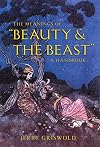
From the title of this book I was expecting more literary criticism of the fairy tale than what is offered here. Instead, most of the first half of the slim volume is taken up with the texts of various versions of the fairy tale and short stories inspired by it. It's a wonderful resource for researchers new to this material but for those already initiated into the studying of the tale it's unnecessary.
It's the second half of Griswold's book that really interested me. He examines the many show more various illustrations "Beauty and the Beast" has inspired throughout the centuries. After this there is a unique queer reading of the Cocteau and Disney films. I wish Griswold had expanded his thoughts on these two issues and included even more analysis of other versions of the story.
All in all this is a great introductory volume for studying "Beauty and the Beast" but it pales in comparison to Betsy Hearne's "Beauty and the Beast: Visions and Revisions of an Old Tale" which really delves into the history and complexity of this "tale as old as time." show less
It's the second half of Griswold's book that really interested me. He examines the many show more various illustrations "Beauty and the Beast" has inspired throughout the centuries. After this there is a unique queer reading of the Cocteau and Disney films. I wish Griswold had expanded his thoughts on these two issues and included even more analysis of other versions of the story.
All in all this is a great introductory volume for studying "Beauty and the Beast" but it pales in comparison to Betsy Hearne's "Beauty and the Beast: Visions and Revisions of an Old Tale" which really delves into the history and complexity of this "tale as old as time." show less
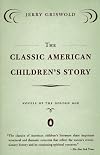
A reviewer on Amazon, David Adams, says:
"This is a fabulous study! Griswold sets out the fundamental similarities among twelve American children's books, then does an in-depth study of each book. I think this is a must read book for anyone interested in children's literature. I found the links among these books to be endlessly fascinating. He writes about: The Wizard of Oz, Huck Finn, Rebecca of Sunnybrook Farm, Little Lord Fauntleroy, Tarzan of the Apes, The Prince and the Pauper, Tom show more Sawyer, Little Women, Toby Tyler, Hans Brinker, The Secret Garden, Pollyana. This book is very readable, not at all a dry, scholarly study even though the scholarship is certainly its foundation." show less
"This is a fabulous study! Griswold sets out the fundamental similarities among twelve American children's books, then does an in-depth study of each book. I think this is a must read book for anyone interested in children's literature. I found the links among these books to be endlessly fascinating. He writes about: The Wizard of Oz, Huck Finn, Rebecca of Sunnybrook Farm, Little Lord Fauntleroy, Tarzan of the Apes, The Prince and the Pauper, Tom show more Sawyer, Little Women, Toby Tyler, Hans Brinker, The Secret Garden, Pollyana. This book is very readable, not at all a dry, scholarly study even though the scholarship is certainly its foundation." show less
Awards


Statistics
- Works
- 7
- Members
- 141
- Popularity
- #145,670
- Rating
- 4.0
- Reviews
- 4
- ISBNs
- 8