
Missouri Williams
Author of The Doloriad
Works by Missouri Williams
Tagged
Common Knowledge
- Gender
- female
- Occupations
- writer
editor - Places of residence
- Prague, Czech Republic
- Associated Place (for map)
- Prague, Czech Republic
Members
Reviews
Dolorous Dolores
Review of the Dead Ink Books (UK) paperback* (March 3, 2022) published almost simultaneously with the Farrar Straus Girard (FSG) (USA) paperback (March 1, 2022)
The Doloriad is not rateable on the Library Thing scale of likeability such as a 3-star 'I liked it' or a 4-star 'I really liked it'. It is more likely that it will repulse and repel you, which would then result in a 1-star 'I did not like it' rating. But if you are prepared to enter its world of a post-apocalyptic show more community, bred by incest and surviving by scavenging and meager farming on the outskirts of a deserted city, ruled by its savage Matriarch and policed by her even more savage eldest son Jan, you may find that it will still engage you and compel you to read it regardless.
I found The Doloriad engaging in that way and it evoked various memories of other bleak visions of either the end of humanity, such as in the plays of Samuel Beckett (e.g. Waiting for Godot, Endgame, etc.) or in Russell Hoban's novel Riddley Walker (esp. due to some parallels with the latter's St. Eustace vs. St. Thomas Aquinas in The Doloriad) or in the inhumanity of isolated tribes, such as in William Golding's Lord of the Flies.
Although the character of Dolores is introduced quite early in The Doloriard, she is not really its main protagonist, although she does instigate momentous change in its community. So instead of the story of Ilium (aka Troy) in The Iliad or of Aeneas in The Aeniad or of Tom Ripley in The Ripliad, The Doloriad is more of a story of anguish and distress (i.e. some sample definitions of the word dolor).
See illustration at https://static01.nyt.com/images/2022/02/27/books/review/01LENNON/01LENNON-superJ...
Illustration by Sydney Smith for the New York Times review of 'The Doloriad.' See source link below under Other Reviews.
The tribe of the Matriarch appears to consist of 3 generations descended from is leader and her brother known as Uncle. Various mutations exist in the descendants due to either incest or due to environmental poisoning. Primarily only the second generation is named, with enforcer & organizer Jan, scavenger Jakub, eldest sister Marta, the conniver Agathe and legless younger sister Dolores being the main roles. The only other elder is the Schoolmaster, also legless (likely due to environmental mutation, as no family tie-in is mentioned). The legless characters are usually transported in wheelbarrows by the others, unless when they crawl along on their own. The Matriarch, although not legless, travels by means of a wheelchair.
The 'entertainment' of the tribe consists of daily lectures by the Schoolmaster, reciting the works of Thomas Aquinas and Hesiod in the examples given, or in a weekly viewing on VHS tapes of an apparent English language sit-com? reality show? 'Get Aquinas in Here!' where the theological scholar (presumably an actor) is called in to adjudicate on various problem situations. The VHS tapes are dubbed in Czech, and we learn from various other situations that the geographical location of the story is in the former Czech Republic (the author Missouri Williams lives in Prague). The line 'Get Aquinas in Here!' is the only comic relief in the entire work that I noticed except for some surreal segments portrayed as if Aquinas was viewing the outside action from inside the television or when Jan's chickens become self-aware as the humans around them battle for supremacy:
The plot is propelled by the Matriarch having a vision of another tribe living beyond the nearby forest. In order to seek an alliance or perhaps to offer a sacrifice, the legless Dolores is carted off to the middle of the forest and abandoned. The envisioned other tribe does not appear however and Dolores crawls back to the community, revealing the fallibility of the Matriarch to all the others. This provokes various murders, revenge and savagery as the children jockey for position as the possible inheritors of leadership. In a way, it all ends with the meek inheriting the earth.
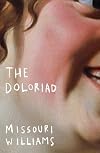
See image at https://i.gr-assets.com/images/S/compressed.photo.goodreads.com/hostedimages/168...
The Dead Ink Books (UK) cover uses a very precisely cropped segment of the painting "Woman Tuning a Lute" (1624) by Gerrit van Honthurst (1590-1656) which manages to turn something joyful into something which hints of the diabolical. Cover design by Luke Bird. Image sourced from the collection of the Musée des Beaux Arts Montreal (Montreal Museum of Fine Arts).
I read The Doloriad through my subscription to the Republic of Consciousness Book of the Month where it was the April 2022 selection, although I passed over it at the time due to being repulsed by its beginning. When it won the Republic of Consciousness Prize 2023 for the UK/Ireland, I decided to finally make an effort to finish it. So I can't say that I 'liked it', but I at least understood its vision and admired the author's commitment to see it through.
Footnote
* I also made reference to the Dead Inks Book Kindle eBook edition, in order to mark selected excerpts for quoting or for further research.
Other Reviews
The novel awes on a sentence level, but ultimately bludgeons the reader with the brutality of its larger vision, Kirkus Reviews, January 15, 2022.
In a Debut Novel, Humans are Scarce and Humanity Scarcer by J. Robert Lennon, New York Times, March 1, 2022.
Missouri Williams' 'The Doloriad' pulls itself along the ground, Pop Matters, March 2, 2022.
The Doloriad (Book Review), by Jonathan Thornton, Fantasy Hive, March 3, 2022.
Trivia and Links
The Guardian reports Dead Ink wins Republic of Consciousness Prize with Missouri Williams’ astonishing debut. show less
Review of the Dead Ink Books (UK) paperback* (March 3, 2022) published almost simultaneously with the Farrar Straus Girard (FSG) (USA) paperback (March 1, 2022)
The Doloriad is not rateable on the Library Thing scale of likeability such as a 3-star 'I liked it' or a 4-star 'I really liked it'. It is more likely that it will repulse and repel you, which would then result in a 1-star 'I did not like it' rating. But if you are prepared to enter its world of a post-apocalyptic show more community, bred by incest and surviving by scavenging and meager farming on the outskirts of a deserted city, ruled by its savage Matriarch and policed by her even more savage eldest son Jan, you may find that it will still engage you and compel you to read it regardless.
I found The Doloriad engaging in that way and it evoked various memories of other bleak visions of either the end of humanity, such as in the plays of Samuel Beckett (e.g. Waiting for Godot, Endgame, etc.) or in Russell Hoban's novel Riddley Walker (esp. due to some parallels with the latter's St. Eustace vs. St. Thomas Aquinas in The Doloriad) or in the inhumanity of isolated tribes, such as in William Golding's Lord of the Flies.
Although the character of Dolores is introduced quite early in The Doloriard, she is not really its main protagonist, although she does instigate momentous change in its community. So instead of the story of Ilium (aka Troy) in The Iliad or of Aeneas in The Aeniad or of Tom Ripley in The Ripliad, The Doloriad is more of a story of anguish and distress (i.e. some sample definitions of the word dolor).
See illustration at https://static01.nyt.com/images/2022/02/27/books/review/01LENNON/01LENNON-superJ...
Illustration by Sydney Smith for the New York Times review of 'The Doloriad.' See source link below under Other Reviews.
The tribe of the Matriarch appears to consist of 3 generations descended from is leader and her brother known as Uncle. Various mutations exist in the descendants due to either incest or due to environmental poisoning. Primarily only the second generation is named, with enforcer & organizer Jan, scavenger Jakub, eldest sister Marta, the conniver Agathe and legless younger sister Dolores being the main roles. The only other elder is the Schoolmaster, also legless (likely due to environmental mutation, as no family tie-in is mentioned). The legless characters are usually transported in wheelbarrows by the others, unless when they crawl along on their own. The Matriarch, although not legless, travels by means of a wheelchair.
The 'entertainment' of the tribe consists of daily lectures by the Schoolmaster, reciting the works of Thomas Aquinas and Hesiod in the examples given, or in a weekly viewing on VHS tapes of an apparent English language sit-com? reality show? 'Get Aquinas in Here!' where the theological scholar (presumably an actor) is called in to adjudicate on various problem situations. The VHS tapes are dubbed in Czech, and we learn from various other situations that the geographical location of the story is in the former Czech Republic (the author Missouri Williams lives in Prague). The line 'Get Aquinas in Here!' is the only comic relief in the entire work that I noticed except for some surreal segments portrayed as if Aquinas was viewing the outside action from inside the television or when Jan's chickens become self-aware as the humans around them battle for supremacy:
Now a different world was coming—a world for the animals. The chickens exchanged glances. They thought, as one, This is the age of chickens!
The plot is propelled by the Matriarch having a vision of another tribe living beyond the nearby forest. In order to seek an alliance or perhaps to offer a sacrifice, the legless Dolores is carted off to the middle of the forest and abandoned. The envisioned other tribe does not appear however and Dolores crawls back to the community, revealing the fallibility of the Matriarch to all the others. This provokes various murders, revenge and savagery as the children jockey for position as the possible inheritors of leadership. In a way, it all ends with the meek inheriting the earth.
See image at https://i.gr-assets.com/images/S/compressed.photo.goodreads.com/hostedimages/168...
The Dead Ink Books (UK) cover uses a very precisely cropped segment of the painting "Woman Tuning a Lute" (1624) by Gerrit van Honthurst (1590-1656) which manages to turn something joyful into something which hints of the diabolical. Cover design by Luke Bird. Image sourced from the collection of the Musée des Beaux Arts Montreal (Montreal Museum of Fine Arts).
I read The Doloriad through my subscription to the Republic of Consciousness Book of the Month where it was the April 2022 selection, although I passed over it at the time due to being repulsed by its beginning. When it won the Republic of Consciousness Prize 2023 for the UK/Ireland, I decided to finally make an effort to finish it. So I can't say that I 'liked it', but I at least understood its vision and admired the author's commitment to see it through.
Footnote
* I also made reference to the Dead Inks Book Kindle eBook edition, in order to mark selected excerpts for quoting or for further research.
Other Reviews
The novel awes on a sentence level, but ultimately bludgeons the reader with the brutality of its larger vision, Kirkus Reviews, January 15, 2022.
In a Debut Novel, Humans are Scarce and Humanity Scarcer by J. Robert Lennon, New York Times, March 1, 2022.
Missouri Williams' 'The Doloriad' pulls itself along the ground, Pop Matters, March 2, 2022.
The Doloriad (Book Review), by Jonathan Thornton, Fantasy Hive, March 3, 2022.
Trivia and Links
The Guardian reports Dead Ink wins Republic of Consciousness Prize with Missouri Williams’ astonishing debut. show less
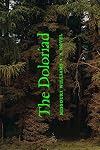
Hieronymus Bosch seems to be a significant influence in this novel. The often grotesque characterization in Williams’ book reflects the waking nightmare imagery in many of Bosch’s paintings, images like “that nest of sin . . . . [and] the seething, copulating virus of humanity” (104). In The Doloriad, this intense Boschian atmosphere is contrasted with a confidence in the idealized—trans-narrative—philosophical mind of Thomas Aquinas. For example, in a disturbing set piece, show more Aquinas is the only hope for a brother descending into physical and psychological hell (115-123). And even when Aquinas himself is a flawed character struggling in a scene in the novel (137-142; 218-223), his presence acts as a clean bandage for the wounds narrated: “We should GET AQUINAS IN HERE—” (142); his presence evokes / anticipates / signals hope for healing, as in the final chapter where he takes on the narrator’s voice and provides a framework for the sheep’s veering climactic “baby made of stone” scene (226)—a fascinating echo of Christ the rock in the desert and the stone rejected by the builders. Understandably, Aquinas is linked to “Reason, cities of reason, a shared purpose that spanned continents. Everything in place and accounted for. . . . [But now] there is neither faith nor reason; the system is dead, vanished . . . ” (106).
In addition to the ethical crisis emanating from this loss of faith and metaphysical context is the ecological crisis that permeates the setting of the novel: “It’s the poison—it’s in the trees, the earth, the water—everywhere” (107). And yet, there is a profound mystical hope at the core of this dark book, “Agathe could hear . . . the murmuring of life: there, behind everything else, were other voices too, things that were just beginning . . . It isn’t over yet! they were saying to her and she was beaming their message back up to them with a strange and savage joy” (108).
After finishing this book, I thought of Aquinas’ famous assertion (made after he had an overwhelming epiphany while saying Mass): “All that I have written seems to me like straw compared with what has now been revealed to me.” Perhaps Williams’ final sentence echoes this hope of a revelation on the horizon: “Something else was already opening up” (226).
I recommend this book. If you spend some time viewing Hieronymus Bosh’s paintings (especially those depicting hell) before you begin reading Williams’ novel, it will contextualize her use of the surreal grotesque and cushion the shock. The references to the Middle Ages work well and the secure hope associated with Aquinas is a unexpected and fascinating anchor in a modern work of literary fiction.
I also love good sentences, and this book is generously sprinkled with them. Here are a few samples:
“There is an ancient agreement between the glass and the light that allows one to pass through the body of the other without hesitation” (6).
“. . . and so [Agathe] pushed herself back through the green forest and through the arrow loops of her own dark eyes all the way into her own dark head . . . ” (5).
“The single crack that chasmed across the computer screen was silvery with interior fire . . . ” (17).
“The schoolmaster could see the transmitter tower in the blackness behind his eyelids as clearly as though he himself had been there in another life, and it was a huge construct of rust and steel that reached into the sky like an insolent needle” (26).
“Before him [the schoolmaster] the aisles of children dipped and dreamed like minnows in a stream of bright water” (45).
“By the time Agathe looked up again the day had moved on: the sun crawled back down to the earth and the field was striped with javelins of light and the dark shadows of the trees. Above her the sky blazed yellow and orange” (70). show less
In addition to the ethical crisis emanating from this loss of faith and metaphysical context is the ecological crisis that permeates the setting of the novel: “It’s the poison—it’s in the trees, the earth, the water—everywhere” (107). And yet, there is a profound mystical hope at the core of this dark book, “Agathe could hear . . . the murmuring of life: there, behind everything else, were other voices too, things that were just beginning . . . It isn’t over yet! they were saying to her and she was beaming their message back up to them with a strange and savage joy” (108).
After finishing this book, I thought of Aquinas’ famous assertion (made after he had an overwhelming epiphany while saying Mass): “All that I have written seems to me like straw compared with what has now been revealed to me.” Perhaps Williams’ final sentence echoes this hope of a revelation on the horizon: “Something else was already opening up” (226).
I recommend this book. If you spend some time viewing Hieronymus Bosh’s paintings (especially those depicting hell) before you begin reading Williams’ novel, it will contextualize her use of the surreal grotesque and cushion the shock. The references to the Middle Ages work well and the secure hope associated with Aquinas is a unexpected and fascinating anchor in a modern work of literary fiction.
I also love good sentences, and this book is generously sprinkled with them. Here are a few samples:
“There is an ancient agreement between the glass and the light that allows one to pass through the body of the other without hesitation” (6).
“. . . and so [Agathe] pushed herself back through the green forest and through the arrow loops of her own dark eyes all the way into her own dark head . . . ” (5).
“The single crack that chasmed across the computer screen was silvery with interior fire . . . ” (17).
“The schoolmaster could see the transmitter tower in the blackness behind his eyelids as clearly as though he himself had been there in another life, and it was a huge construct of rust and steel that reached into the sky like an insolent needle” (26).
“Before him [the schoolmaster] the aisles of children dipped and dreamed like minnows in a stream of bright water” (45).
“By the time Agathe looked up again the day had moved on: the sun crawled back down to the earth and the field was striped with javelins of light and the dark shadows of the trees. Above her the sky blazed yellow and orange” (70). show less
If Cormac McCarthy’s [b:The Road|6288|The Road|Cormac McCarthy|https://i.gr-assets.com/images/S/compressed.photo.goodreads.com/books/1600241424l/6288._SY75_.jpg|3355573] was too cheerful for you, may I present you with Missouri Williams’ The Doloriad. While McCarthy’s novel could be said to explore how a radical love for humanity can survive even in the absolute worst possible post-apocalyptic scenario (think of the boy urging his father to give food to the old man they passed, or show more urging his father to spare the thief who stole all their goods), Williams seems to explore how much abuse can be withstood by a wretched product of a wretched humanity down to its last grim remnants. Love? For oneself, maybe.
In its stance towards humanity and often in its vituperative prose it reminds me of the [a:Thomas Bernhard|7745|Thomas Bernhard|https://images.gr-assets.com/authors/1651769154p2/7745.jpg] I’ve read, and perhaps will be best enjoyed by fans of Bernhard. For instance, I offer up the following two passages:
A peculiar and interesting facet of this novel is the inclusion of Thomas Aquinas through episodes of an old sitcom the characters repeatedly watch, in which Aquinas is invited to solve some sort of moral dilemma. While the plot of The Doloriad is I think a secondary characteristic of the novel, it can be said to follow an application of Aquinas’ conception of natural law to this group’s situation. Man’s first concern is to remain alive, and so they carry out tasks that support this goal like growing crops. Secondly natural law dictates that man will be concerned with sexual intercourse and education of offspring, and so they have frequent sexual intercourse despite the very limited pool in which to do so, and they have a (useless) schoolmaster. Thirdly man wishes to know God and to live in society, and while the former gets short shrift here, best presented as the schoolmaster’s faith that he’ll be transformed and reborn as a moth, the Matriarch creates a sternly ordered society that the rest of the group feels they have to live within, until she weakens… at which point the unraveling of the established society leads to chaos and death until a new society is reconstituted.
Early in the novel the uncle character remembers a line from his seminary training in the Before times, which went “To question the perfection of the creatures is to question the perfection of the power that made them,” which would seem to be related to the writing of Aquinas. No doubt a reader trained in philosophy/theology would get the connections between Aquinas and this novel far better than I can, but for me the novel seems to pose just such a question, or a challenge, that is answered in a Bernhardian negativity.
I prefer [b:The Road|6288|The Road|Cormac McCarthy|https://i.gr-assets.com/images/S/compressed.photo.goodreads.com/books/1600241424l/6288._SY75_.jpg|3355573], myself. show less
In its stance towards humanity and often in its vituperative prose it reminds me of the [a:Thomas Bernhard|7745|Thomas Bernhard|https://images.gr-assets.com/authors/1651769154p2/7745.jpg] I’ve read, and perhaps will be best enjoyed by fans of Bernhard. For instance, I offer up the following two passages:
… faced with the pitiful mess of the survivors, who - it could not be argued otherwise - lived in a kind of torpid sin, a lethargy and lust that corroded any claim to a higher moral purpose, the necessity of survival, or the particular worthiness of their species, and so over time he had come to see them as simply forgotten. The departed gods had left their task incomplete; they had neglected to wipe away these last remnants of their great error, and in the vacuum of their intention these things had bred and clung on to a meagre existence in a world more inhospitable than ever simply because “nature hateth emptiness.”
- - -
… looking into her bruised face the schoolmaster thought to himself that the history of the world was the history of cruelty, that it had never been anything else: they limped along the great curve of extinction, one foot in the void, dwindling each year, and it was cruelty that made them cling on, pain and the paining of others that kept them moving.
A peculiar and interesting facet of this novel is the inclusion of Thomas Aquinas through episodes of an old sitcom the characters repeatedly watch, in which Aquinas is invited to solve some sort of moral dilemma. While the plot of The Doloriad is I think a secondary characteristic of the novel, it can be said to follow an application of Aquinas’ conception of natural law to this group’s situation. Man’s first concern is to remain alive, and so they carry out tasks that support this goal like growing crops. Secondly natural law dictates that man will be concerned with sexual intercourse and education of offspring, and so they have frequent sexual intercourse despite the very limited pool in which to do so, and they have a (useless) schoolmaster. Thirdly man wishes to know God and to live in society, and while the former gets short shrift here, best presented as the schoolmaster’s faith that he’ll be transformed and reborn as a moth, the Matriarch creates a sternly ordered society that the rest of the group feels they have to live within, until she weakens… at which point the unraveling of the established society leads to chaos and death until a new society is reconstituted.
Early in the novel the uncle character remembers a line from his seminary training in the Before times, which went “To question the perfection of the creatures is to question the perfection of the power that made them,” which would seem to be related to the writing of Aquinas. No doubt a reader trained in philosophy/theology would get the connections between Aquinas and this novel far better than I can, but for me the novel seems to pose just such a question, or a challenge, that is answered in a Bernhardian negativity.
I prefer [b:The Road|6288|The Road|Cormac McCarthy|https://i.gr-assets.com/images/S/compressed.photo.goodreads.com/books/1600241424l/6288._SY75_.jpg|3355573], myself. show less
Academic Dystopia
A review of the NetGalley ARC eBook released in advance of the Farrar, Straus & Giroux / MCD (US May 26, 2026) and Fourth Estate (UK May 21, 2026) hardcovers / eBooks / audiobooks.
At first glance, The Vivisectors is completely unlike Missouri Williams' debut [book:The Doloriad|57845084] (2022) which had a breakthrough success by winning the 2023 Republic of Consciousness Prize and other accolades. Instead of a post-apocalyptic dystopia we have a setting in an unnamed show more university in an unnamed city and country. The university is decaying in its own dystopic manner though through lack of both physical and perhaps intellectual maintenance.
The lead character, a post-graduate named Agathe comes from a dysfunctional family and now works for a dysfunctional professor at the university. Agathe is basically doing all of the professors' work for her from preparing lectures to marking papers. Meanwhile the prof becomes obsessed with a student named Adam who is in conflict with the university authorities. The university and the city are meanwhile in conflict with the city's maintenance workers who are called the gardeners, so that the infrastructure is going back to nature as plants and vines and ivys envelope the buildings.
This doesn't have the scale of horror that was The Doloriad, even if the decaying infrastructure does signal some sort of coming apocalypse. There is the nod and a wink to Doloriad fans though towards the end when Agathe is forced to take her decrepit mother for a "walk" by using a wheelbarrow.
I'm sure that it could all be read as a metaphor for universities, cities and societies in general in our present day. What most impressed me was that Williams would write something so completely different from her first book. Its meaning is still enough to haunt me regardless.
My thanks to Farrar, Straus & Giroux / MCD and NetGalley for the opportunity to read this advance ARC copy for which I provide this honest review.
Trivia and Links
Although you might have expected that Williams' short story [book:The Vivisectors|62911395] (2022) would have been an excerpt from the novel, in fact it does not appear at all. There is a bit of a cross-over theme of an academic setting, but that is all.
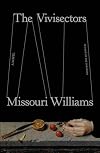
As always I was curious about the cover art used for both the US and UK editions. Even with the aid of the reverse image search engine Tin Eye I still couldn't trace a source for the US cover though. The UK cover was easily identifiable though as a cropped image from the painting The Incredulity of Saint Thomas by Caravaggio where the "doubting Thomas" has to probe the wounds of the resurrected Christ before he will believe.
See image at https://upload.wikimedia.org/wikipedia/commons/thumb/6/6c/Der_ungl%C3%A4ubige_Th... show less
A review of the NetGalley ARC eBook released in advance of the Farrar, Straus & Giroux / MCD (US May 26, 2026) and Fourth Estate (UK May 21, 2026) hardcovers / eBooks / audiobooks.
At first glance, The Vivisectors is completely unlike Missouri Williams' debut [book:The Doloriad|57845084] (2022) which had a breakthrough success by winning the 2023 Republic of Consciousness Prize and other accolades. Instead of a post-apocalyptic dystopia we have a setting in an unnamed show more university in an unnamed city and country. The university is decaying in its own dystopic manner though through lack of both physical and perhaps intellectual maintenance.
The lead character, a post-graduate named Agathe comes from a dysfunctional family and now works for a dysfunctional professor at the university. Agathe is basically doing all of the professors' work for her from preparing lectures to marking papers. Meanwhile the prof becomes obsessed with a student named Adam who is in conflict with the university authorities. The university and the city are meanwhile in conflict with the city's maintenance workers who are called the gardeners, so that the infrastructure is going back to nature as plants and vines and ivys envelope the buildings.
This doesn't have the scale of horror that was The Doloriad, even if the decaying infrastructure does signal some sort of coming apocalypse. There is the nod and a wink to Doloriad fans though towards the end when Agathe is forced to take her decrepit mother for a "walk" by using a wheelbarrow.
I'm sure that it could all be read as a metaphor for universities, cities and societies in general in our present day. What most impressed me was that Williams would write something so completely different from her first book. Its meaning is still enough to haunt me regardless.
My thanks to Farrar, Straus & Giroux / MCD and NetGalley for the opportunity to read this advance ARC copy for which I provide this honest review.
Trivia and Links
Although you might have expected that Williams' short story [book:The Vivisectors|62911395] (2022) would have been an excerpt from the novel, in fact it does not appear at all. There is a bit of a cross-over theme of an academic setting, but that is all.
As always I was curious about the cover art used for both the US and UK editions. Even with the aid of the reverse image search engine Tin Eye I still couldn't trace a source for the US cover though. The UK cover was easily identifiable though as a cropped image from the painting The Incredulity of Saint Thomas by Caravaggio where the "doubting Thomas" has to probe the wounds of the resurrected Christ before he will believe.
See image at https://upload.wikimedia.org/wikipedia/commons/thumb/6/6c/Der_ungl%C3%A4ubige_Th... show less
Lists
Awards


You May Also Like
Associated Authors
Statistics
- Works
- 4
- Members
- 272
- Popularity
- #85,117
- Rating
- 3.3
- Reviews
- 8
- ISBNs
- 6
- Languages
- 2