
Lynn Johnson
Author of All Aboard!: Images from the Golden Age of Rail Travel
Works by Lynn Johnson
A New Day at Paradise Pottery: An engrossing and heart-warming World War One family saga (The Potteries Girls, 4) (2023) 4 copies
The Magic Forest 2 copies
Pittsburgh 1 copy
Lynn Johnson 1 copy
Associated Works
Tagged
Common Knowledge
- Gender
- female
- Awards and honors
- Pulitzer Prize finalist (Feature Photography, 2019)
Members
Reviews
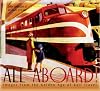
If you were a graphic artist in the 1980s and 1990s Chronicle Books of San Francisco was your crack, publishing tons of art, art history, design and architecture books every. All were beautifully designed and printed using the latest computerized technology of its time, and as a designer myself, I drooled over their catalogs. (No online shopping back then.) Though not hardcover the books were made to last and be referred to again and again. The paper was heavy and slick, perfect for detailed show more art and true color. Of course I owned a bunch of them and still do.
But times change, and gradually the internet became the tool of choice for art research and creation. There wasn’t a need for artists to keep libraries of reference material anymore. But I kept much of mine. For both sentimental reasons and just because these books are such a sensual delight. I even like the spicy smell and feel of that heavy, thick, almost plasticized paper.
This book I found at Goodwill. It’s about the Golden Age of train travel – roughly from 1890 to the 1950s. Though most of it consists of pictures, the text, cursory as it is, is interesting as well. For example, in what is known as the Art Deco design period, in the 1930s, streamlined train engines became the norm, the sleek designs luring riders with promises of speed and comfort. But in actuality, the new engines were the same design of the steam trains used previously, just with fancy new sheathing and improved mechanics. And to be fair, that streamlined sheath did improve the train’s speed.
Another advertising gimmick railway companies used was to name specific trains and the routes they traveled. Santa Fe had the Chief and Super Chief engines; Union Pacific, the City of Los Angeles route. Even today in the U.S., with the passenger lines long conglomerated into Amtrak, the route names persist: The Empire Builder, The Sunset Limited, The City of New Orleans, all of them calling back to a slower, perhaps more romantic time.
Also included are travel posters from the U.S., England, and Europe; baggage tags and stickers; and menus and other ephemera, as well as historic photos of the trains themselves. So potent was the magic of the rails, and the strength of its images, that in the U.S. at least, older people born before the 1950s mourn it still. I remember talk from my older relatives about how the railway magic was gone and the stations in decay shortly before the formation of Amtrak, when cars and the interstates had become the primary means of travel.
All Aboard! is out of print now, but worth a look or a purchase if you love trains. show less
But times change, and gradually the internet became the tool of choice for art research and creation. There wasn’t a need for artists to keep libraries of reference material anymore. But I kept much of mine. For both sentimental reasons and just because these books are such a sensual delight. I even like the spicy smell and feel of that heavy, thick, almost plasticized paper.
This book I found at Goodwill. It’s about the Golden Age of train travel – roughly from 1890 to the 1950s. Though most of it consists of pictures, the text, cursory as it is, is interesting as well. For example, in what is known as the Art Deco design period, in the 1930s, streamlined train engines became the norm, the sleek designs luring riders with promises of speed and comfort. But in actuality, the new engines were the same design of the steam trains used previously, just with fancy new sheathing and improved mechanics. And to be fair, that streamlined sheath did improve the train’s speed.
Another advertising gimmick railway companies used was to name specific trains and the routes they traveled. Santa Fe had the Chief and Super Chief engines; Union Pacific, the City of Los Angeles route. Even today in the U.S., with the passenger lines long conglomerated into Amtrak, the route names persist: The Empire Builder, The Sunset Limited, The City of New Orleans, all of them calling back to a slower, perhaps more romantic time.
Also included are travel posters from the U.S., England, and Europe; baggage tags and stickers; and menus and other ephemera, as well as historic photos of the trains themselves. So potent was the magic of the rails, and the strength of its images, that in the U.S. at least, older people born before the 1950s mourn it still. I remember talk from my older relatives about how the railway magic was gone and the stations in decay shortly before the formation of Amtrak, when cars and the interstates had become the primary means of travel.
All Aboard! is out of print now, but worth a look or a purchase if you love trains. show less
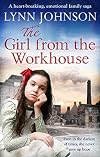
Honestly, I was on a deadline when I was reading this and I just couldn't make myself read any faster. I was totally immersed in the time period, lost in the lives of the characters the author brought to life before my eyes, and there for every up, down, and in between with my heart in my hand. When Ginnie and her mum and da first go to the workhouse, I was shattered. How could they let Mabel go stay with the Aunty, but NOT Ginnie? Was there truly not enough room for such a little girl? Then show more when the visits didn't come from the outside, and sometimes not even within the "estates" walls, I felt the trembling of my shattered heart going dormant...and yet unable to stop hoping that something would change for the better. Then, as life often does, things DID change...
Clara became a dear heart that ended up parting ways from Ginnie way too soon. Sam started as her most innocent of loves and grew over time to be truly "the one" that may or may not ever actually have to chance to be something more to each other outside the walls of Haddon House, and yet it didn't stop them from dreaming, from holding on to each other's hearts with all their might. Even when times separated them, they still managed to keep the other as a tender possibility for a future they dared to imagine. Mary was an unexpected connection, but one that was no less genuine than the rest. She provided a mother/sister figure in time for Ginnie, as well as the other girls, while sharing not a drop of blood. Constance was another unexpected friend in the making, and just goes to show you that your class does not determine the size of your heart. Of course, we also have Ginnie's blood relation family, but the funny thing is...I hold more fondly to those she chose to be in her circle, per se, than to those that we granted the right biologically.
Through the voices of these characters (and more!), the author winds her story around your person and snares your heart. You can't help but hope for something more for Ginnie, Sam, and the others, while still holding tight to the richness of what they do have, albeit not countable in silver or gold. The historical events they are living through certainly color their lives, but in spite of the harshness, they become truer versions of themselves, reaching for a tomorrow that they certainly know isn't promised, yet can't help but try for. Though filled with much darkness and despair, there is also hope and love...and that my friends is certainly worth reading for.
**ebook received for review; opinions are my own show less
Clara became a dear heart that ended up parting ways from Ginnie way too soon. Sam started as her most innocent of loves and grew over time to be truly "the one" that may or may not ever actually have to chance to be something more to each other outside the walls of Haddon House, and yet it didn't stop them from dreaming, from holding on to each other's hearts with all their might. Even when times separated them, they still managed to keep the other as a tender possibility for a future they dared to imagine. Mary was an unexpected connection, but one that was no less genuine than the rest. She provided a mother/sister figure in time for Ginnie, as well as the other girls, while sharing not a drop of blood. Constance was another unexpected friend in the making, and just goes to show you that your class does not determine the size of your heart. Of course, we also have Ginnie's blood relation family, but the funny thing is...I hold more fondly to those she chose to be in her circle, per se, than to those that we granted the right biologically.
Through the voices of these characters (and more!), the author winds her story around your person and snares your heart. You can't help but hope for something more for Ginnie, Sam, and the others, while still holding tight to the richness of what they do have, albeit not countable in silver or gold. The historical events they are living through certainly color their lives, but in spite of the harshness, they become truer versions of themselves, reaching for a tomorrow that they certainly know isn't promised, yet can't help but try for. Though filled with much darkness and despair, there is also hope and love...and that my friends is certainly worth reading for.
**ebook received for review; opinions are my own show less

What does it really mean to be a Quaker? This memoir offers stories of six different spiritual encounters that illustrate the heart of Quaker identity: knowing the in-dwelling presence of God and seeing that of God everywhere.
You May Also Like
Associated Authors
Statistics
- Works
- 19
- Also by
- 6
- Members
- 168
- Popularity
- #126,678
- Rating
- 4.0
- Reviews
- 3
- ISBNs
- 19