
William E. Boyce (1930–2019)
Author of Elementary Differential Equations and Boundary Value Problems
About the Author
William E. Boyce is the Edward P. Hamilton Distinguished Professor Emeritus of Science Education (Department of Mathematical Sciences) at Rensselaer Richard C. DiPrima is on the faculty of Rensselaer Polytechnic Institute
Image credit: William E. Boyce
Works by William E. Boyce
Outsiders on the Inside: Understanding Racial Fatigue, Racial Resilience, and Racial Hospitality in Our Churches (2022) 6 copies
Elementary Differential Equations and Boundary Value Problems and Student Solutions Manual (2001) 4 copies
Associated Works
Elementary Differential Equations and Boundary Value Problems: Student Solution Manual (1979) 104 copies, 1 review
Tagged
Common Knowledge
- Birthdate
- 1930-12-19
- Date of death
- 2019-11-04
- Gender
- male
- Organizations
- Rensselaer Polytechnic Institute
- Nationality
- USA
- Associated Place (for map)
- USA
Members
Reviews

Elementary Differential Equations and Boundary Value Problems delivers what it promises; a set of elementary differential equations and the techniques used to solve them. This book is replete with examples and has numerous problems to solve along with the book. Each chapter has an introduction to the problems at hand, an explanation of techniques used to solve the problems, the problems themselves, and references for further reading. Along the way, we are treated to little tidbits of trivia show more located in the footnotes. Most of the trivia is about famous mathematicians of the past and their contributions to the realm of mathematics or physics. This book expects a grounding in elementary calculus, but it still goes back and covers some of the topics that you should be familiar with. Since this edition of the book was printed in 1977, it doesn’t have that many pictures and very little color. Personally, I like it like this, since a lot of the images and graphs can get distracting. Since the book was originally printed in 1965 it might have some old terminology, but given the context I understood what was meant.
The book is divided into eleven main chapters, which are further subdivided into sections. These chapters are as follows;
Chapter 1 is merely an overview and introduction. It talks about what differential equations are, and the history that they have.
Chapter 2 is called First Order Differential Equations. Not much to say about this one. It starts with Linear Equations and goes on to Homogeneous Equations.
Chapter 3 is called Second Order Linear Equations.
Chapter 4 is called Series Solutions Of Second Order Linear Equations.
Chapter 5 follows Higher Order Linear Equations.
Chapter 6 discusses the Laplace Transform.
Chapter 7 discusses Systems of First Order Linear Equations.
Chapter 8 discusses Numerical Methods. This chapter probably needs an explanation. It starts with the Euler or Tangent Line Method, goes on to the error involved in it and improves on it. The following sections cover the Runge-Kutta Method and some other methods.
Chapter 9 is Nonlinear Differential Equations and Stability.
Chapter 10 is Partial Differential Equations and Fourier Series.
Chapter 11 is Boundary Value Theorems and Sturm-Liouville Theory.
Since this is a textbook, it contains a suggested syllabus for a classroom setting, assuming that you have a single semester of three hour classes.
All in all, this was a good book. It was written in such a way that it explained the terminology and didn’t go too far over my head. The main problem I have with advanced mathematics is that I only got up to Calculus II, and I don’t think I did too well in that case anyway. Being an autodidact is hard sometimes. Nonetheless, the book was quite good and written in a manner that I enjoyed. show less
The book is divided into eleven main chapters, which are further subdivided into sections. These chapters are as follows;
Chapter 1 is merely an overview and introduction. It talks about what differential equations are, and the history that they have.
Chapter 2 is called First Order Differential Equations. Not much to say about this one. It starts with Linear Equations and goes on to Homogeneous Equations.
Chapter 3 is called Second Order Linear Equations.
Chapter 4 is called Series Solutions Of Second Order Linear Equations.
Chapter 5 follows Higher Order Linear Equations.
Chapter 6 discusses the Laplace Transform.
Chapter 7 discusses Systems of First Order Linear Equations.
Chapter 8 discusses Numerical Methods. This chapter probably needs an explanation. It starts with the Euler or Tangent Line Method, goes on to the error involved in it and improves on it. The following sections cover the Runge-Kutta Method and some other methods.
Chapter 9 is Nonlinear Differential Equations and Stability.
Chapter 10 is Partial Differential Equations and Fourier Series.
Chapter 11 is Boundary Value Theorems and Sturm-Liouville Theory.
Since this is a textbook, it contains a suggested syllabus for a classroom setting, assuming that you have a single semester of three hour classes.
All in all, this was a good book. It was written in such a way that it explained the terminology and didn’t go too far over my head. The main problem I have with advanced mathematics is that I only got up to Calculus II, and I don’t think I did too well in that case anyway. Being an autodidact is hard sometimes. Nonetheless, the book was quite good and written in a manner that I enjoyed. show less
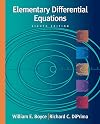
From what I've seen when I tried to find an alternative book, this might be the best out there. For someone who isn't naturally mathematically intuitive, this book sure doesn't take it easy on me. I understand that Differential Equations is a higher level math course. But this book left a lot of questions unanswered. To get through my semester, I ended up purchasing the student solutions manual and two other differential equations books. I also made use of the free lectures on the MIT show more website. I couldn't have gone through this course (and this book) without the supplements!
It's sad to see that I couldn't find a more highly rated differential equations text on Amazon. If someone knows of one, let me know! I finished the course, but I really would like to have a better grasp. It really is an amazing and practical field of mathematics, and apparently lays the groundwork for a lot of application. It would be a shame if I never got to fully understand it because I couldn't get my brain wrapped around this book. Who knows? Maybe I'm just slow. show less
It's sad to see that I couldn't find a more highly rated differential equations text on Amazon. If someone knows of one, let me know! I finished the course, but I really would like to have a better grasp. It really is an amazing and practical field of mathematics, and apparently lays the groundwork for a lot of application. It would be a shame if I never got to fully understand it because I couldn't get my brain wrapped around this book. Who knows? Maybe I'm just slow. show less
Elementary Differential Equations and Boundary Value Problems , 8th Edition, with ODE Architect CD by William E. Boyce
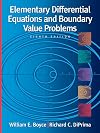
Definitely did not like using this book. I found it hard to extract the vital information from it for tests and HW problems. It was not too clear with it's presentation though it covered a lot of information.
Ordinary Differential Equations & BV Problems 7E with Maple Manual for Differntial Equations 2E and Student Sur by William E. Boyce
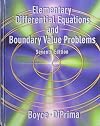
This book is comprehensive and the concepts are well explained. I'm not sure if it's really a "mathemtatical" treatment of ODE's though. There's no proper proofs of existence and uniqueness, and also nothing on dependence on initial conditions and things like that.
Lists
You May Also Like


Associated Authors
Statistics
- Works
- 11
- Also by
- 1
- Members
- 1,211
- Popularity
- #21,206
- Rating
- 3.4
- Reviews
- 6
- ISBNs
- 102
- Languages
- 3