
Nathaniel Tripp
Author of Father, Soldier, Son: Memoir of a Platoon Leader in Vietnam
About the Author
Works by Nathaniel Tripp
Confluence: A River, the Environment, Politics and the Fate of All Humanity (2005) 18 copies, 1 review
Associated Works
Tagged
Common Knowledge
- Gender
- male
- Relationships
- Lindbergh, Reeve (wife)
Lindbergh, Anne Morrow (mother-in-law)
Members
Reviews
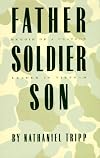
FATHER SOLDIER SON: MEMOIR OF A PLATOON LEADER IN VIETNAM, by Nathaniel Tripp.
I have probably read a score or more of Vietnam war memoirs, some good, some not so good. But Tripp's is unique, both for its eloquence and for the family and emotional baggage he brings to his story. "Baggage" is probably the wrong word, with its negative connotations, but it will have to do. Tripp grew up with a mother and grandmother, an only child. His father, a Naval veteran of WWII, suffered from mental show more illness much of his life, and so was largely absent from Tripp's childhood. So there was that. And Tripp, during his tour in Vietnam, plagued by doubts and fears of his leadership capability, often wondered if he might be going a bit mad himself, although he denied this when his father asked him outright. He felt guilty at times that he abandoned the mission, worrying instead only of "the continued safety of my men." Early on he questioned the sanity of the war itself, understanding implicitly -
"There was nothing heroic here, we were being pushed by old men, with self-serving ideas, pushed to the brink of death just to glorify old men."
Tripp becomes very close with the men of his platoon, young men he comes to love.
"But we had all become family by now. For me, and I suspect many others, it was the closest, most loving family we had ever known. The loneliness which is so much a part of being a man, which stalks us from the cradle to the grave, was gone now. We only wanted to be with each other."
Tripp reveals truths about our involvement in Vietnam that are still true today with the current ongoing wars in the Middle East. "The war had evolved out of naïve misconceptions and cynical misrepresentation of facts ... this brought bad leadership to the fore, particularly among senior officers whose careers rested upon a successful tour of duty ..."
The half-serious comments the author makes about simply walking north, "all the way up Highway Thirteen to Cambodia and beyond" and "Cambodia sounded wonderful, like the Emerald City, a place of peace" reminded me of Tim O'Brien's fictional soldiers' magical journey in GOING AFTER CACCIATO, a book I savored many years ago.
FATHER SOLDIER SON is a deeply personal account of a pivotal time in Nathaniel Tripp's young life, a time that scarred him permanently. He still feels, as he did then, that in such a war, "there are no winners, that there are only survivors, forever scarred by the agony and humiliation of war."
Tripp waited nearly thirty years to sort it all out and write it down, but I for one am glad that he did. I am sure he is not alone in how he felt about the war, but I'm also pretty sure that his assessment of it all may be cause for controversy, even among the men who fought in Vietnam. But, as I said, this is a deeply personal account, perhaps undertaken as a form of therapy. Nathaniel Tripp is a fine writer and I will recommend his book highly. (four and a half stars) show less
I have probably read a score or more of Vietnam war memoirs, some good, some not so good. But Tripp's is unique, both for its eloquence and for the family and emotional baggage he brings to his story. "Baggage" is probably the wrong word, with its negative connotations, but it will have to do. Tripp grew up with a mother and grandmother, an only child. His father, a Naval veteran of WWII, suffered from mental show more illness much of his life, and so was largely absent from Tripp's childhood. So there was that. And Tripp, during his tour in Vietnam, plagued by doubts and fears of his leadership capability, often wondered if he might be going a bit mad himself, although he denied this when his father asked him outright. He felt guilty at times that he abandoned the mission, worrying instead only of "the continued safety of my men." Early on he questioned the sanity of the war itself, understanding implicitly -
"There was nothing heroic here, we were being pushed by old men, with self-serving ideas, pushed to the brink of death just to glorify old men."
Tripp becomes very close with the men of his platoon, young men he comes to love.
"But we had all become family by now. For me, and I suspect many others, it was the closest, most loving family we had ever known. The loneliness which is so much a part of being a man, which stalks us from the cradle to the grave, was gone now. We only wanted to be with each other."
Tripp reveals truths about our involvement in Vietnam that are still true today with the current ongoing wars in the Middle East. "The war had evolved out of naïve misconceptions and cynical misrepresentation of facts ... this brought bad leadership to the fore, particularly among senior officers whose careers rested upon a successful tour of duty ..."
The half-serious comments the author makes about simply walking north, "all the way up Highway Thirteen to Cambodia and beyond" and "Cambodia sounded wonderful, like the Emerald City, a place of peace" reminded me of Tim O'Brien's fictional soldiers' magical journey in GOING AFTER CACCIATO, a book I savored many years ago.
FATHER SOLDIER SON is a deeply personal account of a pivotal time in Nathaniel Tripp's young life, a time that scarred him permanently. He still feels, as he did then, that in such a war, "there are no winners, that there are only survivors, forever scarred by the agony and humiliation of war."
Tripp waited nearly thirty years to sort it all out and write it down, but I for one am glad that he did. I am sure he is not alone in how he felt about the war, but I'm also pretty sure that his assessment of it all may be cause for controversy, even among the men who fought in Vietnam. But, as I said, this is a deeply personal account, perhaps undertaken as a form of therapy. Nathaniel Tripp is a fine writer and I will recommend his book highly. (four and a half stars) show less
At times it seems like every Vietnam War platoon leader has written a memoir. Tripp has written a better than average one, elevated by literary ambitions and simultaneously expanded and tangled up by an attempt to link this peak experience of his life to his father and his son.
When this book is on, it is extremely on. Tripp writes about the feeling of being plugged into the war with an electric vividness, of the organic wholeness of his 'Mike Division' platoon moving like a superorganism show more through the jungle, alive with vibrations and hiding signs, trying to tune in on the Viet Cong and knowing they were trying to do the same to you, and that failing in this ESP test meant ambush and death. He get almost as close describing the waste and brutality of the American war, the armored and flying death machines, bulldozers, arbitrary destructiveness, top to bottom hypocrisy, the cowardice of the REMFs, and the secret separate peace the Michelin company cut with the Viet Cong to keep their rubber plantations safe. But Tripp's main emotion is love, even love for his enemies, and the necessary hatred is just out of his reach. The stories are true war stories, as poet-laureate of the war Tim O'Brien would put it, and while there is little actual combat, there is lots of slipstream weirdness around combat, a kind of nightmare-turned-real aspect that really works.
Tripp also tries to place himself in some kind of chain of being, from his harsh Yankee patriarch of a grandfather, to his half-mad failure of a father, and to the hope for peace for his own children. The psychodrama doesn't quite hold together, too reserved and too open at once, though a passage on coming to grips with the trauma of war with his fellow veterans did.
This is a solid memoir, with parts that rise to greatness, but it lacks the unitary perfection of a classic. show less
When this book is on, it is extremely on. Tripp writes about the feeling of being plugged into the war with an electric vividness, of the organic wholeness of his 'Mike Division' platoon moving like a superorganism show more through the jungle, alive with vibrations and hiding signs, trying to tune in on the Viet Cong and knowing they were trying to do the same to you, and that failing in this ESP test meant ambush and death. He get almost as close describing the waste and brutality of the American war, the armored and flying death machines, bulldozers, arbitrary destructiveness, top to bottom hypocrisy, the cowardice of the REMFs, and the secret separate peace the Michelin company cut with the Viet Cong to keep their rubber plantations safe. But Tripp's main emotion is love, even love for his enemies, and the necessary hatred is just out of his reach. The stories are true war stories, as poet-laureate of the war Tim O'Brien would put it, and while there is little actual combat, there is lots of slipstream weirdness around combat, a kind of nightmare-turned-real aspect that really works.
Tripp also tries to place himself in some kind of chain of being, from his harsh Yankee patriarch of a grandfather, to his half-mad failure of a father, and to the hope for peace for his own children. The psychodrama doesn't quite hold together, too reserved and too open at once, though a passage on coming to grips with the trauma of war with his fellow veterans did.
This is a solid memoir, with parts that rise to greatness, but it lacks the unitary perfection of a classic. show less
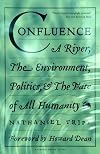
An environmental treatise that doesn't slam you over the head, this is the book to give your friends who are on the fence over such issues. Reading at times more like a work of literature, this is a simple explanation of why more must be done to conserve our rivers.
3759. Father, Soldier, Son: Memoir of a Platoon Leader in Vietnam, by Nathaniel Tripp (read June 15 2003) This is a well-written account of a not too admirable person who went into the Army and spent 1968-1969 in Vietnam. He tells a pretty realistic-seeming story of how scared he was when he first came and how he bonded with the men of his platoon. After six months as platoon leader his job changed to one supposedly building trust with the Vietnamese. He intersperses his account with show more accounts of his time after the war, when he marries, gets divorced, and his love-hate relationship with his father. The language was often literal, though he does use the word "urinate" more often than its four-letter equivalent so I was grateful for that small favor. This book was probably not worth reading, though it had its moments. show less
Lists
Awards


You May Also Like
Associated Authors
Statistics
- Works
- 4
- Also by
- 2
- Members
- 166
- Popularity
- #127,844
- Rating
- 3.8
- Reviews
- 8
- ISBNs
- 10