
Shlomo Sand
Author of The Invention of the Jewish People
About the Author
Shlomo Sand teaches contemporary history at the University of Tel Aviv.
Works by Shlomo Sand
اختراع الشعب اليهودي 2 copies
Judeophobia: A History 1 copy
Comment la terre d'Israël fut inventée. De la Terre sainte à la mère patrie (French Edition) (2014) 1 copy
מתי ואיך הומצא העם היהודי 1 copy
Tagged
Common Knowledge
- Canonical name
- Sand, Shlomo
- Legal name
- Sand, Shlomo
- Other names
- Šlomoh Zand (hébreu)
שלמה זנד (hébreu) - Birthdate
- 1946-10-09
- Gender
- male
- Education
- Ecole des hautes études en sciences sociales (Doctorat, Histoire)
Université de Tel Aviv (Baccalauréat, Lettres)
Université de Paris (Maîtrise, Lettres) - Occupations
- professor
historian - Organizations
- Université de Tel Aviv, Israël (Professeur, Histoire)
- Relationships
- Rebérioux, Madeleinr (Directeur de thèse)
- Nationality
- Austria (birth)
Israel - Birthplace
- Linz, Austria
- Places of residence
- Tel Aviv, Israel
- Map Location
- Israel
Members
Reviews
Yeah, I knew that there always seemed to be fighting in the middle East and I remember the six day war and the fear that the Israelis would drop a nuclear bomb on the Aswan High Dam....instead they did what they have proven to be very good at: They struck early and without warning and wiped out all the Egyptian aircraft while they were still on the ground. Why were they always fighting.....I had no real idea. Seemed to me it was a David and Goliath situation and Israel was fighting for its show more survival against all the Arab states surrounding it. Then I met up with Mahmoud who was my Marketing Officer in Abu Dhabi and found he was Palestinian. “How come you’re working here?” I naively asked. He then patiently explained that in 1948 he and his family had been living in their ancestral home and farm in what is now the West Bank and on the declaration of the State of Israel.... Jewish settlers and militia had come around knocking on doors and telling the inhabitants that they had 24 hours to get out. And in 24 hours, bulldozers came and destroyed their home and farm. They had only whatever they could carry and fled to a refugee camp. And there were no rights of return to their land which was commandeered by Jewish settlers. So that was my first brush with the Palestinian/Israel issue.
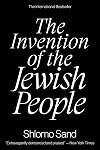
However, like everyone else, I’ve watched the systematic isolation of the Palestinian refugees in their refugee camps and the illegal settlements being built, and the pathetic volleys of untargeted rockets by Hezbollah and Hamas. And the massive destructive response by Israel from the air. And I’ve read more about the displacement of the Palestinians and seen some of the settler violence and military harassment at various check points, on TV. And followed, with horror, the awful raid by Hamas fighters on October 7th where they killed over 1000 people. And I’ve watched with growing alarm the systematic bombing and bulldozing of the Gaza Strip. The murder of 73,000 Palestinians and maiming of about 173,000 in apparent retribution. The withholding of aid, the restriction of food and water; the blocking of relief convoys; the murder of thousands of women and children. With Bombs, and planes supplied by the Americans and support from the Americans. And it all seems to be disproportionate and profoundly sad and unfair to the Palestinians. ....So how did the situation get to this stage. Well I’ve read “A Very Short History of Israel” by Ilan Pappe. And found that pretty disturbing and I’ve now just finished “The Invention of the Jewish People” by Shlomo Sand. Both authors are Jewish and both historians from universities in Israel.
Now this raises an immediate question in my mind. Just how objective can an Israeli historian be when writing about the history of the Jewish People and of Israel? I don’t know the answer but both of these authors are very critical of the way Israel has developed and many of the actions of Israel....especially in the treatment of the Palestinians. And it’s clear from what they write that, indeed, many of their fellow Israeli historians have distorted history to favour some of the national myths. What are some of these national myths? Well Sand draws attention to some of the foundational myths: There was no expulsion of the Jews, led by Moses, from Egypt. The glorious kingdoms of Solomon and David are apparently a myth. The Pentateuch is certainly not an historical document. There was no mass expulsion and deportation from Israel under the Romans....the mass of the people just stayed where they were .......attached to their farms.
Years ago, I read a history of the Jewish people and it propounded the picture of the diaspora of the Jews following the destruction of the temple in about 70 AD. With the Jews wandering the Mediterranean some of them ending up in Spain. Then being expelled from Spain by Phillip and Isabel ...where they took refuge in the Netherlands and from there they expanded into Eastern Europe and Russia. Though some had found their way to Eastern Europe more directly after the expulsion from Judea. That all sounded vaguely plausible until I read Sand’s critique. It’s a critique on multiple levels.
I’ll let Sand speak for himself in the following paragraphs:
The inhabitants of Judea, being agriculturalists, never abandoned their land, because peasants do not give up their vital resources unless they are absolutely forced to do so by great poverty and famine......In the second century BCE, Judaism was clearly a proselytizing monotheism that experienced rapid expansion within the Hellenistic world. It was this popularization of Judaism that paved the way for the subsequent arrival of its two younger sisters, Christianity and Islam........In the fourth century CE, with the victory of Christianity in the Eastern Roman Empire, the indigenous population of Palestine gradually began to change religion......At the time of the Muslim conquest in the seventh century, however, the majority of the population effectively abandoned their old Jewish beliefs and rallied to the new prophet, who did not claim to be the Son of God.......Those who embraced the cult of Mohammed were exempt from paying taxes: a big incentive to change religions. . There was therefore not a population replacement but a religious replacement.
Was there, however, a Jewish people before the imaginary act of exile in the first century? It is difficult to apply the term “people” to a largely illiterate population, who had no compulsory education, no newspapers or radio, who spoke a different dialect of Hebrew in each region or village.......A Jew from Casablanca could not communicate with a Jew from Kiev; they did not like the same food.....And so when was the “Jewish people,” in the modern sense of the word, invented? The answer is simple: in the second half of the nineteenth century, after the emergence of modern peoples and nations in Western Europe.
Has Zionism succeeded in unifying the descendants of Jewish believers into a single people and grouping them together to live as one in its nation-state? The answer is no.
Today, although nowhere in the world is there any obstacle to those with a Jewish identity moving to Israel, the balance of emigration is negative. (That was certainly the case in 2025). Those across the world who claim to belong to the Jewish people do not speak the language of the Israeli people, do not really know their ways of life, and have no effective share in what they do or suffer.
The histories of peoples and nations have been designed like the statues in city squares—they must be grand, towering, heroic. For Israelis, they know for a certainty that a Jewish nation has been in existence since Moses received the tablets of the law on Mount Sinai, and that they are its direct and exclusive descendants (except for the ten tribes, who are yet to be located). They are convinced that this nation “came out” of Egypt; conquered and settled “the Land of Israel,” which had been famously promised it by the deity....They are also convinced that this nation was exiled, not once but twice, after its periods of glory—after the fall of the First Temple in the sixth century BCE, and again after the fall of the Second Temple, in 70 CE......They believe that these people—their “nation,” which must be the most ancient—wandered in exile for nearly two thousand years and yet, despite this prolonged stay among the gentiles, managed to avoid integration with, or assimilation into, them. The nation scattered widely, but it always managed to maintain close blood relations among the far-flung communities and to preserve its distinctiveness.
For me, one of the more interesting issues seems to be the origins of the Eastern European and Russian Jews. Sands is somewhat equivocal on this point but I’ve just read a recent scientific paper, which is much more precise than previous genetic work and it was published after Sands wrote his book. It is “The Missing Link of Jewish European Ancestry: Contrasting the Rhineland and the Khazarian Hypotheses” in Genome Biology and Evolution, Jan, 2013. By Eran Elhaik.......The “Khazarian hypothesis” suggests that Eastern European Jews descended from the Khazars, in the Caucasus who converted to Judaism in the 8th century. Following the collapse of their empire, the Judeo–Khazars fled to Eastern Europe. The rise in numbers of European Jewry is therefore explained by the contribution of the Judeo–Khazars. Their findings very clearly support the Khazarian hypothesis. This seems to be a bit of a bombshell finding because it undermines the claims of Eastern European and Russian Jews to a direct genetic link to the land of Israel. Their forefathers adopted the religion from afar in the 8th century...they were never in Israel.
And Quoting Sand agasin: “Many Israelis still believe that, but for Hitler’s horrible massacre, “Eretz Israel” would soon have been filled with millions of Jews making “aliyah” [returning to Israel] by their own free will, because they had dreamed of it for thousands of years.....The empty, virgin land longed for a nation to come and make it bloom. Some uninvited guests had, it is true, settled in this homeland, but since “the people kept faith with it throughout their Dispersion” for two millennia, the land belonged only to that people.....The violent resistance of the local population was criminal;.....Even in Israel these burdens of memory did not appear spontaneously but rather were piled layer upon layer by gifted reconstructors of the past, beginning in the second half of the nineteenth century.....When occasional findings threatened the picture of an unbroken, linear Jewish history, they were rarely cited; when they did surface, they were quickly forgotten, buried in oblivion.....The Israeli historians have always known that a Jew is a descendant of the nation that was exiled two thousand years ago”.
But, as Sand says, perhaps, despite everything we have been told, Judaism was simply an appealing religion that spread widely until the triumphant rise of its rivals, Christianity and Islam...One quarter of the citizens are not categorized as Jews, and the laws of the state imply that Israel is not their state nor do they own it.....Instead, Israel insists on seeing itself as a Jewish state belonging to all the Jews in the world, even though they are no longer persecuted refugees but full citizens of the countries in which they choose to reside. The excuse for this grave violation of a basic principle of modern democracy, and for the preservation of an unbridled ethnocracy that grossly discriminates against certain of its citizens, rests on the active myth of an eternal nation that must ultimately forgather in its ancestral land.
He does suggest a solution. He agrees that a religious link to a holy place does not confer any rights on it: this is true for Zionists today as it was for the Crusaders of yesterday.....But what has been done cannot be undone without creating a new series of tragedies.
The ideal project for solving the century-long conflict and sustaining the closely woven existence of Jews and Arabs would be the creation of a democratic binational state between the Mediterranean Sea and the Jordan River..... The Jewish supra-identity .. will have to undergo a process of Israelization, open to all citizens..... In addition to an Israelization that welcomes the "other," it must develop a policy of democratic multicultural-ism—similar to that of the United Kingdom or the Netherlands...... And Jewish-Israeli children must be made aware that they are living in a state in which there are many "others."
Today this forecast seems fantastic and utopian..... Would the Israeli elites be capable, following this cultural globalization, of undergoing a mental reformation and adopting a more egalitarian temperament?..... Furthermore, will anyone dare to repeal the Law of Return..... And now the last, perhaps the hardest, question of them all:- To what extent is Jewish Israeli society willing to discard the deeply embedded image of the "chosen people," and to cease isolating itself in the name of a fanciful history or dubious biology and excluding the "other" from its midst?..... There are more questions than answers, and the mood at the end of this book, much as was the case in the personal stories at its start, is more pessimistic than hopeful..... If the nation's history was mainly a dream, why not begin to dream its future afresh, before it becomes a nightmare? But, If the nation's history was mainly a dream, why not begin to dream its future afresh, before it becomes a nightmare?
The book has had a profound impact on me. I’d like to think that his solution could work but watching the daily bombings of Gaza and the similar actions in Lebanon and the assassinations and bombings of Iranians, I’m very pessimistic in the short term. I think He is probably right about the Arap population of Israel. That they will be a future problem. Though Israel has shown absolute ruthlessness towards West Bank Palestinians. I can’t imagine they will be any more generous to the Arab citizens of Israel. It might help if the USA withdraws military and political support...but this is unlikely.
Anyway, A very interesting and challenging work. An easy five stars from me. show less
However, like everyone else, I’ve watched the systematic isolation of the Palestinian refugees in their refugee camps and the illegal settlements being built, and the pathetic volleys of untargeted rockets by Hezbollah and Hamas. And the massive destructive response by Israel from the air. And I’ve read more about the displacement of the Palestinians and seen some of the settler violence and military harassment at various check points, on TV. And followed, with horror, the awful raid by Hamas fighters on October 7th where they killed over 1000 people. And I’ve watched with growing alarm the systematic bombing and bulldozing of the Gaza Strip. The murder of 73,000 Palestinians and maiming of about 173,000 in apparent retribution. The withholding of aid, the restriction of food and water; the blocking of relief convoys; the murder of thousands of women and children. With Bombs, and planes supplied by the Americans and support from the Americans. And it all seems to be disproportionate and profoundly sad and unfair to the Palestinians. ....So how did the situation get to this stage. Well I’ve read “A Very Short History of Israel” by Ilan Pappe. And found that pretty disturbing and I’ve now just finished “The Invention of the Jewish People” by Shlomo Sand. Both authors are Jewish and both historians from universities in Israel.
Now this raises an immediate question in my mind. Just how objective can an Israeli historian be when writing about the history of the Jewish People and of Israel? I don’t know the answer but both of these authors are very critical of the way Israel has developed and many of the actions of Israel....especially in the treatment of the Palestinians. And it’s clear from what they write that, indeed, many of their fellow Israeli historians have distorted history to favour some of the national myths. What are some of these national myths? Well Sand draws attention to some of the foundational myths: There was no expulsion of the Jews, led by Moses, from Egypt. The glorious kingdoms of Solomon and David are apparently a myth. The Pentateuch is certainly not an historical document. There was no mass expulsion and deportation from Israel under the Romans....the mass of the people just stayed where they were .......attached to their farms.
Years ago, I read a history of the Jewish people and it propounded the picture of the diaspora of the Jews following the destruction of the temple in about 70 AD. With the Jews wandering the Mediterranean some of them ending up in Spain. Then being expelled from Spain by Phillip and Isabel ...where they took refuge in the Netherlands and from there they expanded into Eastern Europe and Russia. Though some had found their way to Eastern Europe more directly after the expulsion from Judea. That all sounded vaguely plausible until I read Sand’s critique. It’s a critique on multiple levels.
I’ll let Sand speak for himself in the following paragraphs:
The inhabitants of Judea, being agriculturalists, never abandoned their land, because peasants do not give up their vital resources unless they are absolutely forced to do so by great poverty and famine......In the second century BCE, Judaism was clearly a proselytizing monotheism that experienced rapid expansion within the Hellenistic world. It was this popularization of Judaism that paved the way for the subsequent arrival of its two younger sisters, Christianity and Islam........In the fourth century CE, with the victory of Christianity in the Eastern Roman Empire, the indigenous population of Palestine gradually began to change religion......At the time of the Muslim conquest in the seventh century, however, the majority of the population effectively abandoned their old Jewish beliefs and rallied to the new prophet, who did not claim to be the Son of God.......Those who embraced the cult of Mohammed were exempt from paying taxes: a big incentive to change religions. . There was therefore not a population replacement but a religious replacement.
Was there, however, a Jewish people before the imaginary act of exile in the first century? It is difficult to apply the term “people” to a largely illiterate population, who had no compulsory education, no newspapers or radio, who spoke a different dialect of Hebrew in each region or village.......A Jew from Casablanca could not communicate with a Jew from Kiev; they did not like the same food.....And so when was the “Jewish people,” in the modern sense of the word, invented? The answer is simple: in the second half of the nineteenth century, after the emergence of modern peoples and nations in Western Europe.
Has Zionism succeeded in unifying the descendants of Jewish believers into a single people and grouping them together to live as one in its nation-state? The answer is no.
Today, although nowhere in the world is there any obstacle to those with a Jewish identity moving to Israel, the balance of emigration is negative. (That was certainly the case in 2025). Those across the world who claim to belong to the Jewish people do not speak the language of the Israeli people, do not really know their ways of life, and have no effective share in what they do or suffer.
The histories of peoples and nations have been designed like the statues in city squares—they must be grand, towering, heroic. For Israelis, they know for a certainty that a Jewish nation has been in existence since Moses received the tablets of the law on Mount Sinai, and that they are its direct and exclusive descendants (except for the ten tribes, who are yet to be located). They are convinced that this nation “came out” of Egypt; conquered and settled “the Land of Israel,” which had been famously promised it by the deity....They are also convinced that this nation was exiled, not once but twice, after its periods of glory—after the fall of the First Temple in the sixth century BCE, and again after the fall of the Second Temple, in 70 CE......They believe that these people—their “nation,” which must be the most ancient—wandered in exile for nearly two thousand years and yet, despite this prolonged stay among the gentiles, managed to avoid integration with, or assimilation into, them. The nation scattered widely, but it always managed to maintain close blood relations among the far-flung communities and to preserve its distinctiveness.
For me, one of the more interesting issues seems to be the origins of the Eastern European and Russian Jews. Sands is somewhat equivocal on this point but I’ve just read a recent scientific paper, which is much more precise than previous genetic work and it was published after Sands wrote his book. It is “The Missing Link of Jewish European Ancestry: Contrasting the Rhineland and the Khazarian Hypotheses” in Genome Biology and Evolution, Jan, 2013. By Eran Elhaik.......The “Khazarian hypothesis” suggests that Eastern European Jews descended from the Khazars, in the Caucasus who converted to Judaism in the 8th century. Following the collapse of their empire, the Judeo–Khazars fled to Eastern Europe. The rise in numbers of European Jewry is therefore explained by the contribution of the Judeo–Khazars. Their findings very clearly support the Khazarian hypothesis. This seems to be a bit of a bombshell finding because it undermines the claims of Eastern European and Russian Jews to a direct genetic link to the land of Israel. Their forefathers adopted the religion from afar in the 8th century...they were never in Israel.
And Quoting Sand agasin: “Many Israelis still believe that, but for Hitler’s horrible massacre, “Eretz Israel” would soon have been filled with millions of Jews making “aliyah” [returning to Israel] by their own free will, because they had dreamed of it for thousands of years.....The empty, virgin land longed for a nation to come and make it bloom. Some uninvited guests had, it is true, settled in this homeland, but since “the people kept faith with it throughout their Dispersion” for two millennia, the land belonged only to that people.....The violent resistance of the local population was criminal;.....Even in Israel these burdens of memory did not appear spontaneously but rather were piled layer upon layer by gifted reconstructors of the past, beginning in the second half of the nineteenth century.....When occasional findings threatened the picture of an unbroken, linear Jewish history, they were rarely cited; when they did surface, they were quickly forgotten, buried in oblivion.....The Israeli historians have always known that a Jew is a descendant of the nation that was exiled two thousand years ago”.
But, as Sand says, perhaps, despite everything we have been told, Judaism was simply an appealing religion that spread widely until the triumphant rise of its rivals, Christianity and Islam...One quarter of the citizens are not categorized as Jews, and the laws of the state imply that Israel is not their state nor do they own it.....Instead, Israel insists on seeing itself as a Jewish state belonging to all the Jews in the world, even though they are no longer persecuted refugees but full citizens of the countries in which they choose to reside. The excuse for this grave violation of a basic principle of modern democracy, and for the preservation of an unbridled ethnocracy that grossly discriminates against certain of its citizens, rests on the active myth of an eternal nation that must ultimately forgather in its ancestral land.
He does suggest a solution. He agrees that a religious link to a holy place does not confer any rights on it: this is true for Zionists today as it was for the Crusaders of yesterday.....But what has been done cannot be undone without creating a new series of tragedies.
The ideal project for solving the century-long conflict and sustaining the closely woven existence of Jews and Arabs would be the creation of a democratic binational state between the Mediterranean Sea and the Jordan River..... The Jewish supra-identity .. will have to undergo a process of Israelization, open to all citizens..... In addition to an Israelization that welcomes the "other," it must develop a policy of democratic multicultural-ism—similar to that of the United Kingdom or the Netherlands...... And Jewish-Israeli children must be made aware that they are living in a state in which there are many "others."
Today this forecast seems fantastic and utopian..... Would the Israeli elites be capable, following this cultural globalization, of undergoing a mental reformation and adopting a more egalitarian temperament?..... Furthermore, will anyone dare to repeal the Law of Return..... And now the last, perhaps the hardest, question of them all:- To what extent is Jewish Israeli society willing to discard the deeply embedded image of the "chosen people," and to cease isolating itself in the name of a fanciful history or dubious biology and excluding the "other" from its midst?..... There are more questions than answers, and the mood at the end of this book, much as was the case in the personal stories at its start, is more pessimistic than hopeful..... If the nation's history was mainly a dream, why not begin to dream its future afresh, before it becomes a nightmare? But, If the nation's history was mainly a dream, why not begin to dream its future afresh, before it becomes a nightmare?
The book has had a profound impact on me. I’d like to think that his solution could work but watching the daily bombings of Gaza and the similar actions in Lebanon and the assassinations and bombings of Iranians, I’m very pessimistic in the short term. I think He is probably right about the Arap population of Israel. That they will be a future problem. Though Israel has shown absolute ruthlessness towards West Bank Palestinians. I can’t imagine they will be any more generous to the Arab citizens of Israel. It might help if the USA withdraws military and political support...but this is unlikely.
Anyway, A very interesting and challenging work. An easy five stars from me. show less

All cultures have their myths, and Jews and the modern nation-state Israel are no exceptions.
For instance, in the United States we have the bowdlerized myths of Christopher Columbus "discovering" the "New World" and the Pilgrims first Thanksgiving, etc.
Identifying these myths and understanding their implications is certainly a legitimate exercise, and long overdue efforts such as The 1619 Project have attempted to do that.
But Sand's book is not that. Although he frames his arguments as a show more scholarly analysis utilizing the techniques and terminology of serious academic work, that is just window dressing to support his own biased political and religious beliefs. In order to make his case, he resorts to all sorts of devious tactics, such as presenting well-substantiated and widely accepted conclusions as far-fetched while conversely presenting extremely speculative assertions as established fact. He touts long debunked claims, and ignores reams of evidence that undermine his arguments.
Despite the catastrophic shortcomings, he does raise some interesting questions about identity, nationalism, and the influence of the perception of a shared history on modern Israeli politics. show less
For instance, in the United States we have the bowdlerized myths of Christopher Columbus "discovering" the "New World" and the Pilgrims first Thanksgiving, etc.
Identifying these myths and understanding their implications is certainly a legitimate exercise, and long overdue efforts such as The 1619 Project have attempted to do that.
But Sand's book is not that. Although he frames his arguments as a show more scholarly analysis utilizing the techniques and terminology of serious academic work, that is just window dressing to support his own biased political and religious beliefs. In order to make his case, he resorts to all sorts of devious tactics, such as presenting well-substantiated and widely accepted conclusions as far-fetched while conversely presenting extremely speculative assertions as established fact. He touts long debunked claims, and ignores reams of evidence that undermine his arguments.
Despite the catastrophic shortcomings, he does raise some interesting questions about identity, nationalism, and the influence of the perception of a shared history on modern Israeli politics. show less

The Invention of the Jewish People is an often fascinating, often frustrating, account of the history and historiography of the Jewish ethnicity, Zionism, and modern Israel. Sand follows Benedict Anderson in assessing nationality as a potent and also ontologically weak framing. Nationhood is one of the things people are most willing to kill and die for, but trying to define a nation, as opposed to the political limits of a given state, or the cultural practices of an ethnicity, is an show more exercise in contradictions. But it is a necessary exercise, if you want to understand your own present.
The first fascinating bit was that Sand notes that every Israeli university has two history departments: one of General History which is pretty similar to a European or American history department, and one of Jewish History which has a unique intellectual orientation as the keeper of the national political mythology, and has it closest intellectual links to American Evangelical Biblical archeology. The political mythology is fairly simple. While the Torah doesn't have to be read literally as book of divine commandments, it can be read literally as history. The land between the Jordan river and the sea was home to Abraham, was conquered by exiles returning from Egypt, was ruled by the powerful kingdoms of David, Solomon, and the Hasmoneans, was taken from the Jews by the Romans, and was restored to the Jews in 1948.
Where this gets frustrating is a long historiographic dive into 19th century historians writing the history of the Jews against other Eastern European nation movements. I have no doubt that the basic question of whether a Jew could be German was of great import to these people, but I also think the matter was effectively settled by other political developments in the 1940s.
Sand then loops back to the ancient world to argue rather convincingly that Judaism expanded across the Mediterranean by conversion between the 2nd century BCE and the 4th century, making substantial progress against pagan beliefs before being forced into a subsidiary role against Constantine's state Christianity. The last great conversion was the Caucasian (in the exact sense of the mountains rather than the imprecise racial sense) kingdom of the Khazars. In Sand's history, modern Ashkenazi Jews are descended from the Khazars, and the people living in Palestine in the 19th and 20th century were the descendants of the common people of the Jewish kingdoms who were not removed by the Romans, as no evidence of this explusion exists, who converted to Islam for tax reasons under the Caliphate.
Those closing chapter loops around to the modern contradictions between Israel, a political and cultural entity, and the Jewish Nation, which exists everywhere there are Jews but is specifically instantiated in the borders of Israel and the occupied territories. Sand has something to say about Israeli politics around the time he was writing this book, and the politics have only gotten worse since, but I'm not entirely sure I follow. Most national mythologies are ultimately incoherent and built on racist nonsense; Israel has unfortunately chosen to double down on the worst aspects of its own mythology, since it must justify not only its recent historical existence, but the ongoing policies of the occupation. show less
The first fascinating bit was that Sand notes that every Israeli university has two history departments: one of General History which is pretty similar to a European or American history department, and one of Jewish History which has a unique intellectual orientation as the keeper of the national political mythology, and has it closest intellectual links to American Evangelical Biblical archeology. The political mythology is fairly simple. While the Torah doesn't have to be read literally as book of divine commandments, it can be read literally as history. The land between the Jordan river and the sea was home to Abraham, was conquered by exiles returning from Egypt, was ruled by the powerful kingdoms of David, Solomon, and the Hasmoneans, was taken from the Jews by the Romans, and was restored to the Jews in 1948.
Where this gets frustrating is a long historiographic dive into 19th century historians writing the history of the Jews against other Eastern European nation movements. I have no doubt that the basic question of whether a Jew could be German was of great import to these people, but I also think the matter was effectively settled by other political developments in the 1940s.
Sand then loops back to the ancient world to argue rather convincingly that Judaism expanded across the Mediterranean by conversion between the 2nd century BCE and the 4th century, making substantial progress against pagan beliefs before being forced into a subsidiary role against Constantine's state Christianity. The last great conversion was the Caucasian (in the exact sense of the mountains rather than the imprecise racial sense) kingdom of the Khazars. In Sand's history, modern Ashkenazi Jews are descended from the Khazars, and the people living in Palestine in the 19th and 20th century were the descendants of the common people of the Jewish kingdoms who were not removed by the Romans, as no evidence of this explusion exists, who converted to Islam for tax reasons under the Caliphate.
Those closing chapter loops around to the modern contradictions between Israel, a political and cultural entity, and the Jewish Nation, which exists everywhere there are Jews but is specifically instantiated in the borders of Israel and the occupied territories. Sand has something to say about Israeli politics around the time he was writing this book, and the politics have only gotten worse since, but I'm not entirely sure I follow. Most national mythologies are ultimately incoherent and built on racist nonsense; Israel has unfortunately chosen to double down on the worst aspects of its own mythology, since it must justify not only its recent historical existence, but the ongoing policies of the occupation. show less

Fantastic little number, very accessible.
Shlomo Sand is lovely to contextualise Renan in the frame of Said villanising him as a key founder of race theory. He is generous is explaining that Said was not wrong, but only that Renan's views changed over time. In this way, Sand brings another progressive Palestinian voice into his hopeful dialectic.
Of course the only people who push the ridiculous and dangerous notion that Jews are a race are Nazis and UltraZionists. Here, with direct citation show more in original languages of antiquity is Renan demonstrating quite clearly this is not true. And together with Said and Sand we span almost 3000 years of history up to the present - an argument that can only bring hope for the kind of alliances and new formations that will be necessary to defeat racism and ensure mutual communal flourishing for all in Palestine in the years ahead.
Shlomo Sand is an inspiration. show less
Shlomo Sand is lovely to contextualise Renan in the frame of Said villanising him as a key founder of race theory. He is generous is explaining that Said was not wrong, but only that Renan's views changed over time. In this way, Sand brings another progressive Palestinian voice into his hopeful dialectic.
Of course the only people who push the ridiculous and dangerous notion that Jews are a race are Nazis and UltraZionists. Here, with direct citation show more in original languages of antiquity is Renan demonstrating quite clearly this is not true. And together with Said and Sand we span almost 3000 years of history up to the present - an argument that can only bring hope for the kind of alliances and new formations that will be necessary to defeat racism and ensure mutual communal flourishing for all in Palestine in the years ahead.
Shlomo Sand is an inspiration. show less
Awards


You May Also Like


Associated Authors
Statistics
- Works
- 34
- Members
- 1,281
- Popularity
- #20,020
- Rating
- 4.2
- Reviews
- 29
- ISBNs
- 98
- Languages
- 10
- Favorited
- 1

