

Ingvild H. Rishøi
Author of Brightly Shining
About the Author
Image credit: Ingvild Hedemann Rishøi (2011)
Photo: Grethe Tvede/Aust-Agder bibliotek og kulturformidling
Photo: Grethe Tvede/Aust-Agder bibliotek og kulturformidling
Works by Ingvild H. Rishøi
Tagged
Common Knowledge
- Canonical name
- Rishøi, Ingvild H.
- Legal name
- Rishøi, Ingvild Hedemann
- Birthdate
- 1978-08-24
- Gender
- female
- Occupations
- journalist
editor
author - Awards and honors
- P.O. Enquists pris (2013)
Språklig samlings litteraturpris (2011)
Sultprisen (2012)
Bjørg Vik-prisen (2015) - Nationality
- Norway
- Birthplace
- Oslo, Norway
Members
Reviews
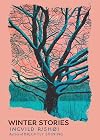
These stories are not comforting; yet they are deeply humane. Set during winter in Norway, the long nights and frigid days evoke a dark mood that pervades each story. The protagonists and main characters are children and young people challenged by poverty, neglect and moral confusion. Rishøi approaches her characters with remarkable restraint. Her intention seems less to resolve their hardships than to witness them honestly, offering brief glimmers of resilience, love and hope in the guise show more of kind strangers.
In “We Can’t Help Everybody,” a young single mother struggles to preserve her five-year-old daughter’s innocence while having few financial resources when the generosity of a stranger provides a small but meaningful moment of hope in the face of utter despair. In “The Right Thomas,” an ex-convict seeks redemption by reconnecting with his young son. His unsuccessful attempt to purchase something as mundane as a pillow serves to symbolize his struggle to return and reconnect with his son. Once again, Rishøi inserts a kind stranger to show him the way when he is on the verge of giving up. In the last story of the tryptic, a 17-year-old girl, burdened by responsibility for her younger half-siblings, makes a desperate choice to flee their unstable home for a place she remembers as safe and secure. In this instance an older woman who picks the trio up on a snowy, dark road provides the rescue.
Clearly, Rishøi has an uncanny ability to make ordinary, often overlooked lives feel urgent and unforgettable. While the emotional tone remains consistent across the stories, they sometimes feel repetitive. However, their cumulative effect is haunting rather than repetitious, reinforcing the sense of lives lived under persistent strain. Notwithstanding her masterful exploitations of setting and character, one questions Rishøi’s choice to focus on stories of despair and neglect in Norway, a country known for its wealth and excellent social programs. Yet, the prominence of kind strangers in each story could be construed as the idea that society has a duty to care for the destitute. show less
In “We Can’t Help Everybody,” a young single mother struggles to preserve her five-year-old daughter’s innocence while having few financial resources when the generosity of a stranger provides a small but meaningful moment of hope in the face of utter despair. In “The Right Thomas,” an ex-convict seeks redemption by reconnecting with his young son. His unsuccessful attempt to purchase something as mundane as a pillow serves to symbolize his struggle to return and reconnect with his son. Once again, Rishøi inserts a kind stranger to show him the way when he is on the verge of giving up. In the last story of the tryptic, a 17-year-old girl, burdened by responsibility for her younger half-siblings, makes a desperate choice to flee their unstable home for a place she remembers as safe and secure. In this instance an older woman who picks the trio up on a snowy, dark road provides the rescue.
Clearly, Rishøi has an uncanny ability to make ordinary, often overlooked lives feel urgent and unforgettable. While the emotional tone remains consistent across the stories, they sometimes feel repetitive. However, their cumulative effect is haunting rather than repetitious, reinforcing the sense of lives lived under persistent strain. Notwithstanding her masterful exploitations of setting and character, one questions Rishøi’s choice to focus on stories of despair and neglect in Norway, a country known for its wealth and excellent social programs. Yet, the prominence of kind strangers in each story could be construed as the idea that society has a duty to care for the destitute. show less
This novella reads like a childhood fable. Kids are threatened and isolated; adults can be caring but also quite unaware. Yet miracles sometimes do happen but often they just don’t.
Two sisters are living on the brink of disaster in Oslo. Their father is a single parent and an unreliable alcoholic. The narrator, Ronja, tells the story from the perspective of a 10-year-old. She is naïve but hopeful. Melissa is a much more worldly 16-year-old who is clear-eyed about their circumstances. As a show more self-parenting teen, she deals with the bill-collectors and provides for her sister. The girls live in constant fear of child welfare swooping in to take them away from their home. Thus, they hide their situation from their neighbors, friends and schoolteachers.
It's Christmastime in Norway and the vendors are out in the cold and snow selling trees and greenery. Indeed, most of the plot occurs at one of these tree stands. The girls’ father abandons his temp job selling Christmas trees for drink once he gets an advance in pay. Melissa convinces the vendor to let her take on his job. The appeal for him is that she will pay off the advance and will work for less. She juggles the job and school with the hope of providing some semblance of a Christmas for Ronja. With the exception of the bureaucratic and penny-pinching tree stand owner, the adult characters in the novella demonstrate a fairy godmother quality, caring for the girls, especially Ronja. The school caretaker tips them off about the job at the tree stand while sharing his lunch with Ronja. Aronson, their neighbor, feeds and irons for Ronja while also attending her school Christmas pageant. Tommy, a clever worker at the stand, hatches a scheme that provides the girls with a substantial income. And Musse, a Muslim schoolmate, rescues Ronja when she is drugged by one of her dad’s friends.
Rishøi furnishes her readers with a warmhearted fable ideal for the holidays. While highlighting the consumerism and corporate greed that unfortunately pervade the season, she emphasizes the importance of kindness and connection that should be its hallmark. Like all good fairytales, the story dreams of magic and hope in a world that sometime can seem uncaring and threatening. show less
Two sisters are living on the brink of disaster in Oslo. Their father is a single parent and an unreliable alcoholic. The narrator, Ronja, tells the story from the perspective of a 10-year-old. She is naïve but hopeful. Melissa is a much more worldly 16-year-old who is clear-eyed about their circumstances. As a show more self-parenting teen, she deals with the bill-collectors and provides for her sister. The girls live in constant fear of child welfare swooping in to take them away from their home. Thus, they hide their situation from their neighbors, friends and schoolteachers.
It's Christmastime in Norway and the vendors are out in the cold and snow selling trees and greenery. Indeed, most of the plot occurs at one of these tree stands. The girls’ father abandons his temp job selling Christmas trees for drink once he gets an advance in pay. Melissa convinces the vendor to let her take on his job. The appeal for him is that she will pay off the advance and will work for less. She juggles the job and school with the hope of providing some semblance of a Christmas for Ronja. With the exception of the bureaucratic and penny-pinching tree stand owner, the adult characters in the novella demonstrate a fairy godmother quality, caring for the girls, especially Ronja. The school caretaker tips them off about the job at the tree stand while sharing his lunch with Ronja. Aronson, their neighbor, feeds and irons for Ronja while also attending her school Christmas pageant. Tommy, a clever worker at the stand, hatches a scheme that provides the girls with a substantial income. And Musse, a Muslim schoolmate, rescues Ronja when she is drugged by one of her dad’s friends.
Rishøi furnishes her readers with a warmhearted fable ideal for the holidays. While highlighting the consumerism and corporate greed that unfortunately pervade the season, she emphasizes the importance of kindness and connection that should be its hallmark. Like all good fairytales, the story dreams of magic and hope in a world that sometime can seem uncaring and threatening. show less
In a Nutshell: A Scandinavian literary fiction with a different kind of Christmas story, somewhat inspired by ‘The Little Match Girl.’ Don’t trust that joyous cover and the title; the story is dark and emotional. The ending is left open to interpretation, which might go either way for readers. Not for those looking for feel-good Christmas tales.
~~~~~~~~~~~~~~~~~~~~~~~
Plot Preview:
This debut novel was first published in Norwegian as ‘Stargate: en julefortelling’ (Stargate: A Christmas Story’). A huge success, it was instantly acclaimed as a modern classic. This version, translated to English by Caroline Waight, was released in November 2024.
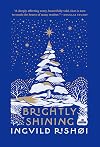
Seeing that gorgeous Christmas tree and the sparkly star on the cover, and the title proudly proclaiming “Brightly Shining”, it is easy to understand why most English-language readers would take this to be a merry story for the joyful season. The truth is exactly the opposite. The title might remind you of all things bright and beautiful, but let’s not forget that even when eyes are filled with unshed tears, they look “brightly shining”. This is not a happy story in any way, though there are some heartwarming moments. I think that the title and the cover of the English edition neither indicate nor suit the content well.
Ronja, whose name means ‘star’, is a fascinating character to have as the narrator. She loves to go into dreamland, either pondering over the happy moments of the past or making wishful plans for the future. At the same time, she is mature because of her circumstances, and isn’t a typical head-in-the-clouds child we often see in light fiction. As our narrator is so young, we need to be prepared for a lot of reading between the lines. Ronja tells us what she knows and wishes and wonders, but she can’t tell us facts beyond her limited worldview. As such, the character development of the other characters is a bit surface-level. But what little we see is enough to get a handle on them.
Ronja’s elder sister Melissa is excellent. Forced to be a provider and caretaker to Ronja at the young age of sixteen, Melissa comes across as a mature youngster who is worried about the future but isn’t so fearful as to run away from it. I simply loved the realistic bond between the two siblings. There are also a few amazing secondary characters in the book, my favourite being the caretaker.
The blurb doesn’t mention this, but Hans Christian Andersen’s ‘The Little Match Girl’ has a strong role to play in the story, both through direct mentions in the plot as well as some scenes inspired by the sad fairy tale. If you know this story, then you can be prepared for a similar melancholic vibe in this novella.
The Scandinavian setting is used beautifully in the plot. The snow, the trees, the people, the atmosphere – all seem so real that you will feel as chilled as Ronja does in the Christmas tree stand. The portrayal of the family is also true to life, especially in the depiction of their father’s alcoholism (which is disappointing as well as infuriating) and the girls’ regular struggles to find enough food.
At just 192 pages (that too, in the hardcover edition), this is a quick read despite being literary in style. There are no chapter divisions, but there are sectional breaks in between scene transitions.
Ronja’s age might lull you into thinking that this book can work for middle-graders or teens, but be warned: the content is not for children. This is literary fiction, not middle-grade or YA fiction. There are many upsetting scenarios that are suitable only for adult eyes. The book does contain Christmassy feelings, but not necessarily of the warm or faith-oriented kind. The focus in the book is more on the capitalist nature of contemporary Christmas celebrations, with everyone having forgotten the true reason for the season.
In some ways, the book reminded me of Claire Keegan’s ‘Small Things Like These’, which is also an unusual Advent-Christmas story. But while Keegan’s novella, though equally grim, ends with a ray of hope, this book moves towards an array of confusion. You see, the ending is open to interpretation. There seems to be a sudden jump in genre, which I simply couldn’t understand the reason for. I am still trying to decide if what happened was literal or metaphorical. The final scene could be considered either magic or tragic, depending on your perspective.
One thing I simply didn’t like in the book was the repetitive use of a blasphemous cuss word. There might be people in real life who say such things, but does a Christmas story need to have a cuss word referencing ‘Jesus’ in such a vulgar way? This could have easily been avoided.
All in all, this is a story set during Christmas, but it is not a Christmas story. Mostly well-written but character-oriented, it will work better for literary fiction lovers looking for a somewhat serious holiday read. This book is being adapted for film. I hope the movie will shed more light on the ending because I do want to know what exactly happened.
Recommended to those who appreciate darker fairy tales/ Christmas stories such as ‘The Little Match Girl’ and don’t mind the cuss words. It is definitely not for those looking for a uplifting festive tale with a happy ending.
3.75 stars. (I’d have gone higher if the ending had been clearer and the language, cleaner.)
My thanks to Grove Atlantic for providing the DRC of “Brightly Shining” via NetGalley. This review is voluntary and contains my honest opinion about the book.
~~~~~~~~~~~~~~~~~~~~~~~
Connect with me through:
My Blog || The StoryGraph || Instagram || X/Twitter || Facebook || show less
~~~~~~~~~~~~~~~~~~~~~~~
Plot Preview:
Tøyen, Norway. Ten-year-old Ronja is a dreamer. But she is also practical. Her alcoholic father is out ofshow more
work again, so when Ronja gets to know about a job at the local Christmas tree stand, she pushes him to get it. For a few days, things are “brightly shining” for Ronja and her elder sister Melissa. But then, her father falls back to his old ways and loses the job, after having taken a huge advance on his salary. Melissa decides to take his place so that the motherless siblings aren’t sent to foster care. Ronja does her best to chip in. But can Christmas turn around so easily for the siblings?
The story comes to us in Ronja’s first-person perspective.
This debut novel was first published in Norwegian as ‘Stargate: en julefortelling’ (Stargate: A Christmas Story’). A huge success, it was instantly acclaimed as a modern classic. This version, translated to English by Caroline Waight, was released in November 2024.
Seeing that gorgeous Christmas tree and the sparkly star on the cover, and the title proudly proclaiming “Brightly Shining”, it is easy to understand why most English-language readers would take this to be a merry story for the joyful season. The truth is exactly the opposite. The title might remind you of all things bright and beautiful, but let’s not forget that even when eyes are filled with unshed tears, they look “brightly shining”. This is not a happy story in any way, though there are some heartwarming moments. I think that the title and the cover of the English edition neither indicate nor suit the content well.
Ronja, whose name means ‘star’, is a fascinating character to have as the narrator. She loves to go into dreamland, either pondering over the happy moments of the past or making wishful plans for the future. At the same time, she is mature because of her circumstances, and isn’t a typical head-in-the-clouds child we often see in light fiction. As our narrator is so young, we need to be prepared for a lot of reading between the lines. Ronja tells us what she knows and wishes and wonders, but she can’t tell us facts beyond her limited worldview. As such, the character development of the other characters is a bit surface-level. But what little we see is enough to get a handle on them.
Ronja’s elder sister Melissa is excellent. Forced to be a provider and caretaker to Ronja at the young age of sixteen, Melissa comes across as a mature youngster who is worried about the future but isn’t so fearful as to run away from it. I simply loved the realistic bond between the two siblings. There are also a few amazing secondary characters in the book, my favourite being the caretaker.
The blurb doesn’t mention this, but Hans Christian Andersen’s ‘The Little Match Girl’ has a strong role to play in the story, both through direct mentions in the plot as well as some scenes inspired by the sad fairy tale. If you know this story, then you can be prepared for a similar melancholic vibe in this novella.
The Scandinavian setting is used beautifully in the plot. The snow, the trees, the people, the atmosphere – all seem so real that you will feel as chilled as Ronja does in the Christmas tree stand. The portrayal of the family is also true to life, especially in the depiction of their father’s alcoholism (which is disappointing as well as infuriating) and the girls’ regular struggles to find enough food.
At just 192 pages (that too, in the hardcover edition), this is a quick read despite being literary in style. There are no chapter divisions, but there are sectional breaks in between scene transitions.
Ronja’s age might lull you into thinking that this book can work for middle-graders or teens, but be warned: the content is not for children. This is literary fiction, not middle-grade or YA fiction. There are many upsetting scenarios that are suitable only for adult eyes. The book does contain Christmassy feelings, but not necessarily of the warm or faith-oriented kind. The focus in the book is more on the capitalist nature of contemporary Christmas celebrations, with everyone having forgotten the true reason for the season.
In some ways, the book reminded me of Claire Keegan’s ‘Small Things Like These’, which is also an unusual Advent-Christmas story. But while Keegan’s novella, though equally grim, ends with a ray of hope, this book moves towards an array of confusion. You see, the ending is open to interpretation. There seems to be a sudden jump in genre, which I simply couldn’t understand the reason for. I am still trying to decide if what happened was literal or metaphorical. The final scene could be considered either magic or tragic, depending on your perspective.
One thing I simply didn’t like in the book was the repetitive use of a blasphemous cuss word. There might be people in real life who say such things, but does a Christmas story need to have a cuss word referencing ‘Jesus’ in such a vulgar way? This could have easily been avoided.
All in all, this is a story set during Christmas, but it is not a Christmas story. Mostly well-written but character-oriented, it will work better for literary fiction lovers looking for a somewhat serious holiday read. This book is being adapted for film. I hope the movie will shed more light on the ending because I do want to know what exactly happened.
Recommended to those who appreciate darker fairy tales/ Christmas stories such as ‘The Little Match Girl’ and don’t mind the cuss words. It is definitely not for those looking for a uplifting festive tale with a happy ending.
3.75 stars. (I’d have gone higher if the ending had been clearer and the language, cleaner.)
My thanks to Grove Atlantic for providing the DRC of “Brightly Shining” via NetGalley. This review is voluntary and contains my honest opinion about the book.
~~~~~~~~~~~~~~~~~~~~~~~
Connect with me through:
My Blog || The StoryGraph || Instagram || X/Twitter || Facebook || show less
I caught this lovely tale in what was still the holiday season, even if after Christmas proper, and it still was delightful and added to the glow. 2 sisters, Ronja (10) and Melissa (15) have high hopes for their perennially disappointing father, an addict. Ronja tells the story from the sweet pov of someone reading the signs of trouble, but not fully comprehending their import. Melissa, on the other hand is savvy and cynical and acts as both a mother to Ronja and a parent to their father. show more When their Dad takes a job with a Christmas tree lot around the holidays, it seems he may have finally found his way, relishing the physical work and the quick cash. But temptation is a tough obstacle and when he succumbs, Melissa picks up the slack by taking on the tree lot job, in addition to her schooling. Even Ronja gets involved, hawking the wreaths and garlands and convincing buyers the money goes to needy children - not a total lie. The girls also find purpose in the work, hard as it is, and the money gives them one of their best Christmas times ever. But the owner find out about the scheme and the 'child labor' and their wobbly world is exposed. A somewhat magical and ambigous ending results, and the girls prevail. Elements of fairy tale - and the Norwegian setting evokes Hans Christian Andersen's Little Match Girl but with some Christmas hope. show less
Awards


You May Also Like
Associated Authors
Statistics
- Works
- 14
- Members
- 410
- Popularity
- #59,367
- Rating
- 3.8
- Reviews
- 18
- ISBNs
- 54
- Languages
- 9