
Teresa Robeson
Author of Queen of Physics: How Wu Chien Shiung Helped Unlock the Secrets of the Atom
About the Author
Image credit: via Astra Publishing House
Works by Teresa Robeson
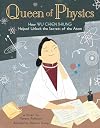
Queen of Physics: How Wu Chien Shiung Helped Unlock the Secrets of the Atom (2019) 163 copies, 18 reviews
Who Smashed Hollywood Barriers with Gung Fu?: Bruce Lee: A Who HQ Graphic Novel (Who HQ Graphic Novels) (2025) 31 copies, 1 review
Who Is Tibet's Exiled Leader?: The 14th Dalai Lama: An Official Who HQ Graphic Novel (Who HQ Graphic Novels) (2023) 26 copies, 3 reviews
Associated Works
Tagged
Common Knowledge
There is no Common Knowledge data for this author yet. You can help.
Members
Reviews
Queen of Physics: How Wu Chien Shiung Helped Unlock the Secrets of the Atom (People Who Shaped Our World) by Teresa Robeson

Wu Chien Shiung was born on May 31, 1912 in a small town near Shanghai, China. (According to Chinese naming conventions, Wu was her last name and Chien Shiung her given name.) The author reports in a note at the end of the book that Chien Shiung’s parents believed girls to be equal to boys and thus they should receive an equivalent education. They gave their daughter a name meaning “Courageous Hero,” and they nurtured her love of learning and science.
Chien Shiung left home at age show more eleven to compete for a place in a boarding school for teacher training; she was ranked ninth among around 10,000 applicants. During the day, Chien Shiung attended her own classes, and at night, she studied the textbooks of her friends. She kept up this habit of self-learning her whole life.
After graduating at the top of her class in 1929, Chien Shiung, now 17, traveled to Nanjing, again by herself, to attend the National Central University. As in boarding school, Chien Shiung was recognized as a leader among students and was asked to lead political demonstrations, all while majoring in mathematics and physics.
She was encouraged to pursue her PhD abroad in the U.S., and eventually settled on the University of California at Berkeley. (She originally intended to study at the University of Michigan until she heard that women were not allowed to use the front entrance of the student center - they had to use a side entrance.)
She focused her work on beta decay, which, as the author explains in a glossary at the end of the book, is what happens when the center of an atom “decays” or breaks apart. Soon, the author reports, Chien Shiung had a deeper understanding of beta decay than just about anyone else, and other physicists came to her for consultation. She even helped shatter a fundamental concept of nuclear physics (“the parity laws”). It was such spectacular work that the male physicists involved won the Nobel Prize (but not Chien Shiung). In fact, over time, six male physicists won Nobel Prizes for the work she helped them complete, but Chien Shiung was passed over. The author writes:
“Sometimes Chien Shiung did not get the jobs she wanted either - because she was a woman, because she was Asian. Was she sad? Yes. Was she disappointed? Often. Was she discouraged? Occasionally. But she did not let those feelings stop her from doing what she loved, because Baba [her father] always said, ‘Ignore the obstacles. Just put your head down and keep walking forward.’”
She became such an exceptional physicist that the “Smithsonian” magazine called her “The First Lady of Physics Research” and “Newsweek” named her the “Queen of Physics.”
The author concludes:
“And that is how a small girl from a faraway village in China went to school, proved herself as smart as any boy, learned to be a scientist, and even became a queen!”
The Afterword adds that Wu Chien Shiung was the first woman to be hired as an instructor by Princeton and to receive an honorary doctorate from that institution; the first woman to be elected president of the American Physical Society, and the first person to receive the Wolf Prize in Physics, inter alia. (The Wolf Prize is considered the second most prestigious award in the sciences, after the Nobel Prize.)
Although it is not part of this story, Wu also made significant contributions to the “Manhattan Project” dedicated to the development of nuclear weapons during World War II. As the author of an article in "The New Inquiry" observed:
"The popular historical narrative of the Manhattan Project presents it as a masculine, western enterprise, fitting the image of the young, white, male soldier on the battlegrounds of the two world wars. Yet the work of Wu, among many others, shows that the narrative was more complicated than that. Women, non-white, and non-Western people made vital contributions to the Manhattan Project and the physics underlying it. They disappeared from the history of the project as it was used to reinforce the image of the US as the leading Western superpower, both politically and scientifically. The forgotten history of Wu is one where state politics meets gender politics to the detriment of our understanding of scientific development."
Wu died in 1997 in New York City.
Illustrator Rebecca Huang uses mixed-media images that include chalkboards full of equations and nuclear symbols floating around the text.
Evaluation: This book, for ages six and up, does a nice job of explaining any complicated concepts central to Wu's story, and emphasizing the obstacles Wu faced on account of her gender and race. Children will no doubt be amazed at the bravery of the little girl who traveled many miles away from home and from her beloved family in pursuit of an education. Wu’s story is pretty amazing, and it was gratifying to see it made available to inspire children. An included short bibliography will guide them to additional resources. show less
Chien Shiung left home at age show more eleven to compete for a place in a boarding school for teacher training; she was ranked ninth among around 10,000 applicants. During the day, Chien Shiung attended her own classes, and at night, she studied the textbooks of her friends. She kept up this habit of self-learning her whole life.
After graduating at the top of her class in 1929, Chien Shiung, now 17, traveled to Nanjing, again by herself, to attend the National Central University. As in boarding school, Chien Shiung was recognized as a leader among students and was asked to lead political demonstrations, all while majoring in mathematics and physics.
She was encouraged to pursue her PhD abroad in the U.S., and eventually settled on the University of California at Berkeley. (She originally intended to study at the University of Michigan until she heard that women were not allowed to use the front entrance of the student center - they had to use a side entrance.)
She focused her work on beta decay, which, as the author explains in a glossary at the end of the book, is what happens when the center of an atom “decays” or breaks apart. Soon, the author reports, Chien Shiung had a deeper understanding of beta decay than just about anyone else, and other physicists came to her for consultation. She even helped shatter a fundamental concept of nuclear physics (“the parity laws”). It was such spectacular work that the male physicists involved won the Nobel Prize (but not Chien Shiung). In fact, over time, six male physicists won Nobel Prizes for the work she helped them complete, but Chien Shiung was passed over. The author writes:
“Sometimes Chien Shiung did not get the jobs she wanted either - because she was a woman, because she was Asian. Was she sad? Yes. Was she disappointed? Often. Was she discouraged? Occasionally. But she did not let those feelings stop her from doing what she loved, because Baba [her father] always said, ‘Ignore the obstacles. Just put your head down and keep walking forward.’”
She became such an exceptional physicist that the “Smithsonian” magazine called her “The First Lady of Physics Research” and “Newsweek” named her the “Queen of Physics.”
The author concludes:
“And that is how a small girl from a faraway village in China went to school, proved herself as smart as any boy, learned to be a scientist, and even became a queen!”
The Afterword adds that Wu Chien Shiung was the first woman to be hired as an instructor by Princeton and to receive an honorary doctorate from that institution; the first woman to be elected president of the American Physical Society, and the first person to receive the Wolf Prize in Physics, inter alia. (The Wolf Prize is considered the second most prestigious award in the sciences, after the Nobel Prize.)
Although it is not part of this story, Wu also made significant contributions to the “Manhattan Project” dedicated to the development of nuclear weapons during World War II. As the author of an article in "The New Inquiry" observed:
"The popular historical narrative of the Manhattan Project presents it as a masculine, western enterprise, fitting the image of the young, white, male soldier on the battlegrounds of the two world wars. Yet the work of Wu, among many others, shows that the narrative was more complicated than that. Women, non-white, and non-Western people made vital contributions to the Manhattan Project and the physics underlying it. They disappeared from the history of the project as it was used to reinforce the image of the US as the leading Western superpower, both politically and scientifically. The forgotten history of Wu is one where state politics meets gender politics to the detriment of our understanding of scientific development."
Wu died in 1997 in New York City.
Illustrator Rebecca Huang uses mixed-media images that include chalkboards full of equations and nuclear symbols floating around the text.
Evaluation: This book, for ages six and up, does a nice job of explaining any complicated concepts central to Wu's story, and emphasizing the obstacles Wu faced on account of her gender and race. Children will no doubt be amazed at the bravery of the little girl who traveled many miles away from home and from her beloved family in pursuit of an education. Wu’s story is pretty amazing, and it was gratifying to see it made available to inspire children. An included short bibliography will guide them to additional resources. show less
Queen of Physics: How Wu Chien Shiung Helped Unlock the Secrets of the Atom (Volume 6) (People Who Shaped Our World) by Teresa Robeson
I loved this book for many reasons, but the most important is how incredible this physicist was and how much she contributed to the world. and was not recognized for her contributions, but the men she helped were recognized. This true story started when she was born in China just before the Cultural Revolution, and how her parents' views shaped her beliefs about herself and how her education went against traditional cultural values. She was encouraged to go to school and learn as much as show more possible. She was even sent to a prestigious boarding school where she was introduced to advanced sciences and mathematics and discovered her love and passion for these subjects. She then went to University in Beijing during the Cultural Revolution and participated in underground protest movements. Her bravery and determination drove her to come to the U.S. to study there and eventually become a professor of Physics at Columbia University. There, she assists well-known men who won the Nobel prize for their contributions to the atomic bomb and her pivotal input in their discoveries. She is finally acknowledged for her contributions much later in her life. This is an inspiring book, especially for girls who are very rare in physics. show less
Queen of Physics: How Wu Chien Shiung Helped Unlock the Secrets of the Atom (Volume 6) (People Who Shaped Our World) by Teresa Robeson
Wu Chien Shiung is born in a little village in China where girls are considered less than boys. But her parents believe girls can be just as smart as boys and have opened a girls school because of this. Due to her parents' confidence, she is educated, first in the school they have started and eventually in the United States. While working in the states, due to her careful and dedicated study, she is able to prove multiple theories by men correct. Eventually she is named the Queen of Physics.
Queen of Physics: How Wu Chien Shiung Helped Unlock the Secrets of the Atom (Volume 6) (People Who Shaped Our World) by Teresa Robeson
I hate Science. I hate the thought of Physics. It's just not my thing. However, there are people who LOVE it. Wu Chein Shiung is quite the role model for readers. Her determination to learn and be thorough is quite the life lesson. This woman has received amazing accolades for her atomic research--from receiving an honorary degree from Princeton to becoming the first female hired by Princeton.
There is a lot of learn and discover in this picture book biography! I appreciate the glossary of show more terms in the back. (Like I said, I'm not the greatest with upper Scientific concepts.) Be prepared to learn about an incredible woman pioneer. show less
There is a lot of learn and discover in this picture book biography! I appreciate the glossary of show more terms in the back. (Like I said, I'm not the greatest with upper Scientific concepts.) Be prepared to learn about an incredible woman pioneer. show less
Lists
Awards


You May Also Like
Associated Authors
Statistics
- Works
- 7
- Also by
- 1
- Members
- 269
- Popularity
- #85,898
- Rating
- 4.1
- Reviews
- 25
- ISBNs
- 24
- Languages
- 1