
Kim Man-jung (1637–1692)
Author of The Nine Cloud Dream
About the Author
Works by Kim Man-jung
Associated Works
Tagged
Common Knowledge
- Canonical name
- Kim Man-jung
- Legal name
- 김만중
金萬重 - Other names
- Gim Manjung
Kim Manchung - Birthdate
- 1637-03-06
- Date of death
- 1692-06-14
- Gender
- male
- Nationality
- Korea
- Map Location
- South Korea
Members
Reviews

A Korean classic, written at about the same time as The Pilgrim’s Progress in English, and with a similar kind of mix of fantasy fiction and religious allegory.
The story, with a mix of realistic and supernatural elements, is set in 9th century (Tang) China. The promising young monk Hsing-chen allows himself to be coerced into breaking his vows, first by a Dragon King who persuades him to drink a glass of wine whilst on a diplomatic mission to his Underwater Palace (sadly, we are not given show more any explanation about the fascinating mystery of just how you can drink wine underwater…) and then by eight fairies who are blocking a single-lane bridge and engage him in frivolous banter. As a lesson to teach him about the emptiness of worldly glory and possessions, he is made to live through a reincarnation as Shao-yu, a man from a modest background who does well in the civil service exam and rises to high office in the Emperor’s court, falling in love along the way with eight beautiful, clever and talented women who turn out to be extraordinarily good at getting on with each other and entirely free of mutual jealousy.
There is plenty of drama along the way, as Shao-yu has to overcome all sorts of major and minor obstacles. Most of the eight ladies are experts at disguise, whilst Shao-yu seems remarkably bad at remembering what they look like, even in the most intimate circumstances, so that one is able to persuade him that she is first a fairy and then a ghost, another dresses as a boy to become his travelling companion, yet another pretends she is dead and marries him under another name … and so on. It all makes Shakespeare comedy look straightforward and plausible.
The whole thing is dense with explicit and buried allusions to the Chinese classics and complicated Buddhist and Confucian religious symbolism. At another level, the courtier Kim Man-jung — writing from exile on a remote island — is using the story to comment on the foibles of the Korean court of his own day and the misbehaviour of his king, Sukjong. Fenkl provides detailed notes in case you want to follow all this up, but it’s perfectly possible to read the book just for the entertaining operatic storyline. Shao-yu and the eight ladies are all lively, witty, three-dimensional characters with more individuality than you might expect. Fun! show less
The story, with a mix of realistic and supernatural elements, is set in 9th century (Tang) China. The promising young monk Hsing-chen allows himself to be coerced into breaking his vows, first by a Dragon King who persuades him to drink a glass of wine whilst on a diplomatic mission to his Underwater Palace (sadly, we are not given show more any explanation about the fascinating mystery of just how you can drink wine underwater…) and then by eight fairies who are blocking a single-lane bridge and engage him in frivolous banter. As a lesson to teach him about the emptiness of worldly glory and possessions, he is made to live through a reincarnation as Shao-yu, a man from a modest background who does well in the civil service exam and rises to high office in the Emperor’s court, falling in love along the way with eight beautiful, clever and talented women who turn out to be extraordinarily good at getting on with each other and entirely free of mutual jealousy.
There is plenty of drama along the way, as Shao-yu has to overcome all sorts of major and minor obstacles. Most of the eight ladies are experts at disguise, whilst Shao-yu seems remarkably bad at remembering what they look like, even in the most intimate circumstances, so that one is able to persuade him that she is first a fairy and then a ghost, another dresses as a boy to become his travelling companion, yet another pretends she is dead and marries him under another name … and so on. It all makes Shakespeare comedy look straightforward and plausible.
The whole thing is dense with explicit and buried allusions to the Chinese classics and complicated Buddhist and Confucian religious symbolism. At another level, the courtier Kim Man-jung — writing from exile on a remote island — is using the story to comment on the foibles of the Korean court of his own day and the misbehaviour of his king, Sukjong. Fenkl provides detailed notes in case you want to follow all this up, but it’s perfectly possible to read the book just for the entertaining operatic storyline. Shao-yu and the eight ladies are all lively, witty, three-dimensional characters with more individuality than you might expect. Fun! show less
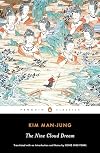
I had checked this out at the library when I did my sweep through for #koreanmarch, grabbing every book from a Korean author that I could find. To be honest, I didn't really expect to get to this one, as I had never heard of it and its status as a seventeenth-century classic made me suspect it might be dry and less interesting than some of the modern books I had also checked out. But then I read a post by a friend on Instagram and immediately moved this book to the top of my stack.
Dry is the show more last thing this book is. A young Buddhist monk strays from his path and as a consequence is sent to Hell to be reincarnated, as are the eight fairies who caused his temptation. Reborn, they are all incredibly beautiful and epically talented (literally epically, their various talents are constantly being compared to legends of poetry, music, beauty, and wisdom in Chinese history, and generally coming out favorably). The whole thing doesn't seem like much of a punishment or lesson until you realize that it is all a commentary on the nature of reality, the three paths of Confucianism, Buddhism, and Taoism, and Korean politics of the day.
Without these perspectives (which the introduction does a lot of work to establish), it can simply be read as a charming fairy tale, a vision of an idealized epoch of wise leaders and gracious women.
An important text in Korean culture, it can also shine some light on modern Korean literature and other arts. It connected some dots for me on things that had mystified me in K-dramas. I am glad that this was recommended to me, and that I read it! show less
Dry is the show more last thing this book is. A young Buddhist monk strays from his path and as a consequence is sent to Hell to be reincarnated, as are the eight fairies who caused his temptation. Reborn, they are all incredibly beautiful and epically talented (literally epically, their various talents are constantly being compared to legends of poetry, music, beauty, and wisdom in Chinese history, and generally coming out favorably). The whole thing doesn't seem like much of a punishment or lesson until you realize that it is all a commentary on the nature of reality, the three paths of Confucianism, Buddhism, and Taoism, and Korean politics of the day.
Without these perspectives (which the introduction does a lot of work to establish), it can simply be read as a charming fairy tale, a vision of an idealized epoch of wise leaders and gracious women.
An important text in Korean culture, it can also shine some light on modern Korean literature and other arts. It connected some dots for me on things that had mystified me in K-dramas. I am glad that this was recommended to me, and that I read it! show less
Lists
Reading LIst (1)
Awards

You May Also Like
Associated Authors
Statistics
- Works
- 4
- Also by
- 1
- Members
- 194
- Popularity
- #112,876
- Rating
- 3.5
- Reviews
- 4
- ISBNs
- 15
- Languages
- 4