
Cedella Marley
Author of One Love: Based on the Song by Bob Marley
Works by Cedella Marley
Associated Works
Tagged
Common Knowledge
- Gender
- female
Members
Reviews
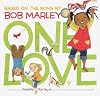
Yes, it’s that song and it’s been reworked by that songwriter’s daughter (take a second look at her last name if you think I joke.) Like some of the more popular songs of the Beatles, this one is both trite and profound in its simplicity. The illustrations are brilliantly colored and that lifts the song a bit out of its jarring repetition.
“One love,
one heart,
let’s get together
and feel all right!”
“One love,
one heart,
let’s get together
and feel all right!”
There are 4 reasons that I like this book. First, it is unique in that the words of the book are simply the lyrics to Bob Marley’s song “One Love.” This song is so inspiring and sends a great message to children. I have never seen a book structured in this way, and I think it is so interesting, especially if you play the song for children as they are reading. Second, the pictures in the book directly relate to each line of the song. For example, for the lyrics, “One love, what my show more family gives to me,” there is a picture of a young girl blowing a kiss to her parents who have made her a nice breakfast in their kitchen. This connects the words of the song to children’s lives, making it relatable. Third, there is a big emphasis on interracial relationships in this book. For instance, the young African American girl, who seems to be the main character of the illustrations, is friends with a young Caucasian girl. The young girls parents are also an interracial couple. The book shows members of all races coming together to create “One Love Park.” Fourth, I like the fact that the author included an author’s note at the end of the book. Cedella Marley explains what the song “One Love” meant to her father and the message that she wants children to receive from this book. This central message is one of tolerance, teaching children that we are all equal and should love one another as such. show less

This book for very young children is adapted by a daughter of Bob Marley from one of his most popular songs. The illustrations by Vanessa Brantley-Newton are bright and cheery and show a diverse collection of people celebrating the joys of cooperation and community.
The song “One Love” expresses these sentiments, and was named "Song Of The Millennium" by the British Broadcasting Corporation....
"One love, one heart
Let's get together and feel all right
As it was in the beginning (One show more love)
So shall it be in the end (One heart)
Alright, "Give thanks and praise to the Lord and I will feel all right."
In her notes at the end of the book, the author explains:
"I think everybody has a ‘happy song’ and ‘One Love’ is mine. Yet, in many ways, it’s everybody’s happy song.... When my father sang ‘One Love,’ he felt it all the way – heart and soul, mind and body. He thought a world united by love was possible, and it is. All we’ve got to do, he said, is ‘Give a little, take a little.’ My father wanted people to embrace one another and take care of one another. That was and is the message of ‘One Love.’” show less
The song “One Love” expresses these sentiments, and was named "Song Of The Millennium" by the British Broadcasting Corporation....
"One love, one heart
Let's get together and feel all right
As it was in the beginning (One show more love)
So shall it be in the end (One heart)
Alright, "Give thanks and praise to the Lord and I will feel all right."
In her notes at the end of the book, the author explains:
"I think everybody has a ‘happy song’ and ‘One Love’ is mine. Yet, in many ways, it’s everybody’s happy song.... When my father sang ‘One Love,’ he felt it all the way – heart and soul, mind and body. He thought a world united by love was possible, and it is. All we’ve got to do, he said, is ‘Give a little, take a little.’ My father wanted people to embrace one another and take care of one another. That was and is the message of ‘One Love.’” show less
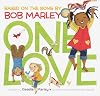
One Love by Cedella Marley
Summary:
The contemporary multicultural picturebook used the intertextual quality of the illustrations that were sketched in soft watercolors to add depth and tones that provided the readers understanding of the authors intent; tolerance and racial acceptance. This contemporary picturebook mirrored the current cultural emphasis with his visual communication through the illustrations that depict children, minority and majority ethnicity playing together in the same show more neighborhoods; building the relationships of best friends oblivious to race; living life benefiting from their similarities and differences. Marley does not use stereotypes nor negative narrative to support the idea of racial indifference; it is shown in a child’s smile while engaged in the same activities.
Personal Reaction:
The depiction of a world where children can play together, work through differences, and live as one resonated well with me. I have very strong feeling about racial equality and thoroughly enjoyed the information shared in Marley’s illustrations that were supported by the prose form Bob Marley’s lyrics. It sings to me a story that needs to be heard by the young to make up for the social indiscretions of their adult role models.
Classroom Extension Ideas
1. Early childhood teachers could read this book to a mixed gender and multicultural classrooms as an example and as an informative approach though visual communication to teach them racial equality and that all children are the same as they laugh, cry, play and work the same.
2. Children could contemplate the messages from Marley and discuss their differences and what they can do to better understand the value of those differences.
3. Children could learn the music used in the book and perform a skit about ways the races are the same. show less
Summary:
The contemporary multicultural picturebook used the intertextual quality of the illustrations that were sketched in soft watercolors to add depth and tones that provided the readers understanding of the authors intent; tolerance and racial acceptance. This contemporary picturebook mirrored the current cultural emphasis with his visual communication through the illustrations that depict children, minority and majority ethnicity playing together in the same show more neighborhoods; building the relationships of best friends oblivious to race; living life benefiting from their similarities and differences. Marley does not use stereotypes nor negative narrative to support the idea of racial indifference; it is shown in a child’s smile while engaged in the same activities.
Personal Reaction:
The depiction of a world where children can play together, work through differences, and live as one resonated well with me. I have very strong feeling about racial equality and thoroughly enjoyed the information shared in Marley’s illustrations that were supported by the prose form Bob Marley’s lyrics. It sings to me a story that needs to be heard by the young to make up for the social indiscretions of their adult role models.
Classroom Extension Ideas
1. Early childhood teachers could read this book to a mixed gender and multicultural classrooms as an example and as an informative approach though visual communication to teach them racial equality and that all children are the same as they laugh, cry, play and work the same.
2. Children could contemplate the messages from Marley and discuss their differences and what they can do to better understand the value of those differences.
3. Children could learn the music used in the book and perform a skit about ways the races are the same. show less
Lists
Youth: Music (2)
VBL Picturebooks (1)
Awards

You May Also Like


Associated Authors
Statistics
- Works
- 10
- Also by
- 1
- Members
- 1,494
- Popularity
- #17,195
- Rating
- 4.0
- Reviews
- 31
- ISBNs
- 30
- Languages
- 2