
Tiffany Rose
Author of M Is for Melanin: A Celebration of the Black Child
Series
Works by Tiffany Rose
Associated Works
Tagged
Common Knowledge
There is no Common Knowledge data for this author yet. You can help.
Members
Reviews
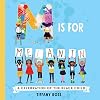
Beautiful book, teaching not only the alphabet, but also that every person is beautiful just the way they are. This book is in celebration of black children, but could definitely be read by any child. Throughout the book there are children of every shade depicted on each book. They are shown with different colored hair, different hair types - from braids to bald - all different styles of clothing. One of my favorite pages was the Pride page - which shows one child holding an equality sign show more and one with the trans flag on their shirt. The P is filled in with the colors of the rainbow. While it is subtle, it is still very important as queer people of color are often the ones who are killed in crimes against the LGBTQ community - especially Trans POC. However, throughout the whole book we are reminded of black people who rose to power - Michelle and Barack Obama, Oprah, Malcom X, Martin Luther King Jr. among others.
M is for Melanin is a beautifully illustrated book for children of all backgrounds, but especially for people of color. show less
M is for Melanin is a beautifully illustrated book for children of all backgrounds, but especially for people of color. show less
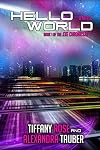
I really enjoyed this book and would give it a higher rating if it weren't for one thing that really bugged me:
The authors reduce all manual languages in English speaking countries to "sign language" which is an ableist term for a non-existent language. The characters in this book from the US and the UK all speak this non-existent manual language instead of the languages they would actually speak - ASL in the US and BSL in the UK (statistically speaking, though there are other manual show more languages spoken in both countries). While ASL and BSL speakers could understand each other somewhat (I'm told by a friend who is very involved in international deaf advocacy), it would be difficult and slow. This story ignores the very real differences between manual languages in the US and UK for the sake of narrative convenience. Which, for a story with such great representation of LGBTQIA and POC characters, was very unfortunate. show less
The authors reduce all manual languages in English speaking countries to "sign language" which is an ableist term for a non-existent language. The characters in this book from the US and the UK all speak this non-existent manual language instead of the languages they would actually speak - ASL in the US and BSL in the UK (statistically speaking, though there are other manual show more languages spoken in both countries). While ASL and BSL speakers could understand each other somewhat (I'm told by a friend who is very involved in international deaf advocacy), it would be difficult and slow. This story ignores the very real differences between manual languages in the US and UK for the sake of narrative convenience. Which, for a story with such great representation of LGBTQIA and POC characters, was very unfortunate. show less
Here me out about this book.
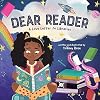
I get the author's message. I get the author's intent. It's about a girl who loves going to the library and exploring books. (And a thumbs up for the library card end papers at the front of the book! And proving that picture books have some of the most advanced vocabulary within their pages!) Then, realizing that a lot of the Black narratives are ones of struggle and triumph over adversity (Rosa Parks, Martin Luther King Jr) and not stories of adventures and show more superheroes, she seeks to create those narratives. It's a valid argument: up until recently, the only Black representation was more in nonfiction and about events along the Civil Rights moment. A black girl was not the protagonist in a story about food. (Or if it was it was about slavery and food)
Here's my problem, though. The byline of the book is "a love letter to libraries." To be honest, I did not get that vibe while reading "Dear Reader." If anything, I felt it was attacking the lack of Black girls in books. And that the library was a little responsible for perpetuating the cycle. I think that is misguided. Please visit my library and see that, now, we always have books on display that feature BIPOC characters. Characters doing seemingly everyday activities.
So, I guess don't call it a love letter. It was more of an OP/ED piece. show less
I get the author's message. I get the author's intent. It's about a girl who loves going to the library and exploring books. (And a thumbs up for the library card end papers at the front of the book! And proving that picture books have some of the most advanced vocabulary within their pages!) Then, realizing that a lot of the Black narratives are ones of struggle and triumph over adversity (Rosa Parks, Martin Luther King Jr) and not stories of adventures and show more superheroes, she seeks to create those narratives. It's a valid argument: up until recently, the only Black representation was more in nonfiction and about events along the Civil Rights moment. A black girl was not the protagonist in a story about food. (Or if it was it was about slavery and food)
Here's my problem, though. The byline of the book is "a love letter to libraries." To be honest, I did not get that vibe while reading "Dear Reader." If anything, I felt it was attacking the lack of Black girls in books. And that the library was a little responsible for perpetuating the cycle. I think that is misguided. Please visit my library and see that, now, we always have books on display that feature BIPOC characters. Characters doing seemingly everyday activities.
So, I guess don't call it a love letter. It was more of an OP/ED piece. show less
Lists
Youth: Poetry (1)
Awards


You May Also Like
Associated Authors
Statistics
- Works
- 3
- Also by
- 1
- Members
- 154
- Popularity
- #135,794
- Rating
- 3.9
- Reviews
- 3
- ISBNs
- 9