
Ersi Sotiropoulos
Author of What's Left of the Night
About the Author
Works by Ersi Sotiropoulos
Δαμάζοντας το κτήνος 1 copy
Σενιορίτα 1 copy
Tagged
Common Knowledge
- Canonical name
- Sotiropoulos, Ersi
- Legal name
- Σωτηροπούλου, Έρση
- Other names
- Sotiropoulos, Ersi
- Birthdate
- 1953
- Gender
- female
- Short biography
- Érsi Sotiropoúlou ou Ersi Sotiropoulos est une écrivaine grecque.
Après des études de philosophie et d'anthropologie à Florence, elle a été conseiller culturel à l'Ambassade de Grèce à Rome, avant d'être élue membre de l'International Writing Programm de l'Université d'Iowa.
Elle écrit des articles avant de se lancer en littérature dans les années 1980. Poète, elle est aussi l'auteur de nombreux romans et nouvelles.
Son roman "Zigzags dans les orangers" (1999) reçoit le prix d'État de l'Académie d'Athènes et le Prix de la revue Diavàzo ("je lis") en 2000.
Elle est également l'auteure de "Dompter la bête" (2003) et "Eva" (2009).
"Ce qui reste de la nuit" (2015) se voit décerner le prix Méditerranée étranger en 2017. - Nationality
- Greece
- Birthplace
- Patras, Greece
- Places of residence
- Rome, Italy
Athens, Greece - Map Location
- Greece
- Associated Place (for map)
- Greece
Members
Reviews

Ersi Sotiropoulos puts herself inside Cavafy's head during a short stay in Paris, whilst he and his brother John are on their way home from a trip to visit relatives in Britain in June 1897. The newspapers are full of the Dreyfus Affair, there is talk of Proust and Wilde and Baudelaire, the streets are full of distracting life and movement and beautiful young men, and Cavafy is struggling to find the self-confidence to carry on with his poetry. On the third night, after a grotesque and not show more very arousing visit to a notorious private club on the fringes of Paris (his guide insists on a stop at an equally notorious "cottage" on the way back), the poet rips up his work-in-progress and starts to get a clear sense of a voice that is recognisably his own.
This is probably a book to read when you are already fairly familiar with Cavafy as a poet - it's full of half-buried references to his poems and the subjects he deals with in them, many of which will probably pass you by if you haven't read them. It's an enjoyable historical novel with lots of very authentic-sounding but not unduly laboured period detail. And it gives us an interesting insight into what it might be like to be a modest genius who isn't quite sure that he is as clever as people tell him.
I don't know enough about Cavafy's biography to judge whether he really did have this kind of epiphany in 1897, but the book conveys a strong impression that Sotiropoulos must have immersed herself in everything written by and about him, so I imagine that it must be at least plausible in the context of what is known. Although I'm pretty sure she made up the bit about the single irritating pubic hair...
One oddity about this book - which otherwise ticks all the boxes for an LGBT-interest historical novel, right down to the strategically placed text over the genitals in the cover art - is that it doesn't appear to have an introduction by Edmund White. Surely New Vessel Press must have realised that that is a legal requirement when publishing a book of this kind in English? (Happily, White's name is prominent amongst the blubbers, and he has been doing promotional events together with the author and the translator, so it looks as though this omission was only a minor hiccup in the fabric of reality.) show less
This is probably a book to read when you are already fairly familiar with Cavafy as a poet - it's full of half-buried references to his poems and the subjects he deals with in them, many of which will probably pass you by if you haven't read them. It's an enjoyable historical novel with lots of very authentic-sounding but not unduly laboured period detail. And it gives us an interesting insight into what it might be like to be a modest genius who isn't quite sure that he is as clever as people tell him.
I don't know enough about Cavafy's biography to judge whether he really did have this kind of epiphany in 1897, but the book conveys a strong impression that Sotiropoulos must have immersed herself in everything written by and about him, so I imagine that it must be at least plausible in the context of what is known. Although I'm pretty sure she made up the bit about the single irritating pubic hair...
One oddity about this book - which otherwise ticks all the boxes for an LGBT-interest historical novel, right down to the strategically placed text over the genitals in the cover art - is that it doesn't appear to have an introduction by Edmund White. Surely New Vessel Press must have realised that that is a legal requirement when publishing a book of this kind in English? (Happily, White's name is prominent amongst the blubbers, and he has been doing promotional events together with the author and the translator, so it looks as though this omission was only a minor hiccup in the fabric of reality.) show less

I first discovered Ersi Sotiroupolos through her acclaimed short story collection Landscape with Dog and my enthusiastic review of that perfect little volume held her up as an exemplar of the 21st century short form. I was in two minds as to whether or not to adventure into her novels since few modern writers handle both forms well: I was wrong, she is a master of both forms.
ZigZag is her fifth novel but the first to be translated into American, and I stress American rather than English, and show more in some palpable sense this makes reading the translation a double translation exercise for while Peter Green translates the words beautifully there is something not quite perfect about the translation and had I not read the short stories so wonderfully rendered by Karen Emmerich I would be hard pressed to put my finger on what it is. Put simply some of the essential contemporary Greekness of her characters seeps out of Green’s translation that Emmerich captures perfectly in her rendering of the short stories.
Quibble over, I must now turn to the more pleasurable task of reviewing the work itself. ZigZag is actually the motif that the author uses throughout the work and uses to great effect. Sotiropoulos is a master of character and here she gives us four memorable, fascinating characters whose lives in modern, pre-austerity Greece each zig and zag across the others’. She zigzags so cleverly that one almost misses the twists and turns that connect the four characters. In fact had I not previously noticed how Paul Auster often stitches three novellas together to make his most amusing and entertaining novels I might have missed it altogether. As a structure it is not entirely novel but it makes for a reading experience that challenges and rewards the attentive reader and entertains the casual reader.
Her prose is exact, colloquial. and entirely convincing and yet it yearns toward the poetic. Her characters are strong, flawed and often troubled. Her situations are challenging for both the characters and the reader. This is first class, top notch modern writing that restores my faith in modern literature. I look forward to reading more of her work as it is translated and am particularly to see how she portrays austerity Greece and its beleaguered citizenry - I have high hopes. show less
ZigZag is her fifth novel but the first to be translated into American, and I stress American rather than English, and show more in some palpable sense this makes reading the translation a double translation exercise for while Peter Green translates the words beautifully there is something not quite perfect about the translation and had I not read the short stories so wonderfully rendered by Karen Emmerich I would be hard pressed to put my finger on what it is. Put simply some of the essential contemporary Greekness of her characters seeps out of Green’s translation that Emmerich captures perfectly in her rendering of the short stories.
Quibble over, I must now turn to the more pleasurable task of reviewing the work itself. ZigZag is actually the motif that the author uses throughout the work and uses to great effect. Sotiropoulos is a master of character and here she gives us four memorable, fascinating characters whose lives in modern, pre-austerity Greece each zig and zag across the others’. She zigzags so cleverly that one almost misses the twists and turns that connect the four characters. In fact had I not previously noticed how Paul Auster often stitches three novellas together to make his most amusing and entertaining novels I might have missed it altogether. As a structure it is not entirely novel but it makes for a reading experience that challenges and rewards the attentive reader and entertains the casual reader.
Her prose is exact, colloquial. and entirely convincing and yet it yearns toward the poetic. Her characters are strong, flawed and often troubled. Her situations are challenging for both the characters and the reader. This is first class, top notch modern writing that restores my faith in modern literature. I look forward to reading more of her work as it is translated and am particularly to see how she portrays austerity Greece and its beleaguered citizenry - I have high hopes. show less
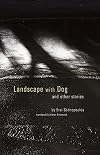
Ersi Sotiropoulos is one of Greece's most beloved writers, and one can see why! She wields a delicate and finely-tuned pen. This writer is able to discern the deeper nuances in relationships between people and is a keen observer of human contradictions; what's more, she's able to transmit those observations articulately on paper.
This well–crafted collection of stories is set in Greece, and Italy across the Ionian Sea, and includes snapshots of everyday life. Sotiropoulos skilfully builds show more intrigue, and one can sense the tension between, and within, characters. Sometimes the tension is so intense, it leads to physical fights. Yet, beneath the tensions between husband and wife, brother and sister, mother and child, there is an intimacy and closeness that binds these people, overriding all other anxieties.
Her writing is eloquent and the narratives become more enjoyable as the book progresses. By the end, I was totally hooked by the superb writing, the insights shared, and the excellent skill on the part of the translator, Karen Emmerich.
A number of the stories involved writers struggling to hone their skill. And there were many great lines, for example: "I'd spent many evenings in the half–light, trying to write a line, trying to fit two mutilated words together on a napkin...", and, "One by one the words, then the sentences of the half-finished story streamed through her mind with incomparable grace, like white snowflakes swirling before they dissolve."
The prose encompasses fine, descriptive writing: "He ... promised he would never abandon her again. They stayed like that a whole hour, hugging under the overhang at the station, while the snow came down around them. Everything was white, and the two of them a solitary black shape in a sea of ice."
Soitropoulos understands the communication dynamic between couples, as well as the limits they impose on one another. Her characters know instinctively how far they can push their partners, and when the thread will break: "By now he's learned to keep quiet ‒it makes no difference what he says, she's made up her mind, and whirls into the kitchen like a tornado."
Sotiropoulos' writing is special; it is vivid, and beautiful, and sensual, and she often takes the reader by surprise. I'm delighted to know that more of her works are becoming available in English!
This review was first published in Issue 3 of Belletrista: http://www.belletrista.com/2010/issue3/reviews_4.php show less
This well–crafted collection of stories is set in Greece, and Italy across the Ionian Sea, and includes snapshots of everyday life. Sotiropoulos skilfully builds show more intrigue, and one can sense the tension between, and within, characters. Sometimes the tension is so intense, it leads to physical fights. Yet, beneath the tensions between husband and wife, brother and sister, mother and child, there is an intimacy and closeness that binds these people, overriding all other anxieties.
Her writing is eloquent and the narratives become more enjoyable as the book progresses. By the end, I was totally hooked by the superb writing, the insights shared, and the excellent skill on the part of the translator, Karen Emmerich.
A number of the stories involved writers struggling to hone their skill. And there were many great lines, for example: "I'd spent many evenings in the half–light, trying to write a line, trying to fit two mutilated words together on a napkin...", and, "One by one the words, then the sentences of the half-finished story streamed through her mind with incomparable grace, like white snowflakes swirling before they dissolve."
The prose encompasses fine, descriptive writing: "He ... promised he would never abandon her again. They stayed like that a whole hour, hugging under the overhang at the station, while the snow came down around them. Everything was white, and the two of them a solitary black shape in a sea of ice."
Soitropoulos understands the communication dynamic between couples, as well as the limits they impose on one another. Her characters know instinctively how far they can push their partners, and when the thread will break: "By now he's learned to keep quiet ‒it makes no difference what he says, she's made up her mind, and whirls into the kitchen like a tornado."
Sotiropoulos' writing is special; it is vivid, and beautiful, and sensual, and she often takes the reader by surprise. I'm delighted to know that more of her works are becoming available in English!
This review was first published in Issue 3 of Belletrista: http://www.belletrista.com/2010/issue3/reviews_4.php show less
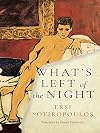
It is both readable and intensely sensual. This artwork is, in every way, a hallucination. A truly amazing book—a magnificent imaginative piece as well as a worthy homage to the greatest Greek poet of the twentieth century.
Lists
Awards


You May Also Like
Associated Authors
Statistics
- Works
- 15
- Members
- 184
- Popularity
- #117,735
- Rating
- 2.7
- Reviews
- 8
- ISBNs
- 33
- Languages
- 4
- Favorited
- 1