
Russell Celyn Jones
Author of The Ninth Wave
Works by Russell Celyn Jones
Tagged
Common Knowledge
- Birthdate
- 1955
- Gender
- male
- Nationality
- UK
- Birthplace
- London, England, UK
- Places of residence
- Swansea, Wales, UK
- Associated Place (for map)
- UK
Members
Reviews
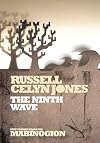
The Mabinogion is a collection of medieval Welsh stories of Celtic origin – they are written very much in the bardic tradition of oral storytelling. The eleven tales as normally collected have the four ‘branches’ of the Mabinogion proper, a set of Native Tales and three Romances; the Native Tales also include early references to King Arthur. During my obsessive Arthurian reading period some years ago, (see the previous post) I did include the Mabinogion. Like Malory, it is not an easy show more read, and the Welsh names take some getting used to, but these stories are full of magic, nature, and always the cycle of life.
The publisher Seren, with its series of short novels ‘New Stories from the Mabinogion’ has commissioned contemporary re-tellings of the stories, (somewhat in the manner of the Canongate Myths). The Ninth Wave by Russell Celyn Jones is the second in the series.
Jones takes the story of Pwyll from the first branch of the Mabinogion and rewrites it as a dystopian vision of a world without oil. Pwyll is a rich young aristocrat who has no idea of how to rule his land. One day out hunting he kills the dog of neighbouring ruler Arawn who proposes that Pwyll should swap places while Arawn quietly does some business, and he ends up getting drawn in to a plot by Arawn’s wife to murder her sister’s fiancée…
I really enjoyed the imagery of Jones’ dystopian world in this one. A land where everyone has gone back to horses for transport, yet Little Chefs and Starbucks are still going – it’s that close to us now. Even more than now, it’s a land of haves and have-nots. Democracy has reverted back to medieval style feudal fiefdoms and tribal enclaves again which brings the story back full-circle to its origins.
"Mounted up and heading along the old motorway, with a hand-drawn map in his hands, he practised the lines he was to use on Havgan. He turned off at exit fifteen and was soon catching the highlights of kids ripping copper pipes off the wall of a house. A car burned at the side of the road, with people walking casually by as if this were nothing special. From shop to light manufacturing unit, there was precious little glass left anywhere in one piece."
This marvellous short novel brings the essence of the original story to life and expands on it to create a whole from the episodic narratives of the Mabinogion. show less
The publisher Seren, with its series of short novels ‘New Stories from the Mabinogion’ has commissioned contemporary re-tellings of the stories, (somewhat in the manner of the Canongate Myths). The Ninth Wave by Russell Celyn Jones is the second in the series.
Jones takes the story of Pwyll from the first branch of the Mabinogion and rewrites it as a dystopian vision of a world without oil. Pwyll is a rich young aristocrat who has no idea of how to rule his land. One day out hunting he kills the dog of neighbouring ruler Arawn who proposes that Pwyll should swap places while Arawn quietly does some business, and he ends up getting drawn in to a plot by Arawn’s wife to murder her sister’s fiancée…
I really enjoyed the imagery of Jones’ dystopian world in this one. A land where everyone has gone back to horses for transport, yet Little Chefs and Starbucks are still going – it’s that close to us now. Even more than now, it’s a land of haves and have-nots. Democracy has reverted back to medieval style feudal fiefdoms and tribal enclaves again which brings the story back full-circle to its origins.
"Mounted up and heading along the old motorway, with a hand-drawn map in his hands, he practised the lines he was to use on Havgan. He turned off at exit fifteen and was soon catching the highlights of kids ripping copper pipes off the wall of a house. A car burned at the side of the road, with people walking casually by as if this were nothing special. From shop to light manufacturing unit, there was precious little glass left anywhere in one piece."
This marvellous short novel brings the essence of the original story to life and expands on it to create a whole from the episodic narratives of the Mabinogion. show less
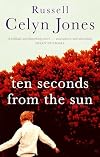
This was an odd read – some great writing that you sail effortlessly through, interspersed with some yawnworthy stretches – thinking particularly of the long descriptions of river navigation – that drag like a dredger stuck in the mud. Not to mention a tendency towards unexpected jump-shifts from calm to turmoil in the blinking of an eye: the car crash (fine, that’s the way they happen) the drama on the beach (to be honest I’m not sure what that section contributed to the show more whole).
Despite any misgivings I had about the style, this has to be a five star review as far as I’m concerned, because once you get a couple of chapters in the story demands to be read. There is a tabloidy fascination about the plot, not necessarily a bad thing. I read it with a feeling of foreboding lodged in the pit of my stomach. You know what is going to happen and are powerless to prevent it but you have to see how it plays out. Celestine was a particularly brilliant character – causer of so much aggro and yet surely worthy of sympathy too. So much to think about. Not a novel I’ll forget in a hurry. show less
Despite any misgivings I had about the style, this has to be a five star review as far as I’m concerned, because once you get a couple of chapters in the story demands to be read. There is a tabloidy fascination about the plot, not necessarily a bad thing. I read it with a feeling of foreboding lodged in the pit of my stomach. You know what is going to happen and are powerless to prevent it but you have to see how it plays out. Celestine was a particularly brilliant character – causer of so much aggro and yet surely worthy of sympathy too. So much to think about. Not a novel I’ll forget in a hurry. show less
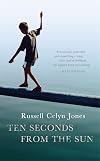
This is a novel of the genre I call psychological thrillers--think for example Ruth Rendell. Ray, a river pilot on the Thames, leads an ostensibly content life--good marriage, healthy and happy children, nice home and job. But Ray harbors a deep, dark secret from his past, something his wife, family and friends know nothing about, and one day that secret rears its ugly head. From then on, Ray makes some pretty poor decisions, digging a deeper and deeper hole for himself. To a certain extent show more it annoys me when characters in books do this--make decisions that are clearly going to end badly. I find myself wondering whether such a character, who has, as Ray, been painted as intelligent and decent, would realistically have made such decisions, or whether my own biases and belief that the decisions are wrong cause me to question the author's ability to develop realistic characters.
Putting this quibble aside, this book explores the interesting theme of whether there are some deeds, including in this instance deeds committed as a child, that can never be atoned for. (This was a theme in another book I read a few years ago that I think is a better book than this one, Boy A by Jonathan Trigell.)
I also enjoyed the background of river navigation on the Thames aspect of this book.
3 stars show less
Putting this quibble aside, this book explores the interesting theme of whether there are some deeds, including in this instance deeds committed as a child, that can never be atoned for. (This was a theme in another book I read a few years ago that I think is a better book than this one, Boy A by Jonathan Trigell.)
I also enjoyed the background of river navigation on the Thames aspect of this book.
3 stars show less
It started off so well. I loved the idea behind the story- it was different. A married man is hiding the fact that he killed his sister when he was twelve, and his half-sister turns up to let his secret out. It had a lot of promise, and the start of the book was really compelling. The middle was very dull, and extremely uninteresting. It does pick up by the end but it was too late by then.
Lists
Awards

Statistics
- Works
- 8
- Members
- 105
- Popularity
- #183,190
- Rating
- 3.3
- Reviews
- 7
- ISBNs
- 18