
Peter Hujar (1934–1987)
Author of Peter Hujar: A Retrospective
Works by Peter Hujar
Peter Hujar: intimate survey 1 copy
Associated Works
Christopher Street, Vol. 2, No. 4, October 1977: "Poetry & Art Issue" — Cover photographer — 1 copy
Tagged
Common Knowledge
- Birthdate
- 1934-10-11
- Date of death
- 1987-11-26
- Gender
- male
- Education
- School of Industrial Art
- Occupations
- photographer
- Relationships
- Wojnarowicz, David (partner)
- Birthplace
- Trenton, New Jersey, USA
- Place of death
- Manhattan, New York, USA
- Burial location
- Gate of Heaven Cemetery, Hawthorne, New York, USA
- Associated Place (for map)
- New York, USA
Members
Reviews
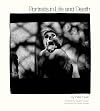
A new edition of the cult classic photography book by the legendary Peter Hujar.
“I am moved by the purity of [Hujar’s] intentions.... These memento mori can exorcise morbidity as effectively as they evoke its sweet poetry and its panic.” ―Susan Sontag
Portraits in Life and Death is the only book of photographs published by Peter Hujar during his lifetime. The twenty-nine portraits of creative people―ranging from William Burroughs, Susan Sontag, and John Waters to Larry Ree, founder show more of the Trocadero Gloxinia Ballet Company, and T.C. (whose identity is unclear)―possess a haunting beauty and degree of psychological examination that is both offbeat and riveting. Following the portraits come eleven images that can only be described as devastating: pictures of semi-preserved, clothed bodies of nineteenth-century Sicilians found in the arid catacombs beneath a church in Palermo.
There is no necessary connection in the photographs themselves or between the two sections of the book, yet the pictorial progression from life to death is an emblem of the journey we all take. The living subjects seem to be meditating on the mortality that is limned with such profound effect in the catacomb pictures. In different ways, both groups of images speak to the basic fears and emotions that we carry with us, somewhere beyond our consciousness. After viewing this extraordinary book, it is almost impossible not to make those connections and interpretations or be moved by Hujar’s consistent ability to convey what appears to be the inner spirit of his subjects.
Even so, an air of nonchalance, even gaiety, hovers over the photographs. The book is odd, oblique, sometimes opaque, and certainly deeply felt; but it sticks to the mind like a burr. It will be noticed. Once seen, it cannot be forgotten.
Do we live on in photographs; can they offer us a kind of immortality? Or do we figuratively die the moment our photograph is taken, after which the image painfully recapitulates death itself? Perhaps the photographed subject occupies a space between the two, not quite alive, not quite dead.
These are just some of the questions that arise in the work of New York photographer Peter Hujar, whose series Portraits in Life and Death is currently showing in Europe for the first time. Walk through the rooms of the exhibition at the 60th Venice Biennale and you’ll run into some familiar faces; John Waters, Susan Sontag, Fran Lebowitz and William Burroughs are among those Hujar photographed in his studio, all of whom were his friends. But the show offers more than a hall of fame. Alongside the portraits of celebrities are those of lesser-known figures from Hujar’s 1970s Lower East Side artistic milieu, captured in intimate states of repose and vulnerability, as well as a haunting set of images taken a decade earlier, in the early 60s, of embalmed bodies in the
That these photos of eerie and entombed remains sit alongside the black and white portraits of contemporaries was Hujar’s intention; he placed the two series side by side in his first and only monograph, also titled Portraits in Life and Death, published in 1976. Hujar’s friend, the writer and critic Susan Sontag wrote in the book’s introduction, “Photography ... converts the whole world into a cemetery. Photographers, connoisseurs of beauty, are also – wittingly or unwittingly – the recording angels of death. We no longer study the art of dying ... but all eyes, at rest, contain that knowledge. The body knows. And the camera shows, inexorably.”
We often think of death as the great equaliser. We all die eventually. One of the most striking images in Hujar’s collection – a masked corpse that appears to be laughing, and the cover image for the monograph – seems to make this point. Yet the reality presents a more complicated picture. Death may be accelerated for those without the means to stave it off through access to the right healthcare, as the untimely death of many of Hujar’s subjects illustrates. There is also the question of who is granted the privilege of remembrance. Take the catacombs where Hujar photographed the mummified bodies, which attest to this uncomfortable fact: the people preserved there were well-known or elite figures who could afford to pay for the embalming process and to be kept on view.
“The catacombs were created for the elite to remain as lifelike as possible, a space for visitation and remembrance,” explains the Venice show’s curator, Grace Deveney. “In those photos, Hujar is drawn to bodies in frames and set up for display. The catacombs were an early way of thinking about photography’s unique possibility to bring life and death together and fix them through these momentary glimpses. When he turns to portraiture he is capturing people with a sense of impending death in life.”
Like the catacomb photos, with their coffins and encasements, in his studio portraits, Hujar’s frame appears to encapsulate and hold his subjects, often as tenderly as they had just died in his arms. Some later did; one image in the show features James Waring, a dancer who died in his fifities, with Hujar taking care of him. Other images Hujar later took (not present in the Venice show) include an image of Warhol superstars Jackie Curtis – after death from a heroin overdose – and Candy Darling, on her deathbed before she passed away from lymphoma at just 29 (an image that later became an album cover for Antohni and The Johnsons).
When Hujar himself was hospitalised in 1987 from Aids-related illness, the artist David Wojnarowicz, Hujar’s former lover, turned the photographer’s camera around, capturing Hujar for posterity, as though not only to complete the Portraits In Life and Death series, but to document the grave tragedy and injustice of the ongoing Aids crisis. Look hard enough at Hujar’s portraits, and you might discern a knowing look in his subjects that seems to foreshadow how Aids would ravage the landscape of the East Village, taking the lives of this network of mostly queer performers and artists that Hujar surrounded himself with.
Although many of Hujar’s subjects are people of note, Deveney suggests “he was not drawn to photographing famous people” but – as Hujar himself put it – “those who push themselves to any extreme [...] and people who cling to the freedom to be themselves.” Dancers and people with dynamic practices were a draw, says Deveney, referencing portraits of Kenneth King, a dancer and choreographer, and Larry Reed of the Trocadero dance troupe. “I think he photographed them in these moments of rest, not moments of performance, because he was interested less in performers on stage or as public facing artists but as people who, outside of the image, can do this extraordinary, transformational or transgressive thing.”
Speaking to Another, photography critic Vince Aletti (and a friend of Hujar’s), agreed that Hujar was not preoccupied with fame. Besides the fact that many of his subjects were not yet famous at the time their portrait was taken, Aletti remembers Hujar himself as an aloof person, wary of mainstream success, and interested in cultivating authentic relationships – both with those in his personal life and with his sitters, who were often one and the same. “Peter rarely photographed people that he didn’t care about. [He] waited for them to let go, rather than giving him their ‘camera face’,” recalls Aletti.
The irony is, however, that the more famous portraits have in part, contributed to Hujar’s recent recognition in the art world and among those with an interest in queer archives and histories. Ten years ago Hujar may not have been recognisable, despite his distinct good looks (best captured in his own mesmerising self-portrait). Now, with the Venice show, and a reissue of the book Portraits In Life and Death forthcoming in October 2024, things are changing. Soon, the actor (and two-time Another Man cover star) Ben Whishaw will play Hujar in a film biopic. Little known beyond his immediate circles and barely earning a dime during his lifetime, today – long after his death – Hujar is becoming a photography superstar revered for his formal expertise and distinct ability to see into a subject’s soul.
This brings us back to the question of who is and isn’t remembered, and Hujar’s fascination with how photography can play an intervening role. As Roland Barthes put it: “In an initial period, photography, in order to surprise, photographs the notable; but soon, by a familiar reversal, it decrees notable whatever it photographs.” show less
“I am moved by the purity of [Hujar’s] intentions.... These memento mori can exorcise morbidity as effectively as they evoke its sweet poetry and its panic.” ―Susan Sontag
Portraits in Life and Death is the only book of photographs published by Peter Hujar during his lifetime. The twenty-nine portraits of creative people―ranging from William Burroughs, Susan Sontag, and John Waters to Larry Ree, founder show more of the Trocadero Gloxinia Ballet Company, and T.C. (whose identity is unclear)―possess a haunting beauty and degree of psychological examination that is both offbeat and riveting. Following the portraits come eleven images that can only be described as devastating: pictures of semi-preserved, clothed bodies of nineteenth-century Sicilians found in the arid catacombs beneath a church in Palermo.
There is no necessary connection in the photographs themselves or between the two sections of the book, yet the pictorial progression from life to death is an emblem of the journey we all take. The living subjects seem to be meditating on the mortality that is limned with such profound effect in the catacomb pictures. In different ways, both groups of images speak to the basic fears and emotions that we carry with us, somewhere beyond our consciousness. After viewing this extraordinary book, it is almost impossible not to make those connections and interpretations or be moved by Hujar’s consistent ability to convey what appears to be the inner spirit of his subjects.
Even so, an air of nonchalance, even gaiety, hovers over the photographs. The book is odd, oblique, sometimes opaque, and certainly deeply felt; but it sticks to the mind like a burr. It will be noticed. Once seen, it cannot be forgotten.
Do we live on in photographs; can they offer us a kind of immortality? Or do we figuratively die the moment our photograph is taken, after which the image painfully recapitulates death itself? Perhaps the photographed subject occupies a space between the two, not quite alive, not quite dead.
These are just some of the questions that arise in the work of New York photographer Peter Hujar, whose series Portraits in Life and Death is currently showing in Europe for the first time. Walk through the rooms of the exhibition at the 60th Venice Biennale and you’ll run into some familiar faces; John Waters, Susan Sontag, Fran Lebowitz and William Burroughs are among those Hujar photographed in his studio, all of whom were his friends. But the show offers more than a hall of fame. Alongside the portraits of celebrities are those of lesser-known figures from Hujar’s 1970s Lower East Side artistic milieu, captured in intimate states of repose and vulnerability, as well as a haunting set of images taken a decade earlier, in the early 60s, of embalmed bodies in the
That these photos of eerie and entombed remains sit alongside the black and white portraits of contemporaries was Hujar’s intention; he placed the two series side by side in his first and only monograph, also titled Portraits in Life and Death, published in 1976. Hujar’s friend, the writer and critic Susan Sontag wrote in the book’s introduction, “Photography ... converts the whole world into a cemetery. Photographers, connoisseurs of beauty, are also – wittingly or unwittingly – the recording angels of death. We no longer study the art of dying ... but all eyes, at rest, contain that knowledge. The body knows. And the camera shows, inexorably.”
We often think of death as the great equaliser. We all die eventually. One of the most striking images in Hujar’s collection – a masked corpse that appears to be laughing, and the cover image for the monograph – seems to make this point. Yet the reality presents a more complicated picture. Death may be accelerated for those without the means to stave it off through access to the right healthcare, as the untimely death of many of Hujar’s subjects illustrates. There is also the question of who is granted the privilege of remembrance. Take the catacombs where Hujar photographed the mummified bodies, which attest to this uncomfortable fact: the people preserved there were well-known or elite figures who could afford to pay for the embalming process and to be kept on view.
“The catacombs were created for the elite to remain as lifelike as possible, a space for visitation and remembrance,” explains the Venice show’s curator, Grace Deveney. “In those photos, Hujar is drawn to bodies in frames and set up for display. The catacombs were an early way of thinking about photography’s unique possibility to bring life and death together and fix them through these momentary glimpses. When he turns to portraiture he is capturing people with a sense of impending death in life.”
Like the catacomb photos, with their coffins and encasements, in his studio portraits, Hujar’s frame appears to encapsulate and hold his subjects, often as tenderly as they had just died in his arms. Some later did; one image in the show features James Waring, a dancer who died in his fifities, with Hujar taking care of him. Other images Hujar later took (not present in the Venice show) include an image of Warhol superstars Jackie Curtis – after death from a heroin overdose – and Candy Darling, on her deathbed before she passed away from lymphoma at just 29 (an image that later became an album cover for Antohni and The Johnsons).
When Hujar himself was hospitalised in 1987 from Aids-related illness, the artist David Wojnarowicz, Hujar’s former lover, turned the photographer’s camera around, capturing Hujar for posterity, as though not only to complete the Portraits In Life and Death series, but to document the grave tragedy and injustice of the ongoing Aids crisis. Look hard enough at Hujar’s portraits, and you might discern a knowing look in his subjects that seems to foreshadow how Aids would ravage the landscape of the East Village, taking the lives of this network of mostly queer performers and artists that Hujar surrounded himself with.
Although many of Hujar’s subjects are people of note, Deveney suggests “he was not drawn to photographing famous people” but – as Hujar himself put it – “those who push themselves to any extreme [...] and people who cling to the freedom to be themselves.” Dancers and people with dynamic practices were a draw, says Deveney, referencing portraits of Kenneth King, a dancer and choreographer, and Larry Reed of the Trocadero dance troupe. “I think he photographed them in these moments of rest, not moments of performance, because he was interested less in performers on stage or as public facing artists but as people who, outside of the image, can do this extraordinary, transformational or transgressive thing.”
Speaking to Another, photography critic Vince Aletti (and a friend of Hujar’s), agreed that Hujar was not preoccupied with fame. Besides the fact that many of his subjects were not yet famous at the time their portrait was taken, Aletti remembers Hujar himself as an aloof person, wary of mainstream success, and interested in cultivating authentic relationships – both with those in his personal life and with his sitters, who were often one and the same. “Peter rarely photographed people that he didn’t care about. [He] waited for them to let go, rather than giving him their ‘camera face’,” recalls Aletti.
The irony is, however, that the more famous portraits have in part, contributed to Hujar’s recent recognition in the art world and among those with an interest in queer archives and histories. Ten years ago Hujar may not have been recognisable, despite his distinct good looks (best captured in his own mesmerising self-portrait). Now, with the Venice show, and a reissue of the book Portraits In Life and Death forthcoming in October 2024, things are changing. Soon, the actor (and two-time Another Man cover star) Ben Whishaw will play Hujar in a film biopic. Little known beyond his immediate circles and barely earning a dime during his lifetime, today – long after his death – Hujar is becoming a photography superstar revered for his formal expertise and distinct ability to see into a subject’s soul.
This brings us back to the question of who is and isn’t remembered, and Hujar’s fascination with how photography can play an intervening role. As Roland Barthes put it: “In an initial period, photography, in order to surprise, photographs the notable; but soon, by a familiar reversal, it decrees notable whatever it photographs.” show less
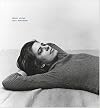
The Lower East Side between 1972 and 1985―filled with artists, wannabe artists and hangers-on―was a community of the misbegotten gathered from every town in America and relocated in the mean streets between Broadway and the Bowery, and Peter Hujar was right in the midst of it. Nothing but talent, flamboyance, rank gender-bending mockery and arch irony supported these artists: some made their names, many came to grief and a few made art. In those days, the gutted streets of the Lower East show more Side resembled a war-zone. Though some established artists had passed through―Rauschenberg and Johns, John Cage and Merce Cunningham―almost everyone lived and worked on the extreme outer margins of money and art, penniless and unknown. As a community, downtown New York was a counterstatement to the rich New York of the banks, museums, media, corporations and the art world itself. That downtown New York is gone: time, gentrification, disease and death have taken their toll and turned this vibrant epoch into a chapter in art history. But before it vanished, its extravagant cast sat for Peter Hujar’s camera, and with this volume, that community is vividly brought to life. Featured are Charles Ludlam, David Wojnarowicz, Edwin Denby, Susan Sontag, Paul Thek, Divine, Robert Wilson, John Waters, William S. Burroughs, Ray Johnson, Fran Lebowitz, Remy Charlip, Joe Brainard and many others.
Peter Hujar (1934–87) was born in Trenton, New Jersey, and moved to Manhattan to work in the magazine, advertising and fashion industries. He documented the vibrant cultural scene of downtown New York throughout the 1970s and 1980s. In 1976 he published Portraits in Life and Death, with an introduction by Susan Sontag. Hujar died of AIDS in 1987. show less
Peter Hujar (1934–87) was born in Trenton, New Jersey, and moved to Manhattan to work in the magazine, advertising and fashion industries. He documented the vibrant cultural scene of downtown New York throughout the 1970s and 1980s. In 1976 he published Portraits in Life and Death, with an introduction by Susan Sontag. Hujar died of AIDS in 1987. show less
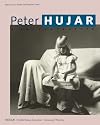
Peter Hujar, a New Yorker of Ukrainian descent, died of AIDS in 1987. He recorded the world in astonishing portraits of cows, sheep, and geese in the country, dogs in the studio, the sea, the city, and above all his fellow human beings, many of whom have since won fame: Susan Sontag, John Waters, Divine, William S. Borroughs, Candy Darling, Robert Wilson, David Wojnarowicz, Paul Thek, and many men, in the nude, half-dressed, sleeping, posing, tumescent. People, animals, landscapes - Peter show more Hujar approached them all with great respect and a perfect sense of balance between near and far. His subjects face us with supremely dignified singularity, with loneliness at times, and at times in an aura of dauntless and "splendid isolation." show less
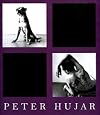
When Peter Hujar (1934-1987) died at the age of 53, his remarkable oeuvre fell into neglect. Sporadic exhibitions and catalogues failed to give Hujar his critical due, or to make the work widely accessible. Now, on the twenty-fifth anniversary of the publication of his first book, Portraits in Life and Death (1976), a concerted effort to exhibit and publish Hujar's work has begun. This book is a prelude to upcoming exhibitions examining Hujar's incomparable portraits of animals and nudes, show more all of which he though to be self-portraits. A student of Lisette Model, admirer of August Sander, and friend of Diane Arbus, Hujar made his photographs distinctly his own: a perfect and unmistakable mirror of his own body and mileau. show less
Lists
Awards

You May Also Like
Associated Authors
Statistics
- Works
- 14
- Also by
- 4
- Members
- 235
- Popularity
- #96,240
- Rating
- 4.1
- Reviews
- 7
- ISBNs
- 16
- Languages
- 3