
Cecil Aldin (1870–1935)
Author of Romance of the Road
About the Author
Works by Cecil Aldin
Christmas Day — Illustrator — 4 copies
Just Among Friends 2 copies
Scarlet to M.F.H., 2 copies
Cathedrals of England 1 copy
An artist's models 1 copy
Hunting scenes; forty sketches of hunting scenes and countries selected and arranged by Cecil Aldin; 1 copy
The White Puppy BOok 1 copy
An Artist's Models 1 copy
The Cecil Aldin book 1 copy
The Black Puppy Book 1 copy
Associated Works
Tagged
Common Knowledge
- Birthdate
- 1870-04-28
- Date of death
- 1935-01-06
- Gender
- male
- Nationality
- UK
- Birthplace
- Slough, Berkshire, England
- Place of death
- London, England
- Associated Place (for map)
- England
Members
Reviews
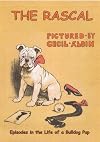
This book was first published in 1905 as A Gay Dog, then published in New York as a Conceited Puppy. I can see why they chose The Rascal for this edition published in 2009.
The sleeve of the book says that Cecil Aldin 'is the finest illustrator of dogs and it has been said the he "captured the very soul of a dog."' I like his artwork with it's Victorian dress so that is why I ordered the book. What I didn't realize was how very small and brief the book is.
The brief story that goes with the show more illustrations had one bit that made me wonder:
'Life in its real sense began for me when the youth with the window in his eye presented me to a lady friend of his.
Pammy was her name, and her business seemed to consist of changing her clothes, while I sat by and guarded the door from intruders.'
It is a fun little book, but I am giving it 3 stars for it's brevity. Love the illustrations, but also because of the small size aren't as impactful. show less
The sleeve of the book says that Cecil Aldin 'is the finest illustrator of dogs and it has been said the he "captured the very soul of a dog."' I like his artwork with it's Victorian dress so that is why I ordered the book. What I didn't realize was how very small and brief the book is.
The brief story that goes with the show more illustrations had one bit that made me wonder:
'Life in its real sense began for me when the youth with the window in his eye presented me to a lady friend of his.
Pammy was her name, and her business seemed to consist of changing her clothes, while I sat by and guarded the door from intruders.'
It is a fun little book, but I am giving it 3 stars for it's brevity. Love the illustrations, but also because of the small size aren't as impactful. show less
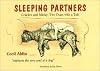
A must have for any bull terrier owner. (Irish Wolfhound owners as well, I suppose...) The drawings in this book are spot on about the peculiar sleeping habits of bullies and the one word descriptions--amalgamation, undulation, agglomeration, excommunication, reconciliation, etc are hilarious.

It is hard to get information on a book sometimes, like when there is no summary or previous written reviews in Goodreads. Dogs of Character, copyright 1928 was one of those books. I found a copy and just ordered it based on the name of the book. I liked the title, and it didn’t hurt that the cover is a bright red with big bold lettering.
We are introduced to his dogs Micky the Wolfhound, and Cracker the Bull Terrier. The start of the book talks about where or how to get a dog, and the next show more chapter is a little on how to train him. Then the book just goes off on different stories and recollections of dogs and happenings. I found the book interesting because it is another time and place, with the stories all pleasant but nothing that really knocked my socks off. The main draw is that Cecil Aldin was apparently a well known artist and the pictures are very detailed and cute. I had enough interest to order another book on him, ‘Cecil Aldin, the Story of a Sporting Artist by Roy Heron. The short bio from Wikipedia is:
Cecil Charles Windsor Aldin (28 April 1870 – 6 January 1935), was a British artist and illustrator best known for his paintings and sketches of animals, sports, and rural life. Aldin executed village scenes and rural buildings in chalk, pencil and also wash sketching. He was an enthusiastic sportsman and a Master of Fox Hounds, and many of his pictures illustrated hunting.
In how to get a dog, he mentions:
‘Another way of getting a rough-haired terrier, or, for that matter, any sort of chap canine companion, is to pay a visit to the Dogs’ Home at Battersea, where you can pick out any dog you like, after they have been in the home a certain number of days awaiting their allotted span before entering the lethal chamber, for the small sum of ten shillings or one pound.’
I looked up the organization on Wikipedia and they are still a going concern, although I imagine the small sum is more than ten shillings. From Wikipedia:
'Battersea Dogs & Cats Home (now known as Battersea) is an animal rescue centre for dogs and cats. Battersea rescues dogs and cats until an owner or a new one can be found. It is one of the UK's oldest and best known animal rescue centres. It was established in Holloway, London, in 1860 and moved to Battersea in 1871.'
I enjoyed the book but it was all scattered stories to me. I found myself laughing at some once I got on to the sense of humor of the author. I thought I would just record a bit from different stories and let you imagine the rest of the story that it came from as a way for you to get a feel for the book.
‘If you have a dog at all, and want a dog of character, don’t condemn him to a solitary, chained-up existence.’
‘You cannot train a puppy, however, without at least one licking, and without wishing to be accused of cruelty, it must be one, if only a hand spanking, which will make him really cry out. The best instrument of chastisement is a very thin and pliable switch, correction always being given at the time of the fault and adjacent to the misdemeanour.’
‘The three-tier afternoon tea-cake stand is also a terrible trial to dogs when first they meet it alone in a room.’
‘All my dog friends have a passion for weak tea. I have an idea—probably any veterinary surgeon will tell me an entirely erroneous one—that weak tea is an antidote for distemper. Anyhow, they all have it after our own tea is over, “ladies first” being the rule, each dog having a basin or saucer of tea in turn and not moving until his name is called and his own tea ready.’
‘I have heard some bad dog language in my time, but Tatters, during these bathing operations, had the most wonderful flow of language of any dog I have known. A stranger standing outside would have thought that my wife, or whoever was with the dog, was being torn to pieces.’
‘He was christened “Hector” by my children, but later, as he rapidly increased in avoirdupois, “Hippopotamus” was added to it.
“HECTORHIPPOPOTAMUS”
however was rather a mouthful to say quickly, so we gave him a kennel name, combining the two of
“HECTORPOTAMUS,”
And at a subsequent date abbreviated it to plan
“POTAMUS.”
(avoirdupois: a system of weights based on a pound of 16 ounces or 7,000 grains, widely used in English-speaking countries. In this case they were talking about a Basset Hound, which I take to mean as it gained it weight…)
‘“Dragonet,” it appeared, had sent seven Dalmatians for me to choose from. The man could not leave his pony, and a passing errand-boy had run the bell; as the door opened in had rushed, pleased as Punch, this pack of plum puddings.
A little disconcerting to have seven large, strange and spotted plum-pudding dogs mixed up with your breakfast—a time when we are not always feeling our brightest and best.’
‘Two years earlier a friend had been in my studio who was shortly going out to West Africa, and at the time I had casually mentioned that a monkey would be an amusing model. On his arrival back in England he had sent the monkey on a chain, addressed to me, either forgetting or, as a practical joke, not advising me of its dispatch, or his arrival in England.’
‘The next morning I went into the stable and found my monkey had escaped from her box. Peering into the loose box I expected to see a gorged foxhound or certainly the remains of a mangled monkey. Instead, I discovered her, warm and happy, curled up against the hound’s “tummy,” while Furrier seemed to be enjoying her company.’
For the next story, you have to know that a little girl had dressed up her Scotch terrier Bogie in a dress. They were out walking the dog while it was in this dress, when they came upon two dogs that were fighting and could not be pulled apart. Then-
‘Bogie’s advent at once cleared the atmosphere, as the sight of the Scotch terrier’s approach, constantly tripping up as she ran towards them, so frightened both the collie and the bull terrier that they immediately forgot their own private quarrel and stampeded in fright in opposite directions.’
For this next bit you need to know that Jackie is a Pony and instigates a game where he digs up one of the Jane the Airedale buried bones. Then the other three dogs join in too -
‘With his forehoof he will then proceed to dig until a bone appears upon the surface, while Jane stands barking round him with indignation at her reserve larder being invaded.
The game then starts by Jackie seizing this bone in his mouth and dashing off as “he,” Jane and the others giving chase. The end of the game is when the pony flings the bone in the air as a dog would do when playing with it—and Jane recovers her hidden treasure.’
‘At a Gaiety play, in which I had a minor part as designer of the scenery and costumes and the man who superintended the live-stock while in the theatre, whatever his stage name may be. I had to find a pack of hounds, two terriers, four horses, a donkey, and a couple of gamecocks—certainly a mixed bag.’
‘A dog who kills cats is a nuisance to his master and—the cats.’
‘All went well while my home was in London, but when I went to live in the country he killed seven lusty hens in the first two days, having a real good whip-hiding after each bout. Hens and cats he would kill as if they were mice.’
‘Some doggy friends of min in Warwickshire, whose garden adjoined their farmyard, were very perturbed because suddenly, for no known reason , their supply of eggs seemed to be going astray.’
(For the last story, I will give you a hint, they had a retriever.)
‘Now the thing to remember is, that this bitch was the sweetest tempered and quietest dog possible, and took no notice of sheep, cattle, or any other animal, her only failing being… goats.’
‘On the other hand, whenever my gardener meets any of my dogs he will stand perfectly still and never utter a sound. This always gives the dogs the “nerves” and in consequence every dog of mine, until corrected, always barks at him.
They do not dislike him, but he just gives them the “nerves.”’
‘Ten couples of these great brutes sitting up a few yards away with forty eyes fixed upon me made me feel very wobbly about the knees. Here again, being too frightened to do anything else, the only thing to do was to sit still and continue—sketching.’
(in the previous quote he was at a kennel in France and was inadvertently left with a whole lot of French Hounds. The picture he leaves of a French Hound looks a bit shakey.)
The next quote you will need to know that a government official had come to charge the per-dog fee on each dog, so they let him in to count them instead of just take the word of the kennel owner. -
‘“There,” said the Master as he pushed his visitor gently but firmly through the gate, “now you can count them yourself, and we can soon settle it.” “Round about sixty couples” of hounds would not be easy for an expert to count, even if jogging along a road, but in a small yard with two specially instructed kennelmen seeing to it that they “kept moving” it was an impossibility.’
‘So I walked the two miles to Edgbaston, the dog showing no further sign of recognition, only a dim, hazy remembrance of my voice and whistle. Every time I stopped he did the same a yard or two away, never once allowing me to pat him.’
No dogs die in the book, but I like the dedication:
‘To Absent Friends
A silent toast to the row of little tombstones in my garden’
The artwork is great. The stories are entertaining. The book cover is a nice color of red, but if I had the dust cover that would have been even nicer. show less
We are introduced to his dogs Micky the Wolfhound, and Cracker the Bull Terrier. The start of the book talks about where or how to get a dog, and the next show more chapter is a little on how to train him. Then the book just goes off on different stories and recollections of dogs and happenings. I found the book interesting because it is another time and place, with the stories all pleasant but nothing that really knocked my socks off. The main draw is that Cecil Aldin was apparently a well known artist and the pictures are very detailed and cute. I had enough interest to order another book on him, ‘Cecil Aldin, the Story of a Sporting Artist by Roy Heron. The short bio from Wikipedia is:
Cecil Charles Windsor Aldin (28 April 1870 – 6 January 1935), was a British artist and illustrator best known for his paintings and sketches of animals, sports, and rural life. Aldin executed village scenes and rural buildings in chalk, pencil and also wash sketching. He was an enthusiastic sportsman and a Master of Fox Hounds, and many of his pictures illustrated hunting.
In how to get a dog, he mentions:
‘Another way of getting a rough-haired terrier, or, for that matter, any sort of chap canine companion, is to pay a visit to the Dogs’ Home at Battersea, where you can pick out any dog you like, after they have been in the home a certain number of days awaiting their allotted span before entering the lethal chamber, for the small sum of ten shillings or one pound.’
I looked up the organization on Wikipedia and they are still a going concern, although I imagine the small sum is more than ten shillings. From Wikipedia:
'Battersea Dogs & Cats Home (now known as Battersea) is an animal rescue centre for dogs and cats. Battersea rescues dogs and cats until an owner or a new one can be found. It is one of the UK's oldest and best known animal rescue centres. It was established in Holloway, London, in 1860 and moved to Battersea in 1871.'
I enjoyed the book but it was all scattered stories to me. I found myself laughing at some once I got on to the sense of humor of the author. I thought I would just record a bit from different stories and let you imagine the rest of the story that it came from as a way for you to get a feel for the book.
‘If you have a dog at all, and want a dog of character, don’t condemn him to a solitary, chained-up existence.’
‘You cannot train a puppy, however, without at least one licking, and without wishing to be accused of cruelty, it must be one, if only a hand spanking, which will make him really cry out. The best instrument of chastisement is a very thin and pliable switch, correction always being given at the time of the fault and adjacent to the misdemeanour.’
‘The three-tier afternoon tea-cake stand is also a terrible trial to dogs when first they meet it alone in a room.’
‘All my dog friends have a passion for weak tea. I have an idea—probably any veterinary surgeon will tell me an entirely erroneous one—that weak tea is an antidote for distemper. Anyhow, they all have it after our own tea is over, “ladies first” being the rule, each dog having a basin or saucer of tea in turn and not moving until his name is called and his own tea ready.’
‘I have heard some bad dog language in my time, but Tatters, during these bathing operations, had the most wonderful flow of language of any dog I have known. A stranger standing outside would have thought that my wife, or whoever was with the dog, was being torn to pieces.’
‘He was christened “Hector” by my children, but later, as he rapidly increased in avoirdupois, “Hippopotamus” was added to it.
“HECTORHIPPOPOTAMUS”
however was rather a mouthful to say quickly, so we gave him a kennel name, combining the two of
“HECTORPOTAMUS,”
And at a subsequent date abbreviated it to plan
“POTAMUS.”
(avoirdupois: a system of weights based on a pound of 16 ounces or 7,000 grains, widely used in English-speaking countries. In this case they were talking about a Basset Hound, which I take to mean as it gained it weight…)
‘“Dragonet,” it appeared, had sent seven Dalmatians for me to choose from. The man could not leave his pony, and a passing errand-boy had run the bell; as the door opened in had rushed, pleased as Punch, this pack of plum puddings.
A little disconcerting to have seven large, strange and spotted plum-pudding dogs mixed up with your breakfast—a time when we are not always feeling our brightest and best.’
‘Two years earlier a friend had been in my studio who was shortly going out to West Africa, and at the time I had casually mentioned that a monkey would be an amusing model. On his arrival back in England he had sent the monkey on a chain, addressed to me, either forgetting or, as a practical joke, not advising me of its dispatch, or his arrival in England.’
‘The next morning I went into the stable and found my monkey had escaped from her box. Peering into the loose box I expected to see a gorged foxhound or certainly the remains of a mangled monkey. Instead, I discovered her, warm and happy, curled up against the hound’s “tummy,” while Furrier seemed to be enjoying her company.’
For the next story, you have to know that a little girl had dressed up her Scotch terrier Bogie in a dress. They were out walking the dog while it was in this dress, when they came upon two dogs that were fighting and could not be pulled apart. Then-
‘Bogie’s advent at once cleared the atmosphere, as the sight of the Scotch terrier’s approach, constantly tripping up as she ran towards them, so frightened both the collie and the bull terrier that they immediately forgot their own private quarrel and stampeded in fright in opposite directions.’
For this next bit you need to know that Jackie is a Pony and instigates a game where he digs up one of the Jane the Airedale buried bones. Then the other three dogs join in too -
‘With his forehoof he will then proceed to dig until a bone appears upon the surface, while Jane stands barking round him with indignation at her reserve larder being invaded.
The game then starts by Jackie seizing this bone in his mouth and dashing off as “he,” Jane and the others giving chase. The end of the game is when the pony flings the bone in the air as a dog would do when playing with it—and Jane recovers her hidden treasure.’
‘At a Gaiety play, in which I had a minor part as designer of the scenery and costumes and the man who superintended the live-stock while in the theatre, whatever his stage name may be. I had to find a pack of hounds, two terriers, four horses, a donkey, and a couple of gamecocks—certainly a mixed bag.’
‘A dog who kills cats is a nuisance to his master and—the cats.’
‘All went well while my home was in London, but when I went to live in the country he killed seven lusty hens in the first two days, having a real good whip-hiding after each bout. Hens and cats he would kill as if they were mice.’
‘Some doggy friends of min in Warwickshire, whose garden adjoined their farmyard, were very perturbed because suddenly, for no known reason , their supply of eggs seemed to be going astray.’
(For the last story, I will give you a hint, they had a retriever.)
‘Now the thing to remember is, that this bitch was the sweetest tempered and quietest dog possible, and took no notice of sheep, cattle, or any other animal, her only failing being… goats.’
‘On the other hand, whenever my gardener meets any of my dogs he will stand perfectly still and never utter a sound. This always gives the dogs the “nerves” and in consequence every dog of mine, until corrected, always barks at him.
They do not dislike him, but he just gives them the “nerves.”’
‘Ten couples of these great brutes sitting up a few yards away with forty eyes fixed upon me made me feel very wobbly about the knees. Here again, being too frightened to do anything else, the only thing to do was to sit still and continue—sketching.’
(in the previous quote he was at a kennel in France and was inadvertently left with a whole lot of French Hounds. The picture he leaves of a French Hound looks a bit shakey.)
The next quote you will need to know that a government official had come to charge the per-dog fee on each dog, so they let him in to count them instead of just take the word of the kennel owner. -
‘“There,” said the Master as he pushed his visitor gently but firmly through the gate, “now you can count them yourself, and we can soon settle it.” “Round about sixty couples” of hounds would not be easy for an expert to count, even if jogging along a road, but in a small yard with two specially instructed kennelmen seeing to it that they “kept moving” it was an impossibility.’
‘So I walked the two miles to Edgbaston, the dog showing no further sign of recognition, only a dim, hazy remembrance of my voice and whistle. Every time I stopped he did the same a yard or two away, never once allowing me to pat him.’
No dogs die in the book, but I like the dedication:
‘To Absent Friends
A silent toast to the row of little tombstones in my garden’
The artwork is great. The stories are entertaining. The book cover is a nice color of red, but if I had the dust cover that would have been even nicer. show less
This book was first published in 1905 as A Gay Dog, then published in New York as a Conceited Puppy. I can see why they chose The Rascal for this edition published in 2009.
The sleeve of the book says that Cecil Aldin 'is the finest illustrator of dogs and it has been said the he "captured the very soul of a dog."' I like his artwork with it's Victorian dress so that is why I ordered the book. What I didn't realize was how very small and brief the book is.
The brief story that goes with the show more illustrations had one bit that made me wonder:
'Life in its real sense began for me when the youth with the window in his eye presented me to a lady friend of his.
Pammy was her name, and her business seemed to consist of changing her clothes, while I sat by and guarded the door from intruders.'
It is a fun little book, but I am giving it 3 stars for it's brevity. Love the illustrations, but also because of the small size aren't as impactful. show less
The sleeve of the book says that Cecil Aldin 'is the finest illustrator of dogs and it has been said the he "captured the very soul of a dog."' I like his artwork with it's Victorian dress so that is why I ordered the book. What I didn't realize was how very small and brief the book is.
The brief story that goes with the show more illustrations had one bit that made me wonder:
'Life in its real sense began for me when the youth with the window in his eye presented me to a lady friend of his.
Pammy was her name, and her business seemed to consist of changing her clothes, while I sat by and guarded the door from intruders.'
It is a fun little book, but I am giving it 3 stars for it's brevity. Love the illustrations, but also because of the small size aren't as impactful. show less
You May Also Like
Associated Authors
Statistics
- Works
- 28
- Also by
- 5
- Members
- 84
- Popularity
- #216,910
- Rating
- 3.9
- Reviews
- 6
- ISBNs
- 12
- Languages
- 1