
Asphyxia
Author of The Words in My Hands
Series
Works by Asphyxia
Tagged
Common Knowledge
- Birthdate
- ????-03-??
- Gender
- female
- Occupations
- puppeteer
Members
Reviews
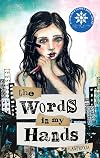
Set in the near future dystopian Australia, 16-year-old Deaf girl named Piper struggles to conform to the ideal teenager her mother wants her to be: “normal”, pass as hearing, and someone who can get a good job. But Piper has other worries: gas prices are through the roof, making transportation via automobiles impossible, and although Organicore has a food alternative called Recon, those have been making some people sick and are beginning to be hard to get ahold of themselves. Piper is show more determined to find a new source of food.
Deaf since the age of three, Piper has always been told that she is in charge of compensating for the hearing people around her. But then she meets Marley, a child of a deaf parent (CODA), and his mum Robbie. While learning how to garden from Robbie, Piper begins to learn Auslan (Australian Sign Language) from the mum and son duo. With this, her whole world opens up to a place where Deafness is celebrated, not hidden.
Wow, what a way to begin 2022! I was able to start it with this amazing book told with a journal filled with mixed media of text, paint, collage, and drawings! It was beautiful and gorgeous and I loved it so much!
The author, Asphyxia is Deaf and she does an amazing job with her description of Deafness and Deaf Culture. I studied to be an American Sign Language Interpreter in college and there are quite a few pages I made notes of that I felt explained Deaf Culture in the best way. There’s also a terrific note in the back of the book from Asphyxia on how to best communicate with the Deaf community that should be read.
Besides diving into the Deaf community, this book also deals with other major issues like freedom of speech, the damage done by humans to the planet, and standing up for what you believe is right.
I absolutely adored Piper, even if she did stuff that was crazy dumb, but she was a sheltered, naive 16-year-old, and who doesn’t do stupid, dumb, naive stuff at that age? The relationship between Piper and her mum made me so sad though. Piper shouldn’t have felt ashamed for learning sign language, her mum should have for not seeing the way forcing Piper to be oral was hurting her daughter.
Marley wasn’t my favorite person on the planet. He is 19, while Piper is 16… and he was still kind of immature when it came to his own insecurities that he would then take out on Piper… their relationship was kind of a “meh” for me…
Other than that, I absolutely loved this book and will be buying my own copy as soon as I can.
I would highly, highly recommend this book to anyone who wants to learn more about the Deaf Community - though it is about Auslan, besides signs being different, it still shows you how awesome the Deaf Community is! This is also a great book to see a story told through mix art! Beautiful all around. show less
Deaf since the age of three, Piper has always been told that she is in charge of compensating for the hearing people around her. But then she meets Marley, a child of a deaf parent (CODA), and his mum Robbie. While learning how to garden from Robbie, Piper begins to learn Auslan (Australian Sign Language) from the mum and son duo. With this, her whole world opens up to a place where Deafness is celebrated, not hidden.
Wow, what a way to begin 2022! I was able to start it with this amazing book told with a journal filled with mixed media of text, paint, collage, and drawings! It was beautiful and gorgeous and I loved it so much!
The author, Asphyxia is Deaf and she does an amazing job with her description of Deafness and Deaf Culture. I studied to be an American Sign Language Interpreter in college and there are quite a few pages I made notes of that I felt explained Deaf Culture in the best way. There’s also a terrific note in the back of the book from Asphyxia on how to best communicate with the Deaf community that should be read.
Besides diving into the Deaf community, this book also deals with other major issues like freedom of speech, the damage done by humans to the planet, and standing up for what you believe is right.
I absolutely adored Piper, even if she did stuff that was crazy dumb, but she was a sheltered, naive 16-year-old, and who doesn’t do stupid, dumb, naive stuff at that age? The relationship between Piper and her mum made me so sad though. Piper shouldn’t have felt ashamed for learning sign language, her mum should have for not seeing the way forcing Piper to be oral was hurting her daughter.
Marley wasn’t my favorite person on the planet. He is 19, while Piper is 16… and he was still kind of immature when it came to his own insecurities that he would then take out on Piper… their relationship was kind of a “meh” for me…
Other than that, I absolutely loved this book and will be buying my own copy as soon as I can.
I would highly, highly recommend this book to anyone who wants to learn more about the Deaf Community - though it is about Auslan, besides signs being different, it still shows you how awesome the Deaf Community is! This is also a great book to see a story told through mix art! Beautiful all around. show less
A YA novel set in a dystopian Australia in which Piper, a Deaf teen, struggles to find her place between the Deaf and hearing communities. This is made more complicated by the fact that her mother didn't allow her to learn sign language growing up, so she has a difficult time understanding both groups. That is, until she meets Marley, a handsome CODA (child of a Deaf adult) working in a bike shop, and he helps her learn to sign. He also introduces her to his mother, who grows all their own show more food, a rogue activity in a world dominated by food shortages and a corporation trying to regulate the food sources with their own manufactured nutrient-based 'food.' This, in turn, is a complication for Piper, whose mother was a key figure in the creation of the company's 'food' stuff. So, tensions all round as Piper learns to live in both worlds.
This one was excellent. Lots going on, but it's all fleshed out and tied together nicely. Piper is also a budding artist, and the book itself is shaped as her journal, so every page has some sort of collage-like artwork. Highly recommended. show less
This one was excellent. Lots going on, but it's all fleshed out and tied together nicely. Piper is also a budding artist, and the book itself is shaped as her journal, so every page has some sort of collage-like artwork. Highly recommended. show less
Originally posted on Just Geeking by.
I've reviewed this book as a part of an event I am hosting in September 2021 called GeekDis. GeekDis is a collaborative event for members of the disability community to talk about disability representation in pop culture. You can learn more about GeekDis here!
Everything about this book is brilliant. As the synopsis states, the story is set in the near future where the food supply has been completely replaced with a scientifically produced food that show more contains everything people need including medication that has wiped out most common viruses and diseases, as well as obesity. As with all future utopias, the solution is not as ideal as it first appeared, and The Words in My Hands starts right as things begin to fall apart.
The protagonist, Piper, is right in the middle of things due to her mother’s job. As the world she’s known falls apart, Piper becomes aware of whole new worlds she never knew existed. One of these is the Deaf community which she is introduced to through Marley, a CODA, Child of a Deaf Adult. As Piper’s story unfolds, so does the many difficulties, judgements, biases and blatant discrimination that Deaf people have to deal with. While ignorance most often comes from strangers, The Words in My Hands shows the reader that it can just as easily come from those closest to us.
While this is a book about a Deaf teenager, it is so much more than that. Piper’s Deafness is a part of her whole story, just as much as her art, her learning to step out of her mother’s shadow and struggling to come to terms with what’s happening to her relationship with her best friend. I started to develop my health conditions in my teens, and I saw myself in Piper’s story in many ways. When she used art to express herself, I especially understood where she was coming from, what she was feeling, and the need to get those feelings down somewhere so that they made sense.
Art accompanies the entire book, every single page is decorated in some way as if you are actually reading Piper’s journal. It makes it feel so much more authentic, and it’s visually stunning. It’s not just the wonderful illustrations providing a visual guide to items or characters, it’s the colours and the textures. Even though it’s printed 2D pages it doesn’t look that way at all and as an artist I could tell what was supposed to be made with paint, paper etc. Piper also explains a lot of techniques as she tries them out, so it was a lot of fun as I read to match up her art tests with a page.
I wondered whether The Words in My Hands would relate to current times in any way, and the answer is, yes, definitely. It was quite eerie how easy I could imagine the world going down this route, considering some of the food shortages we had at the start of the Pandemic. Since the start of certain political changes here in the UK, there’s started to be noticeably fewer items available in supermarkets and sometimes there are times when the supermarket has a shortage of something for a bit. While reading The Words in My Hands I started to recall things I was taught about plants as a child, and some diagrams, such as the one for creating a compost heap, look like they could be quite handy.
I expected to learn a lot from this book in terms of the Deaf community, I didn’t quite expect to learn as much as I did about growing plants, nor did I expect there to be a guide to sign language – although I will note that it is Australian Sign Language (Auslan), not British/American Sign Language so if you do want to learn (as I do) please note there are differences.
I highly recommend The Words in My Hands for its representation, the storyline, character development and the beautiful art journal style and illustrations. Most books offer the reader one thing, whether it’s a good story or information, and this one is giving you multiple things in one.
For more of my reviews please visit my blog! show less
I've reviewed this book as a part of an event I am hosting in September 2021 called GeekDis. GeekDis is a collaborative event for members of the disability community to talk about disability representation in pop culture. You can learn more about GeekDis here!
Everything about this book is brilliant. As the synopsis states, the story is set in the near future where the food supply has been completely replaced with a scientifically produced food that show more contains everything people need including medication that has wiped out most common viruses and diseases, as well as obesity. As with all future utopias, the solution is not as ideal as it first appeared, and The Words in My Hands starts right as things begin to fall apart.
The protagonist, Piper, is right in the middle of things due to her mother’s job. As the world she’s known falls apart, Piper becomes aware of whole new worlds she never knew existed. One of these is the Deaf community which she is introduced to through Marley, a CODA, Child of a Deaf Adult. As Piper’s story unfolds, so does the many difficulties, judgements, biases and blatant discrimination that Deaf people have to deal with. While ignorance most often comes from strangers, The Words in My Hands shows the reader that it can just as easily come from those closest to us.
While this is a book about a Deaf teenager, it is so much more than that. Piper’s Deafness is a part of her whole story, just as much as her art, her learning to step out of her mother’s shadow and struggling to come to terms with what’s happening to her relationship with her best friend. I started to develop my health conditions in my teens, and I saw myself in Piper’s story in many ways. When she used art to express herself, I especially understood where she was coming from, what she was feeling, and the need to get those feelings down somewhere so that they made sense.
Art accompanies the entire book, every single page is decorated in some way as if you are actually reading Piper’s journal. It makes it feel so much more authentic, and it’s visually stunning. It’s not just the wonderful illustrations providing a visual guide to items or characters, it’s the colours and the textures. Even though it’s printed 2D pages it doesn’t look that way at all and as an artist I could tell what was supposed to be made with paint, paper etc. Piper also explains a lot of techniques as she tries them out, so it was a lot of fun as I read to match up her art tests with a page.
I wondered whether The Words in My Hands would relate to current times in any way, and the answer is, yes, definitely. It was quite eerie how easy I could imagine the world going down this route, considering some of the food shortages we had at the start of the Pandemic. Since the start of certain political changes here in the UK, there’s started to be noticeably fewer items available in supermarkets and sometimes there are times when the supermarket has a shortage of something for a bit. While reading The Words in My Hands I started to recall things I was taught about plants as a child, and some diagrams, such as the one for creating a compost heap, look like they could be quite handy.
I expected to learn a lot from this book in terms of the Deaf community, I didn’t quite expect to learn as much as I did about growing plants, nor did I expect there to be a guide to sign language – although I will note that it is Australian Sign Language (Auslan), not British/American Sign Language so if you do want to learn (as I do) please note there are differences.
I highly recommend The Words in My Hands for its representation, the storyline, character development and the beautiful art journal style and illustrations. Most books offer the reader one thing, whether it’s a good story or information, and this one is giving you multiple things in one.
For more of my reviews please visit my blog! show less
Most authentic representation of Deaf culture I have read. Asphyxia doesn't try to sugar-coat her experiences for hearing people. The author places the Deaf protagonist in a near-future dystopian Australia where food insecurity overshadows life for everyone. I most appreciated the afterword, that offers tips for interacting with Deaf people. The creative artwork adds depth to the story.
Lists
Awards


Statistics
- Works
- 10
- Members
- 170
- Popularity
- #125,473
- Rating
- 4.5
- Reviews
- 11
- ISBNs
- 24
- Languages
- 1