
Renne Benoit
Author of Thanksgiving: A Harvest Celebration
About the Author
Image credit: Renne Benoit
Works by Renne Benoit
Associated Works
Tagged
Common Knowledge
- Gender
- female
- Occupations
- illustrator
- Nationality
- Canada
- Birthplace
- Ottawa, Ontario, Canada
- Places of residence
- St. Thomas, Ontario, Canada
- Associated Place (for map)
- Ontario, Canada
Members
Reviews

Less than thrilled at the liver and onion dinner (with no dessert!) that her mother prepares one day, Lisabeth finds that her complaints are met with yet another reference to her mother's own perfect childhood. This time however, When-I-was-a-little-girl actually materializes, as a kind of ghostly visitor! Neatly dressed, perfectly well-behaved, and a maddening contrast to the girl's own rough and tumble appearance and behavior, When-I-was-a-little-girl stays clean, when Lisabeth plays in show more the mud, and seems to love the foods that Lisabeth hates. Finally, deeply unhappy at this unwelcome visitor from her mother's past, Lisabeth phones her grandmother for help...
A humorous picture-book exploration, from the child's perspective, of parental criticism, and the comparisons that such criticism sometimes involves - who hasn't heard the old 'when I was your age' type comment, from an elder? - Rachna Gilmore's When-I-was-a-little-girl is also a sensitive depiction of the way in which the memory can play tricks on us. As it turns out, Lisabeth's Grandmother remembers When-I-was-a-little-girl a little differently than her mother, making her 'retirement' - Mom sighed. She turned to When-I-was-a-little-girl and said, "Maybe it's time for you to go now" - both satisfying (for the child reader), and educational (for the adult one).
With a narrative that has something to offer both children and adults, and appealing illustrations that capture Lisabeth's emotional ups and downs (Renné Benoit did a similarly wonderful job with Lily and the Paper Man), this is a book I would recommend to young readers who are tired of being compared to others, and to the adults in their lives, who may not realize the impact that such comparisons have. show less
A humorous picture-book exploration, from the child's perspective, of parental criticism, and the comparisons that such criticism sometimes involves - who hasn't heard the old 'when I was your age' type comment, from an elder? - Rachna Gilmore's When-I-was-a-little-girl is also a sensitive depiction of the way in which the memory can play tricks on us. As it turns out, Lisabeth's Grandmother remembers When-I-was-a-little-girl a little differently than her mother, making her 'retirement' - Mom sighed. She turned to When-I-was-a-little-girl and said, "Maybe it's time for you to go now" - both satisfying (for the child reader), and educational (for the adult one).
With a narrative that has something to offer both children and adults, and appealing illustrations that capture Lisabeth's emotional ups and downs (Renné Benoit did a similarly wonderful job with Lily and the Paper Man), this is a book I would recommend to young readers who are tired of being compared to others, and to the adults in their lives, who may not realize the impact that such comparisons have. show less

Lily always enjoyed walking home from school with her mother, until the day she encountered a scruffy-looking older man, selling newspapers outside of Mrs. Chan's store. Terrified by his unsmiling face, growling voice, and unkempt appearance, Lily began to opt for the bus, in order to avoid this frightening "Paper Man." But then one snowy day, enchanted by the winter wonderland around her, Lily decided to walk home again, and (bumping into the Paper Man) noticed some things she had show more overlooked before. Like how thin the Paper Man's clothing was, how tattered and full of holes; like how cold he looked, standing outside with his papers. Why wasn't he wearing any socks?, she asked her mother. The answer set Lily to thinking - about how fortunate she was to have a safe, warm home, and about what she could do to help the Paper Man...
This lovely little picture-book addresses some very serious problems - poverty, homelessness, childhood fears - in a gentle, sensitive way, offering a realistic and respectful depiction of the issues, without veering too far into the traumatic. Lily's feelings of fear are natural, but so too is her desire to help, once she overcomes that fear, and Upjohn captures both very nicely in her narrative. Renné Benoit's beautiful watercolor illustrations, which I found particularly appealing in the snowy scenes, really accentuate the emotional impact of the story, whether that be Lily's fear of the Paper Man, or her delight in a snowy day. All in all, Lily and the Paper Man - published by the woman-owned feminist publisher, Second Story Press - is a wonderful book, one I would recommend to anyone looking for a good introduction, for younger children, to issues like hunger, homelessness, and fear of strangers. show less
This lovely little picture-book addresses some very serious problems - poverty, homelessness, childhood fears - in a gentle, sensitive way, offering a realistic and respectful depiction of the issues, without veering too far into the traumatic. Lily's feelings of fear are natural, but so too is her desire to help, once she overcomes that fear, and Upjohn captures both very nicely in her narrative. Renné Benoit's beautiful watercolor illustrations, which I found particularly appealing in the snowy scenes, really accentuate the emotional impact of the story, whether that be Lily's fear of the Paper Man, or her delight in a snowy day. All in all, Lily and the Paper Man - published by the woman-owned feminist publisher, Second Story Press - is a wonderful book, one I would recommend to anyone looking for a good introduction, for younger children, to issues like hunger, homelessness, and fear of strangers. show less
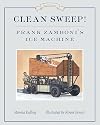
Kulling adds another solid book to her Great Idea Series with the history of the Zamboni. The ice-cleaning machine that fascinates children in rinks everywhere was invented in California by an Italian-American, hence the name. Getting past the idea that Zamboni opened an ice rink in California, he doggedly worked on improving his idea to take a 90 minute job for five men into a ten minute task for one driver.
The story is nice blend of history, practicality, and perseverance with lovely show more illustrations. show less
The story is nice blend of history, practicality, and perseverance with lovely show more illustrations. show less
 This review was written for LibraryThing Early Reviewers.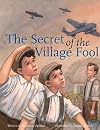
I love reading about heroes from WWII, expecially those that saved children during the Holocaust. This true story takes place in a small village in Poland.
Anton, called the village fool, was friends with several Jewish families. One of them was the family of Milek and Munio Zeiger. When rumours that the Nazis were coming to the village, Anton offered to help the Zeigers. It happened before everyone was ready, but fortunately for the Zeigers, Anton had given them dresses for the boys to wear show more and they were saved until he and their father could dig a tunnel in Anton's root cellar for them and 2 young Jewish girls, Eva and Ziphora, to hide in.
Anton Suchinski endangered his own life to hide these 6 Jewish neighbours. He gave up his own food to make sure they were fed. When the Nazis arrived and tore his house apart, he held firm and did not give them up. When he was taken in for questioning, he still did not give them up.
After the story, Rebecca Upjohn lets us know what happened to the Ziegers, Ziphora, Eva and Anton Suchinski. Using photographs we find out what happens to the families right up to 1992 with Anton's official recognition as "Righteous among Nations" at the Holocaust Memorial and Museum in Jerusalem. This recognition finally transformed Anton from village fool to village hero but his heart and valour have always identified him as a champion, choosing to risk his life to save others, even when ridiculed. The Secret of the Village Fool shows Anton to be not a fool, but a saviour, especially to those whose lives he saved and to their children, grandchildren and others they were able to touch.
I received a copy of this book from Netgalley in exchange for an honest review. show less
Anton, called the village fool, was friends with several Jewish families. One of them was the family of Milek and Munio Zeiger. When rumours that the Nazis were coming to the village, Anton offered to help the Zeigers. It happened before everyone was ready, but fortunately for the Zeigers, Anton had given them dresses for the boys to wear show more and they were saved until he and their father could dig a tunnel in Anton's root cellar for them and 2 young Jewish girls, Eva and Ziphora, to hide in.
Anton Suchinski endangered his own life to hide these 6 Jewish neighbours. He gave up his own food to make sure they were fed. When the Nazis arrived and tore his house apart, he held firm and did not give them up. When he was taken in for questioning, he still did not give them up.
After the story, Rebecca Upjohn lets us know what happened to the Ziegers, Ziphora, Eva and Anton Suchinski. Using photographs we find out what happens to the families right up to 1992 with Anton's official recognition as "Righteous among Nations" at the Holocaust Memorial and Museum in Jerusalem. This recognition finally transformed Anton from village fool to village hero but his heart and valour have always identified him as a champion, choosing to risk his life to save others, even when ridiculed. The Secret of the Village Fool shows Anton to be not a fool, but a saviour, especially to those whose lives he saved and to their children, grandchildren and others they were able to touch.
I received a copy of this book from Netgalley in exchange for an honest review. show less
Lists
Awards


You May Also Like
Associated Authors
Statistics
- Works
- 23
- Also by
- 1
- Members
- 1,131
- Popularity
- #22,700
- Rating
- 4.0
- Reviews
- 69
- ISBNs
- 86
- Languages
- 2
