

Tom Comitta
Author of The Nature Book
Works by Tom Comitta
Tagged
Common Knowledge
There is no Common Knowledge data for this author yet. You can help.
Members
Reviews
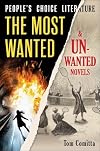
Rating: 4.5* of five
The Publisher Says: What do Americans truly want in a novel? What would it look like if their preferences and aversions materialized in book form? In People’s Choice Literature, Tom Comitta has taken up this challenge, writing two groundbreaking novels based on a nationwide poll about literary taste—one featuring the story elements Americans most desire and another containing everything Americans despise.
The Most Wanted Novel is a fast-paced thriller evoking show more page-turners by Dan Brown, David Baldacci, and Janet Evanovich. It follows a California woman pulled into a tech tycoon’s apocalyptic ambitions after her brother’s kidnapping, teaming up with a hunky FBI agent with a tragic past. The Most Unwanted Novel is a genre-bending an epistolary Christmas novel set on a near-future Mars, where elderly aristocratic tennis players scour the globe for lost love, venturing from the coldest of arctic wastelands to the darkest caverns of the macabre. Variously recalling Kathy Acker, César Aira, and Phillip K. Dick, it features sentient robots, talking animals, and a hundred-page collection of horror stories.
People’s Choice Literature is inspired by the artists Komar and Melamid, who created two now-infamous paintings based on opinion polling. A similar experiment by Dave Soldier produced “The Most Wanted Song” and “The Most Unwanted Song.” Comitta has adapted these methods to fiction, drawing on readers’ preferences about everything from genre to verb tense to characters’ identity. Audacious and shockingly entertaining, People’s Choice Literature also asks big questions about taste, authorship, and the notion of “good writing.”
I RECEIVED A DRC FROM THE PUBLISHER VIA NETGALLEY. THANK YOU.
My Review: A jeu d'esprit comparable to Patchwork in its fun, wacky, sneakily serious affect. I said in that review: "It's refreshing, to say the least, when someone looks afresh at shibboleths like Literature and sees what's under its underpants instead of reverently praising its court dresses."
It's still true. This iteration of Author Comitta's most-ridden literary hobbyhorse is no less interesting, no less impactful, and because of its release's timing, it is a sage observer's warning of the encroachment of AI slop into the realm of literature.
Could it be these are the future of idea consumption via text?
It could.
Will it be?
Dunno. I guarantee you this: Read these two pieces, and you will will come away radicalized. Pro or con, you can't look at these works and not see the message staring back at you.
I'm impressed with Author Comitta's work in these oddball, offputting stories, though if someone tried to sell either of them to me without a knowing wink, I'd be outraged. Columbia's tipped a wink or two. I won't give all five stars because I got the joke before the the enterprise ended. I solved that problem for myself by reading the stories each until I got bored, then jumping into the explanatory and analytical parts; this way I didn't waste an undue amount of my precious remaining eyeblinks on stuff I hated, or just mildly didn't care for; that's as good as it ever got.
Art is not about consensus. Art is not created in committee meetings. Literature is art.
Thank you for coming to my TED Talk. show less
The Publisher Says: What do Americans truly want in a novel? What would it look like if their preferences and aversions materialized in book form? In People’s Choice Literature, Tom Comitta has taken up this challenge, writing two groundbreaking novels based on a nationwide poll about literary taste—one featuring the story elements Americans most desire and another containing everything Americans despise.
The Most Wanted Novel is a fast-paced thriller evoking show more page-turners by Dan Brown, David Baldacci, and Janet Evanovich. It follows a California woman pulled into a tech tycoon’s apocalyptic ambitions after her brother’s kidnapping, teaming up with a hunky FBI agent with a tragic past. The Most Unwanted Novel is a genre-bending an epistolary Christmas novel set on a near-future Mars, where elderly aristocratic tennis players scour the globe for lost love, venturing from the coldest of arctic wastelands to the darkest caverns of the macabre. Variously recalling Kathy Acker, César Aira, and Phillip K. Dick, it features sentient robots, talking animals, and a hundred-page collection of horror stories.
People’s Choice Literature is inspired by the artists Komar and Melamid, who created two now-infamous paintings based on opinion polling. A similar experiment by Dave Soldier produced “The Most Wanted Song” and “The Most Unwanted Song.” Comitta has adapted these methods to fiction, drawing on readers’ preferences about everything from genre to verb tense to characters’ identity. Audacious and shockingly entertaining, People’s Choice Literature also asks big questions about taste, authorship, and the notion of “good writing.”
I RECEIVED A DRC FROM THE PUBLISHER VIA NETGALLEY. THANK YOU.
My Review: A jeu d'esprit comparable to Patchwork in its fun, wacky, sneakily serious affect. I said in that review: "It's refreshing, to say the least, when someone looks afresh at shibboleths like Literature and sees what's under its underpants instead of reverently praising its court dresses."
It's still true. This iteration of Author Comitta's most-ridden literary hobbyhorse is no less interesting, no less impactful, and because of its release's timing, it is a sage observer's warning of the encroachment of AI slop into the realm of literature.
Could it be these are the future of idea consumption via text?
It could.
Will it be?
Dunno. I guarantee you this: Read these two pieces, and you will will come away radicalized. Pro or con, you can't look at these works and not see the message staring back at you.
I'm impressed with Author Comitta's work in these oddball, offputting stories, though if someone tried to sell either of them to me without a knowing wink, I'd be outraged. Columbia's tipped a wink or two. I won't give all five stars because I got the joke before the the enterprise ended. I solved that problem for myself by reading the stories each until I got bored, then jumping into the explanatory and analytical parts; this way I didn't waste an undue amount of my precious remaining eyeblinks on stuff I hated, or just mildly didn't care for; that's as good as it ever got.
Art is not about consensus. Art is not created in committee meetings. Literature is art.
Thank you for coming to my TED Talk. show less
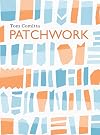
Rating: 4.5* of five
The Publisher Says: Tom Comitta returns with a novella that is at once a picaresque quest for a stolen snuffbox and a marvel of literary découpage, equal parts love story, old-fashioned thriller, and absurdist romp.
To whom does a story belong? Who is its author? What is an author? Does it matter? These questions and more populate the subversive and audacious Patchwork, a comical tragedy that highlights the connective tissue that joins stories to themselves as well as to show more the grand history of storytelling itself. Celebrating the tropes and clichés of classical novels while simultaneously forging them into an original narrative, Patchwork ultimately shows us that the stories produced by hundreds of writers past—celebrated or obscure, reverent or hilarious, factual or fantastical—may, in the hands of a master, become a single, seamless whole.
I RECEIVED A DRC FROM THE PUBLISHER VIA EDELWEISS+. THANK YOU.
My Review: Every so often it's very helpful to one's mood to see Literature cavorting naked, ignoring your shocked gaze. It's a little like finding those nudes of your grandfather, young and virile, displaying for whoever it was that took them. (DON'T ASK.)
Tom Comitta's displaying Literature's bare backside as he remixes bits and pieces of what others wrote to serve new meanings and explore ideas of authorship, of Authority, by...ignoring it. Samuel Beckett made similar experiments sixty years ago. It's refreshing, to say the least, when someone looks afresh at shibboleths like Literature and sees what's under its underpants instead of reverently praising its court dresses.
The means by which he accomplishes this is to set Literature off on a snipe hunt for a snuff box. Ostensibly. Sorta-kinda, anyway, but we ain't goin' in a line, let alone a straight one, anywhere. There are lots and lots of side quests, points where you put your readerly trust in Author Comitta because if there's a path ahead you sure can't see it, and then lo! Behold the comic-strip of a walk home, made up entirely of Victorian artwork that decorated Dickens novels.
Does it make sense? Yes, but in a curious way, no. It's consistent with hunting, with being in motion; it's a metacommentary on research and its pleasures; it's not the only time we are required to double-clutch the non-synchromesh transmission of this assembled car of many manufacturer's bits to see if we're going to make it up the hill of narrative logic.
Don't count on it.
We're then thrust into an olfactory assessment of the walk that runs through Richard Price's evocative prose pertaining to a mall food court's assault on one's nose. That's really another sly rib-poke. A huge assortment of things made into one thing in our readerly framework just by the accident of proximity...like reading the thesaurus as a story, like using all the words you find there in chains of meaning.
It's short, barely two hundred pages. It's pungent and oddly elegant, see above. It's unusual, it's not country you necessarily have a map for at hand (unless you own a copy of Robbe-Grillet's Jealousy, that is). Patchwork is a perfect title for this patched-up piecework example of how to quilt, tat, and knit a whole thing, to sew bits into a refined Frankensteinian monster, that becomes a whole and separate artwork. It's a read that is animated in its parts by many heads and hands long-dead mostly forgotten and revived, reanimated, restored and repurposed by Tom Comitta.
He's done this before, The Nature Book came out from Coffee House Press in 2023 when his subject was the deathly serious issue of climate change; I didn't read it because, well, grim much? I'll go back and pick it up. The world needs fresh ways of thinking about things we already (think we) know. Perspectives like Comitta's are forceful reminders that knowledge, that what already exists in our heads, is not static, not fixed in one pattern, unless we force, allow, ignore it to be. I can't offer a perfect five because, in order to ask people for money, the publisher needs to tell them it's *about* something so a plot of sorts is crafted...I'd say grafted, in the sense skin is over a wound...and it really doesn't add a whole lot to the exercise.
Freshen up your readerly search engine by querying it in unusual ways. You're rewarded by surprises and pleasures not easy to find. show less
The Publisher Says: Tom Comitta returns with a novella that is at once a picaresque quest for a stolen snuffbox and a marvel of literary découpage, equal parts love story, old-fashioned thriller, and absurdist romp.
To whom does a story belong? Who is its author? What is an author? Does it matter? These questions and more populate the subversive and audacious Patchwork, a comical tragedy that highlights the connective tissue that joins stories to themselves as well as to show more the grand history of storytelling itself. Celebrating the tropes and clichés of classical novels while simultaneously forging them into an original narrative, Patchwork ultimately shows us that the stories produced by hundreds of writers past—celebrated or obscure, reverent or hilarious, factual or fantastical—may, in the hands of a master, become a single, seamless whole.
I RECEIVED A DRC FROM THE PUBLISHER VIA EDELWEISS+. THANK YOU.
My Review: Every so often it's very helpful to one's mood to see Literature cavorting naked, ignoring your shocked gaze. It's a little like finding those nudes of your grandfather, young and virile, displaying for whoever it was that took them. (DON'T ASK.)
Tom Comitta's displaying Literature's bare backside as he remixes bits and pieces of what others wrote to serve new meanings and explore ideas of authorship, of Authority, by...ignoring it. Samuel Beckett made similar experiments sixty years ago. It's refreshing, to say the least, when someone looks afresh at shibboleths like Literature and sees what's under its underpants instead of reverently praising its court dresses.
The means by which he accomplishes this is to set Literature off on a snipe hunt for a snuff box. Ostensibly. Sorta-kinda, anyway, but we ain't goin' in a line, let alone a straight one, anywhere. There are lots and lots of side quests, points where you put your readerly trust in Author Comitta because if there's a path ahead you sure can't see it, and then lo! Behold the comic-strip of a walk home, made up entirely of Victorian artwork that decorated Dickens novels.
Does it make sense? Yes, but in a curious way, no. It's consistent with hunting, with being in motion; it's a metacommentary on research and its pleasures; it's not the only time we are required to double-clutch the non-synchromesh transmission of this assembled car of many manufacturer's bits to see if we're going to make it up the hill of narrative logic.
Don't count on it.
We're then thrust into an olfactory assessment of the walk that runs through Richard Price's evocative prose pertaining to a mall food court's assault on one's nose. That's really another sly rib-poke. A huge assortment of things made into one thing in our readerly framework just by the accident of proximity...like reading the thesaurus as a story, like using all the words you find there in chains of meaning.
It's short, barely two hundred pages. It's pungent and oddly elegant, see above. It's unusual, it's not country you necessarily have a map for at hand (unless you own a copy of Robbe-Grillet's Jealousy, that is). Patchwork is a perfect title for this patched-up piecework example of how to quilt, tat, and knit a whole thing, to sew bits into a refined Frankensteinian monster, that becomes a whole and separate artwork. It's a read that is animated in its parts by many heads and hands long-dead mostly forgotten and revived, reanimated, restored and repurposed by Tom Comitta.
He's done this before, The Nature Book came out from Coffee House Press in 2023 when his subject was the deathly serious issue of climate change; I didn't read it because, well, grim much? I'll go back and pick it up. The world needs fresh ways of thinking about things we already (think we) know. Perspectives like Comitta's are forceful reminders that knowledge, that what already exists in our heads, is not static, not fixed in one pattern, unless we force, allow, ignore it to be. I can't offer a perfect five because, in order to ask people for money, the publisher needs to tell them it's *about* something so a plot of sorts is crafted...I'd say grafted, in the sense skin is over a wound...and it really doesn't add a whole lot to the exercise.
Freshen up your readerly search engine by querying it in unusual ways. You're rewarded by surprises and pleasures not easy to find. show less
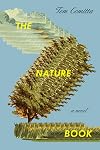
I have some friends who would HATE this book. I think it’s fascinating. Can’t comment on the quality of the writing as such, but the arrangement of the passages into a narrative which is not only coherent, but also beautiful, is admirable.
Awards

You May Also Like
Associated Authors
Statistics
- Works
- 5
- Members
- 53
- Popularity
- #303,172
- Rating
- 3.9
- Reviews
- 3
- ISBNs
- 9