
R. Dudley Edwards (1909–1988)
Author of The Great Famine: Studies in Irish History 1845-52
About the Author
Works by R. Dudley Edwards
Ireland in the Age of the Tudors: The Destruction of Hiberno-Norman Civilization (1977) 13 copies, 1 review
Church and state in Tudor Ireland : a history of penal laws against Irish Catholics, 1534-1603 (1935) 7 copies, 1 review
Tagged
Common Knowledge
- Other names
- Edwards, Robert Walter Dudley
- Birthdate
- 1909-06-04
- Date of death
- 1988-06-05
- Gender
- male
- Education
- University College Dublin
Catholic University School
St Enda's School - Occupations
- historian
- Relationships
- Edwards, Ruth Dudley (daughter)
Edwards, Owen Dudley (son) - Nationality
- Ireland
- Birthplace
- Dublin, Ireland
- Places of residence
- Dublin, Ireland
- Place of death
- Dublin, Ireland
- Associated Place (for map)
- Dublin, Ireland
Members
Reviews
Church and State in Tudor Ireland: A History of Penal Laws Against Irish Catholics, 1543-1603 by R. Dudley Edwards

https://fromtheheartofeurope.eu/church-and-state-in-tudor-ireland-a-history-of-p...
Dudley Edwards published this in 1935 when he was 26; it is the book of his PhD thesis from a couple of years earlier. It’s a remarkable piece of research for the day, looking in detail at the records for the efforts by the governments of Henry VIII, Edward VI and Elizabeth I to impose the Reformation in Ireland (and Mary I’s efforts to reverse it).
He concentrates a bit more on the early part of the show more period, which I am less interested in, rather than the 1560s and after, but I can understand first of all that any writer have more energy for dealing with the earlier bit of research and second that there was simply more going on in the 1530s, 1540s and 1550s in terms of the dynamics of religion and government.
There are two stories here. The first is that the government of Ireland was weak and London was not prepared to put in enough resources to make it effective, so the story of Tudor Ireland is of one chief governor after another failing to make much impact until the very end, in 1603. The second is that the Protestant side was unable to find resources to staff the religious effort; most Irish people spoke Irish, but the state was constrained to operate in English; any sensible rising Protestant evangelist stayed in England where it was safer and the monetary rewards better; and the ability of the state to enforce religious behaviour (let alone belief) even in the most loyal areas was correspondingly weak.
Despite its weight I also found it quite a quick read. I know that much more research has been done on the topic since, but it’s good to go back to basics sometimes. show less
Dudley Edwards published this in 1935 when he was 26; it is the book of his PhD thesis from a couple of years earlier. It’s a remarkable piece of research for the day, looking in detail at the records for the efforts by the governments of Henry VIII, Edward VI and Elizabeth I to impose the Reformation in Ireland (and Mary I’s efforts to reverse it).
He concentrates a bit more on the early part of the show more period, which I am less interested in, rather than the 1560s and after, but I can understand first of all that any writer have more energy for dealing with the earlier bit of research and second that there was simply more going on in the 1530s, 1540s and 1550s in terms of the dynamics of religion and government.
There are two stories here. The first is that the government of Ireland was weak and London was not prepared to put in enough resources to make it effective, so the story of Tudor Ireland is of one chief governor after another failing to make much impact until the very end, in 1603. The second is that the Protestant side was unable to find resources to staff the religious effort; most Irish people spoke Irish, but the state was constrained to operate in English; any sensible rising Protestant evangelist stayed in England where it was safer and the monetary rewards better; and the ability of the state to enforce religious behaviour (let alone belief) even in the most loyal areas was correspondingly weak.
Despite its weight I also found it quite a quick read. I know that much more research has been done on the topic since, but it’s good to go back to basics sometimes. show less
Ireland in the Age of the Tudors: The Destruction of Hiberno-Norman Civilization by R. Dudley Edwards

http://nwhyte.livejournal.com/1308766.html
This is essentially a narrative survey, based on exhaustive sampling of the surviving primary sources, of what happened politically in Ireland from the death of the seventh Earl of Kildare in 1513 to the Flight of the Earls in 1607. I am still getting my head around the various shifts in religious policy, particularly during the reign of Elizabeth I, but this gives a good skeleton on which to hang the meat of any future work I do.
I was less convinced show more by Dudley Edwards' subtitle, 'The Destruction of Hiberno-Norman Civilisation'. It is beyond dispute that in so far as there was such a thing, this period saw its destruction, but he doesn't really illustrate why or what Hiberno-Norman civilisation actually was. It would be more accurate to describe the book as tracking the growth of colonialism as the active British policy in Ireland, which it does very well. show less
This is essentially a narrative survey, based on exhaustive sampling of the surviving primary sources, of what happened politically in Ireland from the death of the seventh Earl of Kildare in 1513 to the Flight of the Earls in 1607. I am still getting my head around the various shifts in religious policy, particularly during the reign of Elizabeth I, but this gives a good skeleton on which to hang the meat of any future work I do.
I was less convinced show more by Dudley Edwards' subtitle, 'The Destruction of Hiberno-Norman Civilisation'. It is beyond dispute that in so far as there was such a thing, this period saw its destruction, but he doesn't really illustrate why or what Hiberno-Norman civilisation actually was. It would be more accurate to describe the book as tracking the growth of colonialism as the active British policy in Ireland, which it does very well. show less
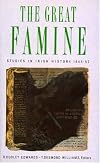
This book is referred to in "The Event and Its Terrors: Ireland, Famine, Modernity (Cultural Memory in the Present)" by Stuart McLean. He mentions that it, published in 1956, was "the first book-length study [on the Great Famine] to emerge from the decades following Ireland's independence".
Lists
Statistics
- Works
- 8
- Members
- 68
- Popularity
- #253,410
- Rating
- 3.8
- Reviews
- 3
- ISBNs
- 11