
W.P. Gerritsen (1935–2019)
Author of Dictionary of Medieval Heroes: Characters in Medieval Narrative Traditions and their Afterlife in Literature, Theatre and the Visual Arts
About the Author
Series
Works by W.P. Gerritsen
Dictionary of Medieval Heroes: Characters in Medieval Narrative Traditions and their Afterlife in Literature, Theatre and the Visual Arts (1993) — Editor — 106 copies, 2 reviews
Floris V door de edelen vermoord — Author — 3 copies
De eenhoorn en de geleerden 1 copy
Associated Works
Tagged
Common Knowledge
- Legal name
- Gerritsen, Willem Pieter
- Other names
- Gerritsen, Wim
- Birthdate
- 1935-08-12
- Date of death
- 2019-10-24
- Gender
- male
- Occupations
- hoogleraar
- Organizations
- Universiteit Utrecht
- Relationships
- Oostrom, Frits van (leerling)
Draak, Maartje (leermeester) - Nationality
- Netherlands
- Associated Place (for map)
- Netherlands
Members
Reviews
A Dictionary of Medieval Heroes: Characters in Medieval Narrative Traditions and their Afterlife in Literature, Theatre and the Visual Arts by W.P. Gerritsen
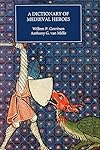
Anglophone Arthurians should from time to time contemplate a different European perspective on the Matter of Britain and its contemporary analogues, and this Dictionary of Medieval Heroes by two Dutch academics gives just such an opportunity. Here we are introduced to such figures as Aiol, Berte aux Grands Pieds, Heimbrecht, Parthonopeus of Blois and Ruodlieb, heroes and heroines certainly previously unfamiliar to this reviewer but popular with a significant proportion of medieval European show more readership, featuring in tales that certainly stand comparison with accounts of Arthur, Galahad, Gawain, Merlin or Perceval.
This is a very user-friendly edition for English-speakers. Each entry typically starts with a short introduction to place the character in a literary or historic context, followed by a synopsis of the principal events in his or her most familiar saga. There is then a critical discussion which also details any subsequent development of the narrative into more recent times, concluded by brief references to principal modern editions, translations and studies. The Lancelot section for example, one of the longest in this book, includes three illustrations from the 13th to the 19th century and discussion of artistic, poetic and novelistic responses to his adventures down to the 1980s, ending with the comment "there seems to be little danger of Lancelot soon losing his prominent position in Arthurian narrative". The entry for Arthur himself, by Frank Brandsma, is authoritative and very detailed, with modern developments in novels, theatre, music and other media extremely well documented.
Around a quarter of the characters listed are directly or indirectly linked with the Arthurian legends (eg Fergus and Yder among the former, Aeneas and Brut among the latter), and several have particularly English connections (eg Bevis of Hampton, Hengest and Horsa, Beowulf) with Cu Chulainn representing the Irish dimension.
The Netherlands, on the crossroads of literary peregrinations between Romance and Northern lands, figures largely as the origin of many of the quoted texts, correcting the rather Anglocentric view that tends to dominate populist literature on his subject here and emphasising that there was a cultural European Union of sorts long before the modern political set-up.
This Dutch A-Z of some ninety figures, originally published in 1993 as Van Aiol tot de Zwaanridder, first appeared in translation in hardback in 1998 with some changes to the original text, not least the addition of the entry on Robin Hood by Richard Barber. This is an extraordinarily stimulating book, whether your interest lies in plot summaries or folktale motifs, cross-cultural influences or native idiosyncracies, or why some tales flourish in a great diversity of retellings while others disappear into a narrative cul-de-sac; certainly this a volume that shouldn't remain on your shelves for long periods.
http://calmgrove.wordpress.com/2012/09/08/heroes/ show less
This is a very user-friendly edition for English-speakers. Each entry typically starts with a short introduction to place the character in a literary or historic context, followed by a synopsis of the principal events in his or her most familiar saga. There is then a critical discussion which also details any subsequent development of the narrative into more recent times, concluded by brief references to principal modern editions, translations and studies. The Lancelot section for example, one of the longest in this book, includes three illustrations from the 13th to the 19th century and discussion of artistic, poetic and novelistic responses to his adventures down to the 1980s, ending with the comment "there seems to be little danger of Lancelot soon losing his prominent position in Arthurian narrative". The entry for Arthur himself, by Frank Brandsma, is authoritative and very detailed, with modern developments in novels, theatre, music and other media extremely well documented.
Around a quarter of the characters listed are directly or indirectly linked with the Arthurian legends (eg Fergus and Yder among the former, Aeneas and Brut among the latter), and several have particularly English connections (eg Bevis of Hampton, Hengest and Horsa, Beowulf) with Cu Chulainn representing the Irish dimension.
The Netherlands, on the crossroads of literary peregrinations between Romance and Northern lands, figures largely as the origin of many of the quoted texts, correcting the rather Anglocentric view that tends to dominate populist literature on his subject here and emphasising that there was a cultural European Union of sorts long before the modern political set-up.
This Dutch A-Z of some ninety figures, originally published in 1993 as Van Aiol tot de Zwaanridder, first appeared in translation in hardback in 1998 with some changes to the original text, not least the addition of the entry on Robin Hood by Richard Barber. This is an extraordinarily stimulating book, whether your interest lies in plot summaries or folktale motifs, cross-cultural influences or native idiosyncracies, or why some tales flourish in a great diversity of retellings while others disappear into a narrative cul-de-sac; certainly this a volume that shouldn't remain on your shelves for long periods.
http://calmgrove.wordpress.com/2012/09/08/heroes/ show less
Van Aiol tot de Zwaanridder personages uit de middeleeuwse verhaalkunst en hun voortleven in literatuur, theater en beeldende kunst by W.P. Gerritsen

symboliek, middeleeuwen, ME, middeleeuwse kunst, verhaalkunst, literatuur, theater, beeldende kunst

Zeer mooie selectie van Middeleeuwse gedichten, vooral periode 1100-1400.
You May Also Like
Associated Authors
Statistics
- Works
- 18
- Also by
- 4
- Members
- 157
- Popularity
- #133,742
- Rating
- 3.3
- Reviews
- 3
- ISBNs
- 17
- Languages
- 3