

Corinne Graber
Author of The Impressionists
About the Author
Works by Corinne Graber
Tagged
Common Knowledge
- Gender
- female
- Nationality
- Switzerland
- Associated Place (for map)
- Switzerland
Members
Reviews
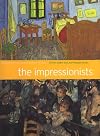
Golly, I hadn't expected to enjoy this book as much as I did nor to think so highly of it as I do. I bought it--probably because it had quite a few works I'd not seen before--heavily discounted at a newsagent's several years ago, stuck it atop a bookcase (the book is over 37 cm high, too tall even for that swish Habitat shelving), and because it was out of sight it was out of mind for yonks. When I pulled it down & read the back cover I expected little beyond the usual poppy fields, show more ballerinas, and, er. paint-by-number text.
But the book is so much better than the glossy volume of priddy pitchers you find on the coffee table of someone who knows what they like. There were indeed many paintings that I don't remember having ever seen. The text was downright gripping and a bit quirky with it and lord knows, quirky is always a bonus.
Most survey art history books are much like most of the art history classes I took: They give dates and follow a timeline, treat artists in a given period or movement in an orderly way and discuss technique and innovation and influences in a clinical one. The Impressionists has an underlying scheme--it does begin with an explanation of Salon standards and attitudes and it ends with the Post-Impressionists--but it's one that isn't obvious. The text is fluid, moving from one artist to one region to one way of seeing & portraying to another to another and another betwixt and between. The authors don't hesitate to offer unusual approaches, either. (Their argument that Monet's late work is the result of greater realism rather than increasing abstraction, e.g., has made me look at the water lilies in an altogether different way.). And a bonus more rewarding than the quirkiness is that contemporary comments on the artists, both as artists and as people, and on the reception of their works pepper the margins.
I'm not qualified to judge the quality of the reproductions in the book but they look crisp to me, with clear (if perhaps slightly dark--?) colours. And because of the book's size many of them are extraordinarily large, allowing one to closely examine details & brushwork. (If you're short-sighted take out the lenses or whip off the specs when reading The Impressionists: you'll be able to see from arm's length a painting as a whole whereas others will have to prop up the book & view it from halfway across the room from it to do so.)
I'd come to regard Impressionism almost as the sort of thing one enthuses about when a teenager before moving on to other art. This book has made me acknowledge as no other book or class did that I've been a dismissive ignoramus; impressionism was complex and highly influential and above all revolutionary. Any book that has you admitting your ignorance whilst dispelling it is a very good thing indeed. show less
But the book is so much better than the glossy volume of priddy pitchers you find on the coffee table of someone who knows what they like. There were indeed many paintings that I don't remember having ever seen. The text was downright gripping and a bit quirky with it and lord knows, quirky is always a bonus.
Most survey art history books are much like most of the art history classes I took: They give dates and follow a timeline, treat artists in a given period or movement in an orderly way and discuss technique and innovation and influences in a clinical one. The Impressionists has an underlying scheme--it does begin with an explanation of Salon standards and attitudes and it ends with the Post-Impressionists--but it's one that isn't obvious. The text is fluid, moving from one artist to one region to one way of seeing & portraying to another to another and another betwixt and between. The authors don't hesitate to offer unusual approaches, either. (Their argument that Monet's late work is the result of greater realism rather than increasing abstraction, e.g., has made me look at the water lilies in an altogether different way.). And a bonus more rewarding than the quirkiness is that contemporary comments on the artists, both as artists and as people, and on the reception of their works pepper the margins.
I'm not qualified to judge the quality of the reproductions in the book but they look crisp to me, with clear (if perhaps slightly dark--?) colours. And because of the book's size many of them are extraordinarily large, allowing one to closely examine details & brushwork. (If you're short-sighted take out the lenses or whip off the specs when reading The Impressionists: you'll be able to see from arm's length a painting as a whole whereas others will have to prop up the book & view it from halfway across the room from it to do so.)
I'd come to regard Impressionism almost as the sort of thing one enthuses about when a teenager before moving on to other art. This book has made me acknowledge as no other book or class did that I've been a dismissive ignoramus; impressionism was complex and highly influential and above all revolutionary. Any book that has you admitting your ignorance whilst dispelling it is a very good thing indeed. show less
You May Also Like
Associated Authors
Statistics
- Works
- 3
- Members
- 89
- Popularity
- #207,491
- Rating
- 3.8
- Reviews
- 1
- ISBNs
- 7
- Languages
- 3