
Tyler Hellard
Author of Searching for Terry Punchout
Works by Tyler Hellard
Tagged
Common Knowledge
There is no Common Knowledge data for this author yet. You can help.
Members
Reviews
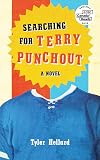
IN A NUTSHELL
A novel about hockey, coming back to the small town you grew up in and hoped never to see again, discovering that your father isn’t the person your memory told you he was, that you aren’t the person you hoped you’d be and that home is a place you can never really leave behind but which doesn’t stand still while you’re away.
The storytelling seems straightforward, the writing is accessible, the dialogue is realistic, but behind the simplicity is an artfully crafted show more structure that builds a deeply emotional picture of a man who has become a little lost and who, by coming home, finally starts to reassess himself, his friends and his father.
I read ‘Searching For Terry Punchout’ because it’s on the 2026 Canada Reads shortlist. Given that the novel is about Adam Macallister, a down-on-his-luck (recently laid off) sportswriter, trying to make money by writing a bio-piece on his estranged hockey-playing father, a retired NFL player famous for his record-setting time in the penalty box, I’d expected to find myself reading a hockey-intensive story with lots of sports-speak and team spirt. It wasn’t that kind of book at all. Insofar as it was about hockey, it was focused on what hockey means to people who live their whole lives in small Canadian towns and what it means to those who use it to get out of small Canadian towns. The energy of the story comes from sharing Adam Macallister’s experience of coming home to the small town he grew up in and had hoped never to return to, and his interviews with the estranged father he’d spent years refusing to talk to
The story is told from Adam Macallister’s point of view, giving the reader direct access to his ‘woe is me/life is hard’ interior monologue. I admired the way Tyler Hellard challenged this monologue, firstly by giving the reader direct access to Terry Macallister’s version of events via a series of unscripted, straight-to-his-son 's-tape-recorder, autobiographical monologues; and secondly through the conversations that Adam has with the friends he left behind and whose memories, values and expectations often differ from his.
I was surprised to find that I liked Terry Macalister more than his son. The more I knew about Adam Macalister, the less I liked him. He struck me as a whiney, insecure, do-you-know-how-bad-I’ve-had-it? man, who hadn’t grown up yet and didn’t really want to. I think it was a sign of the quality of the writing that Adam annoyed me so much, and yet I wanted to keep reading. His father, on the other hand, was more thoughtful, more self-aware and more at peace with himself than his well-educated but deeply insecure son.
It’s easy to underestimate a novel like this because the writing doesn’t feel literary. There’s no purple prose, no epiphanic moments capped with perfectly formed epigrams; there’s just the kind of conversations that you’d hear in any bar where men who’ve known each other forever gather to get drunk and talk about sports, life and women. There’s also a beautifully low-key humour that prevents the book from becoming a pity party. I’d half-expected to find the book littered with sports clichés, but Tyler Hellard’s only use of clichés was in a piece of humour that made me like Adam Macalister at least a little. Here’s Adam’s interior pep talk to himself when he’s trying to get motivated to continue with the emotionally awkward interviews with his father:
"Maybe this will work out for me, after all. I’ve read a thousand athlete profiles and a lot of players like to talk about how they bet on themselves. It’s a stupid cliché because stupid clichés are the first language of all athletes, but I’ve never actually tried betting on myself to do something difficult, and now that I am—admittedly, more out of necessity than anything else—I’m suddenly surging with something that feels dangerously close to self-confidence. It’s intoxicating. I want to stay focused, step up, dig deep, give it a hundred and ten percent, play the game the right way, and do what it takes to win."
I thought ‘Searching For Terry Punchout’ was a fine description of a not-as-grown-up-as-he-ought-to-be man being forced to reassess what he knows about his father, the people he grew up with and ultimately, himself. I liked that what finally sets Adam on a better path is an act of rage-fueled violence of the kind his father was famous for but seldom committed.
I’ve seen this novel described as charming and uplifting. I didn’t find it to be either of those things. Perhaps that’s because I’m not Canadian, and so this doesn’t hit any of my nostalgia buttons. Most likely, it’s because I don’t find descriptions of drunken conversations or self-pitying introspection charming or uplifting, but that says more about me than the novel. For me, what makes this novel work is that it is insightful, truthful and, eventually, compassionate. show less
A novel about hockey, coming back to the small town you grew up in and hoped never to see again, discovering that your father isn’t the person your memory told you he was, that you aren’t the person you hoped you’d be and that home is a place you can never really leave behind but which doesn’t stand still while you’re away.
The storytelling seems straightforward, the writing is accessible, the dialogue is realistic, but behind the simplicity is an artfully crafted show more structure that builds a deeply emotional picture of a man who has become a little lost and who, by coming home, finally starts to reassess himself, his friends and his father.
I read ‘Searching For Terry Punchout’ because it’s on the 2026 Canada Reads shortlist. Given that the novel is about Adam Macallister, a down-on-his-luck (recently laid off) sportswriter, trying to make money by writing a bio-piece on his estranged hockey-playing father, a retired NFL player famous for his record-setting time in the penalty box, I’d expected to find myself reading a hockey-intensive story with lots of sports-speak and team spirt. It wasn’t that kind of book at all. Insofar as it was about hockey, it was focused on what hockey means to people who live their whole lives in small Canadian towns and what it means to those who use it to get out of small Canadian towns. The energy of the story comes from sharing Adam Macallister’s experience of coming home to the small town he grew up in and had hoped never to return to, and his interviews with the estranged father he’d spent years refusing to talk to
The story is told from Adam Macallister’s point of view, giving the reader direct access to his ‘woe is me/life is hard’ interior monologue. I admired the way Tyler Hellard challenged this monologue, firstly by giving the reader direct access to Terry Macallister’s version of events via a series of unscripted, straight-to-his-son 's-tape-recorder, autobiographical monologues; and secondly through the conversations that Adam has with the friends he left behind and whose memories, values and expectations often differ from his.
I was surprised to find that I liked Terry Macalister more than his son. The more I knew about Adam Macalister, the less I liked him. He struck me as a whiney, insecure, do-you-know-how-bad-I’ve-had-it? man, who hadn’t grown up yet and didn’t really want to. I think it was a sign of the quality of the writing that Adam annoyed me so much, and yet I wanted to keep reading. His father, on the other hand, was more thoughtful, more self-aware and more at peace with himself than his well-educated but deeply insecure son.
It’s easy to underestimate a novel like this because the writing doesn’t feel literary. There’s no purple prose, no epiphanic moments capped with perfectly formed epigrams; there’s just the kind of conversations that you’d hear in any bar where men who’ve known each other forever gather to get drunk and talk about sports, life and women. There’s also a beautifully low-key humour that prevents the book from becoming a pity party. I’d half-expected to find the book littered with sports clichés, but Tyler Hellard’s only use of clichés was in a piece of humour that made me like Adam Macalister at least a little. Here’s Adam’s interior pep talk to himself when he’s trying to get motivated to continue with the emotionally awkward interviews with his father:
"Maybe this will work out for me, after all. I’ve read a thousand athlete profiles and a lot of players like to talk about how they bet on themselves. It’s a stupid cliché because stupid clichés are the first language of all athletes, but I’ve never actually tried betting on myself to do something difficult, and now that I am—admittedly, more out of necessity than anything else—I’m suddenly surging with something that feels dangerously close to self-confidence. It’s intoxicating. I want to stay focused, step up, dig deep, give it a hundred and ten percent, play the game the right way, and do what it takes to win."
I thought ‘Searching For Terry Punchout’ was a fine description of a not-as-grown-up-as-he-ought-to-be man being forced to reassess what he knows about his father, the people he grew up with and ultimately, himself. I liked that what finally sets Adam on a better path is an act of rage-fueled violence of the kind his father was famous for but seldom committed.
I’ve seen this novel described as charming and uplifting. I didn’t find it to be either of those things. Perhaps that’s because I’m not Canadian, and so this doesn’t hit any of my nostalgia buttons. Most likely, it’s because I don’t find descriptions of drunken conversations or self-pitying introspection charming or uplifting, but that says more about me than the novel. For me, what makes this novel work is that it is insightful, truthful and, eventually, compassionate. show less
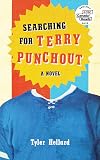
I would never have picked this book up if it hadn't been chosen for Canada Reads 2026. The blurb talks about sportswriting and hockey and a notorious goon, all things that would turn me off. And yet, I really enjoyed this book because it is about so much more than those things.
Adam Macallister is a sports journalist. He's been living in Calgary but his job has been cut so he's gone back to the small town of Pennington, Nova Scotia, where he grew up. He's got one last chance to get an article show more in Sports Illustrated but he has to do it about his father whom he has not seen in ten years. His father, nicknamed Terry Punchout because he was an enforcer on various NHL teams, wasn't around much as Adam was growing up because his mother left his father and returned to Pennington when Terry was traded to the Los Angeles Kings. Adam was only two years old then. He did spend some time with him when he was a teenager and Terry moved back to Pennington after being injured. Just as Adam was finishing high school, his mother died from cancer. His father didn't even show up to her funeral. With no-one to stay in Pennington for, and a bunch of money from his mother's estate, Adam moved away to university and then journalism school. He's a good sports writer but there's not as much call for that skill any more. When he goes looking for his father, he finds out that he is living in a little room in the hockey arena where he cleans the ice and looks after the place. It's quite a comedown for an NHL star. Adam interviews his father just like he would any other subject but, in going around town and meeting old friends, he starts to get a new understanding of his father. Then just when he thinks he's finished and is ready to leave town, Sports Illustrated decides they want him to fly to Toronto to interview the Leafs player that is closing in on Terry's penalty record. That encounter doesn't go well. Adam gets in a fight with him and ends up in the hospital. Terry is also in the hospital back in Nova Scotia after having a heart attack (while fighting). Seems the father and son have more in common than they thought. Adam goes back to Pennington to recuperate with his father and we're left with some questions. Such as: Will his article be his comeback chance? And will he finally get to make love to his high school girlfriend? Is he going to have a relationship with his father now? I don't expect answers to those questions but it's fun to speculate.
I've now read four of the five books in the running for Canada Reads 2026. The theme this year is building bridges. I have to say that this book probably exemplifies that theme the best. show less
Adam Macallister is a sports journalist. He's been living in Calgary but his job has been cut so he's gone back to the small town of Pennington, Nova Scotia, where he grew up. He's got one last chance to get an article show more in Sports Illustrated but he has to do it about his father whom he has not seen in ten years. His father, nicknamed Terry Punchout because he was an enforcer on various NHL teams, wasn't around much as Adam was growing up because his mother left his father and returned to Pennington when Terry was traded to the Los Angeles Kings. Adam was only two years old then. He did spend some time with him when he was a teenager and Terry moved back to Pennington after being injured. Just as Adam was finishing high school, his mother died from cancer. His father didn't even show up to her funeral. With no-one to stay in Pennington for, and a bunch of money from his mother's estate, Adam moved away to university and then journalism school. He's a good sports writer but there's not as much call for that skill any more. When he goes looking for his father, he finds out that he is living in a little room in the hockey arena where he cleans the ice and looks after the place. It's quite a comedown for an NHL star. Adam interviews his father just like he would any other subject but, in going around town and meeting old friends, he starts to get a new understanding of his father. Then just when he thinks he's finished and is ready to leave town, Sports Illustrated decides they want him to fly to Toronto to interview the Leafs player that is closing in on Terry's penalty record. That encounter doesn't go well. Adam gets in a fight with him and ends up in the hospital. Terry is also in the hospital back in Nova Scotia after having a heart attack (while fighting). Seems the father and son have more in common than they thought. Adam goes back to Pennington to recuperate with his father and we're left with some questions. Such as: Will his article be his comeback chance? And will he finally get to make love to his high school girlfriend? Is he going to have a relationship with his father now? I don't expect answers to those questions but it's fun to speculate.
I've now read four of the five books in the running for Canada Reads 2026. The theme this year is building bridges. I have to say that this book probably exemplifies that theme the best. show less
This is a story of going back to your roots. Adam, a less-than-successful sportswriter gets an idea that interviewing his father, Terry "Punchout" Macallister, for Sports Illustrated could be the break he needs. His father was what we, today, call an enforcer (or a goon) in the NHL, setting the record for most penalty minutes. That record is about to be broken, so Adam thinks a retrospective might play well. Problem? He's been largely estranged from his father since he was a child and hasn't show more even seen him in the past ten years. Adam returns to his childhood community and reconnects with not only his father, but with friends and high school girlfriend. This makes for an interesting read as hockey violence is not the only theme running through this book.
Adam is a great character and we get to know him well as he narrates the story in his self-deprecating way. The other characters are mostly less developed, but Adam carried the story for me and I liked the book. show less
Adam is a great character and we get to know him well as he narrates the story in his self-deprecating way. The other characters are mostly less developed, but Adam carried the story for me and I liked the book. show less
If you're Canadian, but you don't live in Canada, and you read this book, it's gonna make you sad as hell
Lists
Awards


Statistics
- Works
- 1
- Members
- 37
- Popularity
- #390,571
- Rating
- 3.9
- Reviews
- 4
- ISBNs
- 3