
Lu You (1125–1210)
Author of The Old Man Who Does As He Pleases
About the Author
Image credit: Wikipedia
Works by Lu You
Grand Canal, Great River: The Travel Diary of a Twelfth-Century Chinese Poet (2007) — Author — 24 copies, 2 reviews
陸游選集 1 copy
Associated Works
World Poetry: An Anthology of Verse from Antiquity to Our Time (1998) — Contributor — 499 copies, 2 reviews
Tagged
Common Knowledge
- Canonical name
- Lu You
- Legal name
- 陸游
- Other names
- Lu Yu
陆游
Feng-weng
放翁 - Birthdate
- 1125-11-13
- Date of death
- 1210-01-26
- Gender
- male
- Cause of death
- old age
- Nationality
- China
- Birthplace
- Wei River, China
- Place of death
- Shaoxing, Zhejiang, China
- Associated Place (for map)
- China
Members
Reviews

Lu You adopted the name The Old Man Who Does as He Pleases in response to politically-inspired criticisms of his behaviour, principally that he drank too much and behaved unbecomingly for a government official. Given the number of poems he wrote about being drunk, the criticism may have had some justification, even if the motivation was partisan.
I expected to enjoy the poems in the first half of the book, and I did. Unexpectedly, I enjoyed Lu's travelogue of his river-journey to a new show more appointment even more. Vignettes of town and rural life, descriptions of tourist sites and natural wonders, customs, history and folklore, the quality of local cuisine and wine, meetings with officials, inn-keepers and priests, and little glimpses of his children. Even his cat gets a mention, as it's brought along on the boat trip. Amazing that 800 years and 9,000 miles of distance doesn't really separate people. show less
I expected to enjoy the poems in the first half of the book, and I did. Unexpectedly, I enjoyed Lu's travelogue of his river-journey to a new show more appointment even more. Vignettes of town and rural life, descriptions of tourist sites and natural wonders, customs, history and folklore, the quality of local cuisine and wine, meetings with officials, inn-keepers and priests, and little glimpses of his children. Even his cat gets a mention, as it's brought along on the boat trip. Amazing that 800 years and 9,000 miles of distance doesn't really separate people. show less
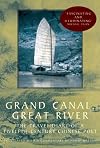
This is an English translation of a 12th century Chinese travel diary of an imperial official sent to Szechuan as Assistant Prefect. The journey, first via the Grand Canal and then up the Yangzi River, takes three months. As a highly educated person (necessary to pass the exam to become an official), the author includes a vast number of literary references and allusions in the text describing a profusion of temples and galleries and viewing points.
The translated text would be almost totally show more inaccessible without the notes of the translator interspersed with the original text.
More detail than I feel I need to know about an obscure time in the life of China, but impressive in reinforcing the sense of continuous high culture in China over millennia. How many such travel diaries could have been written in Europe at the same time, and of that exceedingly small potential number, how many could include almost daily references to the travel and literature of those who went before - up to 1,000 years before!
Read January 2014. show less
The translated text would be almost totally show more inaccessible without the notes of the translator interspersed with the original text.
More detail than I feel I need to know about an obscure time in the life of China, but impressive in reinforcing the sense of continuous high culture in China over millennia. How many such travel diaries could have been written in Europe at the same time, and of that exceedingly small potential number, how many could include almost daily references to the travel and literature of those who went before - up to 1,000 years before!
Read January 2014. show less
My first impression of this book was that it was an expensive, glossy book appealing to the China bandwagon boom. Some of my initial discomfort is still lingering, as I find the design of the book aesthetically displeasing. Examples of these are very small (less than .5 cm) margins, photos which exceed margins, photos which are "embedded", showing eg sculptures freestanding in the text, high-gloss paper and contemporary photographs of present-day Chinese landscapes (which often show more disharmoniously juxtapose with the poetic nature of the text).
Nonetheless, upon closer inspection (after purchase), I find the book a valuable addition to my collection and enjoy reading the diary, and notes of the translator. Basically, the book is an enriched edition of Lu You [陆游] 's Travel diary "Record of entering Shu" (= Sichuan) [入蜀记]. The diary is faithfully translated, while the text is embedded in a text that supports it with notes, remarks and many illustrations of both period works of art, as well as impressions of landscapes the poet travelled through.
My distaste of the modern juxtaposition of old and new is apparently shared by the author, as the description under a photo (p. 106) [describes] "the Lute Pavillion, Jiujiang Buddhists believe evil acts in one life lead to a rebirth in a lower form in the next. This seems to be the fate of traditional Chinese buildings which are successively incarnated in ever more garish style, often reaching their modern apotheosis in painted concrete."
However, the many photos of art works make the book a fine edition that brings a book such as this to life and illustrates the life, art and period for the reader who has less knowledge and access to books about art and culture of ancient China.
Valuable additions to the book are maps, an index and a "dramatis personae" listing all important figures appearing in the text in both romanised script as well as Chinese characters. The bibliography, however, is entirely in hanyu pinyin.
Altogether a splendid book, with some minor faults, appealing to both the specialist and newcomer to ancient Chinese literature. show less
Nonetheless, upon closer inspection (after purchase), I find the book a valuable addition to my collection and enjoy reading the diary, and notes of the translator. Basically, the book is an enriched edition of Lu You [陆游] 's Travel diary "Record of entering Shu" (= Sichuan) [入蜀记]. The diary is faithfully translated, while the text is embedded in a text that supports it with notes, remarks and many illustrations of both period works of art, as well as impressions of landscapes the poet travelled through.
My distaste of the modern juxtaposition of old and new is apparently shared by the author, as the description under a photo (p. 106) [describes] "the Lute Pavillion, Jiujiang Buddhists believe evil acts in one life lead to a rebirth in a lower form in the next. This seems to be the fate of traditional Chinese buildings which are successively incarnated in ever more garish style, often reaching their modern apotheosis in painted concrete."
However, the many photos of art works make the book a fine edition that brings a book such as this to life and illustrates the life, art and period for the reader who has less knowledge and access to books about art and culture of ancient China.
Valuable additions to the book are maps, an index and a "dramatis personae" listing all important figures appearing in the text in both romanised script as well as Chinese characters. The bibliography, however, is entirely in hanyu pinyin.
Altogether a splendid book, with some minor faults, appealing to both the specialist and newcomer to ancient Chinese literature. show less
Lists
Awards

You May Also Like
Associated Authors
Statistics
- Works
- 8
- Also by
- 2
- Members
- 85
- Popularity
- #214,930
- Rating
- 4.2
- Reviews
- 3
- ISBNs
- 7
- Languages
- 1