

Gilli Messer
Author of My Roommate Is a Vampire
Works by Gilli Messer
My Roommate Is a Vampire 4 copies
The Quiet Tenant: A novel 1 copy
Associated Works
The Man Who Sold Air in the Holy Land: Stories (2022) — Narrator, some editions — 54 copies, 2 reviews
Crash of the Heavens: The Remarkable Story of Hannah Senesh and the Only Military Mission to Rescue Europe's Jews During World War II (2025) — Narrator, some editions — 23 copies, 2 reviews
Tagged
Common Knowledge
- Gender
- female
- Occupations
- actress
audiobook narrator - Nationality
- USA
- Associated Place (for map)
- USA
Members
Reviews
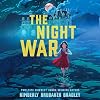
The Night War by Kimberly Brubaker Bradley (2024)
BIBLIOGRAPHIC DETAILS
PRINT:
© © April 9, 2024; 288 pages; unabridged. - Available
DIGITAL:
© April 9, 2024; 288 pages; unabridged. - Available
AUDIO:
(From Amazon) © April 09, 2024; Books on Tape; ASIN: B0CBQQJ9H4; 8 hours and 23 minutes; unabridged. (From WorldCat) OCLC: 1429841604; ISBN: 9780593744284; Record URL: https://search.worldcat.org/title/1429841604?oclcNum=1429841604 [Borrowed through Libby library app.]
SERIES:
No
SUMMARY/ show more EVALUATION:
SELECTED:
I’d liked a couple of previous books by this author.
ABOUT:
(From Amazon) “From the two-time Newbery Honor-winning author of The War That Saved My Life and Fighting Words comes a middle grade novel set at the border between freedom and fear in World War II France, at the Chateau de Chenonceau, where a Jewish girl who has lost everything but her life must decide whether to risk even that to bring others to freedom. “We don't choose how we feel, but we choose how we act.” It's 1942. German Nazis occupy much of France. And twelve-year-old Miriam, who is Jewish, is not safe. With help and quick thinking, Miri is saved from the roundup that takes her entire Jewish neighborhood. She escapes Paris, landing in a small French village, where the spiers of the famous Chateau de Chenonceau rise high into the sky, its bridge across the River Cher like a promise, a fairy tale. But Miri's life is no fairy tale. Her parents are gone—maybe alive, maybe not. Taken in at the boarding school near the chateau, pretending to be Catholic to escape Nazi capture, Miri volunteers one night to undertake a deadly task, one that spans the castle grounds, its bridge, and the very border to freedom. Here is her chance to escape—hopefully to find her parents. But will she take it? One thing is certain: The person Miri meets that night will save her life. And the person Miri becomes that night could save the lives of many more. In her return to the era of The War that Saved My Life and The War I Finally Won , Kimberly Brubaker Bradley brings a new and different story, one with a mystical twist, that explores a little-known slice of World War II history, a highly unusual friendship, and the power of choosing courage even when—especially when—there are no good choices to be had. * Map and detailed author's note included. * “Compelling [with] a hint of magic [that] becomes as satisfying as the whole of this fine novel.” — Booklist "Historical fiction at its finest. [A] masterpiece . . . Readers will be wholeheartedly rewarded." — SLJ (starred review) "Poignant . . . A gripping, humane tale." —Kirkus (starred review) "A thrilling plot [and] thought-provoking read." — Common Sense Media (a Common Sense Selection) "Fast-paced, suspenseful, and heart-wrenching. . . . Highly recommended." — Historical Novel Society “A deeply sympathetic character facing increasingly dangerous and suspenseful circumstances.” —PW “Engaging [and] imaginative [with] emotional weight and contemporary appeal.” — The Horn Book "A must-read." —YA and Kids Books Central”
OVERALL OPINION:
I liked her first two best, but this was also good, and I liked what’s described above as a “mystical twist.”
AUTHOR:
KIMBERLY BRUBAKER BRADLEY
(From Wikipedia) “Kimberly Brubaker Bradley (born June 24, 1967) is an American children's and young adult book author. In 2016, her children's book The War That Saved My Life received the Newbery Honor Award and was named to the Bank Street Children's Book Committee's Best Books of the Year List with an "Outstanding Merit" distinction and won the Committee's Josette Frank Award for fiction.[1]”
NARRATOR:
GILLI MESSER
(From audiobooks.com) “Gilli Messer is known for 9-1-1 (2018), Criminal Minds (2005) and S.W.A.T. (2017).”
GENRE:
Historical Fiction
SUBJECTS (Not comprehensive):
Fiction; European Historical fiction; History; Orphans and Foster Homes; Historical Fiction for Children; Jewish; Paris; Escape; Nazis
TIME:
1942
SETTING(s):
France
DEDICATION:
“To Harold Grinspoon, who understands how much children need stories and books of their own. Sir, you sent me to Israel: This is the book I found there.”
EXCERPT From: Chapter ONE:
“JULY 10, 1942—PARIS, FRANCE
I could hear sirens. Sirens meant trouble.
“Nothing to worry about, Miri,” Mama said, in her usual soft Yiddish. She didn’t look up from mending the pocket of my other dress.
“You don’t know that,” I said.
Her eyes flicked toward me. “It’s a fire engine, not a police sedan.”
“You can tell the difference?”
“I can.”
I knew she meant to reassure me, but I didn’t quite believe her. To me the two sounded the same. Ever since Monsieur Rosenbaum had been taken away, nearly two years ago now, the sound of sirens made my stomach hurt and my vision swim. Mama thought she understood. I let her think she did.
Now I took a deep breath. Released it slowly. Far below, the sirens continued. “I’m going up,” I said.
My mother pressed her lips together. Papa insisted she let me climb onto the roof, but she hated it when I did. Our apartment was on the sixth floor of our building, so if I did fall I would splatter, but I never feared falling. The roof was the only place in Paris I felt safe. Nothing could touch me there.
I moved our red geranium in its clay pot away from the window. I stretched one foot onto the top of the metal grille that kept things from falling out our window, grabbed the window frame, and heaved myself up so I was standing on the grille. From there it was easy to scramble up the slate tiles, still cool in the morning sun. Our window was a dormer on the top floor: It had its own little roof like a hat. I straddled the hat with my legs and let my head and shoulders rest against the main roof. I turned my face to the blue summer sky.
Sirens still wailed, but I could breathe easier now.
It had been my fault the Nazis took Monsieur Rosenbaum away. No one else knew that. I didn’t have the courage to confess it, not even to my mother.
It happened not long after the Germans invaded Paris, in the summer of 1940 when I was ten. I’d been walking through the crowded streets of our neighborhood, the Pletzl, on my way home from school when I saw our neighbor Monsieur Rosenbaum standing in front of two German soldiers on the sidewalk just ahead of me. Monsieur Rosenbaum was talking to them, though I couldn’t hear his words. Suddenly the soldier with a dark mustache grabbed Monsieur Rosenbaum by one arm. With his other fist he punched Monsieur Rosenbaum in the face.
Monsieur Rosenbaum’s head snapped back. Blood sprayed from his nose. I screamed. I ran forward and threw myself between him and the soldier.
The soldier pushed me sideways, hard. I fell to the pavement, scraping my knees and biting the inside of my cheek.
The other soldier looked down at me and said, “Is this your father, little girl?” I looked up at the three men. I tasted blood inside my mouth. My arms and legs, my entire body, froze. Only my head could move, and I shook it, to say no.
I shook my head.
“Well, then.” The first soldier kicked me aside. He and the other soldier shoved Monsieur Rosenbaum into the back of a police van parked on the street. The van drove away, siren blaring.
We hadn’t seen Monsieur Rosenbaum since.
I should have said yes, he was my father. I should have jumped to my feet. I should have fought them.
I should have done anything but what I had done.
I ran home breathless and threw up in the toilet at the end of our hall. Mama tucked me into her bed and I lay with my face against the wall, weeping. Before I could bring myself to tell my parents what had happened, neighbors were pounding on our door with the news. Mama thought it was a coincidence that I was sick. I never told her otherwise. I never confessed my shame.
Monsieur Rosenbaum ended up in a prison factory in Germany. He’d been able to send two letters home. Every time I heard sirens, my heart raced. I thought I would vomit all over again. Sometimes I did.
“Miri,” my mother called through the open window. Mama thought my fear of the police came from Kristallnacht, the night that caused us to flee Berlin. But there’d been no sirens then, even though our house caught fire. The German government had started the riot: They didn’t come to the rescue. “Miri,” Mama called again. “Please come down. Nora’s here asking for you.”
I sat up. Nora was Madame and Monsieur Rosenbaum’s little girl. She had just turned two years old—she’d been a tiny baby when Monsieur Rosenbaum was arrested. I had loved her since the moment she was born.
I climbed down from the roof more carefully than I’d gone up.
“Gut margn, Miriam,” said Madame Rosenbaum. That was Yiddish for “good morning.”
“Gut margn, Miri!” Nora toddled across the floor and held her skinny arms out to me.
I propped the red geranium back onto the grille, out of Nora’s reach, and swooped her into my arms.
“Dit ‘bonjour,’ ” I said to her. Say good morning. In French.
Nora laughed. “Fromage!” she said instead. Cheese!
“Fromage?” I said, tickling her. “You’re the fromage! Fromage, fromage!”
Nora howled. “Fromage!” she shrieked.
“Fromage!” I shrieked.
Madame Rosenbaum rolled her eyes with a slight smile. “I’m waiting for her to forget that. Fromage, dommage—not such a difference.” She spoke in Yiddish except for the two rhyming French words.
Fromage means “cheese.” Dommage means “Oops!” When Madame Rosenbaum confused the two a week ago, Nora had burst out laughing. “She won’t forget,” I said. “It’s too funny.”
Madame Rosenbaum said, “Also she’ll have you to remind her.”
“True.” I grinned.
“Fromage.” Nora sighed happily. She leaned her head against my shoulder and tucked the two middle fingers of her left hand into her mouth.
RATING:
5 stars.
STARTED-FINISHED
7/18/25 to 7/21/2025 show less
BIBLIOGRAPHIC DETAILS
PRINT:
© © April 9, 2024; 288 pages; unabridged. - Available
DIGITAL:
© April 9, 2024; 288 pages; unabridged. - Available
AUDIO:
(From Amazon) © April 09, 2024; Books on Tape; ASIN: B0CBQQJ9H4; 8 hours and 23 minutes; unabridged. (From WorldCat) OCLC: 1429841604; ISBN: 9780593744284; Record URL: https://search.worldcat.org/title/1429841604?oclcNum=1429841604 [Borrowed through Libby library app.]
SERIES:
No
SUMMARY/ show more EVALUATION:
SELECTED:
I’d liked a couple of previous books by this author.
ABOUT:
(From Amazon) “From the two-time Newbery Honor-winning author of The War That Saved My Life and Fighting Words comes a middle grade novel set at the border between freedom and fear in World War II France, at the Chateau de Chenonceau, where a Jewish girl who has lost everything but her life must decide whether to risk even that to bring others to freedom. “We don't choose how we feel, but we choose how we act.” It's 1942. German Nazis occupy much of France. And twelve-year-old Miriam, who is Jewish, is not safe. With help and quick thinking, Miri is saved from the roundup that takes her entire Jewish neighborhood. She escapes Paris, landing in a small French village, where the spiers of the famous Chateau de Chenonceau rise high into the sky, its bridge across the River Cher like a promise, a fairy tale. But Miri's life is no fairy tale. Her parents are gone—maybe alive, maybe not. Taken in at the boarding school near the chateau, pretending to be Catholic to escape Nazi capture, Miri volunteers one night to undertake a deadly task, one that spans the castle grounds, its bridge, and the very border to freedom. Here is her chance to escape—hopefully to find her parents. But will she take it? One thing is certain: The person Miri meets that night will save her life. And the person Miri becomes that night could save the lives of many more. In her return to the era of The War that Saved My Life and The War I Finally Won , Kimberly Brubaker Bradley brings a new and different story, one with a mystical twist, that explores a little-known slice of World War II history, a highly unusual friendship, and the power of choosing courage even when—especially when—there are no good choices to be had. * Map and detailed author's note included. * “Compelling [with] a hint of magic [that] becomes as satisfying as the whole of this fine novel.” — Booklist "Historical fiction at its finest. [A] masterpiece . . . Readers will be wholeheartedly rewarded." — SLJ (starred review) "Poignant . . . A gripping, humane tale." —Kirkus (starred review) "A thrilling plot [and] thought-provoking read." — Common Sense Media (a Common Sense Selection) "Fast-paced, suspenseful, and heart-wrenching. . . . Highly recommended." — Historical Novel Society “A deeply sympathetic character facing increasingly dangerous and suspenseful circumstances.” —PW “Engaging [and] imaginative [with] emotional weight and contemporary appeal.” — The Horn Book "A must-read." —YA and Kids Books Central”
OVERALL OPINION:
I liked her first two best, but this was also good, and I liked what’s described above as a “mystical twist.”
AUTHOR:
KIMBERLY BRUBAKER BRADLEY
(From Wikipedia) “Kimberly Brubaker Bradley (born June 24, 1967) is an American children's and young adult book author. In 2016, her children's book The War That Saved My Life received the Newbery Honor Award and was named to the Bank Street Children's Book Committee's Best Books of the Year List with an "Outstanding Merit" distinction and won the Committee's Josette Frank Award for fiction.[1]”
NARRATOR:
GILLI MESSER
(From audiobooks.com) “Gilli Messer is known for 9-1-1 (2018), Criminal Minds (2005) and S.W.A.T. (2017).”
GENRE:
Historical Fiction
SUBJECTS (Not comprehensive):
Fiction; European Historical fiction; History; Orphans and Foster Homes; Historical Fiction for Children; Jewish; Paris; Escape; Nazis
TIME:
1942
SETTING(s):
France
DEDICATION:
“To Harold Grinspoon, who understands how much children need stories and books of their own. Sir, you sent me to Israel: This is the book I found there.”
EXCERPT From: Chapter ONE:
“JULY 10, 1942—PARIS, FRANCE
I could hear sirens. Sirens meant trouble.
“Nothing to worry about, Miri,” Mama said, in her usual soft Yiddish. She didn’t look up from mending the pocket of my other dress.
“You don’t know that,” I said.
Her eyes flicked toward me. “It’s a fire engine, not a police sedan.”
“You can tell the difference?”
“I can.”
I knew she meant to reassure me, but I didn’t quite believe her. To me the two sounded the same. Ever since Monsieur Rosenbaum had been taken away, nearly two years ago now, the sound of sirens made my stomach hurt and my vision swim. Mama thought she understood. I let her think she did.
Now I took a deep breath. Released it slowly. Far below, the sirens continued. “I’m going up,” I said.
My mother pressed her lips together. Papa insisted she let me climb onto the roof, but she hated it when I did. Our apartment was on the sixth floor of our building, so if I did fall I would splatter, but I never feared falling. The roof was the only place in Paris I felt safe. Nothing could touch me there.
I moved our red geranium in its clay pot away from the window. I stretched one foot onto the top of the metal grille that kept things from falling out our window, grabbed the window frame, and heaved myself up so I was standing on the grille. From there it was easy to scramble up the slate tiles, still cool in the morning sun. Our window was a dormer on the top floor: It had its own little roof like a hat. I straddled the hat with my legs and let my head and shoulders rest against the main roof. I turned my face to the blue summer sky.
Sirens still wailed, but I could breathe easier now.
It had been my fault the Nazis took Monsieur Rosenbaum away. No one else knew that. I didn’t have the courage to confess it, not even to my mother.
It happened not long after the Germans invaded Paris, in the summer of 1940 when I was ten. I’d been walking through the crowded streets of our neighborhood, the Pletzl, on my way home from school when I saw our neighbor Monsieur Rosenbaum standing in front of two German soldiers on the sidewalk just ahead of me. Monsieur Rosenbaum was talking to them, though I couldn’t hear his words. Suddenly the soldier with a dark mustache grabbed Monsieur Rosenbaum by one arm. With his other fist he punched Monsieur Rosenbaum in the face.
Monsieur Rosenbaum’s head snapped back. Blood sprayed from his nose. I screamed. I ran forward and threw myself between him and the soldier.
The soldier pushed me sideways, hard. I fell to the pavement, scraping my knees and biting the inside of my cheek.
The other soldier looked down at me and said, “Is this your father, little girl?” I looked up at the three men. I tasted blood inside my mouth. My arms and legs, my entire body, froze. Only my head could move, and I shook it, to say no.
I shook my head.
“Well, then.” The first soldier kicked me aside. He and the other soldier shoved Monsieur Rosenbaum into the back of a police van parked on the street. The van drove away, siren blaring.
We hadn’t seen Monsieur Rosenbaum since.
I should have said yes, he was my father. I should have jumped to my feet. I should have fought them.
I should have done anything but what I had done.
I ran home breathless and threw up in the toilet at the end of our hall. Mama tucked me into her bed and I lay with my face against the wall, weeping. Before I could bring myself to tell my parents what had happened, neighbors were pounding on our door with the news. Mama thought it was a coincidence that I was sick. I never told her otherwise. I never confessed my shame.
Monsieur Rosenbaum ended up in a prison factory in Germany. He’d been able to send two letters home. Every time I heard sirens, my heart raced. I thought I would vomit all over again. Sometimes I did.
“Miri,” my mother called through the open window. Mama thought my fear of the police came from Kristallnacht, the night that caused us to flee Berlin. But there’d been no sirens then, even though our house caught fire. The German government had started the riot: They didn’t come to the rescue. “Miri,” Mama called again. “Please come down. Nora’s here asking for you.”
I sat up. Nora was Madame and Monsieur Rosenbaum’s little girl. She had just turned two years old—she’d been a tiny baby when Monsieur Rosenbaum was arrested. I had loved her since the moment she was born.
I climbed down from the roof more carefully than I’d gone up.
“Gut margn, Miriam,” said Madame Rosenbaum. That was Yiddish for “good morning.”
“Gut margn, Miri!” Nora toddled across the floor and held her skinny arms out to me.
I propped the red geranium back onto the grille, out of Nora’s reach, and swooped her into my arms.
“Dit ‘bonjour,’ ” I said to her. Say good morning. In French.
Nora laughed. “Fromage!” she said instead. Cheese!
“Fromage?” I said, tickling her. “You’re the fromage! Fromage, fromage!”
Nora howled. “Fromage!” she shrieked.
“Fromage!” I shrieked.
Madame Rosenbaum rolled her eyes with a slight smile. “I’m waiting for her to forget that. Fromage, dommage—not such a difference.” She spoke in Yiddish except for the two rhyming French words.
Fromage means “cheese.” Dommage means “Oops!” When Madame Rosenbaum confused the two a week ago, Nora had burst out laughing. “She won’t forget,” I said. “It’s too funny.”
Madame Rosenbaum said, “Also she’ll have you to remind her.”
“True.” I grinned.
“Fromage.” Nora sighed happily. She leaned her head against my shoulder and tucked the two middle fingers of her left hand into her mouth.
RATING:
5 stars.
STARTED-FINISHED
7/18/25 to 7/21/2025 show less
Statistics
- Works
- 4
- Also by
- 11
- Members
- 7
- Popularity
- #1,123,406
- Rating
- 3.7
- Reviews
- 1