

John Pickrell
Author of Flying Dinosaurs: How Fearsome Reptiles Became Birds
Works by John Pickrell
Weird Dinosaurs: The Strange New Fossils Challenging Everything We Thought We Knew (2016) 54 copies, 4 reviews
The Best Australian Science Writing 2018 (The Best Australian Science Writing Seri) (2018) 15 copies
How Can I Become a Fossil? 1 copy
Tagged
Common Knowledge
- Gender
- male
- Occupations
- science writer
editor - Organizations
- Australian Geographic
Members
Reviews
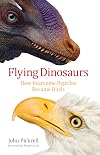
When I started this book after about 25 pages or so I was inclined to set it aside as it didn't seem to be telling me enough that I didn't already know. However, things pick up quickly and Pickrell has a lot to say about the metabolic and structural relationships between dinosaurs and modern birds, the contributions of Chinese researchers, the modern problem of fake fossils, and other issues. Pickrell ends on the note of contemplating how birds were able to survive the great Cretaceous show more extinction and, more interestingly, why small dinosaurs did not. show less
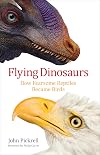
I think if this book is read from the perspective of a dinosaur fan, it would receive a higher rating. However, I was reading it as a bird fan and from that perspective, the book falls short.
It doesn’t actually argue that dinosaurs became birds. It says prehistoric birds existed at the same time as dinosaurs, and concludes it was (some of) those that survived and evolved into modern-day birds after the extinction event that caused all the dinosaurs to die out (including the feathered show more ones).
It does argue, however, that due to a shared ancestor, dinosaurs have more in common with present-day birds than early science and popular culture typically reflects. The information on the bird-like traits and features the dinosaurs had was very interesting and I think would make most dinosaurs-fans enjoy this book a bit more than I did. Even from my bird-focused perspective, it gave a lot of intriguing information. Ultimately though I’m left with more questions than answers (but they are all about birds). show less
It doesn’t actually argue that dinosaurs became birds. It says prehistoric birds existed at the same time as dinosaurs, and concludes it was (some of) those that survived and evolved into modern-day birds after the extinction event that caused all the dinosaurs to die out (including the feathered show more ones).
It does argue, however, that due to a shared ancestor, dinosaurs have more in common with present-day birds than early science and popular culture typically reflects. The information on the bird-like traits and features the dinosaurs had was very interesting and I think would make most dinosaurs-fans enjoy this book a bit more than I did. Even from my bird-focused perspective, it gave a lot of intriguing information. Ultimately though I’m left with more questions than answers (but they are all about birds). show less
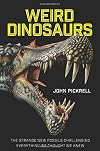
I've been meaning to read this book for awhile, and that might be the one problem here, as, having been published in the middle of the last decade, I have the sense that this work is just on the edge of becoming dated. Take the image of "Spinosaurus" on the cover, which being a large aquatic predator is certainly a poster child for what constitutes "weird" in regards to dinosaurs, However, there is a brisk argument going on since the mid-2010s over just how aquatic this animal really was; show more though Pickrell is certainly aware that it just takes one good fossil to wreck all your theories.
Be that as it may, Pickrell tries to pick his journalistic anecdotes with an eye to illustrating what are still mostly new trends, mostly relating the surprising environments dinosauria was managing to thrive in, and the recognition that such is the overlap between the characteristics of birds and many dinosaurs that they're essentially part of the same family of animals. Still worth reading. show less
Be that as it may, Pickrell tries to pick his journalistic anecdotes with an eye to illustrating what are still mostly new trends, mostly relating the surprising environments dinosauria was managing to thrive in, and the recognition that such is the overlap between the characteristics of birds and many dinosaurs that they're essentially part of the same family of animals. Still worth reading. show less
This is the second of John Pickrell's books I have read, the first being [b:Flying Dinosaurs: How Fearsome Reptiles Became Birds|23093880|Flying Dinosaurs How Fearsome Reptiles Became Birds How Fearsome Reptiles Became Birds|John Pickrell|https://images.gr-assets.com/books/1413131535s/23093880.jpg|41727402]. Weird Dinosaurs is very good and is a well put together overview of the many current digs and the odd and surprising dinosaurs that have been discovered.
Is it any surprise really? They show more were around for millions of years and, just like every other animal on earth, they evolved and adapted to and for the environments of their times. The distribution of fossil dinosaurs revealed in this book ranges from Siberia to Patagonia to Madagascar and the Antarctic. There is a new golden age of fossil finds and dinosaur research that is really expanding our knowledge.
Pickrell, as a science writer, crafts an interesting book for the layman reader or even for someone like myself, who has been reading about dinosaurs for 40 years. I just can't help myself, I have at least a shelf's worth of books just about dinosaurs ranging from college-level texts to popular science books by paleontologists like Jack Horner, Robert Bakker and more. Some childhood fascinations just don't go away. show less
Is it any surprise really? They show more were around for millions of years and, just like every other animal on earth, they evolved and adapted to and for the environments of their times. The distribution of fossil dinosaurs revealed in this book ranges from Siberia to Patagonia to Madagascar and the Antarctic. There is a new golden age of fossil finds and dinosaur research that is really expanding our knowledge.
Pickrell, as a science writer, crafts an interesting book for the layman reader or even for someone like myself, who has been reading about dinosaurs for 40 years. I just can't help myself, I have at least a shelf's worth of books just about dinosaurs ranging from college-level texts to popular science books by paleontologists like Jack Horner, Robert Bakker and more. Some childhood fascinations just don't go away. show less
Lists
Awards

Statistics
- Works
- 5
- Members
- 187
- Popularity
- #116,276
- Rating
- 4.0
- Reviews
- 8
- ISBNs
- 16