

Will Rees (1)
Author of Hypochondria
For other authors named Will Rees, see the disambiguation page.
About the Author
Image credit: Will Rees
Works by Will Rees
Associated Works
Tagged
Common Knowledge
- Gender
- male
- Occupations
- writer
editor - Organizations
- Peninsula Press (co-founder, director)
- Short biography
- First book Hypochondria.
- Places of residence
- London, England, UK
- Associated Place (for map)
- England, UK
Members
Reviews
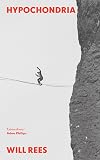
Who better than a confirmed hypochondriac to write Hypochondria? Will Rees has assembled his memoirs and research into a series of essays that have now been reassembled into a book. His experiences are at once pitiable and frightening, as he finds untold millions suffer the same way, daily, for years.
First of all, it turns out hypochondria is really hard to define. They keep moving the goalposts, changing what hypochondria refers to. It used to refer to diseases of the abdomen and rib show more cartilage. Then the DSM, famous for removing the autism spectrum from its catalog of diseases, also removed hypochondria. It is now called hypochondriasis, with two variants having to do with stress and anxiety. Then there are the tests. It seems that hypochondriacs, by definition, have precisely two diseases they worry about. But then, if they are confirmed as hypochondriacs, that’s a third disease, so they can no longer be hypochondriacs. As Rees points out, this makes hypochondria the only illness where the diagnosis is the cure. The bottom line is that a lot of people think they are provably ill, when they are not. They spend their lives trying to find someone to agree with them. Today, we tend to concede hypochondria is a psychological issue, which might or might not have physical attributes. This may or may not be progress.
Rees’ working definition is accessibly reasonable: a condition where in the absence of observable symptoms, the sufferer is obsessed with the idea there is something wrong with him/her. He says today hypochondriacs are sometimes treated with antidepressants, sometimes with cognitive behavioral therapy, but mostly with contempt.
Rees himself had a constant headache he could not shake. His conclusion, after much research – a brain tumor. He was 19. Brain tumors tend to kill within a year, but Rees’ headache went on for many years, with no signs of a tumor. That did not change his own diagnosis however.
Every new symptom had him running to Google, adding to his list of diseases. “Life,” he says “took on the quality of an event.” He was continually preoccupied with the latest symptom, requiring all the resources he could muster.
The book, being a collection of published essays, is all over the place. History shows numerous writers and celebrities suffering from hypochondria. So there are chapters on Nietzsche, Sartre, Kierkegaard, Heidegger, Beaudelaire, Donne, Molière, Kafka, Brontë and on and on. They all suffered it and wrote about it.
Doctors are not much help. In the absence of something real to deal with, they lose patience and interest. Rees found 45% of those who see their doctors for autoimmune diseases are instead diagnosed with hypochondria. Half with endometriosis receive the same misdiagnosis. Years are wasted. More than a quarter of Americans feel they are hypochondriacs.
Hypochondria was the complement to hysteria, in women who suffered all kinds of illnesses and conditions, which their doctors could never find the source of. They prescribed constant rest, no excitement and no work (For a long time, sufferers worried they were made of glass). And the other side of hypochondria, psychosomatic diseases, doesn’t appear in the book until a good 60 pages in. But I was fooled because in the meantime, doctors had changed its name too. It is now somatic symptom disorder, and along with illness anxiety disorder, are the two replacements in the DSM for the perfectly serviceable hypochondria. But just like autism, hypochondria is real, and DSM or no DSM, people will use those terms, because they work.
Psychosomatic conditions are actual illnesses that are brought on by mental states of fear, anxiety or anguish. The mind has the power to bring on disease all by itself. And unlike hypochondria, these diseases are readily identifiable and treated as if they were real. But they can be cured, or turned off, with easing of the worry. So they are very different from hypochondria – but related.
Recovery is of course a mystery. But Rees values the days “when ordinariness is experienced as sort of miracle, when the background conditions that support life become manifest as a source of pleasure.” A day without symptoms is a precious thing. For him, recovery began with an actual condition he had not foreseen. It puzzled his doctor and then several more. There were endless tests, worried looks and no resolution. Then it went away. And Rees stopped looking at himself so intently. The veil lifted and he went on with his life. By his early 30s he was cured of his hypochondria, after more than a decade of suffering.
I liked that Rees found humor in it all. It began with his crack about patients being treated with contempt. But there was more to come. Slavoj Zizek had a doctor saying: “First the good news. You are definitely not a hypochondriac…” Spike Milligan’s tombstone says “I told you I was ill.” And depressive comic Tony Hancock said having hypochondria meant being wrong twice: not having the underlying disease, and having the one illness you were certain you didn’t have.
Hypochondria is a quick read, with far more detail than readers would likely imagine possible. And then it’s over. show less
First of all, it turns out hypochondria is really hard to define. They keep moving the goalposts, changing what hypochondria refers to. It used to refer to diseases of the abdomen and rib show more cartilage. Then the DSM, famous for removing the autism spectrum from its catalog of diseases, also removed hypochondria. It is now called hypochondriasis, with two variants having to do with stress and anxiety. Then there are the tests. It seems that hypochondriacs, by definition, have precisely two diseases they worry about. But then, if they are confirmed as hypochondriacs, that’s a third disease, so they can no longer be hypochondriacs. As Rees points out, this makes hypochondria the only illness where the diagnosis is the cure. The bottom line is that a lot of people think they are provably ill, when they are not. They spend their lives trying to find someone to agree with them. Today, we tend to concede hypochondria is a psychological issue, which might or might not have physical attributes. This may or may not be progress.
Rees’ working definition is accessibly reasonable: a condition where in the absence of observable symptoms, the sufferer is obsessed with the idea there is something wrong with him/her. He says today hypochondriacs are sometimes treated with antidepressants, sometimes with cognitive behavioral therapy, but mostly with contempt.
Rees himself had a constant headache he could not shake. His conclusion, after much research – a brain tumor. He was 19. Brain tumors tend to kill within a year, but Rees’ headache went on for many years, with no signs of a tumor. That did not change his own diagnosis however.
Every new symptom had him running to Google, adding to his list of diseases. “Life,” he says “took on the quality of an event.” He was continually preoccupied with the latest symptom, requiring all the resources he could muster.
The book, being a collection of published essays, is all over the place. History shows numerous writers and celebrities suffering from hypochondria. So there are chapters on Nietzsche, Sartre, Kierkegaard, Heidegger, Beaudelaire, Donne, Molière, Kafka, Brontë and on and on. They all suffered it and wrote about it.
Doctors are not much help. In the absence of something real to deal with, they lose patience and interest. Rees found 45% of those who see their doctors for autoimmune diseases are instead diagnosed with hypochondria. Half with endometriosis receive the same misdiagnosis. Years are wasted. More than a quarter of Americans feel they are hypochondriacs.
Hypochondria was the complement to hysteria, in women who suffered all kinds of illnesses and conditions, which their doctors could never find the source of. They prescribed constant rest, no excitement and no work (For a long time, sufferers worried they were made of glass). And the other side of hypochondria, psychosomatic diseases, doesn’t appear in the book until a good 60 pages in. But I was fooled because in the meantime, doctors had changed its name too. It is now somatic symptom disorder, and along with illness anxiety disorder, are the two replacements in the DSM for the perfectly serviceable hypochondria. But just like autism, hypochondria is real, and DSM or no DSM, people will use those terms, because they work.
Psychosomatic conditions are actual illnesses that are brought on by mental states of fear, anxiety or anguish. The mind has the power to bring on disease all by itself. And unlike hypochondria, these diseases are readily identifiable and treated as if they were real. But they can be cured, or turned off, with easing of the worry. So they are very different from hypochondria – but related.
Recovery is of course a mystery. But Rees values the days “when ordinariness is experienced as sort of miracle, when the background conditions that support life become manifest as a source of pleasure.” A day without symptoms is a precious thing. For him, recovery began with an actual condition he had not foreseen. It puzzled his doctor and then several more. There were endless tests, worried looks and no resolution. Then it went away. And Rees stopped looking at himself so intently. The veil lifted and he went on with his life. By his early 30s he was cured of his hypochondria, after more than a decade of suffering.
I liked that Rees found humor in it all. It began with his crack about patients being treated with contempt. But there was more to come. Slavoj Zizek had a doctor saying: “First the good news. You are definitely not a hypochondriac…” Spike Milligan’s tombstone says “I told you I was ill.” And depressive comic Tony Hancock said having hypochondria meant being wrong twice: not having the underlying disease, and having the one illness you were certain you didn’t have.
Hypochondria is a quick read, with far more detail than readers would likely imagine possible. And then it’s over. show less
If only the whole book had been like the chapter called Emergency it would have gotten 5 stars. But then, of course, it would have been a memoir, not a scholarly investigation. It was thoroughly researched and very academic, hence mostly skimmed by me.
You May Also Like
Associated Authors
Statistics
- Works
- 1
- Also by
- 1
- Members
- 9
- Popularity
- #968,586
- Rating
- 2.9
- Reviews
- 2
- ISBNs
- 3