

Catherine M. Roach
Author of Stripping, Sex, and Popular Culture (Dress, Body, Culture)
About the Author
Catherine M. Roach is Associate Professor of New College, and Affiliated Faculty in Religious Studies and Women's Studies, at the University of Alabama.
Works by Catherine M. Roach
Tagged
Common Knowledge
- Other names
- LaRoche, Catherine
- Birthdate
- 1965-10-19
- Gender
- female
- Education
- Harvard University (MA|1991|PhD|1998|Religion in the Modern West)
University of Ottawa (BA|1987|MA|Religious Studies|1989) - Occupations
- Professor of Gender and Culture Studies
- Organizations
- University of Alabama
- Short biography
- Professor of Gender and Culture Studies in New College at the University of Alabama and spent 2013-14 in residence at the University of Leeds as Fulbright Distinguished Chair.
She is author of Stripping, Sex, and Popular Culture. Her most recent book is Happily Ever After: The Romance Story in Popular Culture, which won a Silver Medal in the Independent Publisher Book Awards. She publishes romance fiction as Catherine LaRoche.
Members
Reviews
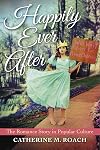
I've never applied my standard response to anthologies (the selections are uneven, with some weak chapters/essays/stories but some gorgeous/insightful/whatever ones) to a monograph, but there's a first time for everything ... and reading this book felt a little like reading an anthology because of its shifts in tone and approach. The shifts are deliberate, part of Roach's experiments in crossing the scholarly-popular and scholar-fan divides, but I found chapters 3 and 4 unreadable (3 mostly show more because I have an academic background and don't see a lot of truth in her stereotype of an academic, an issue that caused dissonance for me as a reader at other points in the book as well, and 4 mostly because it felt so 101 with regard to feminisms/porn/sex/etc. that it bored me ... but again, she's trying to reach a lot of different audiences here). My favorites were the chapters dealing with Roach's experiences as an aspiring romance novelist ("Notes from the Field: Romance Writers of America" and "Notes from the Writing: “Between the Sheets” and Other Moments toward Romance Novelist") and the introductory bit where she lays out the 9 assumptions she sees as central to the genre.
A side note: I'm interested in Roach's reading of romance endings as about reparation of patriarchy: basically, she says the alpha males come, through love, to stop being sexist misogynists at the heroines, which is experienced/envisioned as a sort of 'end of patriarchy.' She mentions but doesn't dive deeply into the problem that this vision leaves the actual huge system of institutions and ideology that we call "the patriarchy" intact, because of course "patriarchy" does not equal "one dude's alphaholery." I wonder about the degree to which this reading is sadly accurate and the degree to which it undersells the more truly feminist/aware/incisive work of different sorts of romance novels. show less
A side note: I'm interested in Roach's reading of romance endings as about reparation of patriarchy: basically, she says the alpha males come, through love, to stop being sexist misogynists at the heroines, which is experienced/envisioned as a sort of 'end of patriarchy.' She mentions but doesn't dive deeply into the problem that this vision leaves the actual huge system of institutions and ideology that we call "the patriarchy" intact, because of course "patriarchy" does not equal "one dude's alphaholery." I wonder about the degree to which this reading is sadly accurate and the degree to which it undersells the more truly feminist/aware/incisive work of different sorts of romance novels. show less
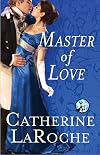
Master of Love is an engaging read featuring characters that are well-drawn and easy to like. The biggest impediment to my enjoyment of this novel was Dom’s insecurity about his intelligence. LaRoche gives further insight about just why he was so touchy about it, but that part still felt a little flat. It seems that a man of his time and rank would have been comfortable about just about any aspect of himself. Pushing that out of mind, I enjoyed the secondary characters and subplots, murder show more attempts, and general drama and shenanigans on the way to the inevitable and ultimate hook-up. LaRoche does a fine job of transporting readers back in time, and illustrating how difficult it was for a woman to maintain a household without the help of a man. Callista eventually gets the help of a powerful man, but it’s offered to her via marriage or her becoming a mistress. Had she not had that help, her life would have taken a severely different turn. I also loved that books were a prominent focus in this charming historical romance. Viva la bluestocking! Just one thing, though, this title is only being released as an e-book so far. Recommended. show less

Charming, but the style was a little anachronistic for my taste, even though I quite approved of the modern lady protagonist. I liked that the sexually adventurous woman was not portrayed as an evil, scheming bitch since so many romances use virginity or lack of experience as a stand-in for moral goodness. Also, female friendships that aren't catty or competitive FTW. The introduction of the second suspenseful bit stretched credulity more than a bit, focusing on one of the other would have show more been more effective. As a whole, it was competently written and well paced and while it didn't blow my mind, I'll look out for the next book. show less
This book...oh this book. Let me put this out there first and foremost--LaRoche has her heroine, the very prim and proper Miss Callista Higginbotham, come up with not only the Dewey Decimal System (because it makes more sense then alphabetizing alone!) but also the card catalog system. Which I admit to missing quite a bit (but that's a discussion for another day). Its 1846. The Dewey Decimal System is created by Melvil Dewey in 1876. I'm going to assume from here on out that Melvil saw the show more system at the Rexton residence and stole the idea--it seems that happens a lot to this family!
This book went on much longer than it should have. While I admit that I am fond of books where the hero is the one pushing for the heroine to 'make an honest man out of him', the entire situation was so contrived that it annoyed me moreso than anything else. Worse, once that was taken care of there's yet ANOTHER obstacle--that comes out of the middle of nowhere I might add--just to drive it home to the heroine that she must love him.
LaRoche turns the whole 'dumb blonde' thing upside down by making Rexton too pretty to have a thought in his head, but I couldn't help but think that every time he said that being a viscount meant having the power to do whatever he wanted he was being disingenuous. If that was true then why didn't he just come out as brilliant clever boy that he was and damn the consequences 'cause he's a viscount? Why make such a big deal about no one taking him seriously when no less then half a dozen people close to him do?
Meanwhile Callista clearly did not use the brains she was given either. She vacillates between understanding the rules that society plays at and shock when those same rules are thrust in her face. Society will--and has!--overlooked many a thing when a girl is rich, beautiful and has a handsome dowry, but Callista only had one of those things (beauty) and attempted to obscure that even. Everybody knows that being in the home of an unwed (or even wed for that matter) gentleman you're not related to unchaperoned is risking censure. Why did she think that being in TRADE on top of that would save her from ruin?
The redeeming feature for this book was basically the banter between the two leads. Nothing like a couple of intelligent folks trading barbs with each other. I also found Rexton's epiphany that he could marry Callista if he wanted (because he's a viscount so it has to count for something!) and his adorably exuberant proposal (he smacks her bottom so she would wake up and then commences to describe the wedding they needed to plan right away).
LaRoche writes in an engaging voice and many of the secondary characters (such as Great-Aunt Mildred) are delightful. Its just the common sense quota was so far below understandable I found myself constantly being taken out of the story (who goes alone to a creeper's apartments for a business deal? Callista does!) and wondering how any of these characters managed to survive. show less
This book went on much longer than it should have. While I admit that I am fond of books where the hero is the one pushing for the heroine to 'make an honest man out of him', the entire situation was so contrived that it annoyed me moreso than anything else. Worse, once that was taken care of there's yet ANOTHER obstacle--that comes out of the middle of nowhere I might add--just to drive it home to the heroine that she must love him.
LaRoche turns the whole 'dumb blonde' thing upside down by making Rexton too pretty to have a thought in his head, but I couldn't help but think that every time he said that being a viscount meant having the power to do whatever he wanted he was being disingenuous. If that was true then why didn't he just come out as brilliant clever boy that he was and damn the consequences 'cause he's a viscount? Why make such a big deal about no one taking him seriously when no less then half a dozen people close to him do?
Meanwhile Callista clearly did not use the brains she was given either. She vacillates between understanding the rules that society plays at and shock when those same rules are thrust in her face. Society will--and has!--overlooked many a thing when a girl is rich, beautiful and has a handsome dowry, but Callista only had one of those things (beauty) and attempted to obscure that even. Everybody knows that being in the home of an unwed (or even wed for that matter) gentleman you're not related to unchaperoned is risking censure. Why did she think that being in TRADE on top of that would save her from ruin?
The redeeming feature for this book was basically the banter between the two leads. Nothing like a couple of intelligent folks trading barbs with each other. I also found Rexton's epiphany that he could marry Callista if he wanted (because he's a viscount so it has to count for something!) and his adorably exuberant proposal (he smacks her bottom so she would wake up and then commences to describe the wedding they needed to plan right away).
LaRoche writes in an engaging voice and many of the secondary characters (such as Great-Aunt Mildred) are delightful. Its just the common sense quota was so far below understandable I found myself constantly being taken out of the story (who goes alone to a creeper's apartments for a business deal? Callista does!) and wondering how any of these characters managed to survive. show less
Lists
Awards

Statistics
- Works
- 6
- Members
- 103
- Popularity
- #185,854
- Rating
- 3.5
- Reviews
- 11
- ISBNs
- 18