
Samuel Rocca
Author of The Forts of Judaea 168 BC-AD 73: From the Maccabees to the Fall of Masada
About the Author
Samuel Rocca, born in 1968, earned his PhD in 2006. Since 2000, he worked as a college and high school teacher at The Neri Bloomfield College of Design Teacher Training, Haifa; at the Talpiot College, Tel Aviv since 2005, and at the Faculty of Architecture at the Judaea and Samaria College, Ariel show more since 2006. show less
Works by Samuel Rocca
The Forts of Judaea 168 BC-AD 73: From the Maccabees to the Fall of Masada (2008) 64 copies, 1 review
La brigata ebraica: e le unità ebraiche nell'esercito britannico durante la Seconda Guerra Mondiale (2012) 2 copies, 1 review
Associated Works
Flavius Josephus (Supplements to the Journal for the Study of Judaism) (2011) — Contributor — 13 copies
Making History: Josephus And Historical Method (Supplements to the Journal for the Study of Judaism) (2006) — Contributor — 10 copies
Tagged
Common Knowledge
- Canonical name
- Rocca, Samuel
- Gender
- male
- Map Location
- Israel
Members
Reviews
The Forts of Judaea 168 BC-AD 73: From the Maccabees to the Fall of Masada (Fortress) by Samuel Rocca
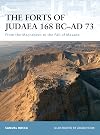
While this is a more workmanlike number in the series, what Rocca does well is to put Herod (and his immediate predecessors) into their context in the late Hellenistic world. Also, besides the usual good artistic depictions of these fortifications in their prime, one has to admit that some very nice aerial photography is provided.
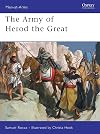
Herod's army is an important source for the unsettling years of the late Republic and early Principate. Herod's ally, Mark Antony, held his loyalty during the period. Interestingly enough, Herod's army was a regional multi--national power, formed from a mix of Jewish, Greek, and Roman influences. We wish more could be known, especially given the reluctance in the period to produce visual evidence, but this little volume summarizes well most of the salient points, and as with all the military show more texts from Osprey, includes artistic representations of military gear and participants. show less
La Brigata Ebraica e le unità ebraiche nell'esercito britannico durante la Seconda Guerra Mondiale by Samuel Rocca

Durante la seconda guerra mondiale, non meno di 35.000 ebrei provenienti dalla Palestina, allora sotto mandato inglese, servirono nell'esercito britannico come volontari. Verso la fine della guerra, nel settembre 1944, venne creata una Brigata Ebraica combattente, che servì sul fronte italiano. Intanto volontari ebrei provenienti dalla Palestina Mandataria servivano nelle piu' disparate unita' dell'esercito inglese, in corpi non combattenti come pionieri (Army Pioneer Corps), trasporti show more (Royal Army Service Corps), genio (Royal Engineers), ed unita' combattenti come l'artiglieria (Royal Artillery), aviazione (Royal Air Force), e marina (Roya! Navy), e naturalmente la sanità' (Royal Army Medicai Corps). Non meno di 3500 donne servirono come ausiliarie nel ATS (Auxiliary Terntcriat Service) in vari compiti. I volontari ebrei della Palestina furono presenti in tutti i teatri bellici in cui combatte' l'esercito britannico, dalla Francia nel 1940, Grecia e Creta nel 1941, i deserti dell'Egitto e della Cirenaica dal 1940 fino al 1943, Etiopia nel 1941, ed dal 1943 al 1945. Vari dottori si trovarono ad operare in India, ed alcuni piloti volarono missioni di combattimento contro i Giapponesi in Birmania. Inoltre vennero create varie unita' speciali, tra cui il Commando 51, lo Special Interrogation Group (SIG), che agiva oltre le linee dell'Afrika Korps, e vari paracaduti sti agirono per conto dello Special Operation Executive nei Balcani, Italia, e in vari paesi del centro Europa. Questa e' la loro storia. show less
Aug 3, 2013 (Edited)Italian
You May Also Like
Associated Authors
Statistics
- Works
- 6
- Also by
- 2
- Members
- 171
- Popularity
- #124,898
- Rating
- 3.9
- Reviews
- 3
- ISBNs
- 14
- Languages
- 1