
Patrick Ryan (2)
Author of Buckeye
For other authors named Patrick Ryan, see the disambiguation page.
Patrick Ryan (2) has been aliased into P. E. Ryan.
Works by Patrick Ryan
Works have been aliased into P. E. Ryan.
So Much for Artemis 1 copy
Associated Works
Works have been aliased into P. E. Ryan.
Men on Men 2000: Best New Gay Fiction for the Millennium (2000) — Contributor — 160 copies, 2 reviews
Tagged
Common Knowledge
- Gender
- male
Members
Reviews
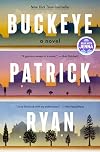
It's May 1945 in the small fictional Ohio town of Bonhomie, and Germany has just surrendered to the Allies. Margaret Salt, whose husband Felix is still serving in the Navy in the Pacific, walks into the local hardware store where Cal Jenkins works and demands he turn on the radio. When the news of victory reaches them, Margaret grabs Cal by the shoulders and kisses him — impulsive, celebratory, not remotely sexy — and Cal, a good husband and new father, finds he likes it. That single show more moment radiates outward through sixty years of American history and two families.
Cal was born with one leg two inches shorter than the other — two inches that kept him out of World War II and put him in Margaret's path. His wife Becky discovered as a child that she can communicate with the dead, a gift that will become a strange comfort during the Vietnam War. Margaret grew up in an orphanage, abandoned as a baby, and carries that wound everywhere. Felix, her husband, is a closeted gay man who served on a Navy cargo ship and met the love of his life — a fellow sailor who quoted Thomas Aquinas — losing him to the war in a way that can never be acknowledged. The novel follows all four through their marriages, mistakes, secrets, and the children who inherit the fallout, all the way through Vietnam and into the 1980s.
[May contain spoilers]
The brief affair between Cal and Margaret produces a child that is obviously not Felix's — a secret that strains and reshapes both marriages across decades. Felix's decades of silent grief over the man he loved and lost at sea is the emotional core of the novel — nothing in his marriage is cruel, just insufficient, and Ryan treats his sexuality with deep tenderness rather than tragedy. The next generation of sons must face Vietnam, and the novel expands to include their experiences and how war ripples forward through families. The ending finds Becky and Cal finally taking the honeymoon they postponed because of the war — a quietly hopeful rather than dramatically resolved conclusion. The final meditation on time is devastating and beautiful.
What I think: This is quiet, devastating, multi-generational American literary fiction with real sweep and extraordinary compassion for all its flawed characters. Felix's storyline alone is worth the whole book. The deliberate pace might try your patience slightly — some reviewers felt the final decades are rushed after spending so long in the early years. But the emotional gut-punch is absolutely there. show less
Cal was born with one leg two inches shorter than the other — two inches that kept him out of World War II and put him in Margaret's path. His wife Becky discovered as a child that she can communicate with the dead, a gift that will become a strange comfort during the Vietnam War. Margaret grew up in an orphanage, abandoned as a baby, and carries that wound everywhere. Felix, her husband, is a closeted gay man who served on a Navy cargo ship and met the love of his life — a fellow sailor who quoted Thomas Aquinas — losing him to the war in a way that can never be acknowledged. The novel follows all four through their marriages, mistakes, secrets, and the children who inherit the fallout, all the way through Vietnam and into the 1980s.
[May contain spoilers]
The brief affair between Cal and Margaret produces a child that is obviously not Felix's — a secret that strains and reshapes both marriages across decades. Felix's decades of silent grief over the man he loved and lost at sea is the emotional core of the novel — nothing in his marriage is cruel, just insufficient, and Ryan treats his sexuality with deep tenderness rather than tragedy. The next generation of sons must face Vietnam, and the novel expands to include their experiences and how war ripples forward through families. The ending finds Becky and Cal finally taking the honeymoon they postponed because of the war — a quietly hopeful rather than dramatically resolved conclusion. The final meditation on time is devastating and beautiful.
What I think: This is quiet, devastating, multi-generational American literary fiction with real sweep and extraordinary compassion for all its flawed characters. Felix's storyline alone is worth the whole book. The deliberate pace might try your patience slightly — some reviewers felt the final decades are rushed after spending so long in the early years. But the emotional gut-punch is absolutely there. show less
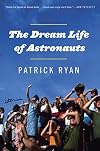
This is a collection of nine somewhat intertwined short stories, set around Cape Canaveral, Florida around the heyday of the space program. Ryan sticks close to reality, while moving and living through its fringes just enough to provide a sense of exploration but with the occasional thud of a reality-check.
Ryan has an easy touch. These are not lighthearted stories, nor are they heavy. But they do get to the soul of the characters involved. The title story traces an encounter between a gay show more teenager, Frankie, and an astronaut, Clark, who hasn’t actually flown a space mission. Clark is attracted to Frankie, but not in the way Frankie would like, and he can’t really deliver on his astronaut status either — reality disappoints.
But Frankie bears on, and he reappears in another, interlinked story, Earth, Mostly. Frankie’s eccentricities don’t die, and he lives on to carry the torch for more slightly endearing, slightly disturbing eccentricities in that story.
These are stories of people who live next to, but not in, the spotlight, in this case, the spotlight of the space race. They inspire the kind of empathy and compassion that levels us all out.
It’s a good book for getting in touch with the core, basic human eccentricities that actually put us all in the same boat. The things that make us weird are the things that make us normal. show less
Ryan has an easy touch. These are not lighthearted stories, nor are they heavy. But they do get to the soul of the characters involved. The title story traces an encounter between a gay show more teenager, Frankie, and an astronaut, Clark, who hasn’t actually flown a space mission. Clark is attracted to Frankie, but not in the way Frankie would like, and he can’t really deliver on his astronaut status either — reality disappoints.
But Frankie bears on, and he reappears in another, interlinked story, Earth, Mostly. Frankie’s eccentricities don’t die, and he lives on to carry the torch for more slightly endearing, slightly disturbing eccentricities in that story.
These are stories of people who live next to, but not in, the spotlight, in this case, the spotlight of the space race. They inspire the kind of empathy and compassion that levels us all out.
It’s a good book for getting in touch with the core, basic human eccentricities that actually put us all in the same boat. The things that make us weird are the things that make us normal. show less
Buckeye by Patrick Ryan is a family saga set in small town Bonhomie, Ohio about the lives of Cal Jenkins and his eventual wife Becky and Margaret Salt and her eventual husband Felix. Cal is born in 1920 with one leg shorter than the other making him ineligible to serve in World War II, while Felix serves in the Navy on a cargo ship. Becky realises her gift of mediumship during the war and Margaret is still troubled by her upbringing as a foundling in an orphanage.
A novel that examines these show more four lives and the families they create in detail wouldn't be my usual reading choice but there was something about the blurb and early praise from the likes of Tom Hanks ("I've been yearning for a novel that connects the American generations who dealt with our two Wars - one of Omaha Beach, the other of the la Drang Valley. Buckeye is that book, and it soars") that drew me in and I'm so glad it did.
The author made me care deeply about each of the characters as they went about their lives, bearing witness to their flaws and insecurities, following their struggles and yearning for their inner peace and happiness.
There were plenty of daily references to suburban life in this era and I especially loved the mention of a mailbox bookclub where four older men enjoyed reading and discussing westerns.
"They agreed ahead of time on what book they would read - often a reread - and when there was only the one copy available, they worked out a system wherein each of them would get three days with it, then tape a nickel inside the book's cover and leave it in their mailbox. Skip would then collect the nickel and carry the book on his bicycle over to the next house, where he would leave it in the mailbox and put the flag up." Page 286
Brilliant! My favourite character arc was that of Cal's alcoholic father who suffered from PTSD related to his service in WWI. A hoarder living on his own, he had a turbulent relationship with his son which came into focus after a near tragedy.
Ryan includes many touching and amusing moments to offset the struggles of our characters, like Becky asking her father-in-law his thoughts on the book Death on the Nile. He said he hadn't especially enjoyed it:
"But that Poy-Rot is in the right business." Page 336
The book spans a period of 60 years and Ryan takes us right through to events in the Vietnam War and in doing so shines a light on the complex effects war has on each generation of characters. Also under the author's microscope is the marriage between Cal and Becky and Margaret and Felix.
At the end of Buckeye, there didn't appear to be a logical conclusion reached with any of the four main characters, rather it felt as though 'this is where the reader will leave the characters.'
"What is it about time that confounds us? We spend it. We save it. We while it away. We waste it. We kill it. We complain about not having enough of it, or about having too much of it on our hands. We regret what we've done with it. We give it away. We want it back. We say 'time and again' when something is bothering us and 'it's time' when something is supposed to end. ...all we should ever want of time is more of it." Page 430
Buckeye by Patrick Ryan is a moving historical family saga set in the American midwest about ambition, love, longing, marriage, parenthood, service, sacrifice, loss, grief, forgiveness, guilt and survival.
Highly recommended!
* Copy courtesy of Bloomsbury * show less
A novel that examines these show more four lives and the families they create in detail wouldn't be my usual reading choice but there was something about the blurb and early praise from the likes of Tom Hanks ("I've been yearning for a novel that connects the American generations who dealt with our two Wars - one of Omaha Beach, the other of the la Drang Valley. Buckeye is that book, and it soars") that drew me in and I'm so glad it did.
The author made me care deeply about each of the characters as they went about their lives, bearing witness to their flaws and insecurities, following their struggles and yearning for their inner peace and happiness.
There were plenty of daily references to suburban life in this era and I especially loved the mention of a mailbox bookclub where four older men enjoyed reading and discussing westerns.
"They agreed ahead of time on what book they would read - often a reread - and when there was only the one copy available, they worked out a system wherein each of them would get three days with it, then tape a nickel inside the book's cover and leave it in their mailbox. Skip would then collect the nickel and carry the book on his bicycle over to the next house, where he would leave it in the mailbox and put the flag up." Page 286
Brilliant! My favourite character arc was that of Cal's alcoholic father who suffered from PTSD related to his service in WWI. A hoarder living on his own, he had a turbulent relationship with his son which came into focus after a near tragedy.
Ryan includes many touching and amusing moments to offset the struggles of our characters, like Becky asking her father-in-law his thoughts on the book Death on the Nile. He said he hadn't especially enjoyed it:
"But that Poy-Rot is in the right business." Page 336
The book spans a period of 60 years and Ryan takes us right through to events in the Vietnam War and in doing so shines a light on the complex effects war has on each generation of characters. Also under the author's microscope is the marriage between Cal and Becky and Margaret and Felix.
At the end of Buckeye, there didn't appear to be a logical conclusion reached with any of the four main characters, rather it felt as though 'this is where the reader will leave the characters.'
"What is it about time that confounds us? We spend it. We save it. We while it away. We waste it. We kill it. We complain about not having enough of it, or about having too much of it on our hands. We regret what we've done with it. We give it away. We want it back. We say 'time and again' when something is bothering us and 'it's time' when something is supposed to end. ...all we should ever want of time is more of it." Page 430
Buckeye by Patrick Ryan is a moving historical family saga set in the American midwest about ambition, love, longing, marriage, parenthood, service, sacrifice, loss, grief, forgiveness, guilt and survival.
Highly recommended!
* Copy courtesy of Bloomsbury * show less
The wisdom that comes with age was needling, he found, because it brought the clarity of hindsight without the means to change anything. from Buckeye by Patrick Ryan
I loved this novel, its pages filled with flawed people who hope for the best but cause deep damage, people who learn to transcend pain and become a support for each other in darkest times.
The story of two families arcs across the twentieth century, encompassing three generations. All the 20th c touchpoints are referenced. It was show more a time of secrets and closeting, when governments sent young men into brutal wars. When women had limited options.
It is set in an intimate small Ohio town and in the city of Columbus with its anonymity and sparkling department stores.
Tom, nicknamed Buckeye for his pockets filled with the nut from his backyard tree, is the crux of the story. His mother abandoned the family when he was a child, and not even his father knew that she had likewise been abandoned when a child. Tom makes friends with an older boy, Skip, whose dad works in his in-law’s hardware store. Skip’s mother freely shares her gift of connecting to the dead, hoping to bring comfort to the grieving.
A secret liaison born of need alters the future.
The things we love tell us what we are. Thomas Aquinas quoted in Buckeye by Patrick Ryan
For all the pain these characters cause each other, there is great forgiveness and love. We realize we should never waste a moment of our brief life, that forgiveness allows us to flourish. We build our life every day, have a chance to make amends every day. We are a work in process.
Thanks to the publisher for a free book through NetGalley. show less
I loved this novel, its pages filled with flawed people who hope for the best but cause deep damage, people who learn to transcend pain and become a support for each other in darkest times.
The story of two families arcs across the twentieth century, encompassing three generations. All the 20th c touchpoints are referenced. It was show more a time of secrets and closeting, when governments sent young men into brutal wars. When women had limited options.
It is set in an intimate small Ohio town and in the city of Columbus with its anonymity and sparkling department stores.
Tom, nicknamed Buckeye for his pockets filled with the nut from his backyard tree, is the crux of the story. His mother abandoned the family when he was a child, and not even his father knew that she had likewise been abandoned when a child. Tom makes friends with an older boy, Skip, whose dad works in his in-law’s hardware store. Skip’s mother freely shares her gift of connecting to the dead, hoping to bring comfort to the grieving.
A secret liaison born of need alters the future.
The things we love tell us what we are. Thomas Aquinas quoted in Buckeye by Patrick Ryan
For all the pain these characters cause each other, there is great forgiveness and love. We realize we should never waste a moment of our brief life, that forgiveness allows us to flourish. We build our life every day, have a chance to make amends every day. We are a work in process.
Thanks to the publisher for a free book through NetGalley. show less
Lists
Awards


You May Also Like
Associated Authors
Statistics
- Works
- 5
- Also by
- 5
- Members
- 1,329
- Popularity
- #19,359
- Rating
- 4.0
- Reviews
- 58
- ISBNs
- 99
- Languages
- 3