
Joe Schuster
Author of The Might Have Been: A Novel
Works by Joe Schuster
Tagged
Common Knowledge
- Canonical name
- Schuster, Joe
- Legal name
- Schuster, Joseph M.
- Gender
- male
Members
Reviews
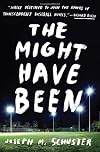
The release of the Might-Have-Been is timed to coincide with the opening of the 2012 MLB season. It is not about the big leagues. It is about life in the dozens of small towns that support professional baseball known as the minor leagues. Young men, locals and outsiders, descend upon these towns to show the world that they have what it takes to be heroes. And while it is about the game, Joseph Schuster's debut novel explores the bewildering, sometimes pitiless consequences of chance and the show more choices we make.
The central character, Edward Everett Yates, was made to be a baseball player. He has the right size and power to succeed but speed makes him exceptional. He can beat difficult throws to first, making them singles. He can steal bases. He can rundown balls in the outfield that seem destined to be hits. He was made to be a baseball player but he might have been other things, a loving husband, a doting father, a natural salesman, a success. But Yates abandons his best opportunities for these other roles to become a major leaguer.
Yates’ draw to baseball is compulsive. His inability to leave the game is almost a phobia. He is paralyzed, petrified in his resolve to make himself a success in the game. Others are able to move on when they fail to break through. Yates packs his bags for the next minor league town. He is frozen within an insular world populated mostly by young men who hardly are more than boys. Can a man progress, having committed himself to a child’s dream of being a hero? It seems unlikely without life affording some grace to those so afflicted.
Schuster’s connection between this kind of baseball mania and mental illness is overt and we see what can happen to men weaker than Yates. The game is cruel to anyone with less than extraordinary ability, extraordinary good fortune and a strong character. Most must find a way to live outside of sport after failing to grasp their dream. Some cannot accept being turned away by the thing they love.
All of his characters are flawed, yet, Schuster treats most of them quietly and with an esteem that makes even some of the more implausible events and coincidences seem real. Life is like that, filled with the mundane, the fantastical moments of chance, brutal punishments and even sublimity. The Might Have Been is written by a mature writer who loves his chosen world and should win a faithful audience of mature readers. show less
The central character, Edward Everett Yates, was made to be a baseball player. He has the right size and power to succeed but speed makes him exceptional. He can beat difficult throws to first, making them singles. He can steal bases. He can rundown balls in the outfield that seem destined to be hits. He was made to be a baseball player but he might have been other things, a loving husband, a doting father, a natural salesman, a success. But Yates abandons his best opportunities for these other roles to become a major leaguer.
Yates’ draw to baseball is compulsive. His inability to leave the game is almost a phobia. He is paralyzed, petrified in his resolve to make himself a success in the game. Others are able to move on when they fail to break through. Yates packs his bags for the next minor league town. He is frozen within an insular world populated mostly by young men who hardly are more than boys. Can a man progress, having committed himself to a child’s dream of being a hero? It seems unlikely without life affording some grace to those so afflicted.
Schuster’s connection between this kind of baseball mania and mental illness is overt and we see what can happen to men weaker than Yates. The game is cruel to anyone with less than extraordinary ability, extraordinary good fortune and a strong character. Most must find a way to live outside of sport after failing to grasp their dream. Some cannot accept being turned away by the thing they love.
All of his characters are flawed, yet, Schuster treats most of them quietly and with an esteem that makes even some of the more implausible events and coincidences seem real. Life is like that, filled with the mundane, the fantastical moments of chance, brutal punishments and even sublimity. The Might Have Been is written by a mature writer who loves his chosen world and should win a faithful audience of mature readers. show less
 This review was written for LibraryThing Early Reviewers.
Rating: 3.75* of five
The Publisher Says: For Edward Everett Yates, split seconds matter: the precise timing of hitting a low outside pitch, of stealing a base, of running down a fly ball. After a decade playing in the minor leagues—years after most of his peers have given up—he’s still patiently waiting for his chance at the majors. Then one day he gets called up to the St. Louis Cardinals, and finally the future he wanted unfolds before him.
But one more split second changes show more everything: In what should have been the game of his life, he sustains a devastating knee injury, which destroys his professional career.
Thirty years later, after sacrificing so many opportunities—a lucrative job, relationships with women who loved him, even the chance for a family—Edward Everett is barely hanging on as the manager of a minor league baseball team, still grappling with regret over the choices he made and the life he almost had. Then he encounters two players—one brilliant but undisciplined, the other eager but unremarkable—who show him that his greatest contribution may come in the last place he ever expected.
Full of passion, ambition, and possibility, The Might-Have-Been maps the profound and unpredictable moments that change our lives forever, and the irresistible power of a second chance.
My Review: Is it a function of aging that one becomes more and more interested in stories about the roads not taken, the chances unchanced, the opportunities unseized? Maybe it is. Maybe there is nothing more interesting ahead in life than the other paths left behind.
That is the most depressing, miserable, sad, and most of all untrue, sentence I've ever written. And this novel explains why.
I'm a disabled fifty*mumble* year old who lives mostly in cyberworld because it hurts too much to do things like sit in chairs and ride in cars. Gawd...doesn't that sound horrible? But you know something...it's not. It's a road I'm traveling, and it's got wonderful rewards...how many busy, active people bustling around their "real" lives have the time or the ability to make good friends on every continent of the planet, maintain and grow those friendships, come to care a lot for those friends?...so I don't feel deprived, or "less than," or pitiable.
This book is about a man with functioning body parts and no cognitive impairments who can't break free of the deeply narcotic dream of his youth, to excel at one and only one thing. It is unbearably sad. No amount of proof to the contrary can fill the hole in him that's labeled "FailureMan." No amount of life lived feels real enough to round the stabbing edges of The Moment It Changed.
How deeply, deeply sad and pathetic it is to know that there are millions if not billions like him, people for whom the present is a shadowplay and The Past is the only real thing. It's not a question of moving on from past pain, a phrase I detest for its implicit judgment of the hearer. It's a case of building something from the rocks and bricks and dirt around you, something you want to look at and live in, even though the rocks and bricks and dirt around you are the ruins of something you once had, or dreamed of having.
That's not "moving on." That's moving in to the home you've made from the mess the world makes of all of our dreams. It's what Schuster, by anti-model, shows us is so vitally necessary.
I'd be remiss if I didn't mention that the baseball setting of the novel made me smile every page or two. The stakes, for my baseball-fan self, were so much sharper for being set in a world I love.
This book was a LibraryThing Early Reviewers win. show less
The Publisher Says: For Edward Everett Yates, split seconds matter: the precise timing of hitting a low outside pitch, of stealing a base, of running down a fly ball. After a decade playing in the minor leagues—years after most of his peers have given up—he’s still patiently waiting for his chance at the majors. Then one day he gets called up to the St. Louis Cardinals, and finally the future he wanted unfolds before him.
But one more split second changes show more everything: In what should have been the game of his life, he sustains a devastating knee injury, which destroys his professional career.
Thirty years later, after sacrificing so many opportunities—a lucrative job, relationships with women who loved him, even the chance for a family—Edward Everett is barely hanging on as the manager of a minor league baseball team, still grappling with regret over the choices he made and the life he almost had. Then he encounters two players—one brilliant but undisciplined, the other eager but unremarkable—who show him that his greatest contribution may come in the last place he ever expected.
Full of passion, ambition, and possibility, The Might-Have-Been maps the profound and unpredictable moments that change our lives forever, and the irresistible power of a second chance.
My Review: Is it a function of aging that one becomes more and more interested in stories about the roads not taken, the chances unchanced, the opportunities unseized? Maybe it is. Maybe there is nothing more interesting ahead in life than the other paths left behind.
That is the most depressing, miserable, sad, and most of all untrue, sentence I've ever written. And this novel explains why.
I'm a disabled fifty*mumble* year old who lives mostly in cyberworld because it hurts too much to do things like sit in chairs and ride in cars. Gawd...doesn't that sound horrible? But you know something...it's not. It's a road I'm traveling, and it's got wonderful rewards...how many busy, active people bustling around their "real" lives have the time or the ability to make good friends on every continent of the planet, maintain and grow those friendships, come to care a lot for those friends?...so I don't feel deprived, or "less than," or pitiable.
This book is about a man with functioning body parts and no cognitive impairments who can't break free of the deeply narcotic dream of his youth, to excel at one and only one thing. It is unbearably sad. No amount of proof to the contrary can fill the hole in him that's labeled "FailureMan." No amount of life lived feels real enough to round the stabbing edges of The Moment It Changed.
How deeply, deeply sad and pathetic it is to know that there are millions if not billions like him, people for whom the present is a shadowplay and The Past is the only real thing. It's not a question of moving on from past pain, a phrase I detest for its implicit judgment of the hearer. It's a case of building something from the rocks and bricks and dirt around you, something you want to look at and live in, even though the rocks and bricks and dirt around you are the ruins of something you once had, or dreamed of having.
That's not "moving on." That's moving in to the home you've made from the mess the world makes of all of our dreams. It's what Schuster, by anti-model, shows us is so vitally necessary.
I'd be remiss if I didn't mention that the baseball setting of the novel made me smile every page or two. The stakes, for my baseball-fan self, were so much sharper for being set in a world I love.
This book was a LibraryThing Early Reviewers win. show less
This review was written for LibraryThing Early Reviewers.I've loved baseball ever since my father taught me to keep score in the upper deck bleachers of Tiger Stadium. I love it in all of its forms from the World Series to MLB Spring Training to the Minor Leagues to college ball and the Cap Cod League down to Little League. I've been there for it all but, as a little girl in the 1960's, never played an inning of organized ball. I can't imagine if the game were taken away. Joe Schuster's "The Might Have Been" imagines far worse for his main show more character, Edward Everett Yates - a single hitting, hungry outfielder, who is irreparably injured during his proverbial month-long 'cup of coffee' in the majors. After following his youthful struggles to deal (or not) with his foreshortened dreams, the story picks up some 33 years, 1000s of games and two marriages later, to find an aging minor league coach, still clutching mightily to his connection with The Game.
You don't really care for baseball, you say? Oh, but this is so much more! Like the best of stories, "The Might Have Been" transcends its diamond-shaped backdrop to reflect on universal themes of dedication (misplaced or not) to one's dreams, regret, ambition, and the helplessness of the little guy in the face of Big Business. Who hasn't faced disappointment and frustration at some point? As by necessity must, the numbers who excel at the highest level of any 'game' are tiny microcosm of the whole. What happens to the ones that can move on, and to those who cannot? Schuster answers with major and minor characters remrkably portrayed with the beautiful details that tell all with economy of descriptive space.
Schuster teaches writing at Webster University, has written many magazine articles (including on baseball) and multiple short stories. His facility with shorter fiction tells in his delightful set pieces throughout his book. To say this is a 'debut' novel in light of this body of work may be a misnomer. Schuster has certainly proven he can write well and entertainingly in the longer form. show less
You don't really care for baseball, you say? Oh, but this is so much more! Like the best of stories, "The Might Have Been" transcends its diamond-shaped backdrop to reflect on universal themes of dedication (misplaced or not) to one's dreams, regret, ambition, and the helplessness of the little guy in the face of Big Business. Who hasn't faced disappointment and frustration at some point? As by necessity must, the numbers who excel at the highest level of any 'game' are tiny microcosm of the whole. What happens to the ones that can move on, and to those who cannot? Schuster answers with major and minor characters remrkably portrayed with the beautiful details that tell all with economy of descriptive space.
Schuster teaches writing at Webster University, has written many magazine articles (including on baseball) and multiple short stories. His facility with shorter fiction tells in his delightful set pieces throughout his book. To say this is a 'debut' novel in light of this body of work may be a misnomer. Schuster has certainly proven he can write well and entertainingly in the longer form. show less
This review was written for LibraryThing Early Reviewers.Baseball might be America's game but it has always struck me as about as exciting as watching the grass grow. So it might seem odd that I do, in fact, cheerfully read books set in the baseball world. I don't think the game is a metaphor for life or anything so deep like others before me do. I am just fascinated by the fact that so many young boys will spend countless years of their lives chasing the dream of professional baseball, weathering disappointment after disappointment, coming close show more but missing that brass ring time after time. And baseball seems a crueler mistress than other professional sports, at least from my outsider's perspective with all the farm teams and different levels. Yet these boys (and they generally are boys)persevere.
Edward Everett Yates, the main character in Joseph Schuster's debut novel is one such boy. He has dreamed all his life of playing in The Show and he has the talent to keep plugging along through the minors, waiting for his moment, that moment when he gets the call. And unlike for so many, it does eventually come. He gets called up to play for the St. Louis Cardinals. And it seems that his brass ring is well in hand. His first game he hits a sacrifice bunt to advance runners. But in his second game, he is having the game of his life despite terrible weather threatening to end the game when in one split second, his decision to climb the fence to catch a ball tears asunder everything for which he's worked so hard. Edward Everett destroys his knee and his future in the big leagues. But he can't quite let go of the game that was to have determined the arc of his entire life even though no team is interested in him anymore. And really, even though 30 years on he is a minor league manager rather than a player retired from the majors, baseball has in fact defined his lonely life.
Told from three very different times in Edward Everett's life, this novel highlights the role that chance and luck play in everyone's life. But it also shows the ways in which our own choices play every bit as big a role. Edward Everett allows his dream to overshadow everything else in his life. His relationships with women, up to an including marriage, have all failed. He has no family beyond his epileptic dog. He not only had no career as a major league ball player, but even as a coach/manager, he is languishing in the minors, Single A even, trying to groom kids who have some talent but are unlikable or kids who are nice in every way but fall short talent-wise, to succeed in the game that has caused Edward Everett himself to turn away from anyone or anything that might have offered him another path or a different, perhaps more fulfilling and certainly less lonely, life.
The lack of connection between Edward Everett and any of the other characters is actually rather sad. His character in his later years is a portrait of a pitiful, might-have-been, just as the title suggests. He is so overwhelmed with regret for the life that he never had a chance to live that he hasn't bothered to live the life he has either. While the tone throughout the novel is melancholic thanks to Edward Everett's numerous lost opportunities, there's also a stultifying air that slows the book down. This stultifying sense is apropos given Edward Everett's downward life trajectory but it can bog the reader down as well. For a reader uninterested or unfamiliar with baseball, there are also quite a few game and player statistics thrown into the novel too. While these numbers are certainly important for a manager looking to keep working at his career, they can overwhelm the point those numbers are intended to make in the text.
As a cautionary tale about the importance of human connection and the need to sometimes temper dreams, this novel works. It is depressing and slow and makes me glad that my boys have never much liked baseball, not to play and not to watch. As a late middle-aged failure, there's not much to root for in Edward Everett who has thoughtlessly thrown out every chance he's ever had for happiness since his career ending injury. A decent enough story, this definitely took longer than it should have to engage my interest and make me invest the time in it to finish it. Baseball fans certainly might appreciate it more than I did. show less
Edward Everett Yates, the main character in Joseph Schuster's debut novel is one such boy. He has dreamed all his life of playing in The Show and he has the talent to keep plugging along through the minors, waiting for his moment, that moment when he gets the call. And unlike for so many, it does eventually come. He gets called up to play for the St. Louis Cardinals. And it seems that his brass ring is well in hand. His first game he hits a sacrifice bunt to advance runners. But in his second game, he is having the game of his life despite terrible weather threatening to end the game when in one split second, his decision to climb the fence to catch a ball tears asunder everything for which he's worked so hard. Edward Everett destroys his knee and his future in the big leagues. But he can't quite let go of the game that was to have determined the arc of his entire life even though no team is interested in him anymore. And really, even though 30 years on he is a minor league manager rather than a player retired from the majors, baseball has in fact defined his lonely life.
Told from three very different times in Edward Everett's life, this novel highlights the role that chance and luck play in everyone's life. But it also shows the ways in which our own choices play every bit as big a role. Edward Everett allows his dream to overshadow everything else in his life. His relationships with women, up to an including marriage, have all failed. He has no family beyond his epileptic dog. He not only had no career as a major league ball player, but even as a coach/manager, he is languishing in the minors, Single A even, trying to groom kids who have some talent but are unlikable or kids who are nice in every way but fall short talent-wise, to succeed in the game that has caused Edward Everett himself to turn away from anyone or anything that might have offered him another path or a different, perhaps more fulfilling and certainly less lonely, life.
The lack of connection between Edward Everett and any of the other characters is actually rather sad. His character in his later years is a portrait of a pitiful, might-have-been, just as the title suggests. He is so overwhelmed with regret for the life that he never had a chance to live that he hasn't bothered to live the life he has either. While the tone throughout the novel is melancholic thanks to Edward Everett's numerous lost opportunities, there's also a stultifying air that slows the book down. This stultifying sense is apropos given Edward Everett's downward life trajectory but it can bog the reader down as well. For a reader uninterested or unfamiliar with baseball, there are also quite a few game and player statistics thrown into the novel too. While these numbers are certainly important for a manager looking to keep working at his career, they can overwhelm the point those numbers are intended to make in the text.
As a cautionary tale about the importance of human connection and the need to sometimes temper dreams, this novel works. It is depressing and slow and makes me glad that my boys have never much liked baseball, not to play and not to watch. As a late middle-aged failure, there's not much to root for in Edward Everett who has thoughtlessly thrown out every chance he's ever had for happiness since his career ending injury. A decent enough story, this definitely took longer than it should have to engage my interest and make me invest the time in it to finish it. Baseball fans certainly might appreciate it more than I did. show less
This review was written for LibraryThing Early Reviewers.Awards

Statistics
- Works
- 3
- Members
- 121
- Popularity
- #164,306
- Rating
- 3.5
- Reviews
- 20
- ISBNs
- 6

