
Irena SENDLER (1910–2008)
Author of Irena's Children: The Extraordinary Story of the Woman Who Saved 2,500 Children from the Warsaw Ghetto
About the Author
Image credit: Irena SENDLER / Irena SENDLEROWA
Works by Irena SENDLER
Irena's Children: The Extraordinary Story of the Woman Who Saved 2,500 Children from the Warsaw Ghetto (2016) — Honoree — 682 copies, 23 reviews
Irena Sendler: In the Name of Their Mothers [2011 film] (2011) — Associated Name — 8 copies, 1 review
Ostatnia droga Doktora — Author — 2 copies
Associated Works
Tagged
Common Knowledge
- Other names
- SENDLER, Irena
SENDLEROWA, Irena
SENDLER, Irena Stanisława - Birthdate
- 1910-02-15
- Date of death
- 2008-05-12
- Gender
- female
- Education
- Warsaw University, Poland
- Occupations
- social worker
nurse
resistance member
Holocaust rescuer - Awards and honors
- Righteous among the Nations (1965)
Order of the White Eagle (2003)
Jan Karski Courage to Care Award - Short biography
- Irena Sendler, née Krzyżanowska, was born in Warsaw, Poland, the only child of Janina and Dr. Stanislaw Krzyżanowski, a physician, and grew up in Otwock.
Her father died from typhus, which he contracted while treating patients, when Irena was seven years old. Afterwards, many in the Jewish community helped to fund her education. She studied Polish literature at Warsaw University, where she disagreed with policies that discriminated against Jews, and was given a three-year suspension. In 1931, Irena married Mieczysław Sendler, and the couple moved to Warsaw. At the start of World War II, as Nazi Germany invaded her homeland, she began to assist the city's Jews, providing food, water, medicine, and clothing. However, once the Warsaw Ghetto was built in 1940, her access to those who needed her help was cut off. She then started to plan other ways in which to help.
Irena persuaded families to let her smuggle children out of the Ghetto, using her status as a social worker and documents obtained from the underground group Zegota (Committee for Aid to Jews, established 1942). Irena was appointed the head of Zegota's children’s division. It is estimated that Irena and her team helped rescue about 2,500 Jewish children from the Warsaw Ghetto.
Those rescued were sent to various orphanages and religious institutions that took in Jewish children under false names.
On October 20, 1943, Irena was arrested by the Nazis and sent to Piawiak prison, where she was tortured for information and sentenced to death. However, her fellow Zegota members bribed workers in the prison to let her escape.
Irena went into hiding for the rest of the war. Once it was over, she dug up the many small jars she and Zegota members had buried in a garden with detailed records and lists of the children and their real identities, so that she could try to connect them with their families. After the war, Irena continued her career as a social worker. She received numerous awards for her work as a Holocaust rescuer, included Yad Vashem’s Righteous Among the Nations, the Jan Karski Courage to Care Award, and Poland’s Order of the White Eagle. The story of her life was told in a 2009 television film called The Courageous Heart of Irena Sendler. - Nationality
- Poland
- Birthplace
- Warsaw, Poland
- Places of residence
- Warsaw, Poland
Otwock, Poland - Place of death
- Warsaw, Poland
- Associated Place (for map)
- Warsaw, Poland
Members
Reviews
Irena's Children: The Extraordinary Story of the Woman Who Saved 2,500 Children from the Warsaw Ghetto by Tilar J. Mazzeo
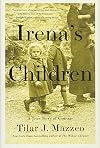
Before reading this book, I had heard of Irena Sendler. I’d read two children’s picture books about her: Irena's Jars of Secrets and Irena Sendler and the Children of the Warsaw Ghetto. Because they were written for children, they were sanitized and did not reveal the worst of the atrocities or many of the details of Irena’s life and the lives of her collaborators or the lives of the victims. I did not get even close to a full picture, though I’m glad there are books for children show more about this heroine. They were fine introductions and inspired me to learn more.
I’ve read hundreds of Holocaust books, non-fiction and fiction. This one is non-fiction and it’s one of the very best books of its kind that I’ve read. I had no qualms about giving it 5 stars. It’s a splendid book, well written and brilliantly organized and expertly constructed. It’s incredibly dense with information, but always readable and engaging. I found it hard to put down, though at times it was extremely painful to read.
I cannot stress enough how much I learned from this book. I got a better feel for the scope of the conditions inside the Warsaw Ghetto, Warsaw and Poland during WWII than I have from reading most other books about it, perhaps more than from any other book. I learned so much about Irena and her background that it made sense why she was as she was and why she did what she did. Many people I’d known about from reading other books make appearances and it was interesting to see how they were connected to each other, including to Irena.
The book is well researched, with a fine explanation from the author about what few liberties she took (I found her and the book’s contents trustworthy!) and how she conducted her research. There are extensive notes and an impressive bibliography. I appreciated what photos were included and wish that there had been even more of them.
It was a good time for me to read this book. Despite its serious and sometimes heartbreaking subject matter, I was fine with reading it over the holidays. I took courage from what these people went through. They and their situations made what trepidation I feel for what we’re facing later this month doable. I got courage from their willingness to do the right thing. This book could have been titled Dozens (maybe Hundreds) of People’s Children. So many participated in trying to save lives and so many were incredibly brave. I hope I would have the courage to do what's right, as might be required, over these next few years! Irena’s bravery and the bravery of those she worked with and the bravery of many other Poles, non-Jewish and Jewish, is so inspiring. They were remarkable people, and ordinary people. I could hope to be only a fraction as brave. There were so many heroes. Unfortunately, there were obviously a huge number of victims, but also so many that were saved, and that is inspiring.
While it turned out that none of them were actually safe, they could certainly have protected themselves better than they did by not trying to help. I was particularly touched by those who had children of their own and risked so much to help other people’s children; their actions were life threatening for them and for their entire families.
I did learn a lot about Warsaw throughout WWII and I’d never realized quite how in danger the Catholic and other non-Jewish Polish people were in, especially toward the end of the war.
How could so many people be so brave (this book must be read to see just how almost superhuman bravery was exhibited time after time!) and how could so many people have acted so evilly? I was left more uplifted than in despair.
One example of what fine storytelling this book has is one of the chapter titles led me to assume one thing, as does the way this book begins (with Irena’s arrest by the Gestapo) and because of that I’d assumed something, until I looked at the photos section in the middle of the book. But why that was done makes perfect sense. The reader follows Irena over time (through her triumphs and tragedies and challenges – with the full gamut of thoughts and emotions and experiences) and the presentation was not done gratuitously but in a way that I as a reader got a real sense of how it was for Irena and all the others, adults and children, non-Jews and Jews, people of all persuasions in this time and place.
I honestly can’t imagine going through what Irena and many of her contemporaries did, and obviously what the Polish Jews had to endure in the ghetto and being sent to Treblinka or otherwise murdered, well I cannot imagine coping. Yes, there is much real life tragedy in this account, but the truly amazing efforts of so many who did what they could to save lives, of adults as well as a large number of children, left me feeling in awe.
There is horrific content and there is a lot of suspense but it also has sweet and lovely and joyful parts.
This is a timely book, telling a story that needed telling, and an excellent effort, and I highly recommend it. show less
I’ve read hundreds of Holocaust books, non-fiction and fiction. This one is non-fiction and it’s one of the very best books of its kind that I’ve read. I had no qualms about giving it 5 stars. It’s a splendid book, well written and brilliantly organized and expertly constructed. It’s incredibly dense with information, but always readable and engaging. I found it hard to put down, though at times it was extremely painful to read.
I cannot stress enough how much I learned from this book. I got a better feel for the scope of the conditions inside the Warsaw Ghetto, Warsaw and Poland during WWII than I have from reading most other books about it, perhaps more than from any other book. I learned so much about Irena and her background that it made sense why she was as she was and why she did what she did. Many people I’d known about from reading other books make appearances and it was interesting to see how they were connected to each other, including to Irena.
The book is well researched, with a fine explanation from the author about what few liberties she took (I found her and the book’s contents trustworthy!) and how she conducted her research. There are extensive notes and an impressive bibliography. I appreciated what photos were included and wish that there had been even more of them.
It was a good time for me to read this book. Despite its serious and sometimes heartbreaking subject matter, I was fine with reading it over the holidays. I took courage from what these people went through. They and their situations made what trepidation I feel for what we’re facing later this month doable. I got courage from their willingness to do the right thing. This book could have been titled Dozens (maybe Hundreds) of People’s Children. So many participated in trying to save lives and so many were incredibly brave. I hope I would have the courage to do what's right, as might be required, over these next few years! Irena’s bravery and the bravery of those she worked with and the bravery of many other Poles, non-Jewish and Jewish, is so inspiring. They were remarkable people, and ordinary people. I could hope to be only a fraction as brave. There were so many heroes. Unfortunately, there were obviously a huge number of victims, but also so many that were saved, and that is inspiring.
While it turned out that none of them were actually safe, they could certainly have protected themselves better than they did by not trying to help. I was particularly touched by those who had children of their own and risked so much to help other people’s children; their actions were life threatening for them and for their entire families.
I did learn a lot about Warsaw throughout WWII and I’d never realized quite how in danger the Catholic and other non-Jewish Polish people were in, especially toward the end of the war.
How could so many people be so brave (this book must be read to see just how almost superhuman bravery was exhibited time after time!) and how could so many people have acted so evilly? I was left more uplifted than in despair.
One example of what fine storytelling this book has is one of the chapter titles led me to assume one thing, as does the way this book begins (with Irena’s arrest by the Gestapo) and because of that I’d assumed something, until I looked at the photos section in the middle of the book. But why that was done makes perfect sense. The reader follows Irena over time (through her triumphs and tragedies and challenges – with the full gamut of thoughts and emotions and experiences) and the presentation was not done gratuitously but in a way that I as a reader got a real sense of how it was for Irena and all the others, adults and children, non-Jews and Jews, people of all persuasions in this time and place.
I honestly can’t imagine going through what Irena and many of her contemporaries did, and obviously what the Polish Jews had to endure in the ghetto and being sent to Treblinka or otherwise murdered, well I cannot imagine coping. Yes, there is much real life tragedy in this account, but the truly amazing efforts of so many who did what they could to save lives, of adults as well as a large number of children, left me feeling in awe.
There is horrific content and there is a lot of suspense but it also has sweet and lovely and joyful parts.
This is a timely book, telling a story that needed telling, and an excellent effort, and I highly recommend it. show less
Irena's Children: The Extraordinary Story of the Woman Who Saved 2,500 Children from the Warsaw Ghetto (A True Story of Courage) by Tilar J. Mazzeo
This informative and moving book has been difficult for me to plow through, even though it is well-written. What took place in Warsaw is almost unfathomable. Irena's work was brave and heroic, even if she herself did not think so. I keep thinking about those Polish people who in the pre-war years didn't like the idea of sharing their country with Jews. I wonder when the Germans' actions became too much for them. Was it when the Germans restricted Jewish businesses? Was it when Jews were show more forced to identify themselves with yellow stars on their clothing? Was it when the Germans forced the Jews to move to the Ghetto? Was it when they started shooting Jews for perceived offenses? When they rounded them up and put them on trains headed toward their deaths? When the children from the orphanage (with their caretaker who calmly refused to leave them) were put on those same trains? When they started shooting children in the streets? Only when the Gestapo tortured and killed sympathizers and people woring to save Jewish children? Or not even then? How does this story parallel with elements of our society in the US today? I can't think of anyone who wouldn't be moved by reading this book. show less
Irena's Children: The Extraordinary Story of the Woman Who Saved 2,500 Children from the Warsaw Ghetto by Tilar J. Mazzeo
Books like this one are not easy to read, and they shouldn't be. But, when well written, books like this can teach us a lot about how and why average men and women either went along with the masses, silent in the face of atrocities, or stayed true to their values, fought against the tide, and became heroes. This book is exceptionally well written.
Tilar Mazzeo writes an engaging narrative. This is absolutely not a dry, textbook type of read. Mazzeo gives us emotion, passion, and insight. She show more lets us see and feel what the people involved experienced. We don't tackle the whole of WWII or even the whole of the Holocaust, but instead we witness the destruction of Poland and its people from the perspective of a handful of people.
This story feels personal. This story hurts. But it also offers hope, because people like Irena are quietly living their lives all around us, and maybe, if we pay attention, we can learn something from them.
*I was provided with an advance copy by the publisher, via NetGalley, in exchange for my honest review.* show less
Tilar Mazzeo writes an engaging narrative. This is absolutely not a dry, textbook type of read. Mazzeo gives us emotion, passion, and insight. She show more lets us see and feel what the people involved experienced. We don't tackle the whole of WWII or even the whole of the Holocaust, but instead we witness the destruction of Poland and its people from the perspective of a handful of people.
This story feels personal. This story hurts. But it also offers hope, because people like Irena are quietly living their lives all around us, and maybe, if we pay attention, we can learn something from them.
*I was provided with an advance copy by the publisher, via NetGalley, in exchange for my honest review.* show less
Irena's Children: The Extraordinary Story of the Woman Who Saved 2,500 Children from the Warsaw Ghetto by Tilar J. Mazzeo
In the midst of Warsaw during WWII, Irena Sendler set up a network to rescue Jewish children. She not only smuggled children from the ghetto, she sets up an extensive network to house the children and provided money for their support. This was an absolutely fascinating book. I had never heard of Irena before, and I read a lot of WWII novels. Despite great risk to herself, imprisonment and torture she never betrayed anyone around her. I hope that many will take inspiration from her show more determination and desire to help people. Overall, highly recommended. show less
Lists
Awards

You May Also Like
Associated Authors
Statistics
- Works
- 6
- Also by
- 1
- Members
- 757
- Popularity
- #33,605
- Rating
- 4.3
- Reviews
- 27
- ISBNs
- 43
- Languages
- 10
- Favorited
- 2
